

Water and wastewater utilities consume 4% of the power. Think about that for a moment. Environmental compliance becomes critical for both operational efficiency and regulatory adherence.
A structured environmental compliance audit helps here. You can identify non-compliance issues before they get pricey with a systematic environmental audit process and a detailed environmental audit checklist.
We’ll walk you through the complete environmental audit process for wastewater treatment plants in this piece. The coverage spans planning and preparation to reporting and corrective actions.
Understanding Environmental Audits for Wastewater Treatment Plants

What is an Environmental Compliance Audit
An environmental compliance audit is a systematic, documented and objective assessment that scrutinizes whether your wastewater treatment operations meet environmental regulations. This audit process verifies adherence to federal, state and local laws. It identifies violations and environmental risks before they escalate into regulatory penalties.
You can conduct these audits internally through your environmental team. You can also use third-party auditors for external audits. External audits provide an independent assessment, which proves valuable especially when you have a facility that lacks specialized personnel or equipment to perform full compliance reviews. The audit evaluates discharge permits and treatment processes. It also reviews waste management records and staff training documentation.
Types of Environmental Audits for Wastewater Facilities
Three distinct audit types serve different purposes for wastewater facilities:
- Environmental Compliance Audits: These external audits review your facility’s legal compliance status with environmental regulations. They represent the most detailed and expensive option. They scrutinize permit adherence and identify non-compliance areas that could result in penalties.
- Environmental Management Audits: Your facility conducts these audits internally. These audits assess whether your facility meets its own environmental performance standards and objectives. They help you understand how well your management systems function against internally set standards.
- Functional Environmental Audits: These specialized audits measure the effects of specific activities or issues. This might focus exclusively on wastewater management for wastewater facilities. It could also target sludge disposal practices or pretreatment programs rather than evaluating all operations.
Key Objectives of Environmental Audits
Environmental audits serve multiple purposes beyond simple compliance verification. They determine mass balance of materials used and review conversion efficiencies of process equipment. The audits establish operational performance norms for waste minimization. The audit process identifies water usage patterns, wastewater generation points and effluent characteristics.
There’s another critical objective that involves assessing solid waste and hazardous waste generation. This includes their sources, quantities and characteristics. Audits also evaluate existing treatment system performance. They determine environmental impacts on surrounding areas such as groundwater, streams and agricultural land.
Regulatory Framework and Compliance Requirements
The Clean Water Act governs water pollution control. It establishes the National Pollutant Discharge Elimination System permit program. EPA or authorized states issue NPDES permits that set technology-based and water quality-based limits. These permits establish monitoring requirements. Smaller facilities face particular compliance challenges. Recent data shows that 60% of NPDES non-compliance violations occurred at these operations.
Common pollutants discharged at violation levels include biochemical oxygen demand and chemical oxygen demand. Total suspended solids, fecal coliform and nutrients also appear frequently. Resource lack and inadequate funding for infrastructure upgrades contribute to these compliance issues at smaller treatment plants. Difficulty retaining certified operators adds to the challenge.
Planning and Preparing for Your Wastewater Facility Audit
Define Audit Scope and Objectives
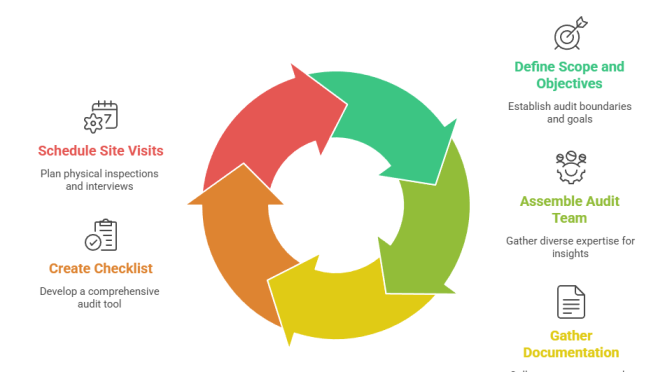
Audit preparation determines whether your environmental compliance audit succeeds or fails. Start by defining the scope and objectives through discussion with department management and a facility-specific risk assessment. The scope establishes which areas, processes and timeframes the audit will get into. Most audits review activities from the most recent twelve-month period and get into whether revenues appear reasonable, expenditures comply with policies, and controls function effectively.
Your objectives should map the exact obligations your facility faces rather than relying on generic templates. This tailored approach will give auditors a way to verify compliance with site-specific permits and processes.
Assemble Your Audit Team
Representatives from environmental health and safety, operations, maintenance and senior management should be included. Their combined points of view provide auditors with accurate information and help management prioritize corrective actions once the report is finalized. External auditors offer unbiased evaluations that carry more weight than internal reviews. Internal teams help spot potential risks before regulatory inspections take place.
Gather Required Documentation and Permits
Collect permits, waste-manifest records, training certificates, inspection logs and standard operating procedures. Gather site drawings, flow diagrams, previous audit reports, utility agreements, climate data, pump and blower curves, and your NPDES permit copy. Well-laid-out documentation accelerates the audit process and demonstrates a culture of compliance.
Create Your Environmental Audit Checklist
Develop a checklist covering drainage systems, water flow monitoring, plant design, operations procedures, operator skills and local regulation compliance. Facility conditions, air emissions, water discharge, waste management, chemical storage, emergency planning and management policies should be included.
Set Timeline and Schedule Site Visits
Schedule the audit execution timeline and think over team availability and necessary resources. Plan site visits to allow physical inspection, data collection using appropriate equipment, staff interviews and documentation analysis.
Conducting the Wastewater Treatment Plant Audit
Step 1: Review Wastewater Discharge Permits and Compliance Records
Get into your NPDES permit first to verify effluent limitations, monitoring requirements and reporting obligations. Review discharge monitoring reports to confirm you’re submitting them to the Bureau of Materials Management and Compliance Assurance regularly. Your facility must maintain DMRs and supporting documentation for a minimum of five years. Check that wastewater collection and treatment systems operate according to approved plans and specifications. Confirm all discharges are properly permitted.
Step 2: Inspect Treatment Processes and Operations
Visual observation gives you critical details during process inspection. The color, smell and appearance of biomass in the activated sludge process indicate operational health. Get into mixed liquor suspended solids concentration, which determines whether solids loading on the clarifier falls within suitable limits. Review solids retention time control, one of the most important parameters in activated sludge processes. Primary sedimentation removes readily settleable solids and reduces suspended solids content even though primary sludge represents only 2% of influent volume.
Step 3: Assess Sludge Management and Disposal Practices
Assess how your facility handles sewage sludge, a biologically active mixture that contains water, organic matter, microorganisms and contaminants. Anaerobic digestion converts sludge into biogas and achieves net-negative emissions of -47.18 kg CO2 equivalents when energy recovery is implemented. Anaerobic digestion requires 1226.4 kWh daily to maintain mesophilic conditions without energy recovery. Verify whether biosolids meet specific standards for utilization or disposal.
Step 4: Assess Stormwater and Pretreatment Programs
Assess compliance with general prohibitions at 40 CFR Part 403.5(a), which forbid pollutant discharges that cause pass through or interference. Specific prohibitions at 40 CFR Part 403.5(b) prevent eight categories of hazardous discharges. These include pollutants that create fire hazards with flashpoints below 140°F. Review how your facility regulates industrial users to prevent pollutants that inhibit treatment operations.
Step 5: Interview Plant Operators and Staff
Ask operators about their regulatory knowledge, safety protocols and compliance procedures. Assess their understanding of treatment processes, equipment maintenance schedules and emergency response procedures.
Step 6: Collect and Analyze Environmental Data
Gather samples and follow proper procedures to ensure data quality and integrity. Monitor flow rates, pollutant concentrations, pH levels and dissolved oxygen to verify treatment efficiency and regulatory compliance.
Completing the Audit and Taking Action
Prepare Your Environmental Audit Report
Your findings need documentation in a structured environmental audit report. This report should contain an executive summary, facility background, existing infrastructure overview, audit findings, and recommended energy efficiency measures. The report must specify the industrial process audited, state the client’s name, include your signature, and detail the audit results. Tailor the report to focus on legal compliance, sustainability goals, or cost reduction depending on the audience when you present findings to stakeholders.
Identify Non-Compliance Issues and Corrective Actions
Environmental auditing on a regular basis identifies root causes behind noncompliance events. Root causes represent the most important factors that lead to violations, not just surface-level symptoms. Your corrective action plan should document non-compliance issues, identify why it happens, and capture measurable solutions with realistic deadlines. Management actions must address why it happens before you conduct subsequent audits.
Implement Improvements and Monitor Progress
Set up reliable monitoring systems for effluent quality. This includes regular sampling and testing. Staff need training on regulatory requirements, operational procedures, and emergency response protocols. All plant operations and maintenance activities require detailed standard operating procedures. Review and update these procedures to reflect regulatory changes or operational modifications.
Schedule Follow-Up Audits for Continuous Compliance
Plan regular follow-up audits to reassess practices and ensure ongoing compliance. Complete audits at least once a year and always after significant product or equipment changes. Periodic audits allow your organization to correct problems, sustain compliance, and prevent discovery of similar findings during subsequent reviews.
Conclusion
You now have a complete roadmap to conduct environmental audits at your wastewater treatment facility. Do this with a complete checklist and you can identify compliance gaps before they turn into penalties.
Consistent auditing is your best defense against regulatory violations. Schedule your first audit and document everything. Address non-compliance issues right away. Your facility’s reputation and operational efficiency depend on it.
Frequently Asked Questions
Q1. What are the main steps involved in conducting an environmental audit for wastewater treatment plants?
The process includes planning and scoping (defining objectives and resources), pre-audit data collection (reviewing permits and previous reports), on-site assessment (conducting inspections and staff interviews), data analysis (comparing findings against standards), and preparing a comprehensive audit report with corrective actions.
Q2. What are the different types of environmental audits used for wastewater facilities?
There are three main types: Environmental Compliance Audits (external reviews of legal compliance status), Environmental Management Audits (internal assessments of performance against facility standards), and Functional Environmental Audits (specialized reviews focusing on specific activities like sludge disposal or pretreatment programs).
Q3. How often should wastewater treatment plants conduct environmental audits?
Facilities should complete environmental audits at least annually to maintain continuous compliance. Additionally, audits should be conducted after any significant changes to equipment, processes, or products to ensure ongoing regulatory adherence and operational efficiency.
Q4. What documentation is needed for a wastewater facility environmental audit?
Essential documents include NPDES permits, discharge monitoring reports, waste-manifest records, training certificates, inspection logs, standard operating procedures, site drawings, flow diagrams, previous audit reports, and utility agreements. All records should be well-organized and readily accessible.
Q5. What should be included in an environmental audit report for a wastewater treatment plant?
The report should contain an executive summary, facility background information, existing infrastructure overview, detailed audit findings, recommended corrective actions and efficiency measures, identification of non-compliance issues, and a timeline for implementing improvements with measurable solutions.
Key Takeaways
Environmental audits are essential for wastewater treatment plants to prevent costly violations and ensure regulatory compliance while maintaining operational efficiency.
- Plan thoroughly before auditing: Define scope, assemble cross-functional teams, gather all permits and documentation, and create facility-specific checklists to ensure comprehensive coverage.
- Follow systematic inspection steps: Review discharge permits, inspect treatment processes, evaluate sludge management, assess stormwater programs, interview staff, and collect environmental data.
- Document findings and take action: Prepare structured reports identifying non-compliance issues, implement corrective measures addressing root causes, and establish monitoring systems for continuous improvement.
- Schedule regular follow-up audits: Conduct audits at least annually and after significant changes to maintain ongoing compliance and prevent recurring violations.
- Focus on high-risk areas: Pay special attention to NPDES permit compliance, treatment process efficiency, and proper waste management practices, as these represent the most common violation sources.
Remember that 60% of significant NPDES violations occur at smaller facilities, making systematic auditing even more critical for maintaining compliance and avoiding regulatory penalties that can severely impact operations and reputation. A single oversight during an environmental audit can lead to hefty fines, reputational damage, and operational disruptions for your wastewater treatment facility.