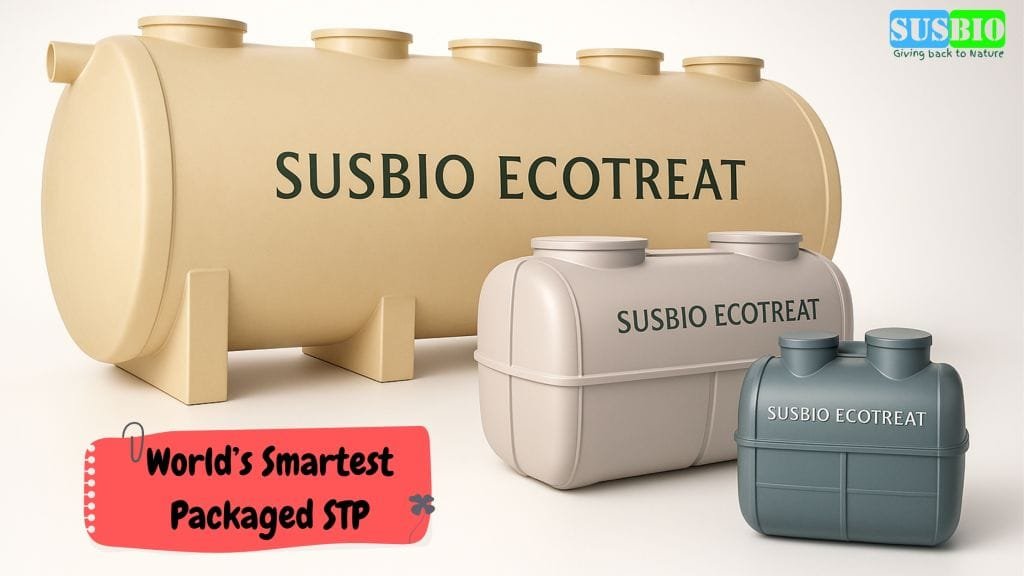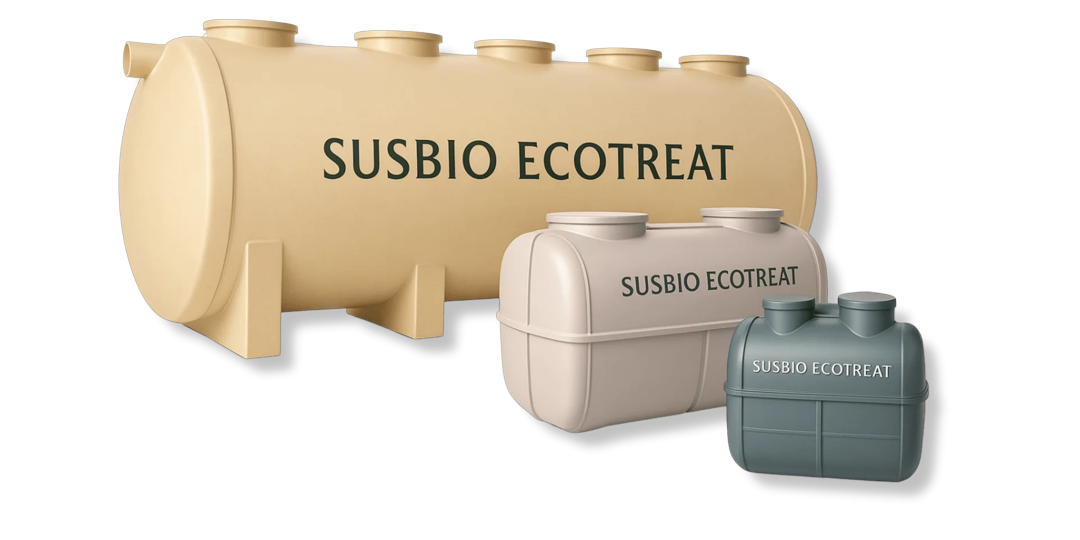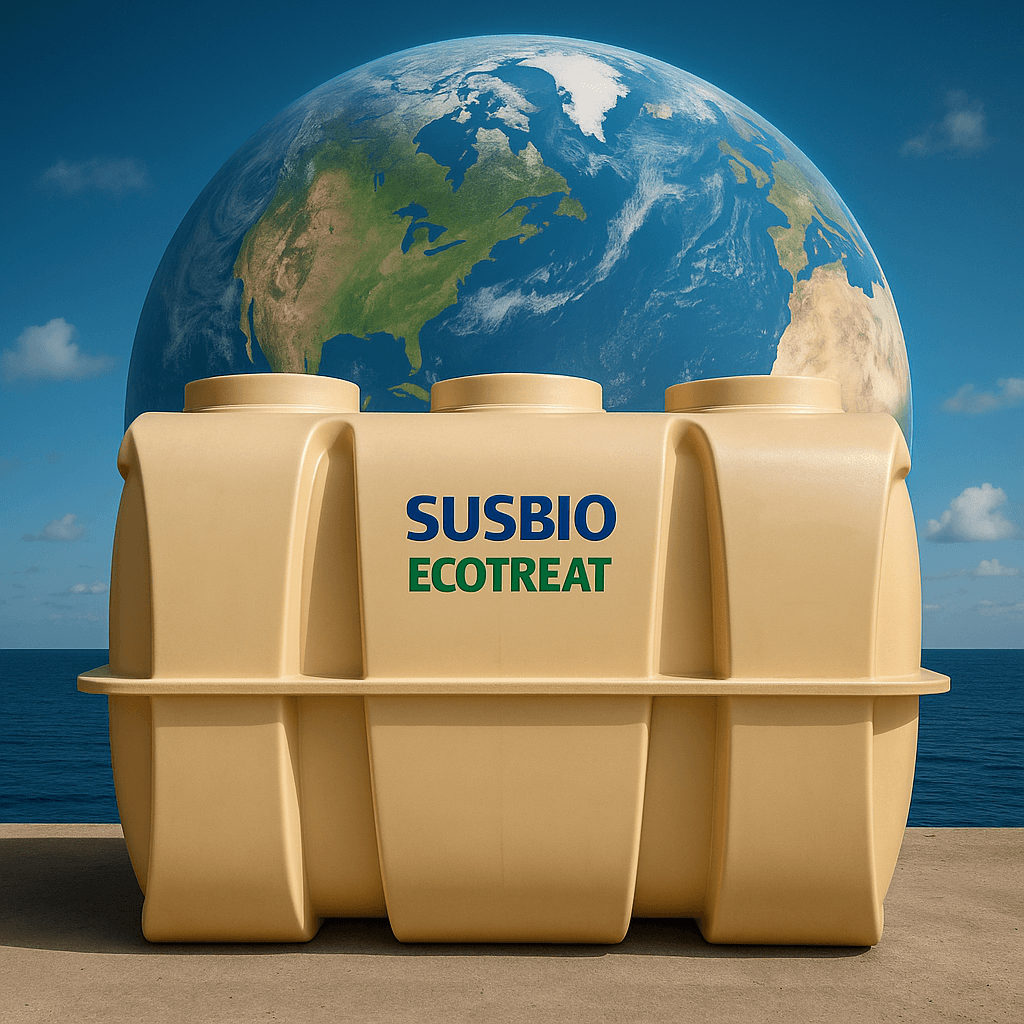


SUSBIO ECOTREAT is an Anaerobic + MBBR packaged sewage treatment plant built for Bangladesh’s rapid urbanization, its textile and garment industry’s wastewater challenge, and Department of Environment (DoE) compliance requirements. Since 2013, SUSBIO has delivered 500+ installations across 24 Indian states and exports to 8 countries — combining dual-stage biological treatment with a compact, prefabricated design that installs in days, not months.
This page covers Bangladesh’s specific wastewater treatment challenges, how SUSBIO ECOTREAT is engineered to meet them, and what to evaluate before choosing a packaged STP manufacturer for your Bangladesh project.
Bangladesh's Wastewater Challenge — Why Standard STPs Fall Short
Bangladesh faces one of Asia’s most acute wastewater treatment gaps — driven by explosive urbanization, a world-scale textile and garment industry, and infrastructure that has struggled to keep pace with demand.
Dhaka’s sewage treatment gap is severe. Dhaka is among the world’s most densely populated cities, generating enormous daily sewage volumes against an infrastructure that treats only a fraction of what is produced. Large portions of Dhaka’s residential and commercial areas fall outside Dhaka WASA’s sewerage network — making on-site packaged treatment the only viable compliance path for individual developments, commercial complexes, and industrial facilities.
Bangladesh’s rivers bear the cost of untreated discharge. The Buriganga, Turag, and Shitalakkhya rivers — which flow through and around Dhaka — have been severely degraded by decades of untreated domestic sewage and industrial effluent discharge. The DoE increasingly enforces effluent standards, and projects discharging into or near these catchments face tightening compliance requirements.
The textile and RMG sector generates complex, high-load effluent. Bangladesh is the world’s second-largest ready-made garment (RMG) exporter, with a textile and dyeing industry centred in Dhaka, Gazipur, Narayanganj, and Chittagong. Textile dyeing and washing operations generate wastewater with high BOD, COD, colour loads, and elevated temperatures — effluent profiles that standard domestic STPs are not designed to handle. Projects in or near textile industrial zones need treatment systems that can handle this variability.
Rapid commercial and hospitality development needs fast, reliable infrastructure. Bangladesh’s growing commercial sector, hotel industry, and residential developments need wastewater infrastructure that can be deployed quickly and maintained with minimal technical staff — conventional civil STP construction timelines of several months simply don’t fit modern project delivery requirements.
DoE Compliance — What Bangladesh Projects Need to Meet
The Bangladesh Department of Environment (DoE) enforces discharge standards under the Environment Conservation Rules (ECR) 1997 and subsequent amendments. Key effluent parameters for sewage treatment plants discharging to inland surface water bodies:
| Parameter | DoE Standard (Inland Surface Water) |
|---|---|
| pH | 6.0 – 9.0 |
| BOD | ≤ 50 mg/L |
| COD | ≤ 200 mg/L |
| Total Suspended Solids (TSS) | ≤ 150 mg/L |
| Temperature | ≤ 40°C |
Projects in sensitive catchment areas — particularly near the Buriganga, Turag, or Shitalakkhya rivers — and projects intending to reuse treated water may be held to stricter standards. SUSBIO ECOTREAT is CPCB Class A compliant, achieving BOD ≤10 mg/L, COD ≤50 mg/L, and TSS ≤10 mg/L — meeting and significantly exceeding DoE’s baseline requirements throughout its capacity range.
SUSBIO ECOTREAT — Engineered for Bangladesh's Conditions
SUSBIO ECOTREAT moves wastewater through oil and grease separation, sedimentation, anaerobic contact media, MBBR biofilm treatment, secondary sedimentation, and disinfection — removing BOD, COD, suspended solids, and pathogens through purely biological dual-stage treatment to produce effluent meeting DoE standards and suitable for non-potable reuse.
Technical specifications
| Spec | Detail |
|---|---|
| Capacity range | 1–500 KLD |
| Construction | Fiber-reinforced plastic (FRP), corrosion-resistant |
| Treatment technology | Anaerobic + MBBR (dual-stage biological) |
| Installation time | Days, prefabricated plug-and-play |
| Footprint | Compact, suited to constrained urban plots |
| Operational lifespan | 15–25 years with minimal maintenance |
| Material warranty | 10 years |
| Energy consumption | 70% less electricity than conventional STPs |
| Effluent standard | CPCB Class A — exceeds DoE baseline requirements |
| Operation | Fully automated, minimal on-site staffing required |
SUSBIO ECOTREAT vs. Conventional STPs
| Factor | SUSBIO ECOTREAT | Conventional STP |
|---|---|---|
| Installation time | Days | Months of civil construction |
| Land requirement | Compact — fits constrained Dhaka plot sizes | Extensive civil footprint |
| Energy consumption | 70% less electricity | High operational power draw |
| DoE compliance | Exceeds baseline — CPCB Class A throughout | Dependent on design and maintenance |
| Automation | Fully automated | Manual/semi-automatic |
| Odour and noise | Enclosed, odour-controlled | Open systems generate odour issues |
| Suitability for textile/industrial adjacent effluent | Handles variable BOD/COD via MBBR biofilm process | Often underperforms on variable loads |
Where SUSBIO ECOTREAT Is Used in Bangladesh
Textile and RMG industrial facilities (Dhaka, Gazipur, Narayanganj, Chittagong)
The Anaerobic + MBBR process handles variable BOD/COD loads from textile dyeing, washing, and processing — not just standard domestic sewage. Its compact footprint suits the constrained plot sizes typical of Bangladesh’s industrial zones.
Residential complexes and apartments (Dhaka, Chittagong)
Automated, low-maintenance operation suits Bangladesh’s fast-growing residential developments where dedicated technical staff for wastewater management isn’t practical. Compact design fits the constrained plot sizes typical in Dhaka’s urban and peri-urban residential areas.
Hotels and hospitality (Dhaka, Cox’s Bazar, Sylhet)
Quiet, odour-free, enclosed operation suits Bangladesh’s hospitality sector — from Dhaka’s commercial hotels to Cox’s Bazar beach resorts and Sylhet tea estate properties — where guest experience and DoE compliance must both be maintained reliably.
Hospitals and healthcare facilities
Consistent effluent quality with integrated disinfection suits Bangladesh’s healthcare sector, where reliable treatment regardless of occupancy variation and compliance with enhanced discharge requirements is essential.
Educational institutions
Automated operation requires minimal on-site technical oversight — suited to Bangladesh’s university campuses and schools where staffing a wastewater system is impractical.
Commercial and mixed-use developments
Fast-growing commercial developments across Dhaka, Chittagong, Sylhet, and Rajshahi need wastewater infrastructure that can be deployed quickly and maintained without specialist staff.
Choosing a Sewage Treatment Plant Manufacturer in Bangladesh — What Actually Matters
1. DoE compliance built in from design. A system engineered around Bangladesh’s specific discharge norms — with the ability to significantly exceed baseline DoE standards — costs less to defend during DoE inspections and consent renewals.
2. Performance on variable industrial effluent. Bangladesh’s textile-adjacent effluent is not domestic sewage. Confirm that the system has been validated on variable BOD/COD loads, not just standard residential wastewater.
3. Installation speed for Bangladesh’s development pace. Fast installation claims vary. Ask for specific day-ranges tied to your project’s capacity and site conditions.
4. Total cost of ownership, not sticker price. At 70% less electricity than conventional STPs, SUSBIO ECOTREAT’s operational savings compound significantly over a 15–25 year lifespan. Maintenance labor and operational reliability dominate lifetime STP costs.
5. After-installation support. Service response time and spare parts availability matter more over a 20-year operational lifespan than almost any other factor. Clarify support arrangements before commitment.
SUSBIO's Commitment to Bangladesh's Water Future
Bangladesh faces one of Asia’s most urgent wastewater challenges — and the gap between wastewater generated and wastewater treated is only growing as urbanization accelerates. SUSBIO ECOTREAT’s Anaerobic + MBBR technology offers a practical, deployable solution for the residential, commercial, industrial, and hospitality projects that need on-site treatment now, not after months of civil construction.
Since 2013, SUSBIO has been doing one thing — making the world more water secure, one installation at a time. 500 plants. 24 states. 8 countries. Bangladesh is part of that commitment.
For project enquiries, technical documentation, and DoE compliance specifications relevant to your Bangladesh project, contact SUSBIO’s technical team directly.
Frequently Asked Questions
Q1: Does SUSBIO ECOTREAT comply with Bangladesh DoE discharge standards?
Yes. SUSBIO ECOTREAT is CPCB Class A compliant, achieving BOD ≤10 mg/L, COD ≤50 mg/L, and TSS ≤10 mg/L — significantly exceeding Bangladesh DoE’s baseline inland surface water discharge standards (BOD ≤50 mg/L, COD ≤200 mg/L, TSS ≤150 mg/L) through its dual-stage Anaerobic + MBBR biological treatment process.
Q2: Is SUSBIO ECOTREAT suitable for Bangladesh’s textile and RMG industry?
Yes. The Anaerobic + MBBR biological treatment process handles the variable BOD/COD loads typical of textile dyeing, washing, and processing operations — not just standard domestic sewage. Its compact footprint suits the constrained plot sizes common in Bangladesh’s industrial zones in Gazipur, Narayanganj, and Chittagong.
Q3: Why do projects in Dhaka need on-site packaged STPs?
Large portions of Dhaka fall outside Dhaka WASA’s sewerage network. Projects in these areas cannot connect to municipal infrastructure — a packaged STP is the only practical path to DoE compliance for residential, commercial, and industrial developments without sewerage access.
Q4: How does SUSBIO ECOTREAT help protect Bangladesh’s rivers?
By treating sewage to CPCB Class A standards before discharge, SUSBIO ECOTREAT prevents BOD, COD, and suspended solids from entering sensitive receiving bodies including the Buriganga, Turag, and Shitalakkhya rivers — supporting DoE compliance and helping protect Bangladesh’s already stressed urban waterways.
Q5: How energy-efficient is SUSBIO ECOTREAT?
SUSBIO ECOTREAT consumes 70% less electricity than conventional sewage treatment systems. Over a 15–25 year operational lifespan, this translates into substantial power cost savings — particularly relevant in Bangladesh where reliable electricity supply and operational cost management are both significant project considerations.
Q6: How quickly can SUSBIO ECOTREAT be installed in Bangladesh?
SUSBIO ECOTREAT’s prefabricated, plug-and-play design installs within days of arriving on site, with minimal civil work required — significantly faster than conventional STP construction timelines of several months.
Q7: Is SUSBIO ECOTREAT suitable for hotels and resorts in Cox’s Bazar and Sylhet?
Yes. Its quiet, odour-free, enclosed operation suits Bangladesh’s hospitality sector — from Cox’s Bazar beachfront resorts to Sylhet tea estate properties — where guest experience and consistent DoE compliance both need to be maintained reliably regardless of seasonal occupancy variation.
Q8: What capacity range does SUSBIO ECOTREAT cover for Bangladesh projects?
SUSBIO ECOTREAT spans 1–500 KLD — covering individual residential complexes, boutique hotels, large garment manufacturing facilities, hospitals, and institutional campuses within a single product family.
Q9: Does SUSBIO ECOTREAT require a dedicated on-site operator in Bangladesh?
No. The system is fully automated, reducing both labor costs and the need for specialized on-site technical staff — relevant for residential complexes, educational institutions, and smaller commercial sites without dedicated wastewater operations teams.
Conclusion
Bangladesh faces one of Asia’s most urgent wastewater challenges — and the gap between wastewater generated and wastewater treated is only growing as urbanization accelerates. SUSBIO ECOTREAT’s Anaerobic + MBBR technology offers a practical, deployable solution for the residential, commercial, industrial, and hospitality projects that need on-site treatment now, not after months of civil construction.
Since 2013, SUSBIO has been doing one thing — making the world more water secure, one installation at a time. 500 plants. 24 states. 8 countries. Bangladesh is part of that commitment.
For project enquiries, technical documentation, and DoE compliance specifications relevant to your Bangladesh project, contact SUSBIO’s technical team directly.