

A small amount of foam is normal in a biological treatment tank — it’s a byproduct of aeration and microbial activity. What’s not normal is thick, persistent foam that builds up, spills over tank edges, or a greasy scum layer that won’t break down. Like odor and cloudy discharge, the specific character of foam or scum is diagnostic — different types point to different causes. This page breaks down what to look for and what it means.
For the broader range of reasons an STP can underperform, see our companion guides on why your STP smells bad, why treated water is cloudy, and why my sewage treatment plant is not working. This page goes deep on foam and scum specifically.
Thick White or Grey Foam: Young Sludge or Overloading
Billowing white foam — sometimes described as looking like shaving cream — is one of the most common foam complaints, and it usually points to one of two related causes: the biological sludge in the aeration tank is too young (the system was recently started up, or sludge has been wasted too aggressively and the microbial population hasn’t fully matured), or the plant is organically overloaded relative to its aeration capacity. Young or stressed sludge doesn’t yet have the settling and floc-forming characteristics of a mature biological population, and that instability shows up as persistent surface foam. This is the same load-versus-capacity distinction covered in our piece on why increasing capacity doesn’t solve performance issues — foam from overloading needs a load assessment, not just skimming the surface more often.
Thick, Stable Brown Foam: Filamentous Bacteria or Old Sludge Age
A darker, more stable, sometimes crusty foam that doesn’t collapse easily is a different problem — usually associated with either filamentous bacteria overgrowth (specific bacterial species that thrive under certain conditions and stabilize foam with their cell structure) or sludge that’s been retained in the system too long. Filamentous foam tends to build up gradually over days or weeks rather than appearing suddenly, and can trap air bubbles in a way that makes it resistant to breaking apart with water spray alone.
Greasy Surface Film or Scum: Fats, Oils, and Grease (FOG)
If what you’re seeing is less like foam and more like a greasy film or floating scum layer, the cause is almost always fats, oils, and grease entering the system — most commonly from kitchen wastewater in hotels, restaurants, and hostels, or from personal care products in residential settings. FOG doesn’t biodegrade the way organic sewage does; it floats, coats surfaces, and accumulates. Left unaddressed, it can also interfere with oxygen transfer at the water surface, compounding whatever other issue is already present. A grease trap or interceptor ahead of the main treatment stage is the standard fix for kitchen-sourced FOG, not something the STP itself is designed to handle at high volume.
Sudden Foam After a Chemical Discharge
If foam appears suddenly and coincides with a specific event — a cleaning chemical, detergent, or disinfectant entering the system in unusually high concentration — this is a surfactant response, not a biological one. Household and industrial cleaning products often contain surfactants (the same chemistry that makes dish soap foam), and a slug of concentrated surfactant reaching the tank can cause a sudden, dramatic foaming event even in an otherwise healthy system. This tends to resolve on its own once the surfactant has been diluted and processed through, but repeated occurrences point to something being discharged into the sewage line that shouldn’t be — a housekeeping or industrial process issue upstream of the STP, not a plant design issue.
Why This Matters Beyond Appearance
Beyond being unsightly, persistent foam and scum are operational problems in their own right: foam that overflows tank edges is a housekeeping and safety issue, foam blankets can insulate the tank surface and interfere with oxygen transfer, and scum that isn’t skimmed can eventually pass through to later treatment stages and affect final effluent quality — connecting back to the same TSS and clarity issues covered in our cloudy-water diagnostic guide.
SUSBIO's Approach to Foam and FOG Control
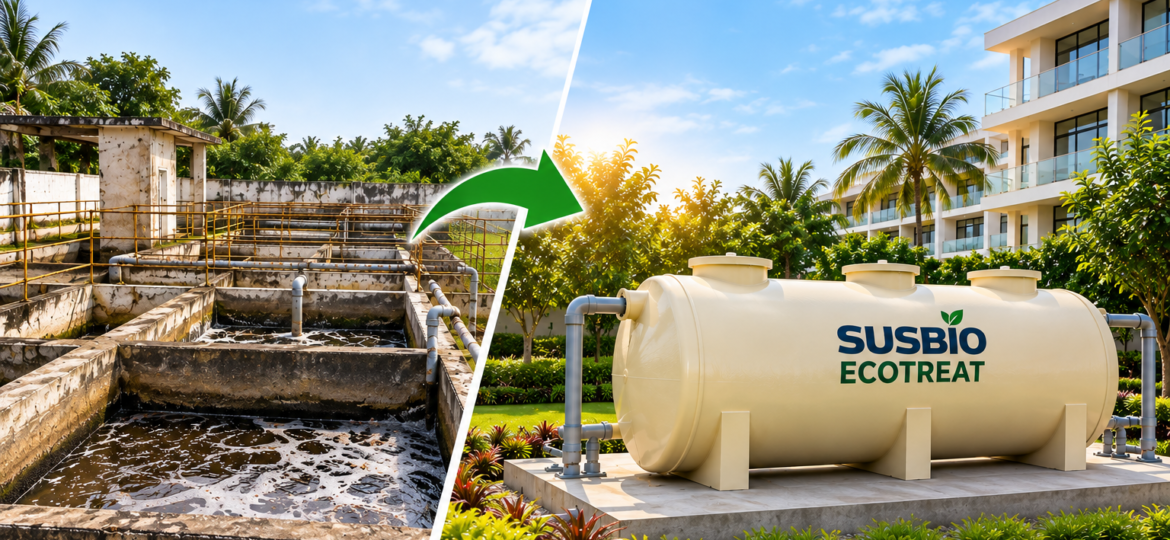
SUSBIO ECOTREAT’s Anaerobic + MBBR design reduces several of the causes above at the engineering stage. The anaerobic pre-treatment stage reduces the organic load reaching the MBBR stage, lowering the risk of the overloading-driven foam described above. Site-specific influent characterisation at the design stage — including identifying likely FOG sources like on-site kitchens — allows appropriate pretreatment (such as a grease trap) to be specified upfront rather than added reactively after a problem appears.
Common Mistakes
- Treating all foam the same way. White billowing foam, stable brown foam, and greasy scum have different causes and different fixes — spraying water on all of them equally doesn’t address the underlying issue.
- Not installing a grease trap for kitchen-heavy sites. Hotels, restaurants, and hostels without upstream FOG interception put a recurring, avoidable load on the STP.
- Ignoring foam that appears right after startup. Some foaming during the first weeks of a new system is expected as the biological population matures — but persistent foam well beyond that window signals a real, ongoing issue.
- Not investigating sudden foaming events. A one-off surfactant spike is usually self-resolving, but repeated sudden foaming points to something being discharged upstream that needs to be identified and stopped.
Frequently Asked Questions
Is some foam on my STP normal?
Yes, a thin layer of foam from aeration and normal microbial activity is expected. Thick, persistent foam that builds up or overflows tank edges is not normal and indicates one of several specific causes.
What does thick white foam on my STP mean?
Billowing white foam usually points to young or immature sludge (common after startup or aggressive sludge wasting) or organic overloading relative to the system’s aeration capacity.
Why is my STP producing greasy scum instead of foam?
Greasy surface film or scum is almost always caused by fats, oils, and grease (FOG) entering the system, commonly from kitchen wastewater. FOG doesn’t biodegrade like organic sewage and needs to be intercepted upstream with a grease trap, not treated by the STP itself.
Why did my STP suddenly start foaming heavily?
Sudden foaming often means a concentrated dose of surfactant-containing chemicals — cleaning products, detergents, disinfectants — entered the system. This usually resolves once it’s diluted through, but repeated events mean something is being discharged upstream that should be identified and stopped.
Can foam affect my treated water quality?
Yes, indirectly. Persistent foam can interfere with oxygen transfer at the water surface, and scum that isn’t properly skimmed can pass through to later stages and affect effluent clarity and TSS levels.
How does SUSBIO ECOTREAT reduce foam and scum issues?
The Anaerobic + MBBR process reduces the organic load reaching the aerobic stage, lowering overload-driven foaming risk. Site-specific influent characterisation at the design stage also identifies likely FOG sources upfront, so appropriate pretreatment like a grease trap can be specified from the start rather than added reactively.
Conclusion
Foam and scum are two of the most visible signs an STP gives you about what’s happening inside it — and like odor and cloudy discharge, the specific type tells you what’s actually wrong. Billowing white foam points to young sludge or overload, stable brown foam points to filamentous bacteria or sludge age, greasy scum points to FOG, and sudden foaming points to a chemical discharge event. Matching the fix to the actual cause, rather than treating every instance the same way, is what actually resolves it rather than masking it temporarily.
Related reading:
- Why Does My STP Smell Bad? Causes and Fixes
- Why Is My Treated STP Water Still Cloudy? A TSS Diagnostic Guide
- Bigger Isn’t Better: Why More ETP Capacity Doesn’t Fix Performance
- Why My Sewage Treatment Plant Is Not Working
- How to Commission STP Plants: Step-by-Step Guide for Engineers — for scum management during initial sludge-drying-bed commissioning specifically