

Many communities overlook decentralized wastewater treatment as a budget-friendly alternative. Recent studies show these systems bring major economic advantages and environmental benefits. Traditional wastewater treatment methods create more than double the pollution compared to decentralized systems, and the cleaning cost gap reaches nearly 2 million euros.
Decentralized wastewater treatment proves especially valuable when you have unique challenges to address. Rural communities in remote and hilly areas can rely on these systems that adapt well to growing semi-urban settlements. Local communities can generate irrigation water even without connections to centralized plants. A newer study, published in Surabaya, Indonesia, revealed decentralized systems were more economically viable than centralized options. This matters greatly since about 3 million residents still dump their wastewater directly into water bodies.
This piece breaks down the detailed costs between centralized and decentralized wastewater treatment systems. You’ll learn about their ground application and economic results to help pick the right system for your needs. The analysis will guide your decision through economic and environmental factors, whether you’re thinking over decentralized wastewater treatment for your community or weighing centralized against decentralized options.
Cost Breakdown of Centralized and Decentralized Wastewater Systems
“A significant benefit of decentralized treatment is its cost savings, particularly in terms of collection and distribution networks, which can account for 75% of the capital expenditure (CAPEX) when establishing wastewater treatment plants.” — Fluence Corporation, Global water and wastewater treatment technology company
The financial aspects of wastewater treatment systems show clear differences between centralized and decentralized approaches. These variations in cost help determine which system works best economically in specific situations.
Original investment comparison: Centralized vs decentralized
Infrastructure costs form the foundation of the financial equation. Centralized sewage treatment plants need huge capital investment because they require extensive network development, including piping, pumping stations, and large treatment facilities. The collection networks alone make up to 75% of the total capital costs needed to establish centralized wastewater treatment plants.
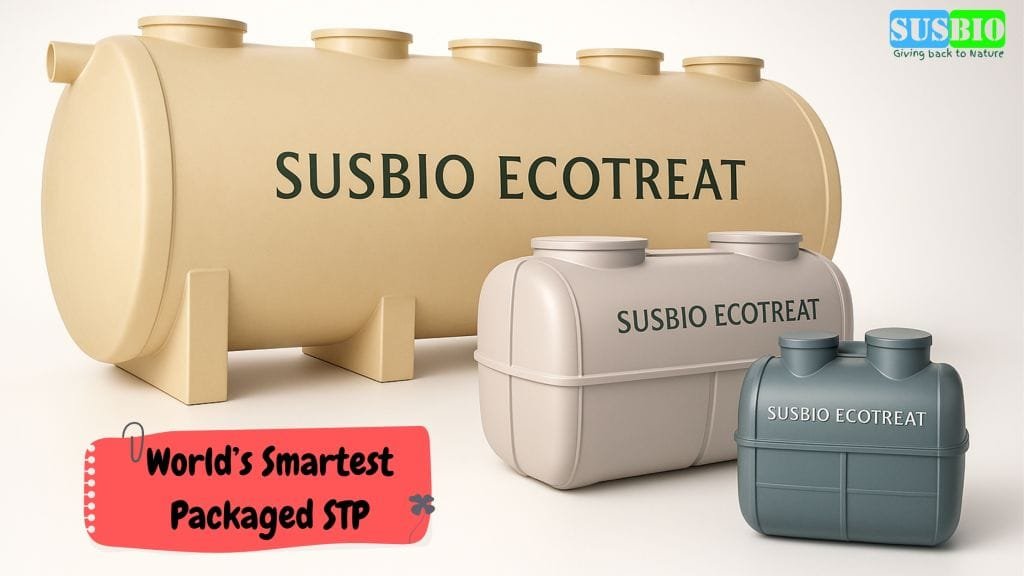
Decentralized wastewater treatment systems just need minimal infrastructure. This makes them financially better for areas where extending sewer lines doesn’t make practical sense. SUSBIO ECOTREAT shows this advantage as an advanced packaged STP solution in India. Its modular design reduces the original investment requirements dramatically.
Long-term O&M costs in different geographies
Operations and maintenance (O&M) costs make up 50% of total annual expenses for wastewater treatment facilities. Centralized systems might see these costs decrease over time due to economies of scale. All the same, pipeline operating costs keep rising as equipment ages and adds unexpected expenses.
Operational costs typically break down this way:
- Maintenance: 15-25% of total O&M costs
- Energy consumption: 10-30%
- Disposal expenses: 15-50%, varying by treatment plant size and local regulations
- Chemical and materials: 5-7%
- Miscellaneous expenses: 5-15%
Decentralized systems may have different costs based on how well they’re maintained. They use less energy, so their carbon footprint stays lower.
Cost of environmental compliance and penalties
Breaking environmental regulations creates big financial risks. Regulatory penalties for wastewater violations can range from thousands to millions of dollars. Companies face these hidden costs beyond direct fines:
- Legal expenses from lawsuits and environmental disputes
- Environmental cleanup responsibilities
- Higher insurance premiums after compliance failures
- Business losses from damaged reputation
Decentralized systems make regulatory compliance easier through localized management. This helps avoid these expensive penalties. Even with higher per-unit treatment costs, reduced transportation expenses and environmental impact often lead to better long-term economic results.
Real-World Case Studies and Economic Outcomes
Ground examples show how decentralized wastewater treatment systems bring major economic advantages in different geographical and demographic settings.
Surabaya, Indonesia: Urban decentralized feasibility
Surabaya, Indonesia’s second-largest city with about 2.85 million inhabitants, shows how urban decentralized systems can work. The city achieved 97.53% wastewater service coverage by 2015 with 43 decentralized treatment units spread across 18 districts. These systems scored an impressive 84.32 in environmental sustainability assessment that indicates excellent ecological performance. The economic dimension reached 43.24, which showed early challenges yet proved its feasibility. A later comparative economic analysis between centralized and decentralized options in Surabaya confirmed that decentralized approaches delivered better cost-benefit ratios in urban environments.
Jordan: Rural reuse and irrigation benefits
Jordan ranks among the world’s most water-scarce nations and has built many decentralized greywater treatment systems in rural communities over three decades. These systems cut household freshwater consumption for irrigation by 40-70%. The numbers tell a compelling story – reclaimed wastewater costs about 0.55 JOD/m³ compared to 1 JOD/m³ for fresh water. These systems create an estimated environmental value of 1.5 JOD/m³ in preserved groundwater resources. The Tafila and Karak projects represent successful implementation with 135 greywater treatment systems that meet both Jordanian and WHO standards.
India: Cost savings in decentralized greywater reuse
India generates about 31 billion liters of greywater daily, which opens huge possibilities for decentralized treatment. Rural Punjab’s effective greywater management has transformed agriculture – farmers see 30% higher crop yields while using 40% less fertilizer. Economic analysis of 50 decentralized sewage treatment plants in India shows lower capital costs through innovative system designs. SUSBIO ECOTREAT leads as India’s most advanced packaged STP solution. Its modular design allows plug-and-play deployment that cuts implementation costs in settings of all sizes. The system’s energy-efficient operation creates lasting operational savings that improve long-term economic viability.
SUSBIO ECOTREAT: A Future-Ready Decentralized STP Solution
SUSBIO ECOTREAT leads India’s most advanced packaged STP solutions with innovative technology. This future-ready system comes with new features that solve common wastewater management problems.
Modular design and plug-and-play deployment
SUSBIO ECOTREAT’s prefabricated modular design makes quick deployment possible with minimal site work. These units use durable fiber-reinforced plastic (FRP) to ensure they last long and resist corrosion. The plug-and-play system cuts down installation time from years to just weeks. This eliminates the need for extensive civil works that traditional treatment plants require. The compact units need less land and work perfectly in space-limited urban areas.
Energy efficiency and low maintenance
SUSBIO ECOTREAT shines in day-to-day operations beyond its easy installation. The system uses advanced dual treatment that combines biological and physical processes to remove pollutants better. The fully automatic operation with IoT integration lets users monitor remotely and maintain equipment proactively. This automation needs fewer on-site staff, while the optimized design uses 22% less power.
Supporting SDGs and circular economy goals
SUSBIO ECOTREAT helps achieve Sustainable Development Goals through its water reuse features. The treated water meets strict quality standards for BOD, COD, TSS, and pathogen levels consistently. Users can safely use this water for non-potable needs like gardening and toilet flushing. The system matches the wastewater 2030 initiative’s vision and promotes circular economy by turning wastewater into a valuable resource. SUSBIO ECOTREAT’s strong infrastructure helps communities adapt to climate challenges while reducing their environmental footprint.
Choosing the Right System for Your Context
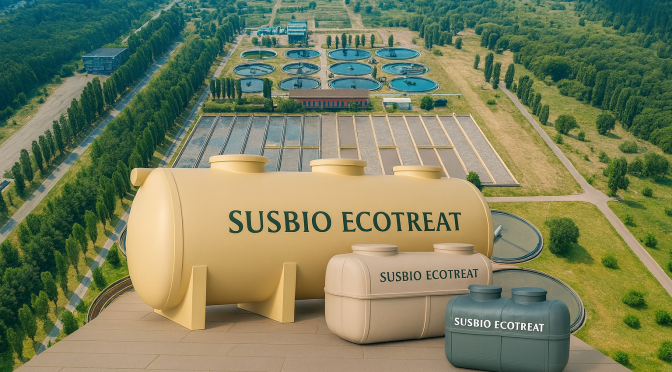
“Long pipelines to outlying areas may encounter construction delays over rugged terrain, sensitive endangered species habitat, archeological finds, and a host of unforeseen obstacles that can push construction over budget.” — Fluence Corporation, Global water and wastewater treatment technology company
Choosing the right wastewater treatment system needs a thorough look at several key factors. Your choice will shape both economic and environmental outcomes well into the future.
Factors to think over: Population density, terrain, and funding
These elements guide system selection:
- Legal requirements are the most significant factor, followed by wastewater volume and discharge fees
- Topography affects how water flows through the system naturally – flat areas often need extra pumping
- Population density shapes the decision—smaller companies usually pick complete off-site treatment, while larger ones lean toward partial or complete on-site setups
- Funding accessibility determines when you can start—many communities combine different financing options like low-interest loans, leasing plans, or strategic collaborations
Types of decentralized wastewater treatment systems
Decentralized approaches fall into three main categories:
Conventional septic systems perform well with daily flows above 2,000 GPD but have limits based on soil percolation rates.
Advanced wastewater package units produce better quality effluent through customized solutions that match specific treatment needs. SUSBIO ECOTREAT leads India’s advanced packaged STP solutions with its future-ready features.
Attached growth systems use submerged media where biology develops, which creates strong treatment capacity even when flow rates change dramatically—a common issue in decentralized settings.
Hybrid models: Combining centralized and decentralized approaches
Hybrid setups have become increasingly popular as a middle-ground solution. A practical arrangement processes black water (toilet waste) at centralized facilities and treats gray water (from sinks/showers) on site. Block-scale systems that serve about 2,000 people in medium-rise apartments can recover valuable resources locally. These hybrid approaches help cut down idle capacity costs when population growth falls short of expectations.
Conclusion
The economic advantages of decentralized wastewater treatment systems are clear in geographical and demographic contexts of all types. These systems help communities save money through reduced infrastructure needs, lower energy use, and minimal land requirements. Communities with limited resources or challenging terrains find these systems particularly valuable.
Case studies from Indonesia, Jordan, and India show the real-life benefits and economic value of decentralized approaches without doubt. The overall financial equation favors decentralized systems in rural areas or fast-developing regions, even with higher per-unit treatment costs.
SUSBIO ECOTREAT has emerged as India’s most advanced packaged STP solution today. This future-ready system’s modular design, plug-and-play deployment capabilities, and remarkable energy efficiency deliver exceptional value. The technology changes wastewater management from an expensive burden into a chance to generate resources sustainably.
The choice between centralized and decentralized systems ended up depending on specific factors like population density, terrain, available funding, and legal requirements. Notwithstanding that, communities should think over decentralized options, especially when they have challenging topography or need fast implementation.
Water shortage concerns continue to grow worldwide. Systems like SUSBIO ECOTREAT that line up with environmentally responsible development goals will become crucial. Knowing how to support circular economy principles through water reuse offers both cost savings and a forward-thinking approach to resource management. Communities and developers should review their specific needs while acknowledging the strong economic and environmental case for decentralized wastewater treatment solutions.
Key Takeaways
Understanding the true costs of wastewater treatment systems reveals compelling economic advantages for decentralized approaches, particularly in challenging geographical contexts and resource-constrained communities.
- Decentralized systems slash infrastructure costs by up to 75% by eliminating extensive collection networks that dominate centralized system expenses.
- Real-world case studies prove economic viability – Surabaya achieved 97% coverage with better cost-benefit ratios, while Jordan reduced water costs by nearly 50%.
- SUSBIO ECOTREAT offers plug-and-play deployment with 22% lower energy consumption and modular design that reduces installation time from years to weeks.
- Context determines optimal choice – consider population density, terrain challenges, and funding availability when selecting between centralized and decentralized approaches.
- Hybrid models provide flexible solutions by combining centralized black water treatment with localized gray water processing for maximum efficiency.
The economic equation clearly favors decentralized systems when accounting for reduced transportation costs, easier regulatory compliance, and resource recovery opportunities. These systems transform wastewater from an expensive burden into a sustainable, value-generating asset that supports circular economy goals while delivering superior long-term financial outcomes.
Frequently Asked Questions
Q1. What are the main differences between centralized and decentralized wastewater treatment systems?
Centralized systems involve large-scale plants serving extensive areas, while decentralized systems use smaller plants closer to the water source or treatment need, serving localized areas. Decentralized systems often require less infrastructure and can be more cost-effective in challenging terrains or rapidly developing regions.
Q2. How do the costs of centralized and decentralized wastewater treatment systems compare?
Decentralized systems can significantly reduce infrastructure costs, potentially saving up to 75% by eliminating extensive collection networks. While per-unit treatment costs may be higher for decentralized systems, they often prove more economical when considering factors like reduced transportation costs and easier regulatory compliance.
Q3. What factors should be considered when choosing between centralized and decentralized wastewater treatment?
Key factors include legal requirements, wastewater volume, population density, topography, funding accessibility, and long-term operational costs. For instance, decentralized systems may be preferable in areas with challenging terrain or where rapid implementation is needed.
Q4. Are there any real-world examples of successful decentralized wastewater treatment implementation?
Yes, several case studies demonstrate success. For example, Surabaya, Indonesia achieved 97.53% wastewater service coverage using decentralized systems, while Jordan implemented greywater treatment systems in rural areas, reducing freshwater consumption for irrigation by 40-70% and lowering water costs.
Q5. What are some advantages of modern decentralized wastewater treatment solutions like SUSBIO ECOTREAT?
Advanced solutions like SUSBIO ECOTREAT offer modular design for quick deployment, energy efficiency (up to 22% lower consumption), and automated operation with remote monitoring capabilities. They also support water reuse, aligning with sustainable development goals and circular economy principles.