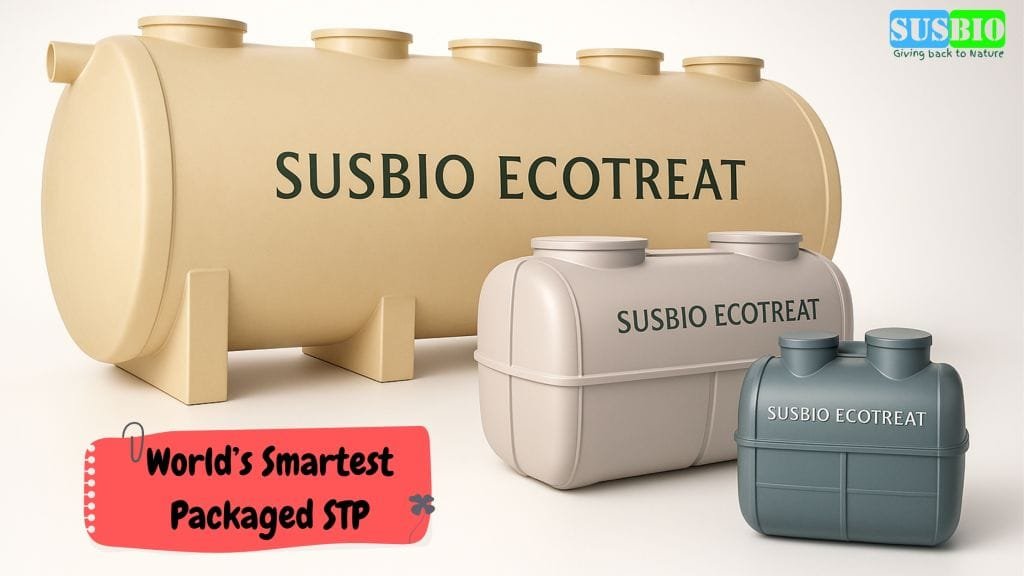


India generates an estimated 72,000 million litres of sewage per day, yet the country’s operational treatment capacity handles only a fraction of this volume. For residential real estate developers, gated communities, housing societies, and township projects, this statistic is not a distant policy concern — it is an operational, regulatory, and reputational challenge that arrives the moment occupancy begins.
Across metropolitan cities such as Mumbai, Bengaluru, Hyderabad, Pune, Chennai, and Delhi, local development authorities now mandate on-site sewage treatment plants as a pre-condition for occupation certificates. The National Green Tribunal (NGT), through its April 2019 amended standards, has tightened effluent discharge norms further. Non-compliance carries penalties, stoppage orders, and potential demolition notices.
Yet not all sewage treatment solutions are equal. Conventional RCC (Reinforced Cement Concrete) civil STPs demand significant land area, long civil construction timelines, and considerable operation and maintenance costs. For residential projects where space is premium, timelines are critical, and recurring costs need to remain low, a better solution exists: the packaged sewage treatment plant — a pre-engineered, factory-built, modular system that can be installed and commissioned in days, not months.
This guide explores everything you need to know about modern packaged STPs for residential projects in India: how they work, how they compare to traditional systems, what regulations govern them, common design mistakes to avoid, and why SUSBIO ECOTREAT — developed by SUSBIO, one of India’s leading sewage treatment plant manufacturers — is the preferred choice for developers, architects, and consultants nationwide.
What Is a Packaged Sewage Treatment Plant?
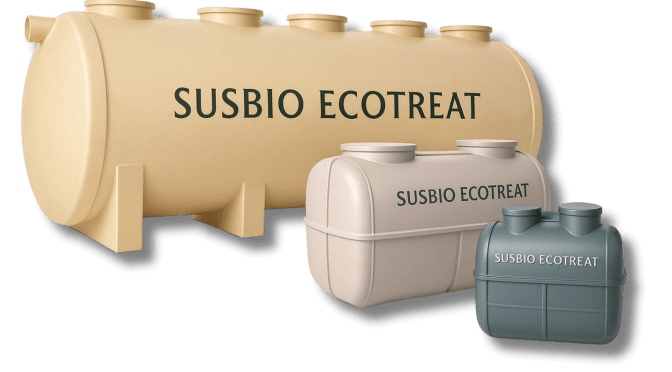
A Packaged Sewage Treatment Plant (PSTP) is a pre-engineered, factory-assembled, self-contained system designed to treat domestic sewage and wastewater generated at the source — without the need for a large civil construction project. It combines primary, secondary (biological), and tertiary treatment processes within a compact, modular unit that can be transported, installed, and commissioned rapidly.
Also referred to as a prefabricated STP or modular STP, these systems are typically manufactured from Fibre Reinforced Plastic (FRP) or mild steel, are factory-tested before delivery, and follow a plug-and-play installation model. They are designed to treat sewage to standards that comply with CPCB and State Pollution Control Board (SPCB) effluent norms, making treated water suitable for reuse in toilet flushing, landscaping, and groundwater recharge.
Unlike large municipal sewage treatment plants that serve entire cities, packaged STPs are decentralised systems — engineered to serve a specific building, community, campus, or facility. Capacities typically range from 1 KLD (kilolitre per day) to 500 KLD and beyond, covering everything from small bungalows to large gated townships.
Why Residential Projects in India Need a Packaged STP: The Regulatory and Environmental Reality
Regulatory Mandate
The Central Pollution Control Board (CPCB) guidelines, the Environment Protection Act 1986, and the Water (Prevention and Control of Pollution) Act 1974 collectively mandate that all residential complexes of a certain size must install and operate a sewage treatment plant. Additionally, the National Green Tribunal has directed all States to ensure STPs are operational in all new residential projects before occupancy certificates are granted.
State-level authorities enforce these requirements through building plan approvals, environmental clearances, and periodic inspections. In states like Maharashtra, Karnataka, Telangana, and Tamil Nadu, the thresholds for mandatory STP installation are increasingly being lowered — meaning more projects than ever now require on-site treatment.
Environmental Context
Untreated or poorly treated sewage from residential buildings contributes directly to river pollution, groundwater contamination, and the spread of waterborne diseases. India has over 400 polluted river stretches, many of which receive untreated residential sewage. Installing an effective packaged STP is not merely a compliance act — it is a direct contribution to environmental conservation.
Water Scarcity and Reuse Potential
Treated sewage water from a properly functioning STP is clean enough for multiple non-potable reuse applications: toilet flushing, irrigation of landscaped areas, cooling tower makeup, and controlled groundwater recharge. In water-scarce cities, this represents a significant operational asset. A 100 KLD STP can produce over 90,000 litres of reusable water per day — reducing freshwater consumption and lowering utility costs for residents.
How a Modern Packaged Sewage Treatment Plant Works: The Technical Process
Understanding the treatment process helps developers and consultants evaluate system performance, ask the right questions during procurement, and interpret compliance reports. A high-quality packaged STP — such as SUSBIO ECOTREAT — typically follows a multi-stage biological treatment sequence:
Stage 1: Screening and Inlet Equalization
Raw sewage entering the plant first passes through a bar screen to remove large solid objects — plastics, rags, fibres, and other debris. This protects downstream equipment from damage. An equalization tank then buffers flow variations (peak morning and evening usage vs. nighttime low-flow) to ensure consistent hydraulic loading into the biological treatment zone.
Stage 2: Primary Settlement / Anaerobic Zone
Settleable solids sink to the bottom and form raw sludge. The liquid fraction moves into the anaerobic zone, where facultative and anaerobic bacteria begin breaking down complex organic compounds under oxygen-deprived conditions. This significantly reduces the organic load, lowering both Biochemical Oxygen Demand (BOD) and Chemical Oxygen Demand (COD) before aeration begins.
Stage 3: Anoxic Zone (Denitrification)
In the anoxic zone — where dissolved oxygen is maintained between 0.2 and 0.5 mg/L — return activated sludge from the secondary clarifier is introduced. Anoxic microbes convert nitrates to inert nitrogen gas (N2), a process called denitrification. This is critical for meeting ammonia nitrogen discharge norms.
Stage 4: Aerobic Aeration (Secondary Biological Treatment)
Wastewater flows into the aeration zone, where compressed air (or fine-bubble diffusers) introduces oxygen to support aerobic microbial activity. Aerobic bacteria — in suspended form (Activated Sludge Process) or attached to media (MBBR — Moving Bed Biofilm Reactor) — metabolise the remaining dissolved organic matter, dramatically reducing BOD, COD, and Total Suspended Solids (TSS). This is the primary treatment mechanism in modern packaged STPs.
Stage 5: Secondary Clarification / Sedimentation
Treated mixed liquor flows into the sedimentation zone, where biological solids (activated sludge) settle to the bottom. Clear, treated effluent overflows at the top. Settled sludge is recirculated back to the anoxic zone as return activated sludge, maintaining the biological population in the system.
Stage 6: Tertiary Treatment and Disinfection
The clarified effluent passes through a Pressure Sand Filter (PSF) and an Activated Carbon Filter (ACF) to remove residual suspended solids, colour, and odour. Finally, sodium hypochlorite dosing or UV disinfection eliminates pathogenic bacteria and faecal coliforms, producing treated water that meets CPCB discharge standards and is safe for reuse.
Stage 7: Sludge Management
Excess biological sludge accumulated during the process is periodically removed (typically every 6 months for a well-designed packaged STP), dewatered in a sludge drying bed, and disposed of or used as soil amendment. Good sludge management is essential for maintaining plant efficiency and avoiding odour issues.
Key Performance Parameters (CPCB Standards for STP Discharge — Inland Surface Water)
BOD: ≤ 20 mg/L | COD: ≤ 250 mg/L | TSS: ≤ 30 mg/L | pH: 6.5–8.5 | Ammonia Nitrogen: ≤ 5 mg/L | Faecal Coliform: ≤ 1000 MPN/100 mL — (Source: CPCB Environment Protection Amendment Rules, 2017 / NGT Directions 2019)
Types of Packaged STP Technologies: A Technical Comparison
Multiple biological treatment technologies are deployed in packaged STPs. Selecting the right one depends on influent quality, space availability, reuse requirements, and budget. The table below summarises the most widely used technologies in residential packaged STPs in India:
| Technology | Working Principle | Best Suited For |
|---|---|---|
| Activated Sludge Process (ASP) | Suspended aerobic biomass treats organic matter; sludge recycled | Large residential townships >200 KLD |
| Moving Bed Biofilm Reactor (MBBR) | Biomass grows on plastic carrier media; robust and compact | Mid-size residential complexes 20–200 KLD |
| Membrane Bioreactor (MBR) | Biological treatment + membrane filtration; very high effluent quality | Projects requiring highest reuse quality |
| Sequencing Batch Reactor (SBR) | Fill-and-draw cycles in a single tank; flexible operation | Variable flow residential projects |
| Dual Anaerobic-Aerobic (SUSBIO ECOTREAT) | Combined anaerobic + aerobic in single FRP unit; energy-efficient | All residential scales; apartments, villas, townships |
| Johkasou (Japanese) | Biological contact aeration in compact tanks | Very small residential units <10 KLD |
Packaged STP vs. Civil (RCC) STP: Which Is Right for Residential Projects?
One of the most common decisions developers face is whether to build a conventional civil STP or invest in a packaged prefabricated STP. The comparison below is based on practical, real-world project data:
| Parameter | Packaged STP (e.g., SUSBIO ECOTREAT) vs. Civil RCC STP |
|---|---|
| Installation Time | Packaged STP: 3–7 days vs. Civil STP: 3–6 months |
| Space Requirement | Packaged STP: 60–80% smaller footprint vs. Civil STP: Large dedicated area |
| Civil Construction | Packaged STP: Minimal (only pit excavation) vs. Civil STP: Extensive RCC work |
| Capital Cost | Packaged STP: Lower for capacities up to ~200 KLD vs. Civil STP: Higher at all scales |
| Treatment Consistency | Packaged STP: Factory-tested, proven performance vs. Civil STP: Depends on site execution quality |
| Scalability / Expansion | Packaged STP: Add modular units vs. Civil STP: Difficult and costly to expand |
| Energy Efficiency | Packaged STP: Optimised aeration systems, lower power vs. Civil STP: Variable, often higher |
| Maintenance | Packaged STP: Low; minimal operator involvement vs. Civil STP: Higher; dedicated operator often needed |
| Aesthetics / Odour | Packaged STP: Enclosed, noiseless, low odour vs. Civil STP: Open structures, odour potential |
| LEED / GRIHA Eligibility | Packaged STP: Yes, contributes to green certification vs. Civil STP: Yes, but less efficient |
Verdict: For most residential projects in the range of 5 KLD to 300 KLD, a high-quality packaged sewage treatment plant delivers superior value across all critical parameters — particularly in urban settings where space, speed, and aesthetics matter. SUSBIO ECOTREAT is engineered precisely for this segment.
Key Design Considerations for Residential Packaged STPs
1. Accurate Flow and Load Estimation
The daily sewage generation from a residential project is typically estimated at 80–135 litres per person per day (lpcd), depending on the project type, amenities, and local water supply norms. A common error is under-sizing the STP based on nominal occupancy rather than peak occupancy, leading to hydraulic overloading and performance failures.
2. Influent Characteristics
Residential sewage typically has BOD in the range of 200–350 mg/L, COD of 400–600 mg/L, and TSS of 200–400 mg/L. Treating this through a well-designed dual-stage system — as employed in SUSBIO ECOTREAT — achieves treated water BOD below 10 mg/L and TSS below 20 mg/L consistently.
3. Space and Location Planning
Even packaged STPs require thought about location: proximity to the sewage network for gravity flow, adequate ventilation, access for maintenance and desludging, and distance from residential buildings to address any potential odour concerns (though modern enclosed FRP units eliminate this issue). Underground installation is an option in many packaged STP designs.
4. Dual Plumbing System
CPCB mandates that treated water be used for toilet flushing, requiring a dual plumbing system — one carrying fresh water and the other carrying treated effluent. This is a critical MEP design consideration that must be incorporated at the project planning stage, not as an afterthought.
5. Online Monitoring and Data Logging
CPCB guidelines require inline sensors to continuously monitor BOD, COD, TSS, flow rate, and pH, with data transmitted to Pollution Control Board servers using RS-485/Modbus protocols. Ensure the STP you specify includes this capability. SUSBIO ECOTREAT supports real-time online monitoring as part of its smart, fully automatic operating model.
6. Sludge Disposal Planning
A residential STP producing treated effluent also produces biological sludge. Planning for a sludge drying bed, sludge dewatering press, or third-party sludge disposal arrangement is essential. Ignoring sludge management is one of the most common causes of STP failure in residential projects.
Regulations and Compliance: India's STP Legal Framework

Understanding the regulatory landscape is essential for developers, architects, and project consultants. Non-compliance with STP regulations can result in project delays, fines, and legal action.
Central Legislation
- Water (Prevention and Control of Pollution) Act, 1974: Establishes CPCB and empowers it to set effluent standards and require consent for discharge.
- Environment Protection Act, 1986: Gives the Government of India authority to set environmental standards across sectors; CPCB norms flow from this.
- NGT Directions (April 2019): Mandated revised STP effluent standards — BOD ≤ 20 mg/L, COD ≤ 250 mg/L, TSS ≤ 30 mg/L, Ammonia Nitrogen ≤ 5 mg/L — for all STPs across India.
CPCB Key Requirements for STP Installation
- Mandatory installation of inline real-time sensors (BOD, COD, TSS, flow, pH) with automated data transmission.
- Dual plumbing system mandatory; treated water must be used for non-potable purposes including toilet flushing.
- “Not for Drinking” notices required at all treated water taps.
- “Danger” signboards at STP locations for safety compliance.
- Modular STP design preferred by CPCB to match phased occupancy loading.
- Consent to Establish (CTE) and Consent to Operate (CTO) from State Pollution Control Board (SPCB) required.
- Annual submission of Form V under Environment Protection Rules, 1986.
State-Specific Considerations
States such as Maharashtra (MPCB), Karnataka (KSPCB), Telangana (TSPCB), Tamil Nadu (TNPCB), and Delhi (DPCC) have issued additional guidelines specific to residential projects, often with lower threshold requirements than national norms. Architects and developers must verify state-level requirements during project design.
RERA and Green Building Certifications
RERA regulations in many states require STP compliance documentation as part of project registration. Green building certification systems — LEED India, GRIHA, and IGBC — award credits for on-site wastewater treatment and water reuse, making a well-designed packaged STP a direct financial contributor to certification points.
Common Problems and Mistakes in Residential STP Projects
Despite growing awareness, residential STP projects frequently suffer from the same avoidable errors. Understanding these helps in making better procurement and design decisions:
- Under-Sizing Based on Phase 1 Occupancy: Many developers size the STP for initial launch occupancy, not full build-out. This results in overloading within 2–3 years and poor effluent quality.
- Choosing Technology on Price Alone: Selecting the cheapest STP without evaluating total cost of ownership (energy, maintenance, replacement parts) is a common and costly mistake. A slightly higher upfront investment in a system like SUSBIO ECOTREAT translates to far lower lifecycle costs.
- Neglecting Dual Plumbing in Building Design: Retrofitting a dual plumbing system after construction is prohibitively expensive. It must be designed in from the start.
- Poor Sludge Management Planning: Failing to plan for periodic desludging leads to sludge accumulation, system failure, and foul odours.
- No Online Monitoring System: Operating without the CPCB-mandated inline sensors means the project is non-compliant from day one, exposing developers to regulatory risk.
- Hiring Unqualified O&M Staff: A technically advanced STP operated by undertrained staff quickly falls into disrepair. Choose a manufacturer that offers comprehensive after-sales O&M support.
- Ignoring Seasonal Variations: In projects with seasonal occupancy patterns (resorts, holiday homes, hostels), flow variation management and STP operational protocols need specific attention.
Benefits of Installing a Packaged STP in Residential Projects
Technical Benefits
- Consistent treatment performance: BOD, COD, TSS reliably within CPCB limits.
- Factory-tested, pre-validated operation — no surprises during commissioning.
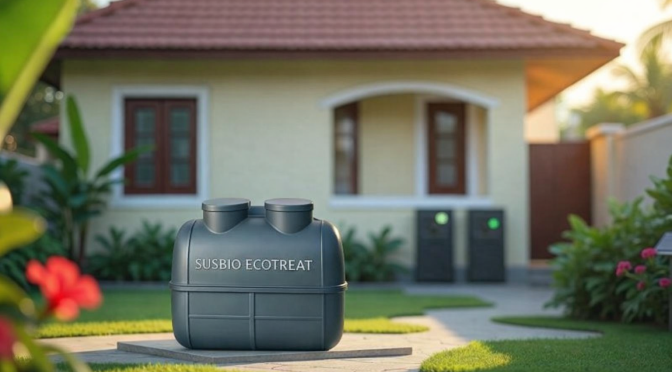
- Compact, underground-installable design preserves valuable land area.
- Modular scalability allows capacity addition as occupancy grows.
- Enclosed FRP/steel construction eliminates odour and noise complaints.
Economic Benefits
- Significantly lower civil and construction costs compared to RCC STPs.
- Faster commissioning (days vs. months) reduces project timeline risk.
- Treated water reuse reduces freshwater purchase/municipal water costs.
- Low energy consumption (systems like SUSBIO ECOTREAT use up to 90% less electricity than conventional systems).
- Lower annual maintenance costs with minimal operator supervision.
Environmental and Compliance Benefits
- Prevents untreated sewage from entering water bodies, drainage systems, or groundwater.
- Supports LEED, GRIHA, and IGBC green building certification credits.
- Contributes to corporate social responsibility (CSR) and sustainability reporting.
- Protects groundwater quality in the vicinity of the project.
- Enables CPCB/SPCB compliance, protecting developers from legal and financial risk.
Why SUSBIO: India's Leading Sewage Treatment Plant Manufacturer
SUSBIO is one of India’s most trusted and technically advanced sewage treatment and wastewater treatment companies. With a deep focus on innovation, engineering quality, and sustainable water management, SUSBIO has developed a comprehensive portfolio of packaged STPs, prefabricated STPs, and decentralised wastewater solutions designed specifically for the Indian market — meeting all CPCB, SPCB, and NGT norms with headroom to spare.
At the core of SUSBIO’s residential offering is the SUSBIO ECOTREAT — India’s most advanced prefabricated packaged sewage treatment plant. Here is a detailed look at what makes SUSBIO ECOTREAT the definitive choice for modern residential projects:
| SUSBIO ECOTREAT Feature | Detail & Advantage |
|---|---|
| Innovative Dual Treatment Technology | Integrates both anaerobic and aerobic treatment within a single compact unit — a combination of Activated Sludge Process and biological contact methods. This comprehensive approach ensures thorough pollutant removal that single-stage systems cannot match. BOD removal efficiency: 90–95%. |
| FRP (Fibre Reinforced Plastic) Construction | High-quality FRP tanks are corrosion-resistant, lightweight, durable, and maintenance-free. Unlike RCC or mild steel, FRP does not corrode, crack, or degrade over decades. SUSBIO ECOTREAT comes with a 10-year structural warranty. |
| Plug-and-Play Installation | Arrives at site pre-assembled and factory-tested. Installation requires only pit excavation and pipe connections. Commissioned in 3–7 days — not months. Eliminates extensive on-site civil engineering work and associated cost overruns. |
| Fully Automatic Operation | Advanced automation enables unattended operation. No dedicated on-site operator required for day-to-day functioning. Reduces recurring labour costs significantly for residential housing societies. |
| 90% Lower Energy Consumption | Energy-optimised aeration systems and process design result in operating power consumption up to 90% lower than conventional ASP-based civil STPs. This translates directly to lower electricity bills for residential welfare associations. |
| Noiseless Operation | Fully enclosed design with vibration-dampened equipment ensures zero noise impact on residents. Ideal for underground or basement installation adjacent to residential towers. |
| Compact Footprint | Modular FRP tanks occupy a fraction of the space of civil STPs. Can be installed underground, preserving usable land for landscaping, parking, or amenities. |
| Online Monitoring Ready | Supports integration with inline sensors for real-time BOD, COD, TSS, flow, and pH monitoring. Fully compatible with CPCB’s mandatory data transmission protocols (RS-485/Modbus). |
| Scalable & Modular | Available from 1 KLD to 500+ KLD. Additional modules can be added as occupancy phases increase, without disrupting the existing system. |
| Comprehensive After-Sales Support | SUSBIO provides in-house AMC (Annual Maintenance Contract) services with trained technicians, ensuring long-term operational reliability and regulatory compliance support. |
SUSBIO positions itself as not merely a product supplier but a long-term wastewater management partner for residential developers. From initial site assessment and technology selection through to installation, commissioning, regulatory approvals, operator training, and ongoing AMC, SUSBIO provides end-to-end support that ensures your project remains compliant and your residents remain satisfied.
Application Areas: Where SUSBIO ECOTREAT Packaged STPs Excel
Residential Apartments and High-Rise Towers
Urban apartment complexes from 20 flats to 1,000+ units require reliable, low-maintenance STPs. SUSBIO ECOTREAT’s compact FRP design, underground installation compatibility, and noiseless automated operation make it the ideal solution — producing treated water for toilet flushing that directly reduces freshwater demand.
Gated Communities and Villas
Large gated communities with a mix of villas, townhouses, and common amenities require a system that handles variable loads gracefully. SUSBIO ECOTREAT’s dual-process design maintains consistent treatment quality even at 30–40% loading — a common condition during phased handover.
Integrated Townships and Mixed-Use Developments
Townships combining residential, commercial, and retail components generate complex, variable sewage loads. SUSBIO ECOTREAT’s modular scalability allows capacity to be added as phases are completed, protecting initial investment while meeting future demand.
Hotels, Resorts, and Hospitality Projects
Hotels and resorts often face stringent environmental clearance conditions and are highly visible in their local communities. SUSBIO ECOTREAT’s noiseless, odourless, fully enclosed operation supports hospitality operations without disturbing guests. Treated water can be reused for garden irrigation and landscaping.
Hospitals and Healthcare Facilities
Hospital wastewater contains pharmaceuticals, disinfectants, and pathogens, requiring more robust treatment. SUSBIO works with healthcare clients to design systems with enhanced disinfection and tertiary treatment to meet biomedical wastewater norms.
Educational Institutions and Campuses
Schools, colleges, and universities with residential hostels generate significant sewage loads. Compact packaged STPs allow these institutions to manage their wastewater sustainably while contributing to green campus certifications.
Industrial Workers’ Colonies and Labour Quarters
Construction sites, manufacturing zones, and industrial estates with on-site worker housing require reliable, easy-to-operate STP solutions. SUSBIO ECOTREAT’s fully automatic operation and minimal maintenance requirement make it particularly suitable for locations with limited technical staff.
Conclusion: The Future of Residential Wastewater Treatment Is Packaged, Prefabricated, and Proven
The Indian residential real estate sector stands at an inflection point in its relationship with wastewater management. Regulatory pressure from CPCB, NGT, and SPCBs is intensifying. Green building certification standards are raising the bar. And residents themselves are increasingly demanding sustainable, well-managed communities that reflect contemporary values.
In this context, the packaged sewage treatment plant is no longer a niche product reserved for remote sites or unusual projects. It is the mainstream, technically superior, economically sound choice for any residential development in India that takes wastewater management seriously. Its advantages over conventional civil STPs — faster installation, lower footprint, higher treatment consistency, lower energy consumption, easier maintenance — are no longer marginal. They are decisive.
At the heart of this evolution stands SUSBIO ECOTREAT — a product that encapsulates everything the modern residential packaged STP should be: built from high-quality FRP for decade-long durability, powered by an innovative dual anaerobic-aerobic treatment process for superior BOD, COD, and TSS removal, fully automatic for minimum operational burden, energy-efficient for cost-conscious residents and developers, and backed by the comprehensive support of SUSBIO — one of India’s most respected sewage treatment and wastewater treatment companies
Whether you are a real estate developer seeking an efficient prefabricated STP for your next township project, an architect specifying an STP for a boutique hotel, a consultant evaluating wastewater treatment options for a hospital, or a housing society seeking to upgrade a failing civil STP — SUSBIO and SUSBIO ECOTREAT offer the technology, expertise, and commitment to deliver a solution that performs, complies, and endures.
Investing in the right sewage treatment plant manufacturer at the outset of a project is not an expense — it is an asset. It protects your regulatory standing, reduces long-term operational costs, generates reusable water, and signals to your buyers and residents that sustainability is a genuine value, not a marketing tagline.
Partner with SUSBIO. Install SUSBIO ECOTREAT. Treat water right, the first time, every time.
Frequently Asked Questions
1. What is a packaged sewage treatment plant and how does it work?
A packaged sewage treatment plant is a pre-engineered, factory-assembled system designed to treat domestic sewage on-site. It uses a combination of physical and biological processes, including screening, anaerobic and aerobic treatment, sedimentation, and disinfection.
The system produces treated effluent that meets CPCB discharge standards, making it suitable for reuse or safe disposal, while eliminating the need for extensive civil construction.
2. Is a sewage treatment plant mandatory for residential apartments in India?
Yes, a sewage treatment plant is mandatory for many residential developments in India.
Under CPCB guidelines, the Environment Protection Act, 1986, and directives from the National Green Tribunal (NGT), residential complexes above specified thresholds must install and operate an STP.
This requirement is enforced by State Pollution Control Boards during project approvals and while issuing Occupancy Certificates. The exact thresholds may vary from state to state.
3. What are the CPCB discharge standards for treated sewage water?
As per CPCB and NGT (2019) standards for discharge into inland surface water, treated sewage must meet the following parameters:
- BOD: ≤ 20 mg/L
- COD: ≤ 250 mg/L
- TSS: ≤ 30 mg/L
- pH: 6.5–8.5
- Ammonia Nitrogen: ≤ 5 mg/L
These are the minimum compliance standards. High-performance systems like SUSBIO ECOTREAT can consistently achieve even better results, ensuring higher treatment efficiency.
4. What is the difference between a packaged STP and a civil (RCC) STP?
A packaged STP is factory-built, pre-tested, and quickly installed with minimal civil work, whereas a civil (RCC) STP is constructed on-site using reinforced concrete and requires longer timelines.
Packaged STPs offer several advantages, including faster installation, compact footprint, lower capital cost (for projects up to approximately 200 KLD), consistent performance, and reduced maintenance. As a result, they are widely preferred for modern residential developments.
5. How much space does a packaged STP require for a residential project?
Packaged STPs are significantly more space-efficient compared to conventional systems.
For example, a 50 KLD SUSBIO ECOTREAT unit typically requires around 20–30 square metres, while a conventional civil STP of the same capacity may require 150–200 square metres.
Additionally, packaged systems can be installed underground, minimizing surface space usage.
6. How often does a packaged STP need to be maintained?
A well-designed packaged STP like SUSBIO ECOTREAT requires minimal routine maintenance.
Typical maintenance includes:
- Monthly removal of screenings
- Monitoring of blower and pump performance
- Desludging approximately every 6 months
These systems are largely automated, eliminating the need for a full-time operator. Annual Maintenance Contracts (AMC) further ensure long-term performance and compliance.
7. What is the capacity range of SUSBIO ECOTREAT packaged STPs?
SUSBIO ECOTREAT is available in a wide capacity range from 1 KLD to 500+ KLD, making it suitable for:
- Individual villas and bungalows
- Residential apartment complexes
- Gated communities
- Large townships
Its modular design allows for easy expansion as project requirements grow.
8. Can treated water from a packaged STP be reused in residential buildings?
Yes, treated water from a properly functioning STP can be safely reused, provided it meets CPCB standards.
Common reuse applications include:
- Toilet flushing through dual plumbing systems
- Garden irrigation and landscaping
- Other non-potable uses
Reuse of treated water significantly reduces freshwater consumption and lowers overall water costs for residents.
9. How do I choose the right packaged STP manufacturer in India?
When selecting a packaged STP manufacturer, consider the following key factors:
- Technology and proven treatment performance
- Quality of construction materials (FRP is preferred for durability)
- Compliance with CPCB and SPCB regulations
- Installation timelines
- After-sales service and AMC support
- Experience and references from similar projects
SUSBIO, with its advanced SUSBIO ECOTREAT, meets all these criteria and is recognised as one of the leading STP manufacturers in India.