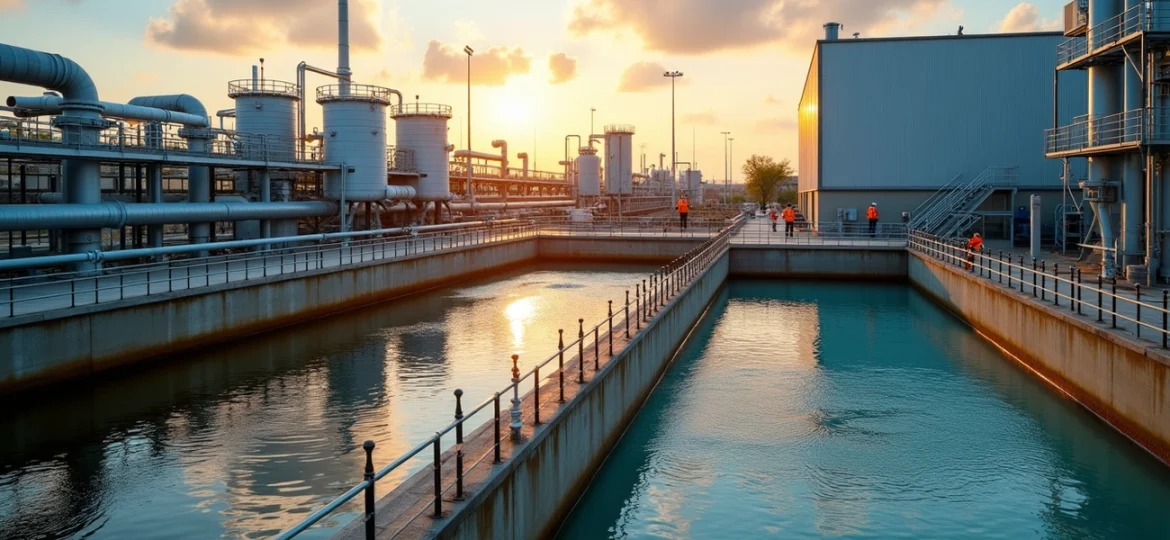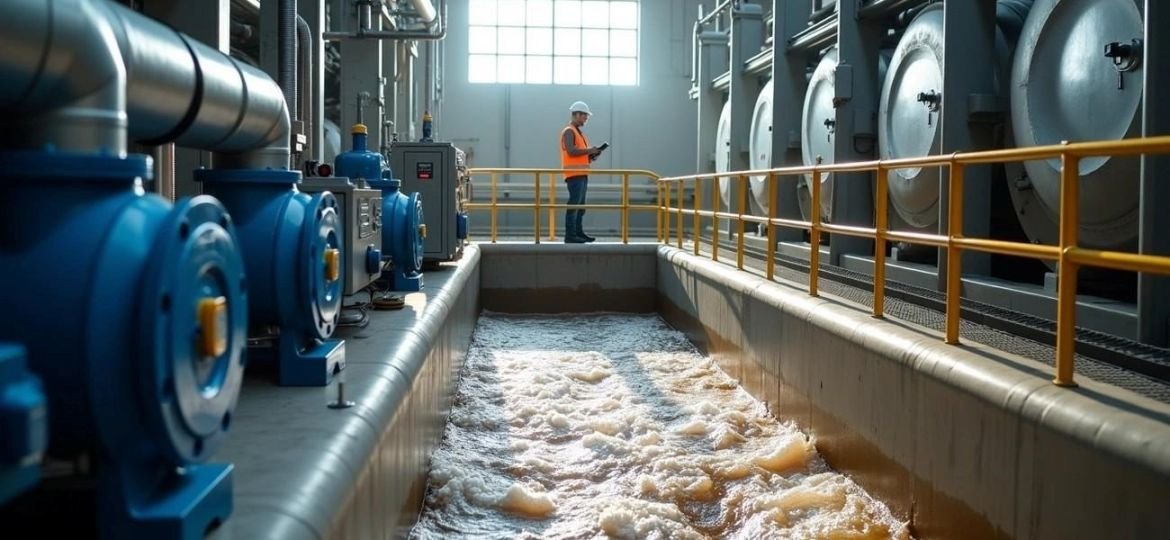


An effluent treatment plant is a designed facility that treats wastewater generated by industrial activities before discharge into the environment. The main goal of an ETP is to remove contaminants from industrial wastewater to meet environmental legislation standards for water quality. Wastewater can be considered as a combination of waste produced by water from residential, administrative, commercial and industrial facilities and drained into groundwater or surface water. Untreated wastewater contains pathogenic microorganisms and organic matter that produces stinking gasses during degradation.
The treatment process wants to return this resource to the water cycle, either by discharging it into watercourses or reusing it in activities such as agriculture. A variety of ways can remove pollutants from wastewater, and these ways are divided into three main categories: physical, chemical and biological processes.
Primary Treatment: Physical Separation Process
Primary treatment physically separates solids and greases from the wastewater. The screened wastewater flows into a primary settling tank where it is held for several hours. Solid particles settle to the tank’s bottom and oils and greases float to the top. This stage can remove about 50-60% of suspended solids and 30-40% of biological oxygen demand (BOD) from the wastewater.
Physical wastewater treatment is the first step in treating industrial and sanitary effluents. It increases the efficiency of other steps and prevents damage to the equipment used in chemical and biological treatment. The separation process of particulate matter and solids in industrial and sanitary effluents is called physical purification.
Secondary Treatment: Biological Processing Methods
Secondary treatment removes organic matter from the water and nutrients such as nitrogen and phosphorus. This secondary treatment, which is mainly biological, uses bacteria and microorganisms to degrade and eliminate the organic matter and the different nutrients contained in the water. Microorganisms consume organic material as food and convert it into carbon dioxide, water and new cell mass. Secondary treatment can remove up to 85-95% of the BOD and suspended solids.
Tertiary Treatment: Advanced Purification Stage
Tertiary or chemical treatment wants to increase the final quality of the water so that it can be returned to the environment and, in some cases, used for human activity. The techniques used include filtration with sand beds or other materials and disinfection, either using chlorine or UV light, to reduce the amount of microscopic living organisms. This stage is especially important in industries such as pharmaceuticals, textiles and food processing, where high standards of treated water quality are essential.
Types of ETP Plants Based on Treatment Methods
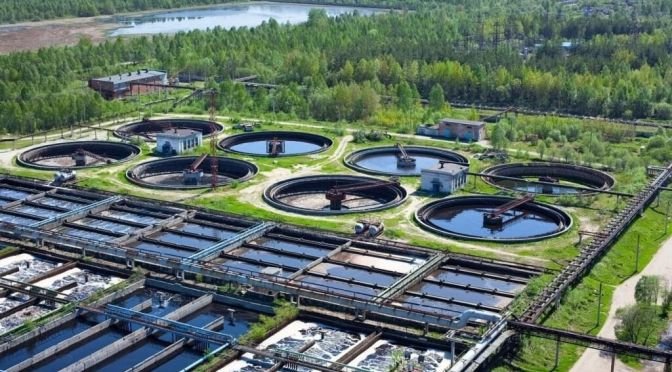
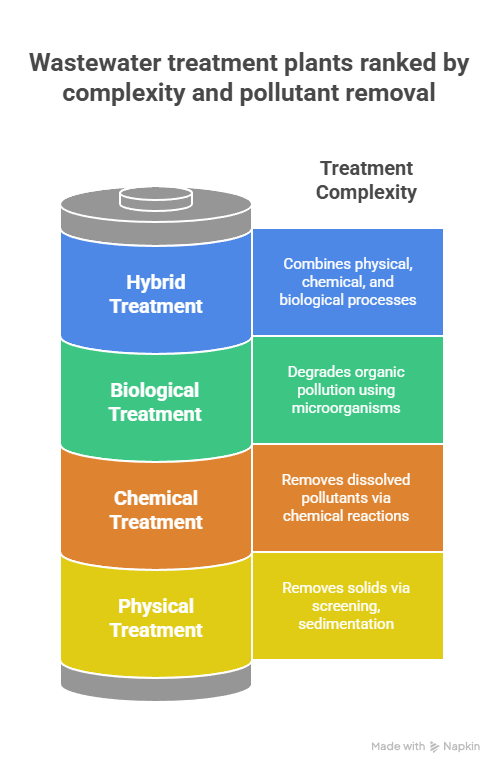
Wastewater treatment technologies can be broadly classified into three main subdivisions based on the treatment processes they employ: physical, chemical, and biological methods. The categorization of effluent treatment plants reflects the nature of wastewater being treated and the specific contaminants that need removal.
Physical Treatment Plants
Physical treatment plants remove suspended solids and sediments through physical processes like screening, sedimentation, and flotation. The equipment and processes used vary according to the type of effluents and the quality desired for wastewater. Mechanical garbage collectors, handheld sewage collectors, and mechanical sewage collectors are installed based on the diameter of seeds that need removal, the width and depth of the canal, and the distance between rods. Special pools allow industrial and sanitary wastewaters to undergo settling where suspended materials settle based on their weight. Floating equipment such as classifiers work well to remove very fine sand.
Chemical Treatment Plants
Chemical treatment plants use coagulation, flocculation, and neutralization to remove pollutants. Chemical reactions remove dissolved metals and inorganic compounds in this type of effluent treatment plant. Coagulants like alum or PAC and flocculants such as anionic or cationic polymers are added to improve separation. pH adjusters including lime, caustic, and HCl maintain optimal conditions. Chemical precipitation works well for removing heavy metals by adjusting pH to reduce solubility.
Biological Treatment Plants
Biological treatment plants use microorganisms to biologically degrade organic pollution. These systems are subdivided into aerobic and anaerobic systems. Aerobic treatment systems use oxygen-demanding processes like activated sludge, trickling filters, and rotating biological contactors. Anaerobic treatment systems operate without oxygen and work well for treating high-strength wastewater from sugar industries or breweries. They produce biogas as a byproduct.
Hybrid Treatment Plants
Many effluent treatment plants employ a blend of physical, chemical, and biological processes to meet regulatory standards. Hybrid systems achieved removal efficiencies of 96.6%, 76.6%, 89.8%, and 99.9% for COD, TN, TP, and TSS. Energy demand in hybrid systems was five times lower than conventional activated sludge at 0.1 kWh m−3.
Industry-Specific ETP Plant Classifications
Different manufacturing sectors generate wastewater with distinct pollutant profiles that need customized treatment approaches. Each industry presents unique challenges based on production processes and chemical usage.
Food Processing and Beverage Industry ETPs
Wastewater from food processing facilities contains high concentrations of organic matter and leads to elevated biochemical oxygen demand levels. Food and beverage operations discharge effluents rich in fats, oils, grease, suspended solids and nutrients. Treatment systems for this sector incorporate screening, equalization, grease removal and biological processes such as activated sludge, MBBR or SBR. The beverage segment produces wastewater during cleaning, sanitizing equipment, washing fruits and bottling operations. These facilities can achieve BOD levels below 10 mg/L and TSS under 5 mg/L through well-designed treatment systems.
Textile and Dyeing Industry ETPs
The textile sector consumes between 80 and 150 liters of water per kilogram of fabric processed. Synthetic dyes, sizing agents, suspended solids and trace heavy metals characterize textile wastewater. Knit dyeing operations function at high material-to-liquid ratios of 1:150-200. This means that 150 to 200 liters of water are added to dye one kilogram of knitted products. Treatment methods include coagulation-flocculation, biological treatment using fungi or bacteria, advanced oxidation processes and membrane filtration.
Pharmaceutical and Chemical Industry ETPs
Pharmaceutical effluents contain active pharmaceutical ingredients, solvents, antibiotics and heavy metals. They exhibit high COD levels exceeding 5,000-10,000 mg/L. These facilities need multi-stage treatment combining coagulation, biological processes like MBBR or UASB and advanced techniques including membrane bioreactors, reverse osmosis and activated carbon filtration. Regulatory bodies mandate pharmaceutical discharge to maintain pH between 6.5-8.5, BOD below 30 mg/L and COD under 250 mg/L.
Metal Processing and Manufacturing ETPs
Metal finishing operations generate wastewater containing heavy metals such as lead, cadmium, chromium, nickel and zinc, along with acids, alkalis and cyanides. Steel industry wastewater originates from coking operations, furnace cooling, rolling mills and pickling processes. Treatment schemes involve neutralization tanks, chemical precipitation for heavy metal removal and filtration through pressure sand and activated carbon filters.
ETP Plant Design Considerations and Operational Requirements
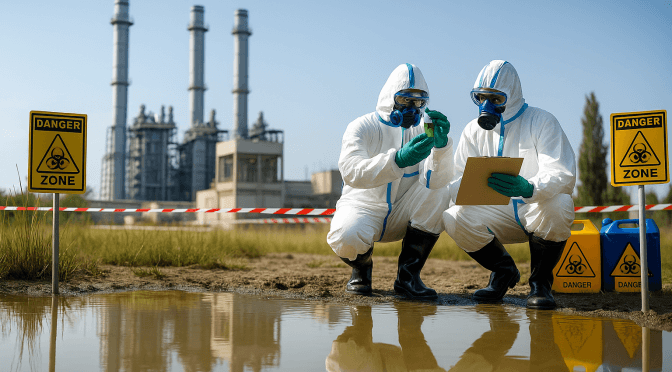
Choosing the right effluent treatment plant needs careful evaluation of multiple technical and regulatory parameters that affect system performance and compliance.
Wastewater Quality and Volume Assessment
Treatment plant design needs to think over the biological, chemical and physical properties that affect effluent quality. You just need to compute the estimated effluent inflow and size of conveying pipes to keep hydraulic computations accurate. Capacity planning varies by industry type. Textile and garments need 50-500 KLD while pharmaceuticals need 10-250 KLD. Chemical plants need 100-1000 KLD and food processing needs 30-500 KLD. Seasonal variations and daily fluctuations need equalization ponds to stabilize inflow. Plus, production increases warrant a 20-30% buffer capacity beyond current needs.
Land Availability and Space Constraints
Small-scale ETPs up to 50 KLD need 500-1000 square feet. Medium-scale plants handling 50-200 KLD need 2000-5000 square feet. Companies facing tight space constraints may find Common Effluent Treatment Plants a better option than in-house systems.
Cost Factors: Installation and Maintenance
Capital expenditure covers equipment, tanks, pumps, clarifiers and civil work. Operational expenses include energy costs for aeration and pumping, chemical consumption and labor. Regular maintenance prevents fines and shutdowns.
Meeting Environmental Protection Standards
The Central Pollution Control Board mandates BOD below 30 mg/L, COD under 250 mg/L, TSS less than 100 mg/L and pH between 5.5-9.0. Non-compliance results in heavy fines and operational shutdowns.
Conclusion
You need to assess wastewater characteristics, treatment methods and regulatory requirements to select the right effluent treatment plant. I’ve covered various ETP types, including physical, chemical and biological systems, among other industry-specific applications for food processing, textiles and pharmaceuticals. Proper design considerations play a critical role. Volume assessment and space constraints matter here. Choosing an appropriate treatment system will give environmental compliance and protects water resources for future generations.
Frequently Asked Questions
Q1. What are the main types of ETP processes used in wastewater treatment?
ETP plants use three primary treatment methods: physical, chemical, and biological processes. Physical treatment removes suspended solids through screening and sedimentation. Chemical treatment uses coagulation, flocculation, and neutralization to eliminate dissolved metals and inorganic compounds. Biological treatment employs microorganisms to degrade organic pollution through aerobic or anaerobic processes. Many facilities also use hybrid systems that combine all three methods to achieve optimal results.
Q2. How do different industries use specialized ETP plants?
Industries require customized ETP solutions based on their specific wastewater characteristics. Food processing plants focus on removing organic matter, fats, and oils. Textile facilities treat synthetic dyes and sizing agents using coagulation and advanced oxidation. Pharmaceutical plants handle active ingredients and solvents through multi-stage treatment including membrane bioreactors. Metal processing operations remove heavy metals like lead and chromium through chemical precipitation and filtration.
Q3. What is BOD and COD in effluent treatment?
BOD (Biochemical Oxygen Demand) measures the amount of oxygen microorganisms need to break down organic matter in wastewater. COD (Chemical Oxygen Demand) indicates the total amount of oxygen required to chemically oxidize all pollutants. Primary treatment typically removes 30-40% of BOD, while secondary biological treatment can eliminate 85-95%. Regulatory standards usually require BOD below 30 mg/L and COD under 250 mg/L for safe discharge.
Q4. What are the three main stages of wastewater treatment in an ETP?
The three treatment stages are primary, secondary, and tertiary. Primary treatment physically separates solids and greases, removing 50-60% of suspended solids. Secondary treatment uses biological processes with microorganisms to eliminate organic matter and nutrients, achieving 85-95% BOD removal. Tertiary treatment provides advanced purification through filtration and disinfection using chlorine or UV light, ensuring water meets quality standards for safe discharge or reuse.
Q5. What factors should be considered when designing an ETP plant?
Key design considerations include wastewater volume and quality assessment, available land space, cost factors, and regulatory compliance. Capacity requirements vary by industry, with textile plants needing 50-500 KLD and chemical plants requiring 100-1000 KLD. Space needs range from 500-1000 square feet for small plants to 2000-5000 square feet for medium-scale facilities. The system must meet environmental standards including pH levels between 5.5-9.0 and specific BOD, COD, and TSS limits.