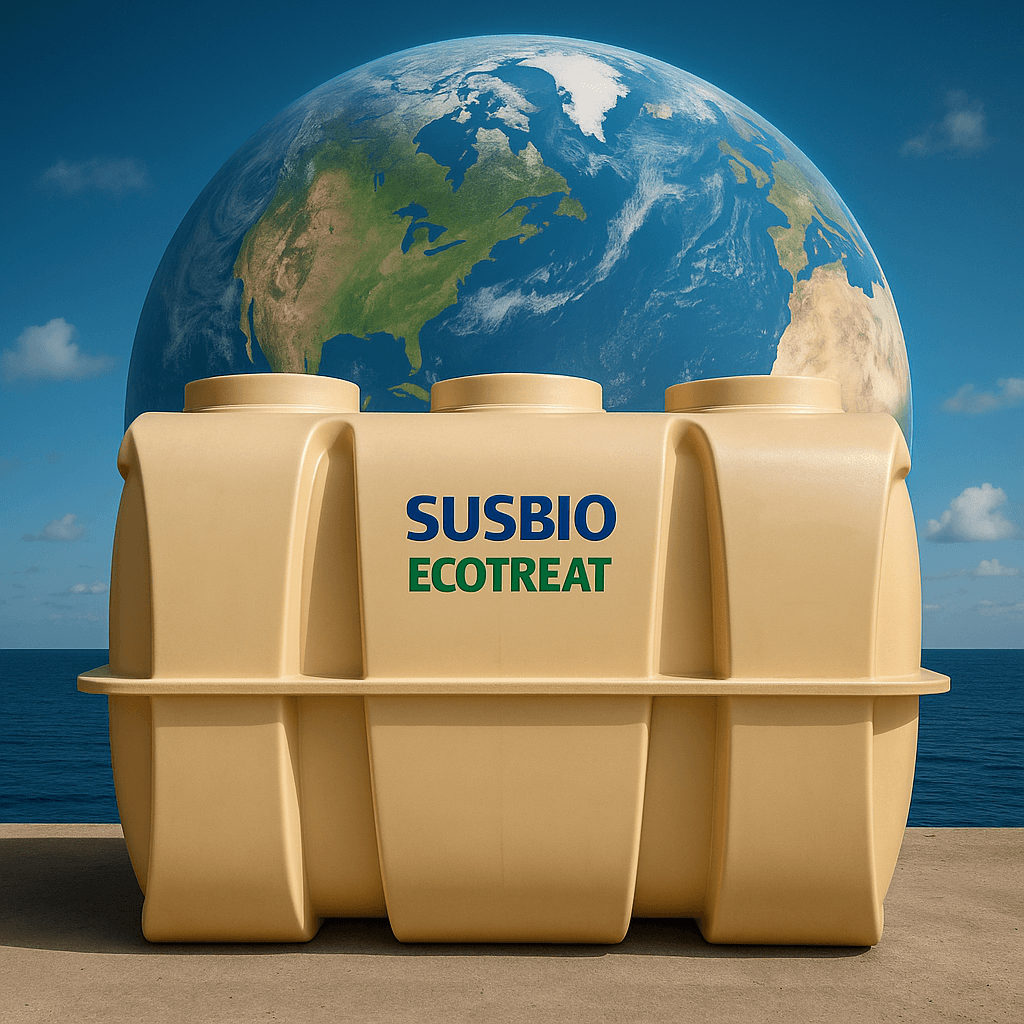


A sewage treatment plant is a facility designed to remove contaminants from wastewater, which comes from households and commercial establishments. Sewage refers to wastewater containing substantial organic and inorganic solids from residential, commercial and industrial premises. The core purpose of what is sewage treatment plant revolves around producing clean water that can be safely discharged into the environment or reused for various purposes.
The main goal centers on treating wastewater to meet environmental discharge standards. This prevents contamination of rivers, lakes and groundwater while controlling the spread of waterborne diseases. The process of sewage treatment makes reuse of treated water possible for gardening and industrial purposes, and promotes sustainable water resource management.
How STP Plant Works: Overview of Treatment Stages
The sewage treatment plant process involves physical, biological and chemical methods working in sequence. Preliminary treatment removes large debris through screening and grit chambers. This protects downstream equipment from damage. Wastewater enters sedimentation tanks during primary treatment, and gravity separates solids from liquids. This stage removes 50-65% of total suspended solids and 20-35% of BOD5.
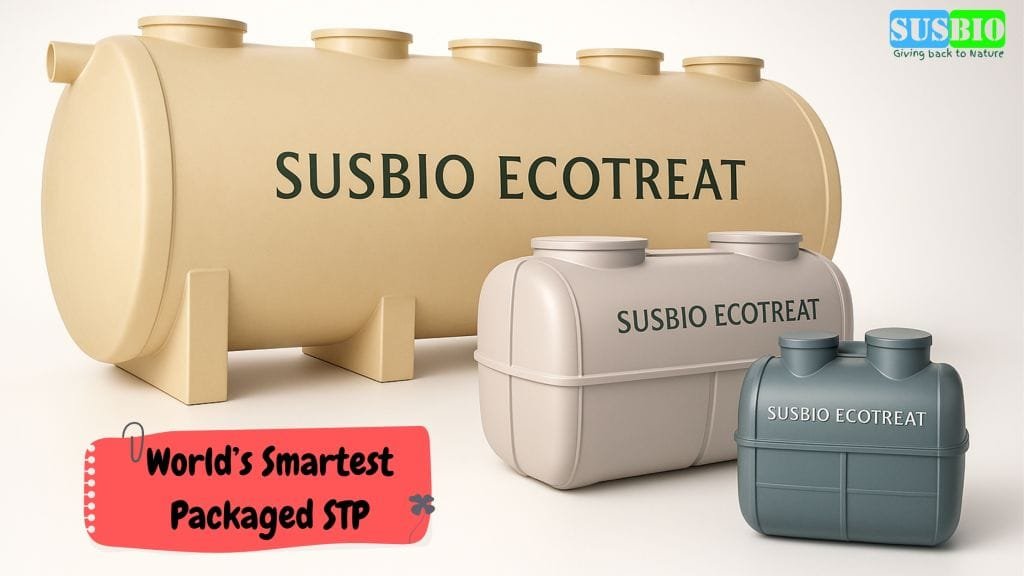
Secondary treatment is the biological heart of the sewage treatment plant working process. Microorganisms break down organic matter through aeration, where air is introduced to support beneficial bacteria that consume pollutants. Tertiary treatment provides final polishing through filtration and disinfection using chlorine or UV light, along with nutrient removal. Solutions like SUBIO ECOTREAT, India’s most advanced packaged STP, integrate these stages for domestic sewage treatment efficiently.
Key Differences Between Industrial and Domestic Sewage Treatment
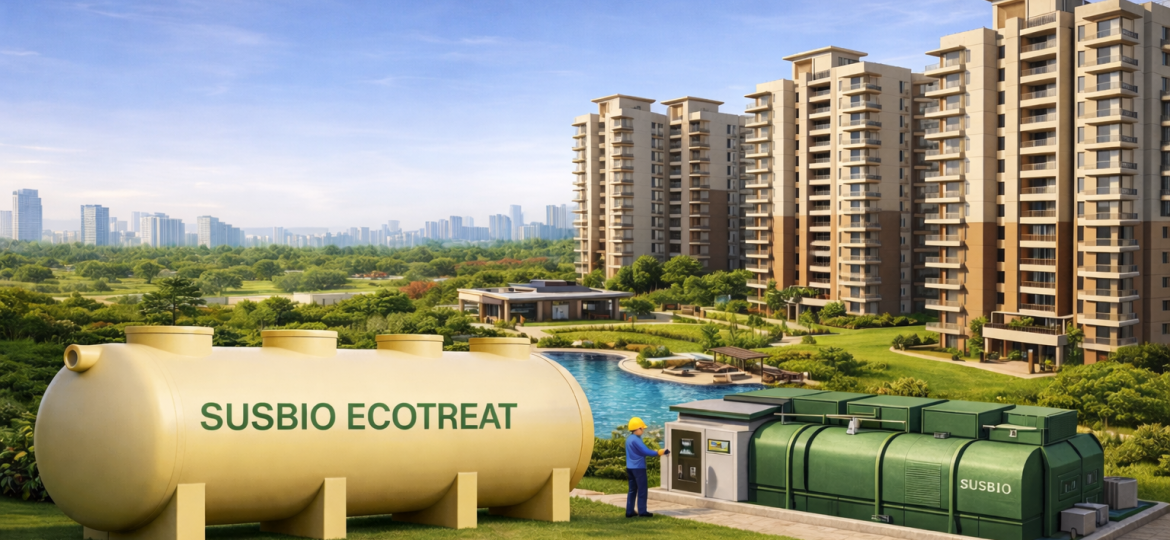
Domestic sewage treatment deals with wastewater from residential and commercial establishments on a smaller scale. The composition remains uniform and predictable, containing organic matter, nutrients and common household chemicals. Treatment technologies involve standardized processes sufficient to work without requiring bespoke solutions at every location.
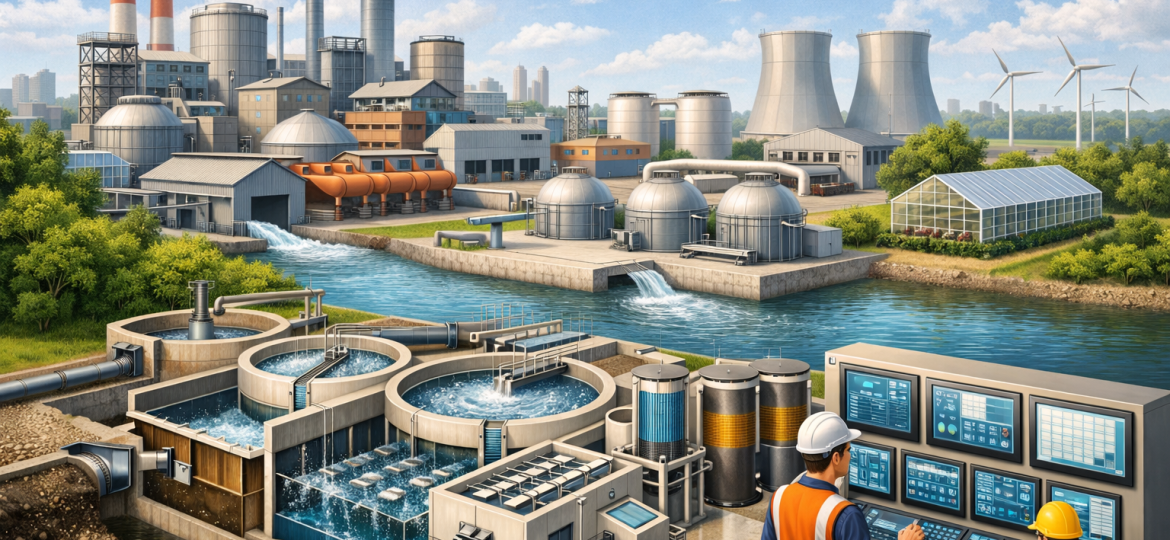
Industrial wastewater treatment companies handle large-scale operations that produce diverse pollutants. These include chemicals, heavy metals and organic compounds in much higher concentrations. Treatment plants need capacity to handle high flow rates and complex wastewater streams because of this complexity. Industrial facilities face stringent regulations due to potentially hazardous contaminants, while domestic systems focus more on public health and sanitation standards.
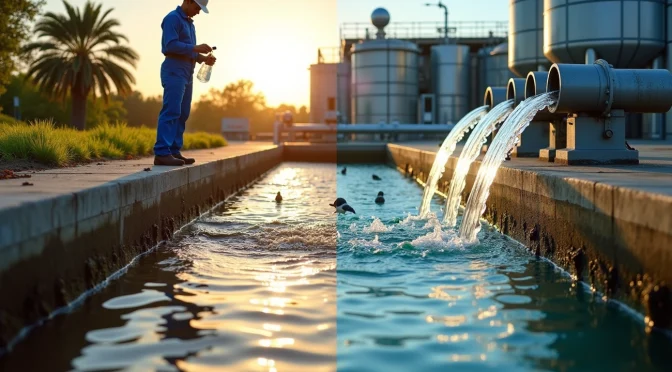
The Four-Stage Process of Sewage Treatment Explained
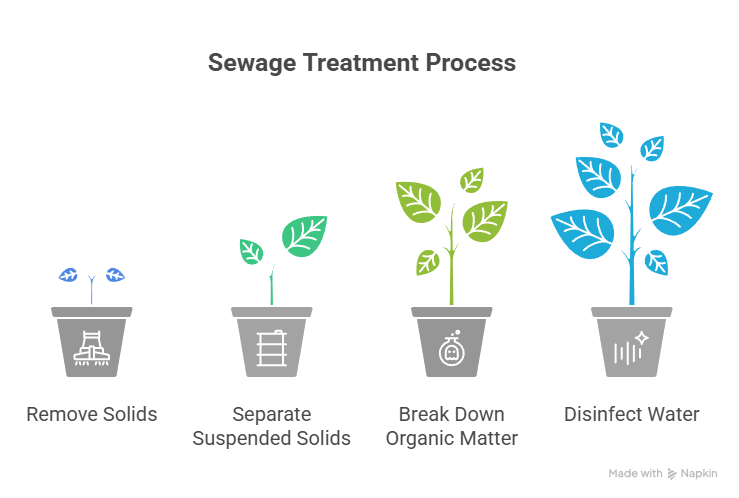
Stage 1: Removing Large Solids and Debris
The influent sewage passes through bar screens that capture large objects like cans, rags, sticks and plastic packets carried in the wastewater stream. Grit removal channels follow. The velocity of incoming sewage decreases here and allows settlement of sand, gravel and heavy inorganic matter. This step just needs to happen to reduce deposit formation in downstream tanks and protect mechanical equipment from abrasion and abnormal wear. It also decreases cleaning frequency.
Stage 2: Separating Suspended Solids Through Settling
Primary sedimentation tanks slow the water flow. Heavy solids settle at the bottom while oil, grease and lighter materials float to the surface for skimming. These basins maintain a hydraulic retention time of 1.5 to 2.5 hours. Primary settling removes 50-70% of suspended solids and 25-40% of biological oxygen demand. Mechanical scrapers collect the settled primary sludge for further processing.
Stage 3: Breaking Down Organic Matter with Beneficial Bacteria
Secondary treatment employs biological processes to digest remaining soluble material, especially organic fractions. The activated sludge process introduces oxygen through aeration tanks. Aerobic bacteria consume organic pollutants and form biological flocs. Trickling filters provide a different way where wastewater flows over media beds hosting biofilm that breaks down organic matter. Advanced systems like SUBIO ECOTREAT, India’s most advanced packaged STP, optimize these biological processes for domestic sewage treatment that works.
Stage 4: Disinfection Methods for Pathogen-Free Water
Disinfection eliminates pathogens before water discharge or reuse. Ultraviolet light at 254 nm disrupts microbial DNA and achieves 3-log reduction in total coliforms at 164.1 mWs/cm². This takes 20-30 seconds. Chlorination uses sodium hypochlorite at 0.2-2 mg/L, while ozone provides strength 3,000 times more than chlorine with 10-30 minute contact time.
Sludge Management and Disposal Options
Sewage sludge undergoes thickening to increase solids from 2-4% to 16-18%. Anaerobic digestion follows and produces biogas. In the U.S., 2.39 million dry metric tons receive land application, 558,000 tons face incineration, and 982,000 tons undergo landfilling.
Choosing the Right Domestic Sewage Treatment Plant for Home Use
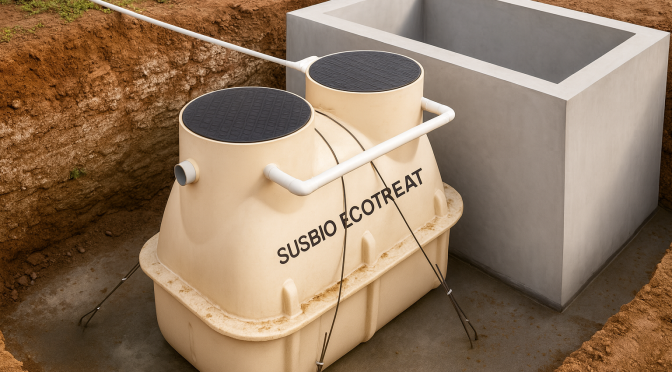
Factors to Think About When Selecting a Domestic STP
Selecting a sewage treatment plant for home requires you to evaluate several interconnected factors. Property type dictates system design: individual homes benefit from compact, low-maintenance packaged STPs, while larger residential complexes just need higher capacity units. The number of occupants determines capacity. You calculate it at approximately 135 liters per person per day in residential settings. Treatment efficiency standards must meet local environmental regulations. BOD below 10 mg/L and TSS below 10 mg/L are required for water reuse in flushing applications.
Regulatory compliance remains non-negotiable. Housing societies exceeding 20,000 square meters built-up area or generating more than 10 KLD of wastewater must install an STP per CPCB guidelines. Systems should provide minimal maintenance requirements and strong after-sales support for hassle-free operations.
Space Requirements for Small Sewage Treatment Plant Installation
Space constraints influence technology selection by a lot. Advanced Aerated Attached Biofilm Reactor (AABR) systems just need 0.4-0.6 sqm per KLD. They fit basements and parking areas in high-rises. MBBR requires 0.8-2.5 sqm per KLD, while traditional systems demand much more footage. A 100 KLD STP using MBR technology occupies 120-180 m². Conventional activated sludge plants need 250-350 m².
Operating Costs and Maintenance Considerations
Energy consumption ranges from 0.4-1.5 kWh per KL. This translates to ₹40,000-₹1.5 lakh yearly for 100 KLD capacity at ₹5-7 per kWh. Maintenance costs amount to 15-25% of total operation costs. Systems like SUSBIO ECOTREAT, India’s most advanced packaged STP, minimize operating expenses through energy-efficient design.
Treated Water Reuse Applications for Households
Treated water enables 70-90% recovery for non-potable applications. SUSBIO ECOTREAT makes reuse easier for landscaping, flushing and irrigation. This reduces water consumption and costs by a lot. Households can repurpose treated effluent for gardening, floor washing and vehicle cleaning. This cuts municipal water dependency by 30-40%.
SUBIO ECOTREAT: The Future-Ready Packaged STP Solution
Advanced Features That Set SUBIO ECOTREAT Apart
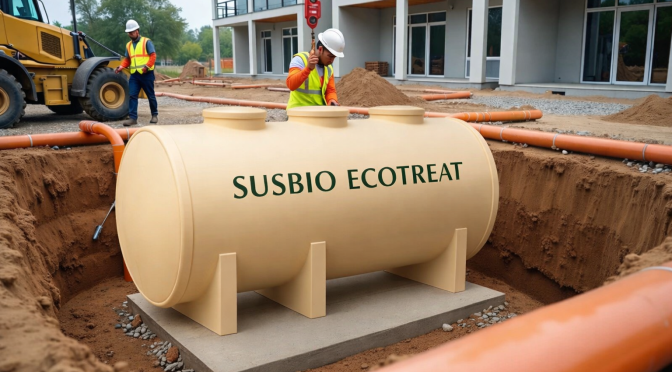
SUBIO ECOTREAT combines prefabricated design with dual treatment processes with anaerobic and aerobic biological treatment. The fiber-reinforced plastic construction delivers corrosion resistance with a 10-year material warranty. The system operates with 90% less electricity than traditional STPs through optimized aeration and smart automation. Installation completes within 2-4 weeks. The modular design requires just 25-100 square meters for small capacity systems.
Proven Performance Results in Indian Conditions
The system achieves 90-95% reduction in BOD and COD levels. Treated water meets discharge standards with BOD below 20 mg/L and TSS below 10 mg/L. UV disinfection delivers 99% pathogen removal and produces effluent suitable for landscaping, flushing and irrigation.
Cost-Effectiveness Compared to Traditional Systems
Most 50-100 KLD sewage treatment plants achieve payback in 18-24 months. Property owners save around INR 4-5 lakhs yearly through water reuse. Energy consumption drops by 90% compared to conventional systems.
Support and Service from Leading Sewage Treatment Plant Manufacturers
Sustainable Biosolutions Pvt Ltd provides detailed installation and maintenance support with round-the-clock assistance. The company offers technical consultancy to get approvals from pollution control boards.
Real-Life Installation Examples and Success Stories
SUSBIO ECOTREAT installations include a 1 MLD plant at BITS Pilani Goa campus and systems at Nanu Beach Resort in Goa. A 15 KLD prefabricated unit serves luxury villas. The Vianaar Infra project showed compliance with environmental regulations while delivering substantial cost savings.
Conclusion
The four-stage sewage treatment process helps homeowners make informed decisions about domestic wastewater management. SUBIO ECOTREAT stands as India’s most advanced packaged STP and delivers exceptional results through energy-efficient design, rapid installation and proven performance in Indian conditions. Property owners achieve substantial cost savings while meeting environmental standards. This future-ready solution addresses the critical need for reliable domestic sewage treatment, protects water resources and enables environmentally responsible water reuse for generations ahead.
Frequently Asked Questions
Q1. How does a domestic sewage treatment plant work?
Domestic sewage treatment plants work through a multi-stage process. First, large solids and debris are removed through screening. Then, suspended solids are separated in settlement tanks where heavy materials sink to the bottom as sludge, which is scraped and pumped away for further processing. Next, beneficial bacteria break down organic matter through biological treatment with aeration. Finally, the water undergoes disinfection to eliminate pathogens before safe discharge or reuse.
Q2. Do sewage treatment plants need regular emptying?
Yes, sewage treatment plants require periodic emptying of accumulated sludge. While the plant’s primary function is to clean the wastewater through biological and chemical processes, solid waste still accumulates at the bottom of settlement tanks. This sludge must be removed by tanker services to maintain the system’s efficiency and prevent operational issues.
Q3. What happens to wastewater after you flush the toilet?
When you flush, wastewater flows through your home’s plumbing system into progressively larger sewer pipes, primarily moving by gravity. Small pipes from individual fixtures connect to larger branch lines, which eventually lead to the main sewer line. From there, the wastewater travels to a treatment facility where it undergoes multiple stages of cleaning before being safely discharged or reused.
Q4. What is the difference between industrial and domestic sewage treatment?
Domestic sewage treatment handles wastewater from homes and commercial buildings on a smaller scale with relatively uniform composition containing organic matter and household chemicals. Industrial sewage treatment operates at much larger scales, dealing with diverse and complex pollutants including heavy metals, chemicals, and high-concentration organic compounds that require specialized treatment processes and face more stringent regulatory requirements.
Q5. Can treated water from sewage plants be reused at home?
Yes, treated water from properly functioning sewage treatment plants can be safely reused for various non-potable household applications. This includes landscaping, garden irrigation, toilet flushing, floor washing, and vehicle cleaning. Advanced systems can achieve 70-90% water recovery, helping households reduce municipal water dependency by 30-40% and significantly lowering water bills.
Key TakeAways
Understanding sewage treatment is essential for homeowners considering domestic wastewater solutions, especially given that only 52% of global sewage receives proper treatment.
- Sewage treatment involves four stages: debris removal, solid separation, biological breakdown, and disinfection to produce safe, reusable water
- Domestic STPs require careful selection based on occupancy (135L per person daily), space constraints, and regulatory compliance for properties over 20,000 sqm
- SUBIO ECOTREAT uses 90% less electricity than traditional systems while achieving 90-95% BOD/COD reduction with 2-4 week installation
- Treated water enables 70-90% recovery for non-potable uses, reducing municipal water dependency by 30-40% and saving ₹4-5 lakhs yearly
- Advanced packaged STPs like SUBIO ECOTREAT offer payback periods of 18-24 months through energy savings and water reuse benefits
Modern sewage treatment technology transforms wastewater management from an environmental burden into a sustainable resource, making domestic STPs both economically viable and environmentally responsible for Indian households. Sewage treatment plants provide a vital service for environmental and public health, yet at the global level, an estimated 52% of sewage is treated. The disparity is striking: high-income countries treat approximately 74% of their sewage while developing countries manage just 4.2%. Domestic sewage contaminates ecosystems and threatens water resources without adequate treatment. Anyone thinking over home wastewater solutions needs to understand the sewage treatment plant process. This piece will explain what a sewage treatment plant is and how it works through its multi-stage process. We’ll also cover what factors matter when selecting a small sewage treatment plant for home use and introduce SUBIO ECOTREAT specifically. SUBIO ECOTREAT is India’s most advanced packaged STP and a future-ready solution designed for reliable domestic sewage treatment.