

The numbers are staggering. Traditional treatment facilities drain energy resources, making eco-friendly wastewater management crucial now more than ever.
Renewable energy integration into sewage treatment provides promising answers to these growing challenges. Modern sewage treatment plants want to meet current needs without compromising future generations’ resources. Solar energy brings benefits beyond cost savings – recent studies reveal it can eliminate nearly 90% of SARS-CoV-2 in wastewater. The Naini Sewage Treatment Plant’s success story shows how meeting half the energy needs through renewable sources saves approximately INR 1.5 crore yearly in electricity costs.
Wastewater management is undergoing a fundamental change, especially with predictions showing two-thirds of the world’s population facing water stress by 2025. SUSBIO ECOTREAT, India’s most advanced packaged STP, represents treatment technology’s future. The system’s lower electricity needs make solar power operation simple and ideal for eco-friendly operations. This piece explores renewable energy options for STPs and shows how their integration cuts operational costs while supporting environmental goals.
Why Energy Costs Are High in Sewage Treatment Plants

Sewage treatment plants (STPs) use a lot of energy. They consume about 1-3% of a country’s total electricity. This high energy use leads to huge operational costs that affect both financial viability and environmental performance.
Electricity consumption in aeration and pumping systems
Aeration systems use the most energy in wastewater facilities – about 60% of the total power consumption. The biological treatment process needs blowers and air pumps to run constantly. These supply oxygen to microorganisms and just need continuous electricity. Small improvements in how efficiently these systems work can save a lot of money.
Pumping systems are the second-largest power users. They account for 15-70% of electricity usage. Goldstein and Smith found that pumps use nearly 80% of all electricity in wastewater treatment. Some countries use between 0.3 to 0.8 kWh/m³ of energy to treat wastewater. This shows why making pumps more efficient matters so much.
Dependence on fossil fuels and grid instability
Most treatment facilities rely heavily on electricity from the power grid, which mainly comes from fossil fuels. This makes them vulnerable to price changes and power cuts. Power grid problems create major operational challenges because treatment processes need uninterrupted power to meet regulations.
Unreliable grid power and occasional blackouts mean facilities need backup systems. These usually run on diesel generators, which cost more and produce more carbon emissions. Traditional WWT methods don’t deal very well with major environmental challenges that threaten their long-term success.
Environmental and sustainability indicators for energy use
Treatment facilities track several factors to measure their environmental impact. These include how much energy they use, how well they remove pollutants, their effect on global warming, and how efficiently they use resources. These measurements help operators review their sustainability and find ways to improve.
Comparing energy efficiency between plants shows they could save up to 41.9% of energy without affecting treatment quality. Studies also reveal that better aeration control strategies can cut air flow rates by 15-20% depending on the season.
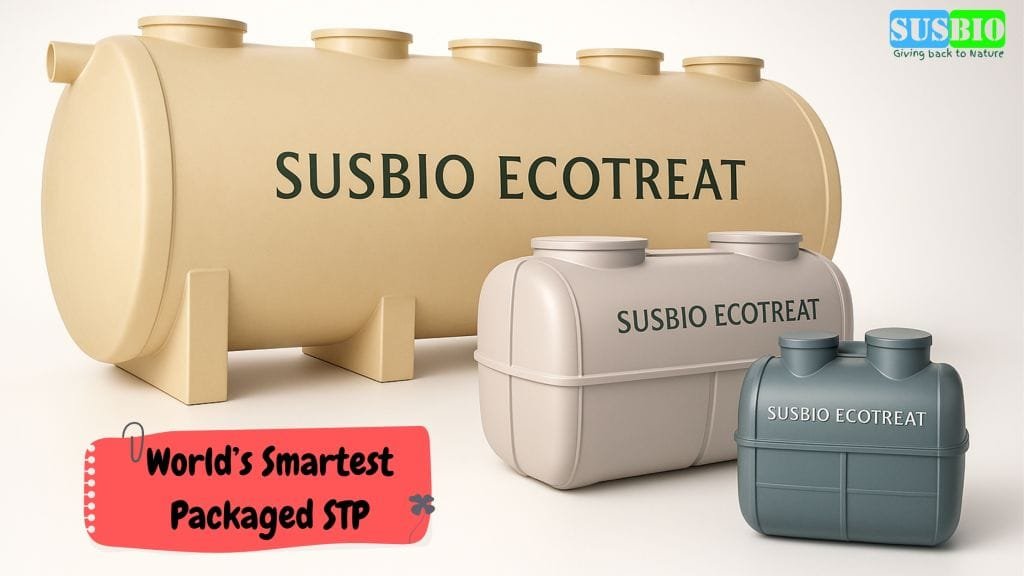
SUSBIO ECOTREAT leads India’s packaged STP solutions with its advanced technology that uses very little electricity. The system makes shared solar integration simple, which makes it perfect for facilities that want to reduce their dependence on grid power while maintaining high standards.
Smart Renewable Energy Options for STPs
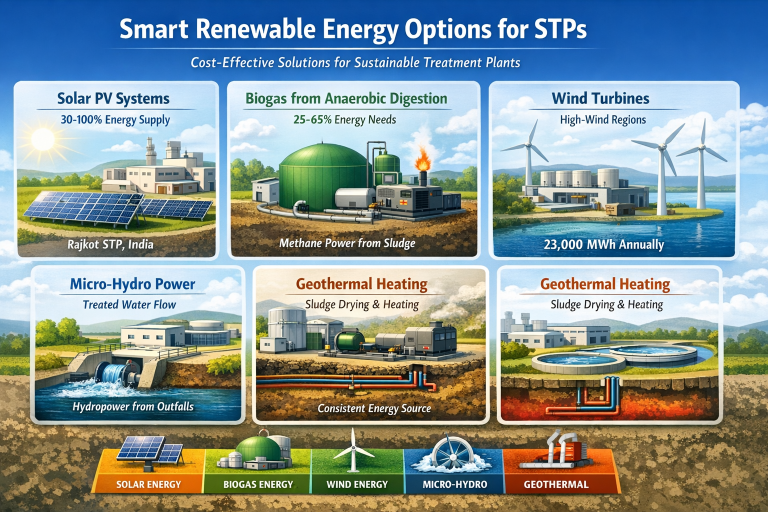
Renewable energy integration offers budget-friendly solutions to reduce operational costs at sewage treatment plants. Several options exist based on site conditions and available resources.
Solar PV integration for decentralized energy supply
Solar photovoltaic systems are now a popular choice in wastewater treatment facilities. California leads this trend with 41 out of 105 plants using solar PV systems. Small to medium plants (below 5 MGD) see the most benefits because solar can provide 30-100% of their energy needs. The Municipal Corporation in Rajkot, India proved this success when their Aji water treatment plant’s solar installation met 20% of the facility’s energy needs. India’s most advanced packaged STP, SUSBIO ECOTREAT, needs minimal electricity and works perfectly with solar power for green operations.
Biogas from anaerobic digestion of sludge
Anaerobic digestion reduces waste and produces energy at the same time. The process creates biogas with 55-65% methane content, which makes it a valuable energy resource. A well-implemented biogas system can meet 25-65% of a facility’s energy needs. The best results come from hybrid systems that combine biogas with other renewables. Biogas storage capability gives it an edge over wind and solar, which are not always available.
Wind turbines for high-wind regions
Treatment plants with wind power installations show remarkable results. Hamburg Wasser’s Dradenau wastewater treatment plant runs three wind turbines with 8.6 megawatts capacity. These turbines produce up to 23,000 megawatt hours each year. Amsterdam’s WWTP West achieved similar success with four wind turbines that generate 21,000 megawatt-hours yearly – enough power for 10,000 households.
Micro-hydro systems using treated water flow
Micro-hydropower stands out as a budget-friendly option that works in any weather condition. This makes it more energy-efficient than solar or wind. The Korean government found 11 GWh of potential hydropower from just 15 WWTPs. Installation costs drop when using existing infrastructure at treatment plant outfalls.
Geothermal heating for sludge processing
Geothermal energy provides reliable power for sludge processing needs around the clock. Unlike other renewable sources, it delivers consistent power generation. This energy source works great for sewage sludge drying and improves treatment system performance by 19-23%.
Designing Energy-Efficient STPs with Renewable Integration
Strategic planning forms the foundation of an energy-efficient STP design that balances environmental sustainability with operational costs. The design process must carefully evaluate multiple factors to combine renewable energy systems effectively.
Site selection and solar exposure analysis
The potential for energy efficiency and renewable integration heavily depends on site selection. STPs work best when built on mild-to-moderate slopes that naturally channel wastewater flow. The ideal location lies downstream of rivers. Modern 3D solar analytics tools help maximize renewable energy generation by separating direct sunlight from atmospheric diffusion, which leads to better accuracy. SUSBIO ECOTREAT installations benefit from optimal site selection that further reduces their minimal electricity needs.
Energy-efficient pumps and motors
Water treatment facilities use substantial energy for their pumping systems. New pumping technology saves 3-7% energy, while high-efficiency motors with variable speed drives cut energy usage by 25-30%. The best efficiency improvements come from:
- Right-sized pumps replacing oversized ones save up to 50% energy
- Variable speed drives added to existing pumps boost efficiency by 10%
- IE5 efficiency synchronous reluctance motors offer the latest upgrade option
Battery storage for off-grid reliability
Battery energy storage systems help store excess energy from renewables for peak demand times. The Ballykelly Wastewater Treatment Works uses a 134 kWh lithium battery system with a 75 kW inverter alongside its 91.2 kWp solar installation. Recent studies show that photovoltaic capacity needs grow from 61.73 kW to 135.47 kW when grid outage duration increases from 25 to 300 hours. SUSBIO ECOTREAT works well with battery-backed solar systems due to its low power requirements.
AI-based energy management systems
AI revolutionizes energy optimization in treatment plants. Smart systems use AI to adjust building parameters immediately through integrated control and automation. These systems predict renewable energy generation and match it with facility demand to maximize onsite resources. Machine learning and advanced analytics constantly track pattern changes across IT/OT systems using high-frequency data. The system reduces operator workload by automatically setting short-term targets based on current daily averages.
SUSBIO ECOTREAT: A Future-Ready Packaged STP
“Over the 25-year agreement, the new solar array should save Central San nearly $6 million in electricity costs.” — REC Solar, Solar Energy Solutions Provider
SUSBIO ECOTREAT leads India’s packaged Sewage Treatment Plant sector with its groundbreaking environmental sustainability technology. The system’s future-ready design tackles major wastewater management challenges head-on.
Low electricity requirement and solar compatibility
SUSBIO ECOTREAT uses nowhere near the electricity of conventional systems. The system runs at just 0.1–0.2 kWh/m³ while traditional systems need 1.5 kWh/m³. This impressive efficiency comes from optimized aeration, smart controls, and energy-efficient components. The system works perfectly with solar power integration and strengthens its environmental sustainability credentials.
Compact design for decentralized installations
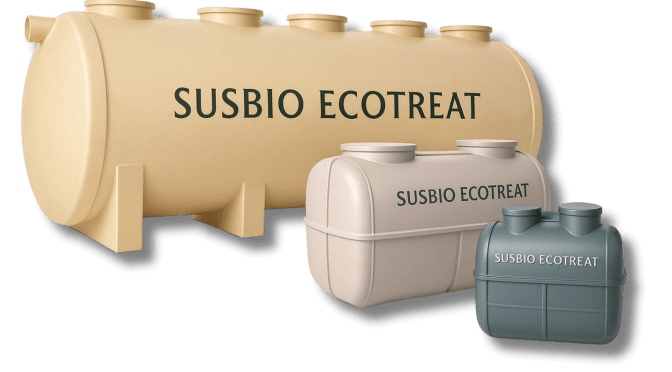
SUSBIO ECOTREAT’s durable fiber-reinforced plastic (FRP) construction features a modular, prefabricated design. Users can choose between Cylinder Type (20-500 KLD) for larger applications and Capsule Type (1-20 KLD) for smaller installations. This plug-and-play system needs minimal space, making it ideal for space-constrained urban areas. The units arrive ready to install, which eliminates the need for extensive on-site construction.
Environmental sustainability examples in urban and rural use
A luxury resort in Goa installed SUSBIO ECOTREAT in just five days. The system runs quietly and recycles 90% of wastewater for gardens and cooling. A residential complex in Pune switched their aging STP with SUSBIO ECOTREAT and saw impressive results. The residents reported zero odor issues and their electricity bills dropped by half.
Case study: SUSBIO ECOTREAT in industrial reuse
A manufacturing cluster in Gujarat chose SUSBIO ECOTREAT because of its scalability and IoT monitoring features. The plant managers track water quality remotely to ensure regulatory compliance and minimize downtime. This implementation shows how advanced sewage treatment supports industrial water reuse and circular economy principles.
Conclusion
Sewage treatment plants face a major challenge today – balancing rising energy costs with environmental responsibilities. This piece explores how integrating renewable energy offers the quickest way to cut operational costs and reduce carbon footprints.
Traditional STPs consume substantial power through energy-heavy processes like aeration and pumping. These processes make them perfect candidates for renewable solutions. The options are diverse – from Solar PV systems and biogas from anaerobic digestion to wind turbines, micro-hydro installations, and geothermal heating. Each option’s viability depends on site conditions and available resources.
Smart design choices can magnify these benefits substantially. A strong foundation for sustainable operations comes from careful site selection, energy-efficient pumps, battery storage systems, and AI-based management. These approaches cut costs and boost reliability – a vital factor for facilities that must run without interruption.
SUSBIO ECOTREAT stands out among available technologies, especially in the Indian context. This advanced packaged STP uses 90% less electricity than conventional systems, making it highly compatible with solar power integration. On top of that, its compact, modular design aids decentralized installations in space-constrained urban and rural settings.
Real-life examples show how facilities using advanced solutions like SUSBIO ECOTREAT get concrete benefits. They see lower electricity bills, better regulatory compliance, and improved water reuse capabilities. These breakthroughs become more valuable as water stress affects growing numbers of people worldwide.
Energy-efficient sewage treatment delivers more than cost savings – it represents a fundamental change toward environmental stewardship. Treatment facilities can revolutionize their role by employing renewable integration in wastewater management. They can evolve from energy consumers to potential producers while achieving their essential public health function. This dual achievement points clearly to the future of eco-friendly infrastructure development.
Key Takeaways
Sewage treatment plants consume massive amounts of energy, but smart renewable integration can dramatically cut costs while supporting environmental sustainability goals.
- Aeration systems consume 60% of STP energy – targeting these high-consumption processes with renewable solutions offers the biggest cost reduction potential.
- Solar PV can provide 30-100% of energy needs for small-to-medium plants, with facilities like Rajkot’s achieving 20% energy supply from solar installations.
- SUSBIO ECOTREAT uses 90% less electricity than conventional systems at just 0.1-0.2 kWh/m³, making it ideal for solar integration and sustainable operations.
- Battery storage enhances renewable reliability – combining solar with storage systems ensures continuous operation during grid outages and peak demand periods.
- AI-based energy management optimizes performance by forecasting renewable generation, coordinating usage patterns, and automatically adjusting system parameters in real-time.
The integration of renewable energy in sewage treatment represents a paradigm shift from energy-intensive operations to sustainable, cost-effective facilities that can even become net energy producers while maintaining essential public health functions.
Frequently Asked Questions
Q1. How can sewage treatment plants reduce their energy costs?
Sewage treatment plants can significantly reduce energy costs by integrating renewable energy sources such as solar PV, biogas from anaerobic digestion, wind turbines, and micro-hydro systems. Implementing energy-efficient pumps, motors, and AI-based energy management systems can also lead to substantial savings.
Q2. What is the most common renewable energy source used in wastewater treatment plants?
Biogas from anaerobic digestion of sewage sludge is one of the most common renewable energy sources used in wastewater treatment plants. It can contribute 25-65% to a facility’s overall energy demand and offers the dual benefits of waste reduction and energy production.
Q3. How effective is solar energy for powering sewage treatment plants?
Solar energy can be highly effective for powering sewage treatment plants, especially for small to medium-sized facilities. In some cases, solar PV systems can provide 30-100% of a plant’s energy needs, significantly reducing operational costs and environmental impact.
Q4. What is SUSBIO ECOTREAT and how does it contribute to energy efficiency?
SUSBIO ECOTREAT is an advanced packaged Sewage Treatment Plant that consumes up to 90% less electricity than conventional systems. Its low power requirements make it highly compatible with solar power integration, contributing to improved energy efficiency and environmental sustainability in wastewater management.
Q5. How can AI improve energy management in sewage treatment plants?
AI-based energy management systems in sewage treatment plants can forecast renewable energy generation, coordinate usage with facility demand, and optimize onsite renewable resource utilization. These systems continuously monitor and adjust parameters in real-time, reducing operator workload and maximizing energy efficiency.