


Industries play a pivotal role in economic development, but they also contribute significantly to environmental pollution—especially through the discharge of industrial wastewater. Industrial Sewage Treatment Plants (STPs) are essential for managing and treating this wastewater, ensuring compliance with environmental regulations, and protecting natural ecosystems. This blog delves into the critical role of Industrial Sewage Treatment Plants, their processes, benefits, and why they are indispensable for sustainable industrial operations.
What are Industrial Sewage Treatment Plants (STPs)?
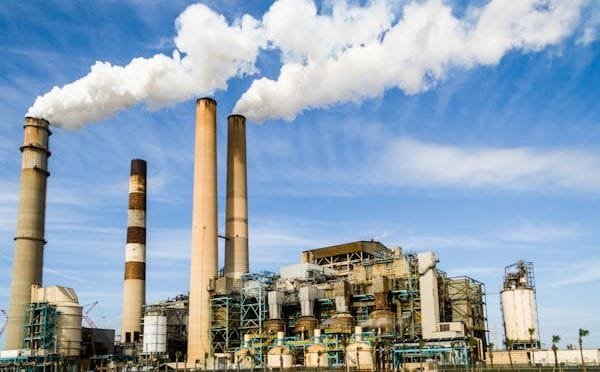
An Industrial Sewage Treatment Plant is a sophisticated system designed specifically to treat wastewater generated by industrial activities. Unlike domestic STPs, which handle household sewage, Industrial Sewage Treatment Plants address a diverse array of contaminants such as heavy metals, chemicals, oils, and other hazardous pollutants. These plants utilize advanced treatment technologies to purify wastewater, rendering it safe for reuse or environmentally responsible discharge.
Why Industries Need Industrial Sewage Treatment Plants
Industrial processes produce massive volumes of wastewater laden with potentially harmful substances. Without proper treatment through Industrial Sewage Treatment Plants, these contaminants can:
- Contaminate Water Bodies: Pollutants may seep into rivers, lakes, and groundwater, endangering aquatic life.
- Degrade Soil Quality: Hazardous chemicals can affect soil health and reduce agricultural productivity.
- Pose Health Risks: Exposure to untreated industrial wastewater can lead to serious health problems for humans and wildlife.
- Trigger Regulatory Penalties: Non-compliance with wastewater treatment standards may result in significant fines and legal issues, making the implementation of well water treatment systems crucial for regulatory compliance.
Industries across sectors—such as textiles, pharmaceuticals, food processing, chemicals, and automobile manufacturing—rely on robust Industrial Wastewater Treatment Plants to tackle these challenges effectively.
Key Roles of Industrial Sewage Treatment Plants
- Pollution Mitigation: By removing harmful contaminants, Industrial Sewage Treatment Plants significantly reduce the environmental impact of industrial wastewater.
- Resource Conservation: Treated wastewater can be recycled for industrial processes, reducing reliance on freshwater resources.
- Regulatory Compliance: These plants ensure that industries meet stringent environmental norms, thereby avoiding legal complications.
- Health and Safety: Effective treatment minimizes the exposure of workers and nearby communities to hazardous pollutants.
Stages of Industrial Sewage Treatment
Preliminary Treatment
Removes large debris like plastics, rags, and sand to prevent equipment damage.Primary Treatment
Settles suspended solids and separates oils and grease through sedimentation and flotation processes.Secondary Treatment
Utilizes biological processes like activated sludge or biofilters to break down organic pollutants and reduce BOD (Biochemical Oxygen Demand).Tertiary Treatment
Employs advanced methods like filtration, reverse osmosis, and UV disinfection to remove residual contaminants, ensuring water meets high-quality standards.Sludge Management
Treats and disposes of sludge generated during the treatment process, often converting it into energy or compost.
Benefits of Industrial Sewage Treatment Plants
- Environmental Protection: Prevents pollution of water bodies and natural ecosystems.
- Cost Efficiency: Reduces water procurement and disposal costs by enabling wastewater reuse.
- Sustainability: Promotes circular water usage, contributing to sustainable industrial practices.
- Reputation Building: Enhances a company’s image as a responsible and environmentally conscious organization.
Applications of Industrial STPs
Industrial STPs are widely used across various sectors:
- Pharmaceuticals: Treating chemical-heavy effluents.
- Textiles and Dyeing: Managing water contaminated with dyes and chemicals.
- Food and Beverages: Handling organic waste and ensuring water reuse.
- Automobile Manufacturing: Treating oils, grease, and heavy metals.
What Makes Industrial Sewage Different from Industrial Effluent?
Industrial sewage typically originates from staff quarters, canteens, restrooms, and administrative areas — similar in nature to domestic wastewater. It contains organic waste, soaps, food particles, and human waste.
Industrial effluent, on the other hand, is a byproduct of manufacturing or industrial processes. It contains complex pollutants such as chemicals, heavy metals, oil & grease, and high TDS (Total Dissolved Solids). Treating effluent requires more advanced and specialized systems compared to sewage.
Types of Industrial Sewage Treatment Plant Systems
Industrial setups can choose from a range of STP technologies depending on sewage characteristics, space availability, and treatment objectives:
| Technology | Description |
|---|---|
| Activated Sludge Process (ASP) | Conventional, oxygen-intensive process using suspended biological growth. |
| SBR (Sequential Batch Reactor) | Ideal for variable flows; treats in batches with high efficiency. |
| MBR (Membrane Bioreactor) | Combines biological treatment with membrane filtration; produces high-quality treated water. |
| MBBR (Moving Bed Biofilm Reactor) | Uses bio-media to enhance biological treatment in compact tanks. |
| UASB (Upflow Anaerobic Sludge Blanket) | Anaerobic treatment ideal for low oxygen environments; useful in pre-treatment. |
How Industrial Sewage Treatment Plants Serve Key Sectors
Industrial STPs are customized to tackle sewage challenges in different sectors:
Textile Industry: Removes color, surfactants, and organic loads from staff colony sewage.
Food Processing Units: Deals with high BOD, oils, and organic residues.
Pharmaceutical Plants: Treats antibiotic-laced sewage without harming microbial processes.
Industrial Townships & Hostels: Manages sewage similar to municipal loads but at larger scales.
What Happens After Treatment? – Treated Sewage Reuse
Treated sewage water from industrial STPs can be safely reused for:
Cooling tower make-up
Boiler feed after tertiary treatment
Toilet flushing, landscaping, and gardening
Dust suppression and construction use
Industries following Zero Liquid Discharge (ZLD) norms integrate STPs into a closed-loop reuse system while ensuring compliance with CPCB and MoEF standards.
Regulatory Compliance for Industrial Sewage Treatment in India
Key regulations industrial STPs must comply with:
CPCB General Standards for Discharge
Environment Protection Act, 1986
NGT Guidelines on wastewater management
State-specific PCB norms (MPCB, TNPCB, GPCB, etc.)
Non-compliance may attract heavy penalties, closure notices, and loss of operating licenses.
Smart Industrial STPs – The Future of Efficient Wastewater Management
Modern industrial STPs integrate smart technologies for optimized operations:
SCADA/PLC Automation – Real-time plant operation and control
IoT-based Monitoring – Alerts on overflow, sludge levels, pH fluctuations
Remote Management Dashboards – Centralized control across multi-site industries
Online BOD/COD Sensors – Accurate treatment tracking
How to Measure STP Performance in Industrial Setups
Key performance indicators (KPIs) for industrial STPs include:
BOD/COD Removal Efficiency (%)
Sludge Generation Volume
Energy Consumption per KL treated
Maintenance Downtime
Return on Investment (ROI) in 2–4 years
Challenges Faced in Running Industrial STPs
Running a successful industrial STP comes with its own set of hurdles:
Sudden load fluctuations or shock loads
Odour management from sludge handling
Lack of skilled operators or maintenance staff
High energy costs during aeration and pumping
STP Installations by Industry Type – Indian Use Cases
 100 KLD SBR STP – Gujarat Pharma Cluster
- 50 KLD MBBR STP – Tamil Nadu Textile Park
- 200 KLD MBR STP – Maharashtra Industrial Township
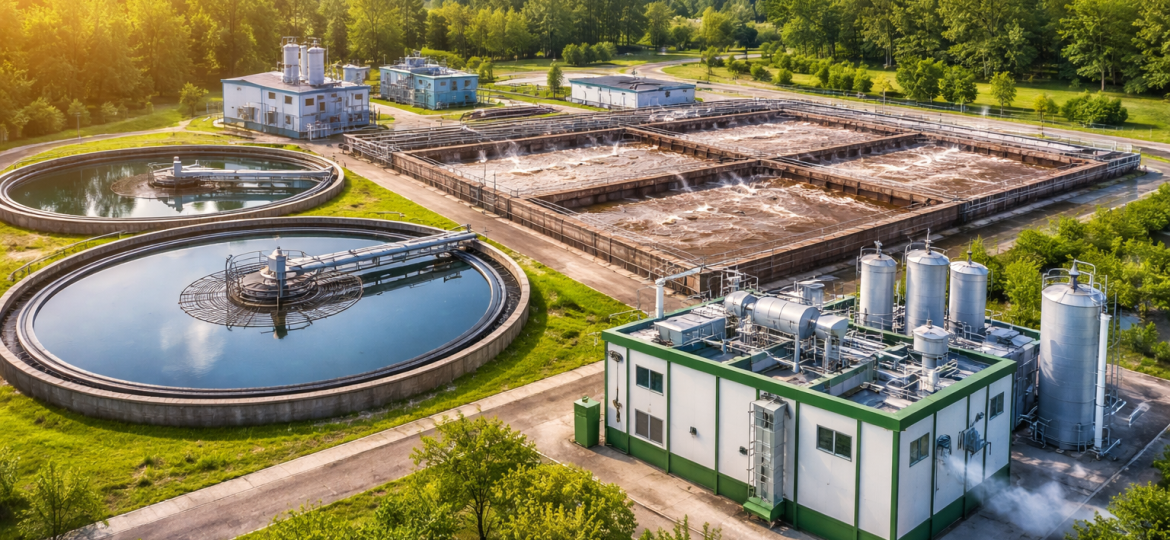
Step-by-Step Process in an Industrial Sewage Treatment Plant
Preliminary Treatment – Bar screening, grit chambers remove solids.
Primary Treatment – Settling tanks reduce suspended solids.
Secondary Treatment – Biological processes like ASP, SBR, or MBBR.
Tertiary Treatment – Sand/activated carbon filtration, UV or ozone disinfection.
Sludge Handling – Dewatering via filter presses or drying beds; used as manure.
Who Needs an Industrial Sewage Treatment Plant?
Industries and campuses generating more than 10 KLD of domestic-type sewage must install STPs:
Manufacturing plants
Industrial residential colonies
IT parks & SEZs
Hospitals and pharmaceutical factories
Commercial kitchens or food parks
Installation, AMC & Remote Monitoring Options
Pre-fabricated STPs – Plug-and-play design, fast installation
Civil-based STPs – Custom build for high capacity
Annual Maintenance Contracts (AMC) – Ensures long-term efficiency
IoT Monitoring – Enables real-time diagnostics, alerts & analytics
Risks of Not Installing an Industrial STP
Hefty fines from CPCB/SPCB/NGT
Factory closures due to non-compliance
Loss of CSR/ESG credits
Brand damage in sustainability-driven markets
SUSBIO’s Role in Industrial STP Solutions
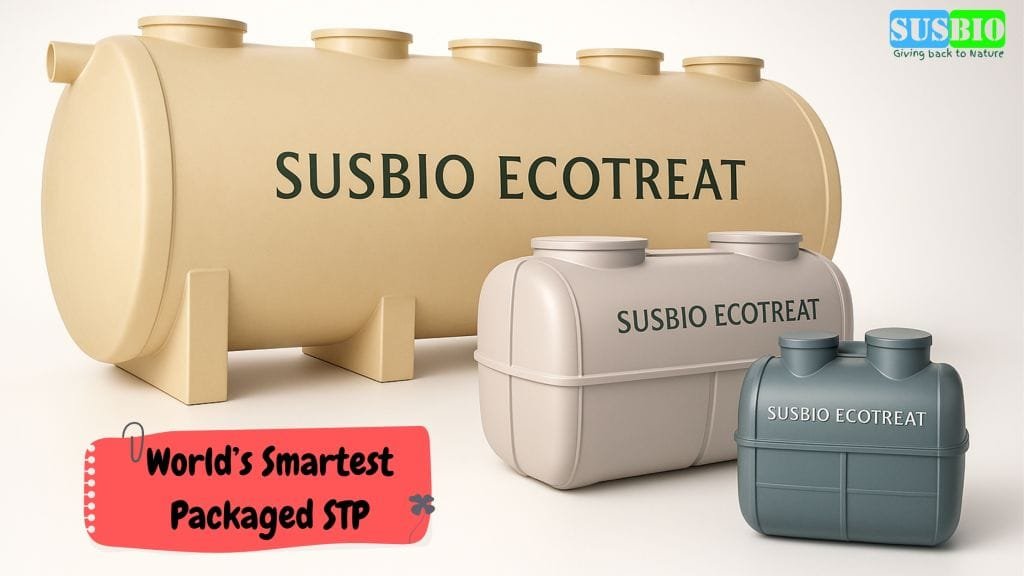
At SUSBIO, we specialize in designing and manufacturing advanced Industrial Sewage Treatment Plants tailored to industry-specific needs. Our flagship product, SUSBIO ECOTREAT, offers:
- High treatment efficiency for various industrial effluents.
- Modular, prefabricated designs for easy installation and scalability.
- Energy-efficient and cost-effective operations.
- Compliance with local and international environmental standards.
Our expertise ensures industries achieve superior wastewater treatment system management while minimizing their environmental footprint.
Frequently Asked Questions (FAQs)
1. What distinguishes Industrial Sewage Treatment Plants from domestic STPs?
Industrial Sewage Treatment Plants are designed to handle a wide variety of contaminants found in industrial wastewater, including heavy metals, chemicals, and oils—components that are typically not present in household sewage.
2. How do Industrial Sewage Treatment Plants ensure compliance with environmental regulations?
These plants incorporate advanced treatment stages (preliminary, primary, secondary, and tertiary) in the sewage treatment process to reduce contaminants to levels that meet or exceed regulatory standards, thereby preventing environmental pollution and avoiding fines.
3. Can the treated water from industrial STPs be reused in industrial processes?
Yes, treated water can be recycled and reused in various industrial processes, reducing the dependency on freshwater resources and contributing to cost savings.
4. What maintenance practices are essential for Industrial Sewage Treatment Plants?
Regular maintenance includes monitoring and servicing of mechanical components, periodic sludge removal, and system checks to ensure that the treatment processes are functioning efficiently and effectively.
5. How does SUSBIO ECOTREAT stand out among other Industrial Sewage Treatment Plants?
SUSBIO ECOTREAT offers a modular, energy-efficient, and cost-effective solution tailored to handle diverse industrial effluents while ensuring regulatory compliance and high treatment efficiency.
Conclusion
Industrial sewage treatment plant models are no longer a luxury but a necessity for industries striving for sustainability. They ensure effective wastewater treatment, compliance with environmental laws, and the conservation of natural resources. With innovations like SUSBIO ECOTREAT, industries can adopt eco-friendly practices without compromising efficiency or profitability.
Choose a reliable partner like SUSBIO a trusted sewage treatment plant manufacturer in Gurgaon, to transform your wastewater challenges into sustainable solutions..


3 Comments
[…] plant (STP) plays a vital role in addressing these needs. This blog delves into the importance of STPs for industries, their benefits, and why SUSBIO ECOTREAT is the ultimate choice for industrial wastewater […]
[…] wastewater, which, if not treated properly, can cause severe environmental and health hazards. A Sewage Treatment Plant (STP) for industries is essential to manage wastewater effectively, ensuring compliance with environmental regulations […]
[…] Industrial sewage from small businesses contains organic matter, chemicals, grease, and other pollutants. If not treated properly, this wastewater can contaminate water bodies, disrupt ecosystems, and pose serious health hazards. This makes sewage treatment a critical necessity for small industries. […]