

Indian law strictly prohibits discharging untreated sewage into drains or water bodies. Residential projects must comply with sewage treatment regulations – there’s no way around it.
The Water (Prevention and Control of Pollution) Act of 1974 requires housing societies to get prior consent from the State Pollution Control Board before setting up any sewage treatment and discharge system. Every STP must meet specific effluent parameters. These include Biochemical Oxygen Demand (BOD) ≤ 10 mg/L, Total Suspended Solids (TSS) ≤ 10 mg/L, pH between 6.5–9.0, and Fecal Coliform ≤ 1,000 MPN per 100 mL [-3]. Large STPs that handle more than one million liters per day need continuous 24×7 online monitoring.
Developers must secure a Consent to Establish (CTE) before construction starts and a Consent to Operate (CTO) when the STP is ready. This piece will dive deep into these requirements and standards that help your residential project stay compliant with current and future STP regulations.
National Legal Framework and Mandatory STP Requirements

Two key laws form the legal foundation that governs Sewage Treatment Plants (STPs) in India. These laws create a detailed regulatory framework.
Water Act 1974 and Environment Protection Act 1986
The Water (Prevention and Control of Pollution) Act of 1974 created the Central Pollution Control Board (CPCB) and State Pollution Control Boards (SPCBs). This law defined their powers and functions related to water pollution control. SPCBs needed to approve any industry operations that affected water quality. The Bhopal Gas Tragedy of 1984 led to the Environment (Protection) Act (EPA) of 1986. This new law addressed gaps in existing regulations. The EPA strengthened the Central Government’s ability to set nationwide discharge norms through official gazette notifications. The law prevented SPCBs from relaxing standards set by the Central Government. However, SPCBs could adopt stricter parameters if they provided written justification.
Housing Projects Requiring STPs: Size and Capacity Thresholds
Housing projects need SPCB consent when they generate 50-100 KLD (Kiloliters per Day) of sewage and have built-up areas under 20,000 square meters. Residential complexes with more than 50 units must install STPs. Properties without municipal sewerage connections must set up independent treatment systems. These systems should follow Central Public Health & Environmental Engineering Organization (CPHEEO) guidelines. Local authorities sometimes add their own rules.
State Pollution Control Board (SPCB) Authority and Jurisdiction
SPCBs hold significant power over STP implementation and monitoring. These boards started by regulating industrial pollution but now oversee construction and real estate sectors too. They grant two types of consent: “Consent to Establish” before STP construction and “Consent to Operate” before commissioning. Section 25(7) of the Water Act states that SPCB’s consent becomes automatic if an application receives no response within four months. SPCBs can inspect properties, enforce penalties, and ensure compliance with effluent standards. The boards’ responsibilities have grown significantly. Since 2000, eleven new laws have added duties in monitoring, implementation, inventory management, and standards setting.
CPCB Effluent Discharge Standards for Residential STPs
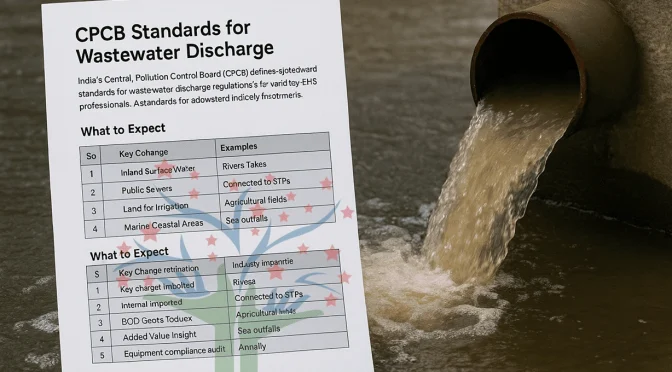
The Central Pollution Control Board (CPCB) sets technical parameters that residential STP effluent must meet before discharge. Location and disposal methods affect these standards. The board balances environmental protection with practical implementation.
BOD, TSS, and pH Parameters for Treated Water
Residential STPs must keep Biochemical Oxygen Demand (BOD) levels at ≤10 mg/L. This measurement shows how much oxygen microorganisms just need to break down organic matter in wastewater. High BOD points to treatment issues and depletes oxygen in water bodies.
The treated effluent’s Total Suspended Solids (TSS) should stay under 10 mg/L. High TSS blocks sunlight from reaching aquatic life and damages ecosystems. This is a big deal as it means that drainage systems can get clogged. Regular TSS monitoring helps maintain treatment efficiency.
Treated water’s pH should remain between 6.5-9.0. This range creates the best conditions for treatment and prevents infrastructure corrosion. Bacterial growth slows down outside this range, which affects the treatment process.
Fecal Coliform and Nitrogen Limits
Treated effluent must have fecal coliform counts below 1000 MPN/100 mL. This shows how well the disinfection works and protects public health from waterborne diseases. Raw sewage usually contains fecal coliform counts between 10^6 to 10^8 MPN/100mL, so the treatment must reduce these levels substantially.
The board limits Total Nitrogen to ≤10 mg/L and Ammonical Nitrogen to ≤5 mg/L. These limits stop nutrient pollution that could cause algal blooms and disrupt ecosystems.
24/7 Online Monitoring Requirements for Large STPs
STPs handling more than 1 MLD (Million Liters per Day) must install 24/7 online effluent monitoring systems. These systems track pH, BOD, TSS, and flow rate continuously. The CPCB/SPCB portal receives this data regularly, which ensures transparency and stops manual log tampering.
The 2019 announcement stated: “We will put a condition of 24/7 monitoring on existing and future STPs, including residential and commercial ones”. The government checks implementation progress every six months, especially in areas facing sewage pollution challenges.
Consent to Establish and Operate: Application Process
Getting legal permission to build and operate STPs in residential projects involves a two-stage process. The process needs careful preparation and must comply with current STP legal standards.
Preparing Technical Documentation and Design Reports
Developers must compile a complete set of technical documentation that includes:
- STP design details with hydraulic calculations based on pollution load
- Sewage generation and inflow computation reports
- Site and layout plans showing STP location and connections
- Operation and maintenance protocols
- Detailed process flow diagrams
Submitting CTE Application to State PCB
The documentation package needs submission through the Online Consent Management and Monitoring System (OCMMS) portal of the respective State Pollution Control Board. The steps involve:
- Registration on the SPCB website to get login credentials
- Selection of “Consent to Establish” under application type
- Upload of all required documents and affidavits
- Payment of appropriate fees calculated based on investment value
Getting CTO After Installation and Testing
Developers must complete these steps after construction but before operations begin:
- Submit Form II application for Consent to Operate
- Include recent effluent test reports (not older than 3 months)
- Schedule SPCB inspection to verify installation matches approved plans
- Show successful trial runs
Validity Periods and Renewal Requirements
Each pollution potential category has different validity periods:
- Red category: 5 years
- Orange category: 10 years
- Green category: 15 years
The renewal application needs submission at least four months before expiry to get a 5% fee rebate.
Operational Compliance and Enforcement Measures
STP legal compliance doesn’t stop after installation. Residential projects must follow strict operational protocols throughout their STP’s lifecycle.
Regular Effluent Testing and Laboratory Reports
Residential projects need effluent testing every six months through NABL-accredited laboratories. These tests verify compliance with prescribed BOD, TSS, pH, and fecal coliform limits. The projects must maintain daily operational logs that document tank levels, pump run-times, and shutdowns. STPs handling loads above 1 MLD require 24/7 online effluent monitoring systems to track critical parameters continuously.
Sludge Management and Disposal Protocols
Environmental protection depends on proper sludge handling. Residential STPs must use authorized disposal methods at designated sites or convert sludge to manure. The country’s STPs generate about 104,210 tons of sludge combined. Lime addition helps control odor problems during storage and processing.
Penalties for Non-Compliance Under Water Act
Legal violations have serious consequences. First-time offenses can result in fines up to ₹1 lakh. Repeated non-compliance leads to utility disconnection, prosecution with possible five-year imprisonment, and environmental compensation charges. The Water Act lets authorities revoke operational consent and close facilities.
NGT Directives and Legal Consequences
The National Green Tribunal requires local bodies to achieve 100% sewage treatment and reuse. The NGT imposes penalties on non-functional STPs in housing complexes. The tribunal can direct SPCBs to levy Environmental Compensation charges and cut off utilities like water and electricity.
Conclusion
STP legal standards are a critical requirement for all residential projects in India. This piece explores the detailed regulatory framework that is 49 years old through the Water Act of 1974 and 37 years old through the Environment Protection Act of 1986. These acts make proper sewage treatment mandatory. Residential developers should note that projects generating 50-100 KLD of sewage need mandatory STPs, especially those with more than 50 units.
State Pollution Control Boards are decisive players in this regulatory world and have substantial authority over STP implementation. Projects need both Consent to Establish before construction and Consent to Operate before commissioning to operate legally.
Technical standards need strict adherence too. The CPCB parameters serve as non-negotiable standards for treated effluent quality: BOD ≤10 mg/L, TSS ≤10 mg/L, pH between 6.5-9.0, and fecal coliform below 1000 MPN/100mL. On top of that, facilities exceeding 1 MLD capacity must use continuous online monitoring systems that send data directly to regulatory authorities.
Operational compliance goes beyond installation. Regular effluent testing, proper sludge management, and detailed record-keeping are the foundations of ongoing STP management. Non-compliance can get pricey with substantial financial penalties, utility disconnection, and even imprisonment in extreme cases.
Without doubt, these regulations need commitment and expertise to navigate. Proper sewage treatment means more than just meeting legal obligations—it shows environmental stewardship and protects public health. Looking toward 2026, developers who tackle these requirements head-on will avoid penalties while helping create cleaner water bodies and healthier communities in India.
Frequently Asked Questions
Q1. Are STPs mandatory for all residential projects in India?
STPs are mandatory for residential projects generating between 50-100 KLD of sewage or with more than 50 units. Projects with built-up areas under 20,000 square meters must obtain consent from their respective State Pollution Control Boards.
Q2. What are the key effluent discharge standards for residential STPs?
Residential STPs must meet the following standards: BOD ≤10 mg/L, TSS ≤10 mg/L, pH between 6.5-9.0, and fecal coliform below 1000 MPN/100mL. For larger STPs handling more than 1 MLD, 24/7 online monitoring is required.
Q3. What is the process for obtaining legal permission to build and operate an STP?
The process involves two stages: obtaining a Consent to Establish (CTE) before construction and a Consent to Operate (CTO) before commissioning. This requires submitting technical documentation, design reports, and undergoing inspections by the State Pollution Control Board.
Q4. How often should effluent testing be conducted for residential STPs?
Residential projects must conduct effluent testing every six months through NABL-accredited laboratories. Daily operational logs are also mandatory, and for STPs handling loads above 1 MLD, continuous online monitoring is required.
Q5. What are the consequences of non-compliance with STP regulations?
Non-compliance can result in severe penalties, including fines up to ₹1 lakh for first-time offenses, utility disconnection, prosecution with potential imprisonment for up to five years, and environmental compensation charges. The authorities can also revoke operational consent, leading to facility closure.
Key Takeaways
Understanding STP legal standards is crucial for residential developers to avoid severe penalties and ensure environmental compliance in India’s evolving regulatory landscape.
• All residential projects with 50+ units or generating 50-100 KLD sewage must install STPs and obtain SPCB consent before construction and operation.
• Treated effluent must meet strict CPCB standards: BOD ≤10 mg/L, TSS ≤10 mg/L, pH 6.5-9.0, and fecal coliform <1000 MPN/100mL.
• Large STPs (>1 MLD capacity) require mandatory 24/7 online monitoring systems that continuously transmit data to regulatory authorities.
• Non-compliance carries severe consequences including fines up to ₹1 lakh, utility disconnection, facility closure, and potential imprisonment up to 5 years.
• Operational compliance demands regular effluent testing every six months through NABL-accredited labs, proper sludge management, and detailed record-keeping.
The regulatory framework continues tightening with NGT directives mandating 100% sewage treatment, making proactive compliance essential for avoiding costly legal battles and contributing to India’s environmental protection goals.