


Selecting an STP for an apartment complex, gated society, or residential layout depends directly on daily water consumption and flat count. For statutory guidelines and compliance details, see our comprehensive Apartment STP Engineering & Sizing Guide.
SUSBIO manufactures prefabricated packaged FRP systems and modular underground biological plants engineered to fit tight basement and ground-level setbacks:
| Residential Setup / Flats | Estimated Sewage (LPD) | Recommended Capacity | Footprint (Sq. Ft.) | Recommended Technology |
|---|---|---|---|---|
| Villas / 5–15 Flats | 3,000 – 8,000 | 5 – 10 KLD | 100 – 160 | Packaged FRP (SUSBIO ECOTREAT) |
| Mid-Rise (25–50 Flats) | 15,000 – 30,000 | 20 – 35 KLD | 220 – 350 | Packaged MBBR / Underground |
| Large Society (60–120 Flats) | 40,000 – 75,000 | 50 – 80 KLD | 450 – 650 | Modular MBBR / SBR |
| Township (150+ Flats) | 90,000 – 150,000+ | 100+ KLD | 800+ | Civil SBR / Custom RCC |
Planning an STP for your Apartment or Housing Project?
Get an exact footprint layout, sizing calculation, and CAPEX/OPEX quote customized for your society’s occupancy.
What Is a Residential Sewage Treatment Plant?
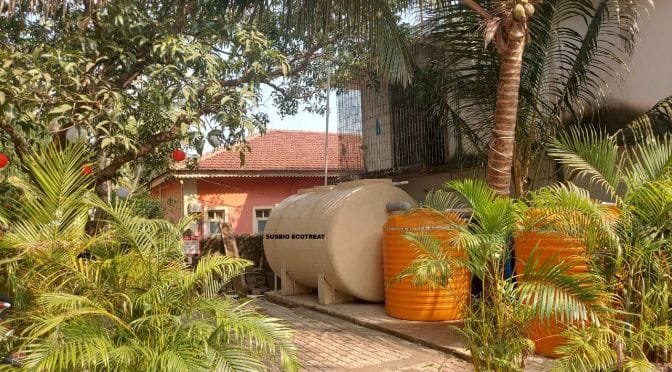
A residential sewage treatment plant is a system designed to treat wastewater generated in homes, apartments, or residential complexes. It processes sewage through various biological, physical, and chemical methods to remove contaminants, resulting in treated water that meets environmental standards.
Key components of a residential STP include:
Primary Treatment: Removal of large solids and debris.
Secondary Treatment: Biological treatment to break down organic matter using microorganisms.
Tertiary Treatment: Advanced filtration and disinfection to ensure the water is safe for reuse or discharge.
Why Do Residential Areas Need Sewage Treatment Plants?
Engineered for Residential Communities: Odor, Noise & Maintenance
Residential complexes have unique operational constraints compared to industrial setups. SUSBIO plants are configured specifically to overcome domestic society challenges:
- Odor-Free Basement & Ground Installation: Closed bioreactor design paired with an activated carbon exhaust adsorption system traps hydrogen sulfide ($H_2S$) and volatile organic compounds, allowing placement directly under podiums or parking slots without bad smells.
- Low-Noise Air Blowers (< 65 dB): Twin-lobe air blowers are housed inside custom acoustic silencing enclosures to keep sound below residential ambient thresholds.
- Treated Water Recycling (40–45% Freshwater Savings): Output water meets strict CPCB urban reuse parameters (BOD ≤ 10 mg/L, TSS ≤ 10 mg/L, COD ≤ 50 mg/L), making it fully compliant for dual-plumbing toilet flushing and landscape gardening.
- Low Energy Consumption: Automated PLC timers cycle aeration cycles based on peak morning and evening domestic flows, lowering monthly society maintenance bills.
Key Benefits of Packaged STPs over Traditional Systems:
- Water Conservation: Packaged STPs recycle treated wastewater for use in landscaping, toilets, and other non-potable applications, reducing reliance on fresh water.
- Energy Efficiency: Packaged STPs use advanced technology to minimize energy consumption, making them more eco-friendly and cost-effective in the long run.
- Lower Environmental Impact: Due to their compact design and energy-efficient systems, packaged STPs have a smaller carbon footprint and contribute less to pollution and waste.
- Cost-Effectiveness: With lower installation and maintenance costs, packaged STPs offer better financial value for residential and commercial projects.
- Sustainability: By incorporating green building standards, packaged STPs help real estate developers align with eco-friendly goals and certifications like LEED.
This table should help clarify the key advantages of sustainable sewage systems and packaged STPs over traditional systems, making it clear how these solutions contribute to water conservation, lower energy use, and a smaller environmental footprint.
Types of Sewage Treatment Technologies for Residential Use
Several advanced technologies are available for residential sewage treatment, each tailored to specific needs and site conditions:
Activated Sludge Process (ASP): A widely used method involving aeration and biological treatment.
Sequential Batch Reactor (SBR): Ideal for residential areas due to its compact design and efficiency in treating high organic loads.
Moving Bed Biofilm Reactor (MBBR): Known for its low maintenance and adaptability to varying wastewater flows.
Membrane Bioreactor (MBR): Combines biological treatment with membrane filtration for superior water quality.
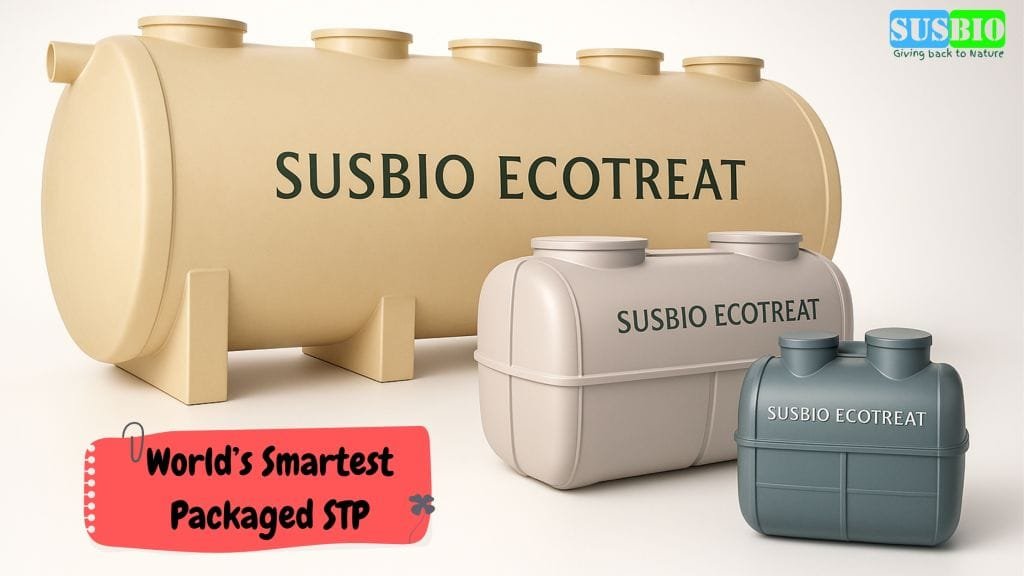
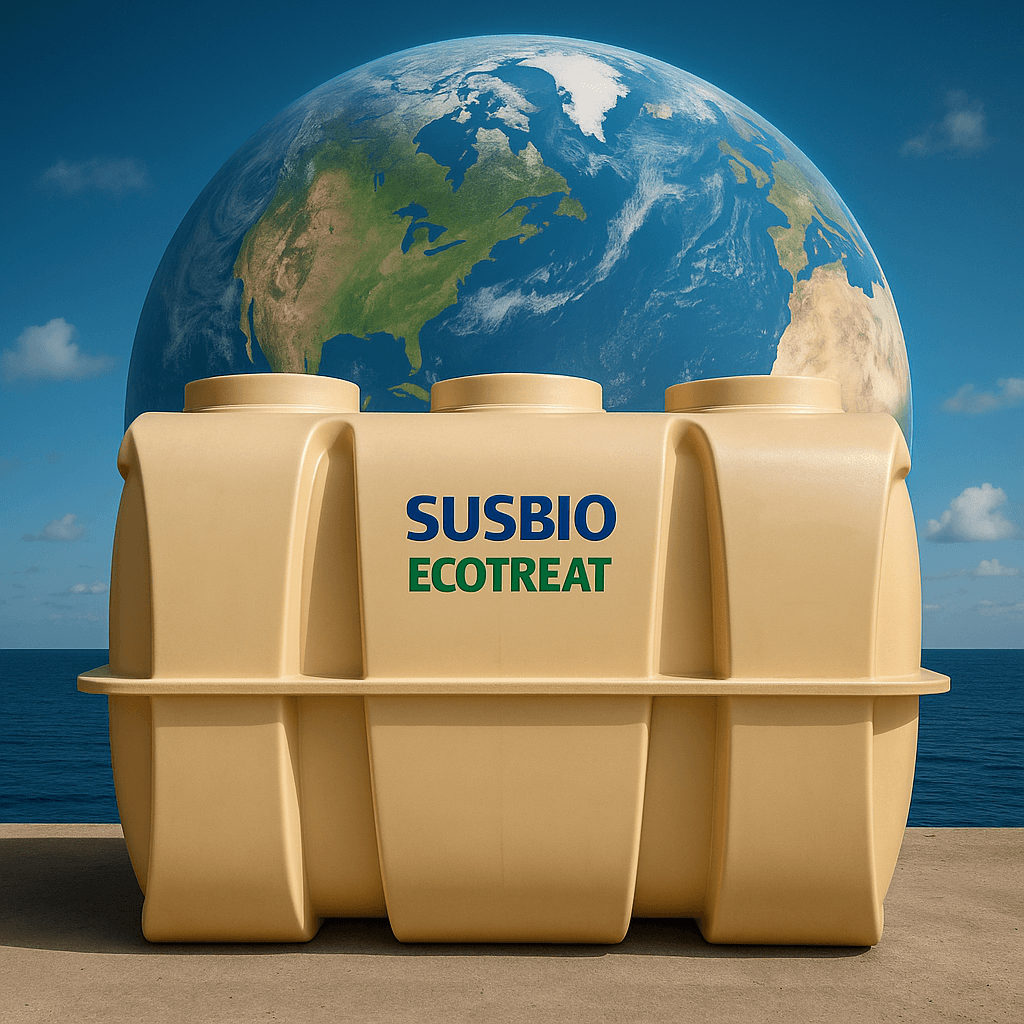
Packaged STPs: Prefabricated units like SUSBIO ECOTREAT, designed for easy installation, operation, and maintenance.
Factors to Consider When Choosing a Residential STP
Selecting the right STP involves evaluating multiple factors to ensure optimal performance:
Capacity: Determine the STP size based on the number of residents and daily water usage.
Space Availability: Opt for compact systems if land is limited.
Energy Efficiency: Choose systems with low operational costs.
Maintenance Requirements: Select technologies that are easy to maintain and have reliable service support.
Compliance: Ensure the STP meets local regulatory standards.
Why Choose SUSBIO for Residential Sewage Treatment?
SUSBIO is a leader in manufacturing and supplying cutting-edge sewage treatment solutions tailored for residential projects. With their flagship product, SUSBIO ECOTREAT, they offer:
Innovative Design: Compact and prefabricated for easy installation.
Advanced Treatment: Dual-treatment processes for superior performance.
Durability: High-quality materials with a long lifespan.
Cost Efficiency: Affordable solutions with low operating costs.
Sustainability: Eco-friendly processes that align with global green standards.
Benefits of Installing a Residential STP
Cost Savings: Reduces water bills by reusing treated water for non-potable purposes.
Enhanced Property Value: Modern sewage systems are a selling point for residential properties.
Eco-Conscious Living: Promotes sustainable water management.
Regulatory Compliance: Avoids penalties and ensures smooth operation of residential projects.
Conclusion
Residential sewage treatment plant model is not just a regulatory requirement but a necessity for sustainable urban living. With the growing emphasis on environmental conservation and water management, installing an efficient STP is an investment in the future. SUSBIO’s expertise in designing innovative and reliable wastewater treatment plant process systems makes them the ideal partner for residential wastewater solutions.
Choose SUSBIO ECOTREAT for your residential STP needs and experience the benefits of advanced technology, cost efficiency, and sustainability. Contact SUSBIO today to learn more about their customized sewage treatment solutions. provided by a leading sewage treatment plant manufacturer in Gurgaon.
Frequently Asked Questions
Question 1: How much space is needed for an apartment STP plant?
Answer: Packaged FRP plants like SUSBIO ECOTREAT require 60% less footprint than conventional civil aeration tanks. A typical 10 KLD plant requires approximately 100–160 sq. ft., while a 50 KLD society system needs around 450–650 sq. ft.
Question 2: Is an STP mandatory for residential apartments in India?
Answer: Yes. As per Central Pollution Control Board (CPCB) directives, State Pollution Control Boards (e.g., MPCB, KSPCB, GSPCB), and the National Green Tribunal (NGT), residential complexes exceeding 20,000 sq. meters built-up area or 50+ dwelling units are legally required to operate an on-site STP with zero untreated discharge.
Question 3: What is the daily power consumption for a residential STP?
Answer: An energy-efficient 20 KLD residential MBBR STP consumes approximately 12 to 18 kWh (electrical units) per day, depending on aeration cycles and feed pump duty hours.


6 Comments
[…] in India, where urbanization and population growth continue to place stress on the environment. Residential sewage treatment plant (STP) offer an efficient solution for treating wastewater, ensuring compliance with environmental […]
[…] high-quality FRP packaged sewage treatment plant can revolutionize wastewater management for residential complexes, commercial establishments, and industrial facilities. With increasing environmental concerns and […]
[…] Savings: A well-designed Residential STP reduces sewage disposal costs by eliminating the need for external sewage tankers and centralized […]
[…] As urbanization accelerates, residential developers face increasing challenges in managing wastewater efficiently. Sewage treatment plants (STPs) have become essential for residential projects, ensuring compliance with environmental regulations, promoting water reuse, and enhancing property value. This article explores the benefits of STPs for residential developments, highlights advanced technologies like SUSBIO ECOTREAT, and provides insights into why they are a must-have for modern housing projects. […]
[…] increasing urbanization and stricter environmental norms, the demand for advanced and reliable STP for Residential and Industrial Projects has never been […]
[…] urban populations grow and environmental awareness increases, sustainable and efficient residential wastewater treatment solutions have become essential. Modern homes demand systems that not only ensure public health […]