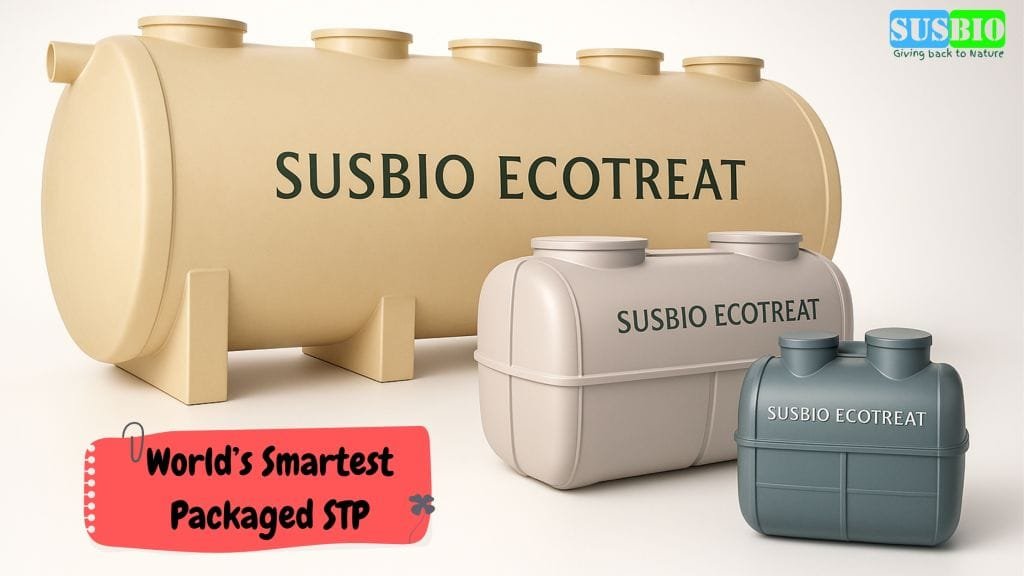


Tamil Nadu, with Chennai as its bustling capital, is a state at the forefront of India’s industrial and urban growth. Yet, beneath this progress lies a pressing challenge: the effective management and treatment of sewage. As population density, urbanization, and industrial activity surge, the need for advanced, sustainable sewage treatment solutions has never been greater. In this comprehensive blog, we explore the sewage treatment scenario in Chennai and Tamil Nadu, the issues and stakes involved, and why the SUSBIO ECOTREAT IoT-enabled packaged STP is the most advanced, future-ready solution for the region.
The Sewage Treatment Landscape in Chennai and Tamil Nadu
Current State of Infrastructure
Tamil Nadu’s urban centers, led by Chennai, generate more than 5,599 million liters per day (MLD) of sewage. However, the state’s infrastructure can treat only about 2,603.9 MLD (including operational, under-construction, and proposed capacity), with just 797.3 MLD currently in operation. This leaves a significant volume of untreated or partially treated sewage entering water bodies and the environment.
Chennai, with a population exceeding 10 million, has 12 major sewage treatment plants (STPs) at five locations: Kodungaiyur, Koyambedu, Nesapakkam, Perungudi, and Alandur. These collectively have an installed capacity of 727–745 MLD but often operate below capacity due to network gaps, maintenance issues, and illegal connections. About 250 million liters of raw sewage are discharged into city rivers daily, a stark indicator of the gap between infrastructure and actual treatment.
Key Issues Facing Sewage Treatment
- Underutilization of STPs: Many plants run at 50% capacity or less due to incomplete sewer networks and illegal connections, especially in narrow lanes and unconnected areas.
- Network Gaps: Large parts of Chennai and other urban centers lack proper sewage collection systems, resulting in direct discharge into drains, rivers, and the sea.
- Maintenance and Operational Challenges: Frequent breakdowns, lack of skilled manpower, and administrative inefficiencies hamper optimal plant performance.
- Environmental Pollution: Untreated sewage pollutes rivers (Cooum, Adyar, Buckingham Canal), groundwater, and the Bay of Bengal, threatening public health and biodiversity.
- Rural and Peri-Urban Gaps: While core city areas have underground sewerage, adjacent and newly incorporated areas still rely on septic tanks and unregulated septage disposal, increasing environmental risks.
Chennai's Growing Districts — Where STP Demand Is Rising Fastest
The Chennai metropolitan region’s wastewater challenge extends well beyond the city core. Four surrounding districts are seeing the fastest growth in STP demand — and all fall largely outside the CMWSSB centralized sewerage network, making on-site packaged STPs the only viable compliance path.
Chengalpattu — OMR Southern Corridor and Mahindra World City
Carved out of Kancheepuram district in 2019, Chengalpattu has become one of Tamil Nadu’s fastest-growing industrial and residential districts — anchored by Mahindra World City, the OMR southern stretch, and multiple SIPCOT industrial zones. New residential townships, IT campuses, and manufacturing units here sit entirely outside CMWSSB’s network. SUSBIO ECOTREAT’s prefabricated, plug-and-play design suits these projects precisely: compact enough for constrained industrial plots, fast enough for pre-handover installation timelines, and TNPCB-compliant from day one.
Sriperumbudur — Auto Manufacturing and Industrial-Grade Effluent
Sriperumbudur is home to Hyundai’s India manufacturing plant, major electronics assembly facilities, and a dense concentration of ancillary manufacturing units. Industrial-adjacent effluent here carries variable BOD/COD loads that purely domestic STPs aren’t designed to handle. SUSBIO ECOTREAT’s Anaerobic + MBBR biological process handles these variable loads within a compact, low-maintenance system suited to Sriperumbudur’s constrained industrial plot sizes and TNPCB compliance requirements.
Kanchipuram — Silk Industry Wastewater and Heritage Tank Sensitivity
Kanchipuram’s silk weaving and dyeing industry generates effluent with high colour, BOD, and chemical oxygen demand loads — distinct from domestic sewage and requiring robust biological treatment. Simultaneously, Kanchipuram’s network of heritage tanks and temple ponds are classified as sensitive receiving bodies under TNPCB norms, raising the discharge standard for nearby projects. SUSBIO ECOTREAT meets TNPCB’s Class A standards throughout, protecting Kanchipuram’s heritage water bodies while handling the variable effluent loads from dyeing operations.
Tiruvallur — North Chennai Industrial Corridor
Tiruvallur district anchors Chennai’s northern industrial expansion — encompassing the Ponneri industrial zone, petrochemical facilities, and significant logistics and light manufacturing activity. Projects in Tiruvallur face the same TNPCB compliance obligations as core Chennai, but without access to centralized sewerage infrastructure. SUSBIO ECOTREAT’s automated, low-maintenance operation suits the industrial profile of Tiruvallur, where reliable TNPCB-compliant treatment without dedicated on-site technical staff is the practical requirement.
The Importance of Advanced Sewage Treatment in Tamil Nadu
1. Water Security and Reuse
Tamil Nadu is a water-stressed state. The reuse of treated wastewater is a cost-effective and environmentally sustainable alternative to freshwater resources, especially for industrial and non-potable applications. Chennai’s Koyambedu and Kodungaiyur plants are pioneering large-scale water reuse, supplying treated water to industrial belts and freeing up freshwater for domestic use.
2. Public Health Protection
With high population density and dependence on groundwater, untreated sewage poses a severe risk of waterborne diseases and groundwater contamination. Advanced treatment directly protects public health.
3. Environmental Sustainability
Proper sewage treatment is essential to rejuvenate rivers, restore groundwater, and protect coastal and marine ecosystems. It also helps meet regulatory standards and avoid penalties.
4. Climate Resilience
Treated wastewater provides a reliable water source during droughts and summers, making urban centers more resilient to climate change and water scarcity.
Regulatory Framework and Policy Initiatives
Stringent Standards and Enforcement
- TNPCB and CPCB Norms: The Tamil Nadu Pollution Control Board (TNPCB) mandates strict effluent standards for BOD, COD, TSS, and fecal coliforms. Treated sewage must be recycled and monitored online, with data linked to regulatory servers.
- Consent and Monitoring: All large construction projects and STPs require TNPCB consent, regular renewal, and online monitoring systems.
- Septage Management: The state has issued comprehensive guidelines for septage management, aiming for universal sanitation and safe disposal in both urban and rural areas.
Innovative Projects
- Koyambedu TTRO Plant: India’s largest water reuse project, using advanced technologies like ultrafiltration, reverse osmosis, and ozonation, enables Chennai to reuse over 20% of its treated water.
Co-Treatment of Septage: Facilities like Nesapakkam allow safe, regulated disposal of septage from unsewered areas, reducing illegal dumping and environmental harm.
The Limitations of Traditional Sewage Treatment Plants
| Challenge | Impact in Chennai/Tamil Nadu |
|---|---|
| Land and Space Constraints | Urban areas lack space for large plants |
| High Operational Costs | Energy- and labor-intensive systems |
| Maintenance Complexity | Skilled operators are scarce; frequent breakdowns |
| Underutilization | Many STPs run below capacity due to network gaps |
| Slow Deployment | Construction is costly and time-consuming |
| Environmental Risks | Untreated sewage pollutes rivers, groundwater, sea |
Traditional activated sludge process (ASP) plants, while effective, are often too large, costly, and slow to deploy for the rapidly evolving needs of urban and peri-urban Tamil Nadu.
The Rise of Packaged, Prefabricated STPs: A Game-Changer
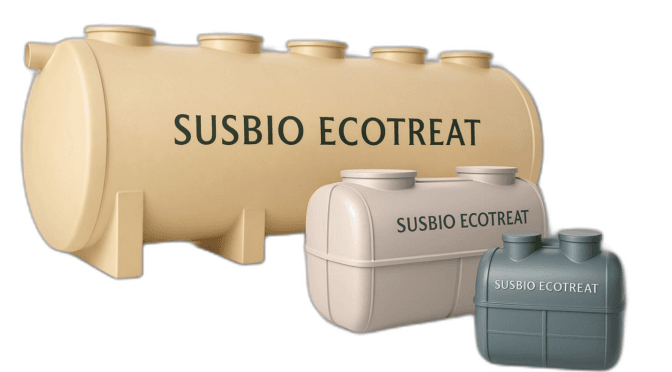
What Are Packaged STPs?
Packaged sewage treatment plants (STPs) are compact, prefabricated units that integrate advanced biological and physical treatment processes in a modular, plug-and-play system. They are ideal for urban, peri-urban, and industrial settings where land is scarce and rapid deployment is essential.
Benefits:
- Minimal Land Use: Suitable for tight urban spaces and retrofits.
- Rapid Installation: Prefabricated and ready to install within weeks.
- Low Maintenance: Automated systems reduce the need for skilled labor.
- Energy Efficiency: Advanced designs consume far less power.
- High Treatment Standards: Engineered for compliance with TNPCB and CPCB norms.
- Scalability: Modular units can be expanded as needs grow.
SUSBIO ECOTREAT: The Smartest, Most Advanced Solution for Tamil Nadu
Key Features of SUSBIO ECOTREAT
- Dual-Stage Biological Treatment
SUSBIO ECOTREAT combines anaerobic and aerobic processes for comprehensive removal of organic pollutants and pathogens, ensuring high-quality effluent that meets the toughest regulatory standards.
- Compact, Prefabricated, Plug-and-Play Design
- Space-Saving: Modular design fits even in small or underground spaces, perfect for dense urban and industrial areas.
- Quick Installation: Arrives ready-to-install, reducing project timelines and labor costs.
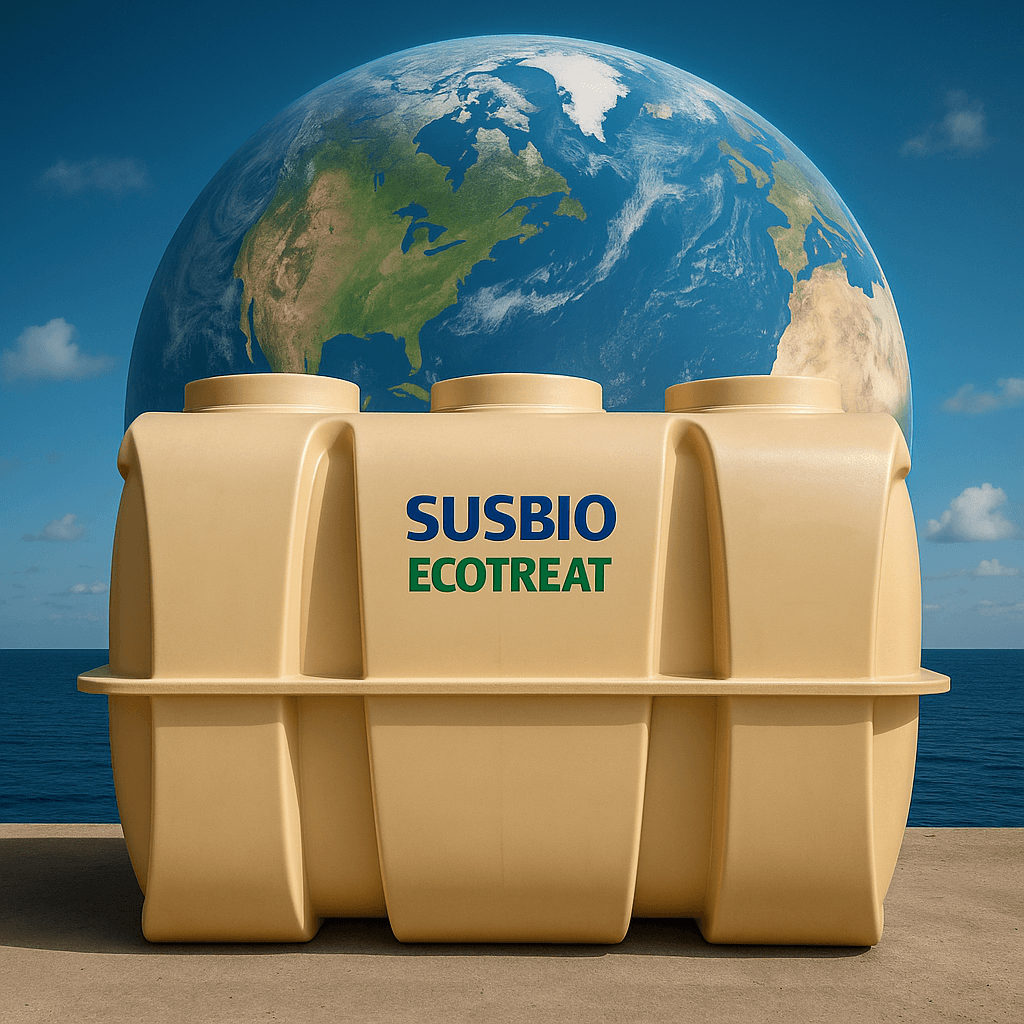
- Durable Construction: Made from fiber-reinforced plastic (FRP), it resists corrosion and is built for Tamil Nadu’s climate.
- IoT-Enabled Automation
- Real-Time Monitoring: Integrated sensors and IoT controls provide continuous oversight of performance, effluent quality, and system health.
- Remote Operation: Operators can manage the plant from anywhere, ideal for unmanned or remote sites.
- Predictive Maintenance: IoT analytics predict maintenance needs, minimizing downtime and repair costs.
- Energy Efficiency and Sustainability
- Up to 70% Less Electricity: SUSBIO ECOTREAT’s design drastically reduces energy consumption, lowering operational costs and carbon footprint.
- Low Sludge Production: Efficient processes minimize sludge, reducing disposal challenges and costs.
- Water Reuse: Advanced tertiary treatment ensures treated water is safe for reuse in landscaping, flushing, cooling, or industrial applications.
- Customizable and Scalable
From small apartment complexes and commercial buildings to large industries and municipal projects, SUSBIO ECOTREAT’s modular design can be tailored and expanded to meet any need.
SUSBIO ECOTREAT vs. Traditional STPs: A Tamil Nadu Perspective
| Feature | SUSBIO ECOTREAT | Traditional STP |
|---|---|---|
| Installation Time | Weeks | Months to Years |
| Land Requirement | Minimal/Underground | Extensive |
| Energy Consumption | Up to 70% less | High |
| Automation | Fully automatic, IoT-enabled | Manual/Semi-automatic |
| Maintenance | Low, remote monitoring | High, on-site required |
| Water Reuse Capability | High (tertiary treatment) | Limited |
| Environmental Impact | Minimal, eco-friendly | Often significant |
| Scalability | Modular, easily expanded | Difficult/expensive |
| Suitability for Urban TN | Ideal (compact, decentralized) | Poor |
Real-World Applications in Chennai and Tamil Nadu
Urban and Peri-Urban Communities
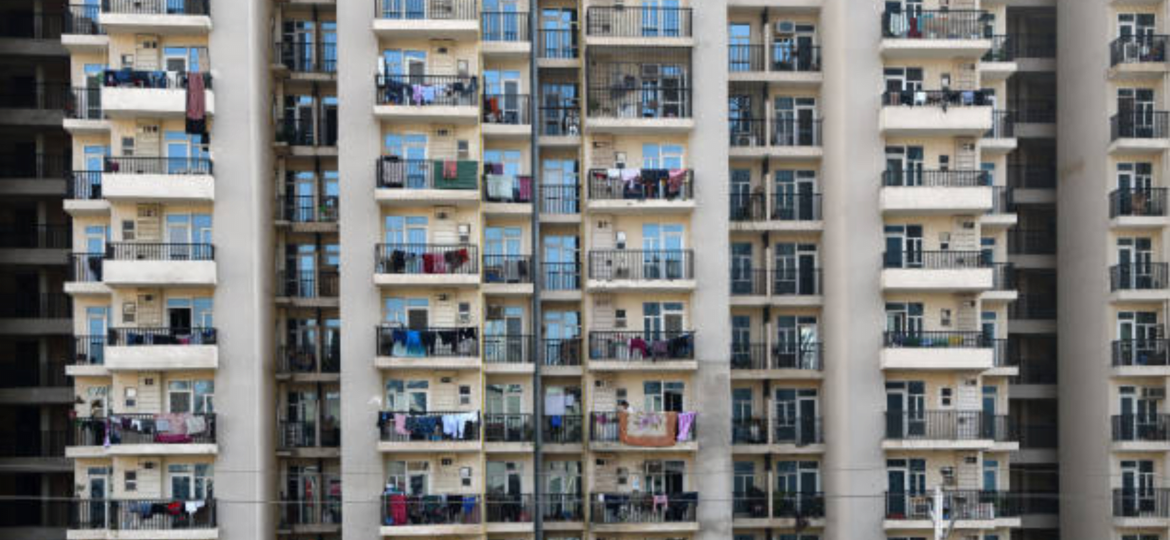
Packaged STPs like SUSBIO ECOTREAT offer decentralized solutions for apartment complexes, gated communities, and peri-urban areas where centralized sewerage is impractical or delayed.
Industries and Commercial Sites
With growing industrialization and regulatory scrutiny, industries need to meet TNPCB norms and enable water recycling for non-potable uses. SUSBIO ECOTREAT ensures compliance and sustainability.
Hospitals, Hotels, and Institutions
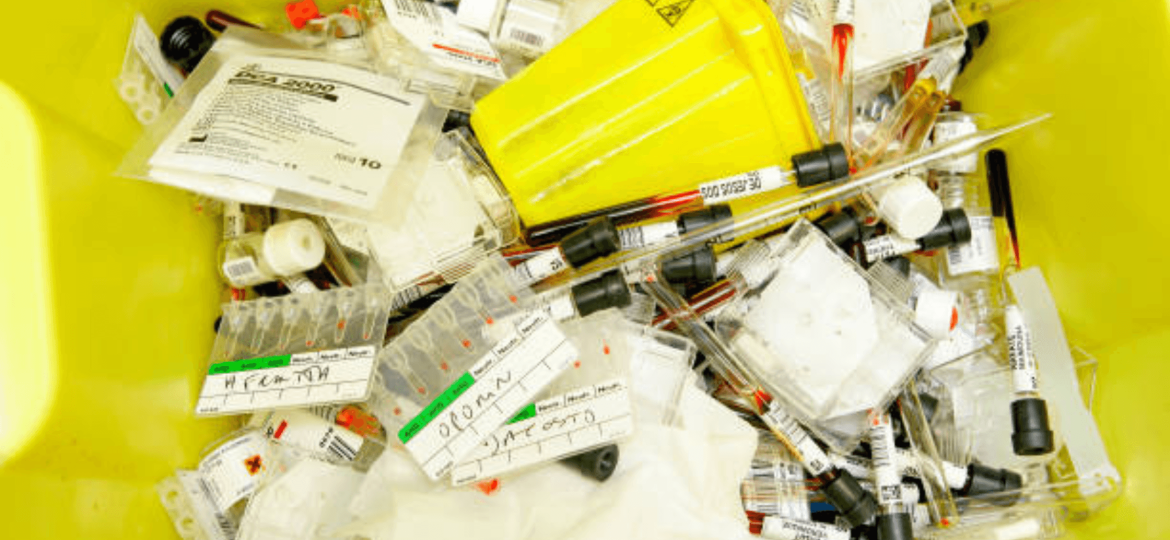
Tamil Nadu’s booming healthcare and hospitality sectors require reliable, high-standard sewage treatment. SUSBIO ECOTREAT’s automated, low-maintenance design is ideal for facilities with fluctuating occupancy and limited technical staff.
Environmental and Economic Benefits
- Pollution Prevention
By treating sewage at the source, SUSBIO ECOTREAT prevents harmful nutrients and pathogens from entering Tamil Nadu’s rivers, lakes, and coastal waters, protecting aquatic life and public health.
- Water Conservation and Reuse
Treated water can be safely reused for irrigation, landscaping, dust control, and industrial processes, reducing demand on Tamil Nadu’s limited freshwater resources and supporting sustainable agriculture and industry.
- Cost Savings
- Lower Operational Costs: Energy savings and minimal maintenance translate to significant long-term savings.
- Reduced Labor Needs: Automation and IoT monitoring cut labor costs and the need for skilled operators on-site.
- Climate Resilience
Energy-efficient, modular systems are more adaptable to Tamil Nadu’s changing climate, urban growth, and environmental challenges, supporting long-term sustainability.
Regulatory Compliance and Future-Readiness
SUSBIO ECOTREAT is engineered to comply with TNPCB and national guidelines, ensuring:
- Effluent quality meets or exceeds discharge standards for BOD, COD, pH, TSS, and pathogens.
- Regular monitoring and reporting for regulatory compliance, with online data linkage as required by TNPCB.
- Safe sludge handling and minimal environmental impact.
By choosing advanced, IoT-enabled packaged STPs, Tamil Nadu can accelerate progress toward universal sanitation, clean water, and sustainable development.
The Smartest STP for Tamil Nadu: SUSBIO ECOTREAT’s IoT Revolution
SUSBIO ECOTREAT’s latest models represent the cutting edge of sewage treatment technology:
- IoT-based Smart Controls: Real-time data, remote management, and predictive analytics ensure optimal performance with minimal intervention.
- Plug-and-Play Installation: Rapid deployment with minimal disruption to communities or businesses.
- Customizable, Modular Design: Scalable to meet the needs of any project, from small homes to large institutions.
No other packaged STP combines such advanced automation, energy efficiency, and ease of use-making SUSBIO ECOTREAT the smartest, most future-ready sewage solution for Chennai and Tamil Nadu.
Conclusion: A Clean, Resilient Future for Chennai and Tamil Nadu
Chennai and Tamil Nadu’s sewage treatment challenge is a test of their commitment to sustainable development, public health, and environmental stewardship. SUSBIO ECOTREAT’s IoT-enabled packaged STP offers a transformative solution-combining advanced technology, compact design, and eco-friendly operation.
For policymakers, urban planners, developers, industries, and community leaders, the path forward is clear:
- Protect water resources and public health.
- Comply with evolving regulations and sustainability goals.
- Invest in the smartest, most efficient sewage treatment technology.
With SUSBIO ECOTREAT, Chennai and Tamil Nadu can lead India in decentralized, smart wastewater management-preserving their natural beauty, water security, and quality of life for generations to come.
Ready to transform sewage treatment in Chennai and Tamil Nadu? Discover how SUSBIO ECOTREAT delivers unmatched efficiency, sustainability, and value for your community, business, or project today.
Frequently Asked Questions
Q1: Does SUSBIO ECOTREAT comply with Tamil Nadu Pollution Control Board (TNPCB) standards?
Yes. SUSBIO ECOTREAT is engineered to meet or exceed TNPCB discharge standards for BOD, COD, TSS, and fecal coliforms throughout its capacity range, with monitoring and reporting support to help projects maintain their TNPCB consent and comply with online data linkage requirements.
Q2: Why is decentralized treatment important in Chennai and Tamil Nadu?
Tamil Nadu generates over 5,599 MLD of sewage but can currently treat only around 797.3 MLD in operational capacity — a substantial gap that centralized infrastructure alone cannot close. Decentralized, on-site packaged STPs like SUSBIO ECOTREAT help individual developments achieve TNPCB compliance without depending on centralized network expansion.
Q3: Can SUSBIO ECOTREAT support water reuse for industrial applications?
Yes. Chennai’s Koyambedu TTRO plant — India’s largest water reuse project — demonstrates the scale of industrial water reuse possible in Tamil Nadu. SUSBIO ECOTREAT’s treatment output meets TNPCB Class A standards, making it suitable for industrial process water, cooling tower makeup, toilet flushing, and landscaping reuse applications.
Q4: Is SUSBIO ECOTREAT suitable for hospitals and healthcare facilities in Tamil Nadu?
Yes. Tamil Nadu’s healthcare sector requires reliable, high-standard sewage treatment with consistent effluent quality regardless of occupancy variation. SUSBIO ECOTREAT’s automated, low-maintenance design suits hospitals and healthcare institutions where dedicated technical staff for wastewater operations isn’t practical.
Q5: How does SUSBIO ECOTREAT help prevent pollution of rivers like the Cooum and Adyar?
By treating sewage at source before it reaches storm drains or waterways, SUSBIO ECOTREAT reduces the volume of untreated sewage entering sensitive receiving bodies including the Cooum River, Adyar River, and Buckingham Canal — helping projects meet TNPCB’s Class A discharge standards for catchment-adjacent sites.
Q6: How much electricity does SUSBIO ECOTREAT save compared to conventional STPs?
SUSBIO ECOTREAT consumes 70% less electricity than conventional sewage treatment systems — reducing both operational costs and carbon footprint for projects across Chennai and Tamil Nadu over a 15–25 year operational lifespan.
Q7: Can SUSBIO ECOTREAT handle sewage from unsewered areas in Tamil Nadu?
Yes. In areas without access to CMWSSB or local body sewerage networks — which covers a large portion of Tamil Nadu’s peri-urban and rural districts — SUSBIO ECOTREAT functions as a fully self-contained on-site treatment system, supporting Tamil Nadu’s push toward universal sanitation and reducing dependence on septic tanks and illegal dumping.
Q8: Is SUSBIO ECOTREAT suitable for projects in Chengalpattu district?
Yes. Chengalpattu’s fast-growing residential townships, IT campuses, and SIPCOT industrial zones sit largely outside CMWSSB’s sewerage network. SUSBIO ECOTREAT’s compact, prefabricated design installs in days and meets TNPCB compliance from day one — suited to Chengalpattu’s pre-handover installation timelines and constrained plot sizes along the OMR southern corridor and Mahindra World City.
Q9: Can SUSBIO ECOTREAT handle the industrial effluent loads from Sriperumbudur’s manufacturing units?
Yes. Sriperumbudur’s auto manufacturing and electronics assembly facilities generate variable BOD/COD loads that standard domestic STPs aren’t designed for. SUSBIO ECOTREAT’s Anaerobic + MBBR biological process handles these variable industrial-adjacent loads while consistently maintaining TNPCB-compliant effluent quality.
Q10: Is SUSBIO ECOTREAT suitable for Kanchipuram’s silk dyeing industry and heritage tank protection?
Yes. Kanchipuram’s silk dyeing operations generate high-colour, high-BOD effluent requiring robust biological treatment. SUSBIO ECOTREAT meets TNPCB’s Class A standards throughout, protecting Kanchipuram’s heritage tanks and temple ponds — classified as sensitive receiving bodies — while handling the variable effluent profile from dyeing and weaving operations.
Q11: Does SUSBIO ECOTREAT serve projects in Tiruvallur district?
Yes. Tiruvallur’s North Chennai industrial corridor — encompassing the Ponneri industrial zone, petrochemical facilities, and logistics operations — sits largely outside centralized sewerage infrastructure. SUSBIO ECOTREAT’s automated, low-maintenance operation delivers reliable TNPCB-compliant treatment without requiring dedicated on-site technical staff, suited to Tiruvallur’s industrial and peri-urban project profile.