


Hospital and healthcare wastewater requires strict segregation and specialized biological treatment to handle high chemical oxygen demand (COD), disinfectant residues, and biological pathogens. Sizing an on-site hospital STP depends on active bed capacity, outpatient (OPD) footfall, and operational laundry volume (typically 350 to 450 Liters per Bed per Day under CPCB standards).
| Facility Scale | Bed Capacity | OPD & Staff Flow | Recommended STP | Treatment Technology | Footprint |
|---|---|---|---|---|---|
| Nursing Home / Daycare | 10 – 30 Beds | 2,000 – 4,000 LPD | 10 – 15 KLD | Packaged FRP MBBR + UV | 120 – 180 sq. ft. |
| Mid-Scale Hospital | 50 – 100 Beds | 8,000 – 15,000 LPD | 35 – 50 KLD | Modular MBBR + Dual Disinfection | 300 – 450 sq. ft. |
| Multi-Specialty Facility | 150 – 300 Beds | 20,000 – 40,000 LPD | 80 – 120 KLD | Advanced MBR / Automated SBR | 600 – 900 sq. ft. |
| Tertiary Care / Medical College | 400+ Beds | 50,000+ LPD | 200+ KLD | Civil SBR + Ozonation / UV | 1,400+ sq. ft. |
Critical Clinical Engineering Standards for Hospital STPs
- Chemical Pre-Treatment Neutralization: Equalization and chemical neutralizing buffers prevent high concentrations of detergents, formalin, and surgical scrub antiseptics from inhibiting biological aeration tanks.
- Dual-Stage Pathogen Disinfection: High-contact sodium hypochlorite dosing combined with inline ultraviolet (UV) sterilization ensures non-detectable fecal coliforms (< 100 MPN/100 mL), eliminating multi-drug resistant pathogens before discharge.
- Strict ETP vs. STP Segregation: Liquid bio-medical waste from laboratories, radiology, and operation theaters is pre-treated and segregated through dedicated lines under Bio-Medical Waste Management (BMWM) Rules before reaching biological reactors.
- Safe Sludge Handling & Dewatering: Closed filter presses and automated bag dewatering systems protect maintenance staff from direct contact with potentially infectious biological solids.
Planning an STP for a Hospital or Healthcare Facility?
Get an engineered bed-to-flow sizing calculation, P&ID layout drawing, and a CPCB/SPCB compliant commercial quotation.
Why Hospital Wastewater Is Different — And Why It Matters for STP Design
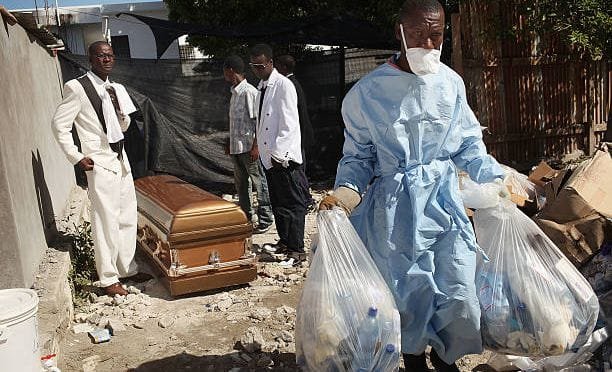
A standard residential STP is designed to treat domestic sewage — toilet waste, kitchen water, washbasin drainage. The organic load is relatively predictable. The pathogens are primarily faecal bacteria and common viruses. The treatment challenge is biological oxygen demand removal and pathogen reduction.
Hospital wastewater presents a fundamentally different treatment challenge across four dimensions:
1. Pharmaceutical and chemical contamination
Hospital wastewater contains active pharmaceutical ingredients (APIs) that pass through patients metabolically or are disposed of through drainage. These include antibiotics, analgesics, hormones, antifungals, and cytotoxic agents from chemotherapy. Standard biological treatment processes do not reliably remove these compounds. They pass through conventional STPs and enter the environment, contributing to antimicrobial resistance in water bodies receiving the discharge.
From 13 years in the field: This is the hospital STP problem that almost nobody mentions in specification documents. Pharmaceutical residues in hospital effluent require advanced tertiary treatment — activated carbon adsorption or advanced oxidation — to remove effectively. A hospital that installs an MBBR system and calls it done is meeting BOD norms but not addressing the specific environmental risk of its effluent. For large hospitals, particularly those with oncology units, this is a serious gap.
2. Disinfectant inhibition of biological treatment
Hospitals use disinfectants at much higher concentrations than domestic settings — chlorine-based agents, quaternary ammonium compounds, iodophors, glutaraldehyde. When these enter the STP inlet in surge quantities — during a floor cleaning cycle or OT disinfection event — they can kill or severely inhibit the biological treatment biomass. A hospital STP must have adequate equalization capacity and ideally an equalization design that buffers chemical shock loads before they reach the biological reactor.
3. Variable flow patterns and load variability
Hospital sewage generation follows distinct patterns — peaks during morning rounds, meal service, and OT schedules. Wastewater from different departments varies enormously in composition. OT effluent contains surgical prep solutions and antiseptics. Laboratory drainage contains chemical reagents and staining agents. Radiology may produce developing chemicals and, in nuclear medicine departments, low-level radioactive tracers. Laundry generates high-volume, high-temperature effluent with detergents and disinfectants.
Not all of these streams should be combined without pre-treatment. Laboratory waste containing concentrated chemicals, cytotoxic agents, or radioactive material must be segregated and handled separately — not mixed into the main STP inlet. This is a specific requirement under India’s Bio-Medical Waste Management Rules, 2016.
4. Pathogen profile
Hospital wastewater contains pathogens at higher concentrations and of greater clinical concern than domestic sewage — including ESKAPE organisms (Enterococcus, Staphylococcus aureus, Klebsiella, Acinetobacter, Pseudomonas, Enterobacter), drug-resistant tuberculosis organisms, hepatitis B and C virus, and other bloodborne pathogens from surgical and laboratory drainage. Effective disinfection — UV or chlorination — is not optional for a hospital STP. It is the stage that defines whether the treated effluent is genuinely safe.
The Regulatory Framework for Hospital STPs in India
Hospital STPs in India are governed by a more complex regulatory framework than residential or commercial STPs — combining CPCB general standards with the Bio-Medical Waste Management Rules and in some cases MoEFCC Environmental Clearance requirements.
| Regulation | Authority | What It Requires for Hospitals |
|---|---|---|
| Environment (Protection) Act 1986 + Schedule VI | CPCB / SPCB | STP mandatory for hospitals generating above threshold sewage volumes — BOD ≤ 30 mg/L discharge standard (national minimum) |
| Bio-Medical Waste Management Rules 2016 (amended 2018, 2019) | MoEFCC / CPCB | Segregation of liquid chemical and pharmaceutical waste from general STP inlet; specific disposal requirements for laboratory chemicals and cytotoxic waste |
| NABH Accreditation Standards (6th Edition, 2023) | NABH | Wastewater management is an assessed parameter — hospitals seeking NABH accreditation must demonstrate proper STP operation and compliance |
| State SPCB Discharge Standards | State PCBs | Many states (Karnataka, Maharashtra, Tamil Nadu, Gujarat) apply stricter standards than CPCB minimums — check applicable SPCB norms for your state |
| EIA Notification 2006 | MoEFCC | Large hospitals (above 100 beds in certain categories) may require Environmental Clearance — STP design documentation is part of EC application |
Important distinction: CPCB’s general discharge standard is BOD ≤ 30 mg/L. Many state SPCBs — particularly Karnataka (KSPCB), Maharashtra (MPCB), and Tamil Nadu (TNPCB) — apply stricter standards for reuse applications: BOD ≤ 10 mg/L. Always confirm the applicable SPCB standard for your hospital’s location before finalising STP design specifications.
The Role of Sewage Treatment Plants in Hospitals
Sewage treatment plants (STPs) for hospitals are designed to treat wastewater before its safe release into the environment or reuse within the facility. These plants employ advanced technologies to remove contaminants and disinfect the water, ensuring compliance with environmental standards and promoting sustainability.
Key Functions of Hospital STPs:
Proper Disposal of Waste: Eliminates pathogenic microorganisms, preventing the spread of infections.
Water Resource Protection: Reduces water pollution by treating wastewater effectively.
Effluent Reuse: Enables recycling of treated water for non-potable applications like irrigation or flushing.
Sustainability Promotion: Demonstrates commitment to environmentally responsible practices.
The Sewage Treatment Process for Hospitals
A hospital STP typically follows a multi-stage process to ensure thorough treatment of wastewater. Here’s a breakdown of the steps:
1. Preliminary Treatment (Pretreatment):
-
Objective: Removal of large debris and heavy solids.
-
Process: Wastewater passes through bar screens to filter out items like sticks, rags, and other substantial materials. Heavy inorganic matter (grit) is removed using a grit chamber. This step is an essential part of primary sewage treatment, as it prepares the wastewater for further treatment by removing large particles and debris that can hinder the process.
2. Primary Treatment:
-
Objective: Separation of solids and greases from the wastewater.
-
Process: Water is directed into primary clarifiers, where solids settle at the bottom (primary sludge) and lighter particles, such as oils, float to the surface to be skimmed off.
3. Secondary Treatment:
-
Objective: Removal of dissolved organic matter through biological processes.
-
Process: Wastewater flows into an aeration tank, where bacteria break down organic contaminants. Oxygen is supplied to support microbial activity. Treated water then enters secondary clarifiers, where solids settle as secondary sludge. Part of this sludge is recycled for the activated sludge process, while the rest is sent for digestion.
4. Tertiary Treatment:
-
Objective: Advanced purification and disinfection.
-
Process: This stage removes remaining suspended solids, organic matter, and pathogenic microorganisms through methods like filtration, UV disinfection, or chlorination. The treated water is now safe for reuse or disposal.
Benefits of Sewage Treatment Plants in Hospitals

Implementing an effective sewage treatment plant offers numerous advantages:
- Proper Waste Disposal: Ensures that harmful pathogens and contaminants are neutralized, preventing the spread of diseases and protecting public health.
- Environmental Protection: Reduces pollution in water bodies, preserving aquatic life and maintaining ecosystem balance.
- Resource Conservation: Treated water can be reused for non-potable purposes such as flushing toilets, irrigation, or cooling systems, promoting sustainability and reducing freshwater consumption.
- Regulatory Compliance: Helps hospitals meet environmental regulations and avoid fines, fostering a culture of accountability and responsibility.
- Enhanced Reputation: Demonstrates a commitment to environmental stewardship and public health, strengthening the institution’s reputation within the community.
Advanced Technologies in Hospital Sewage Treatment
Modern sewage treatment plants for hospitals incorporate cutting-edge technologies to enhance efficiency and effectiveness:
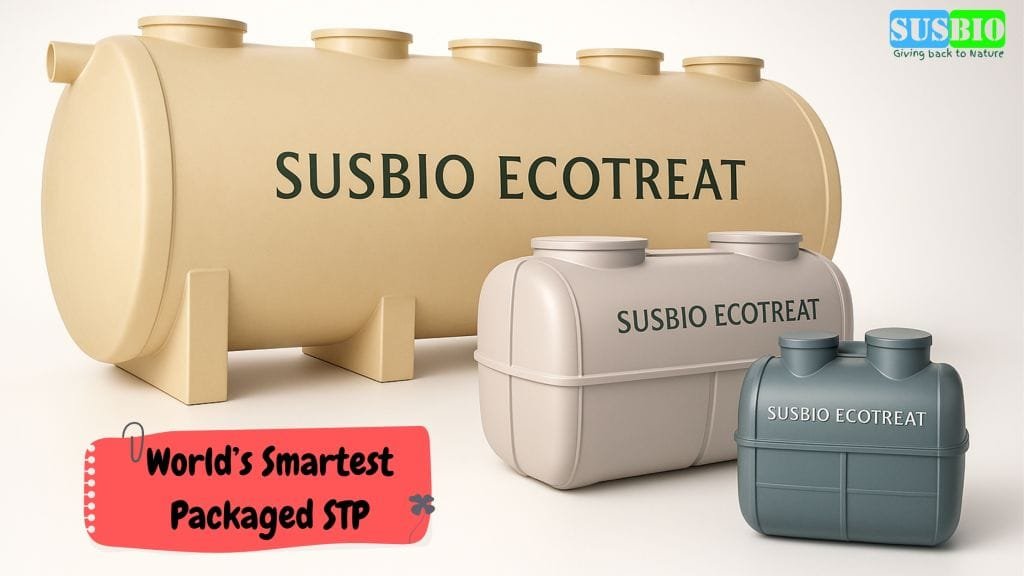
- Anaerobic + MBBR (Moving Bed Biofilm Reactor): Biofilm carriers provide a large surface area for microbial growth, giving stable performance under the variable loads typical of hospitals. This is the configuration SUSBIO ECOTREAT uses for packaged hospital STPs — compact, low-maintenance, and reliable across fluctuating flows.
- Membrane Bioreactors (MBR): Combine biological treatment with membrane filtration. They produce a high-clarity effluent but carry higher capital cost, greater energy demand, and membrane-fouling maintenance — factors worth weighing against the discharge standard a facility actually needs to meet.
- Sequencing Batch Reactors (SBR): Operate in timed batches, allowing precise process control and good adaptability to varying wastewater loads — typically suited to larger flows.
For most hospital applications, a well-designed Anaerobic + MBBR system with appropriate tertiary polishing meets CPCB and SPCB discharge standards reliably, without the operating cost and complexity of membrane systems. The right technology is the one matched to your flow, footprint, and the SPCB standard for your location.
Case Study: 15 KLD Hospital STP, Kolhapur
When Shree Mahalaxmi Diatone Institute and Research Centre in Kolhapur, Maharashtra needed to meet tightened effluent discharge norms, the challenge was exactly the one described above — hospital wastewater carrying pharmaceutical residues, clinical pathogens, and disinfectant chemicals that ordinary domestic treatment isn’t built to handle.
SUSBIO supplied and commissioned a 15 KLD ECOTREAT prefabricated STP — Anaerobic + MBBR, factory-built in FRP and installed on site in days rather than the weeks an RCC plant would take. The compact modular footprint suited a working hospital with limited space, fully-automatic operation removed the need for a dedicated on-site operator, and the system runs on up to 70% less electricity than a conventional STP.
The outcome: a compliant, low-maintenance plant treating the facility’s wastewater to the standard its SPCB Consent to Operate requires — commissioned without disrupting day-to-day hospital operations.
Read the full project: SUSBIO ECOTREAT at Shree Mahalaxmi Diatone Institute, Kolhapur
How to Size an STP for a Hospital — The Correct Methodology
STEP 1- Calculate Total Wastewater Generation
Use CPHEEO design flows for hospital applications:
- In-patients (with full amenities): 340 LPCD — this is the standard Indian design flow for in-patient wards with bathrooms
- Out-patients: 15 to 25 litres per OPD visit — highly variable depending on OPD type and patient volume
- Staff and visitors: 45 LPCD for staff on premises during shifts; 15 litres per visitor
- Canteen/dietary: Add 30 to 45 LPCD per in-patient if full food service is provided
- Laundry: 70 to 120 litres per bed per day for hospitals with in-house laundry
- HVAC and cooling: Depends on cooling tower design — get from MEP consultant
Step 2 — Calculate peak flow and equalization requirement
Apply a peak factor of 2.5 to 3.0 over average daily flow for residential wastewater streams. For hospitals, apply this to the in-patient and staff streams. OT and laboratory streams have different peak patterns that need separate analysis.
Step 3 — Size equalization tank
For hospital applications, equalization tank sizing should be 6 to 8 hours of average daily flow — larger than the residential recommendation of 4 to 6 hours. The additional equalization capacity buffers disinfectant shock loads from hospital cleaning cycles and smooths the OT schedule peaks.
| Hospital Size | Approximate In-Patients | Estimated Daily STP Flow | Recommended STP Capacity |
|---|---|---|---|
| Small nursing home / clinic | Up to 30 beds | 10 – 15 KLD | 15 – 20 KLD |
| Small hospital | 30 – 100 beds | 15 – 40 KLD | 20 – 50 KLD |
| Mid-size hospital | 100 – 250 beds | 40 – 100 KLD | 50 – 120 KLD |
| Large hospital | 250 – 500 beds | 100 – 200 KLD | 120 – 250 KLD |
| Multispecialty / teaching hospital | 500+ beds | 200 KLD+ | Project-specific sizing required |
These are indicative ranges only. Actual hospital STP capacity depends critically on OPD volumes, in-house laundry, canteen scale, staff numbers, and HVAC system design. We have seen 200-bed hospitals generating 35 KLD because they had no in-house laundry and minimal OPD volumes, and 150-bed hospitals generating 80 KLD because they ran a large OPD and full laundry service. Always size from actual flow data or detailed room-by-room water balance — not bed count alone.
SUSBIO ECOTREAT: The Best Sewage Treatment Plant for Hospitals
- Anaerobic + MBBR dual-stage treatment: Combines anaerobic breakdown with MBBR biofilm aeration for maximum contaminant removal and stable performance under variable hospital loads.
- Configurable tertiary stage: For hospitals with significant pharmaceutical loads or oncology units, ECOTREAT can be specified with activated carbon adsorption or advanced oxidation as a tertiary polishing stage — addressing the API and antimicrobial-resistance risk that biological treatment alone cannot remove.
- Prefabricated, modular design: Quick installation, easy scalability, and minimal footprint.
- Energy-efficient and low maintenance: Up to 70% less electricity than conventional STPs, with robust FRP construction for durability.
- Odour-free, silent operation: Ideal for sensitive hospital environments.
- Extended equalisation: Buffers disinfectant shock loads from cleaning and OT cycles before they reach the biological reactor — a hospital-specific design requirement, not an afterthought.
- Customisable solutions: Tailored to the specific needs of each healthcare facility.
- Regulatory compliance: Consistently meets or exceeds CPCB and SPCB discharge standards, with documentation support for NABH assessments.
Frequently Asked Questions — Hospital STPs in India
1. Is an STP mandatory for all hospitals in India?
Yes. Under the Environment (Protection) Act, 1986 and Central Pollution Control Board (CPCB) standards, healthcare facilities generating trade or domestic effluent above defined thresholds (typically 10 KLD or more) must operate a dedicated on-site treatment system and hold an active Consent to Operate (CTO) from their respective State Pollution Control Board (SPCB)[cite: 10]. In addition, the Bio-Medical Waste Management Rules, 2016 require strict segregation and pre-treatment of liquid clinical effluent prior to disposal[cite: 10]. Valid STP operation and test logs are also mandatory criteria during NABH accreditation evaluations[cite: 10].
2. What makes a hospital STP different from a residential STP?
Unlike residential sewage, hospital wastewater contains high concentrations of active pharmaceutical ingredients (APIs), antibiotics, disinfectants, detergents, and clinical pathogens[cite: 10]. Key engineering differences include:
- Extended Equalization (6–8 Hours): Buffers chemical shock loads from surgical cleaning and floor wash downs to prevent biomass washout[cite: 10].
- Advanced Tertiary Polishing: Granular Activated Carbon (GAC) filtration to adsorb trace pharmaceuticals and residual organics[cite: 10].
- Multi-Barrier Disinfection: Dual disinfection utilizing sodium hypochlorite dosing alongside inline ultraviolet (UV) irradiation ensures non-detectable pathogens without excessive chemical residual[cite: 10].
3. What STP capacity does a 100-bed hospital require?
A standard 100-bed facility typically requires an STP capacity of 45 to 60 KLD, depending on laundry and food service operations[cite: 10]:
- Inpatient Load (at 80% occupancy): 80 beds × 340 LPD = ~27.2 KLD[cite: 10]
- OPD & Staff Requirement: 5 to 10 KLD[cite: 10]
- On-Site Laundry & Dietary Services: 10 to 18 KLD[cite: 10]
- Total Daily Flow: ~42 to 55 KLD (a 50–60 KLD plant provides standard operational safety margin)[cite: 10].
4. What documentation is required for NABH accreditation audits?
NABH assessors evaluate environmental safety protocols under the Facility Management and Safety (FMS) domain[cite: 10]. Essential records include:
- Valid Consent to Establish (CTE) and Consent to Operate (CTO) certificates from the SPCB[cite: 10].
- Monthly water testing reports from an NABL-accredited or SPCB-recognized laboratory validating discharge limits[cite: 10].
- Daily operational log sheets (inlet flow, aeration blower runtimes, chemical dosing logs, and treated water meter readings).
- Active preventative maintenance contracts (AMC service logs) and hazardous sludge disposal manifests[cite: 10].
5. Can treated water from a hospital STP be reused for toilet flushing?
Yes, provided the plant is equipped with complete tertiary treatment and disinfection stages[cite: 10]. Effluent meeting strict parameters—BOD < 10 mg/L, TSS < 10 mg/L, and Fecal Coliform < 100 MPN/100 mL—is safe for dual-plumbing toilet flushing and grounds landscape irrigation[cite: 10]. The hospital plumbing design must enforce completely separate, color-coded piping (typically purple) with zero cross-connections to potable lines[cite: 10].
6. Which hospital laboratory waste streams must NOT enter the STP?
Under the Bio-Medical Waste Management Rules, 2016, chemical and hazardous clinical liquid streams must be segregated at source and pre-treated in an Effluent Treatment Plant (ETP) or handled by authorized common disposal facilities (CBMWTF)[cite: 10]. Do not discharge into the STP:
- Concentrated laboratory reagents, fixatives (formalin/formaldehyde), and histological stains[cite: 10].
- Cytotoxic drug residues and chemotherapy preparation liquid waste[cite: 10].
- Radioactive waste and radionuclides from nuclear medicine departments[cite: 10].
- Concentrated disinfectants and chemical sterilants (> 5% active concentration)[cite: 10].
7. What does a turnkey hospital STP cost in India?
Indicative turnkey capital costs for prefabricated FRP packaged systems (SUSBIO ECOTREAT healthcare specification)[cite: 10]:
- 10 to 20 KLD (Clinics & Small Nursing Homes): ₹6 Lakhs to ₹12 Lakhs[cite: 10]
- 25 to 50 KLD (50–100 Bed Hospitals): ₹12 Lakhs to ₹22 Lakhs[cite: 10]
- 60 to 100 KLD (100–200 Bed Multi-Specialty Facilities): ₹22 Lakhs to ₹40 Lakhs[cite: 10]
- 100 to 250+ KLD (Tertiary Care & Medical Campuses): ₹40 Lakhs to ₹75+ Lakhs[cite: 10]
Note: Final pricing depends on site excavation constraints, required civil buffer tanks, automated PLC levels, and state-specific tertiary discharge criteria (e.g., KSPCB, MPCB, TNPCB)[cite: 10].
Conclusion
Sewage treatment plants are indispensable for hospitals striving to maintain high standards of hygiene while minimizing their environmental impact. By investing in a well-designed STP, healthcare facilities not only comply with regulations but also contribute to a sustainable future. Proper wastewater management is a testament to a hospital’s dedication to public health and environmental conservation. Advanced solutions like SUSBIO ECOTREAT empower healthcare facilities to manage wastewater safely, efficiently, and sustainably demonstrating a true commitment to public health and environmental stewardship.
Related Resources
• How a Sewage Treatment Plant Works — Complete India Guide 2026: https://susbio.in/sewage-treatment-plant-how-it-works/
• SUSBIO ECOTREAT — Packaged STP Specifications: https://susbio.in/susbio-ecotreat/
• CPCB STP Guidelines India 2026: https://susbio.in/government-standards-and-guidelines-for-sewage-treatment-plants-stps-in-india-2026-expert-guide/
• STP Capacity Calculator: https://susbio.in/how-to-calculate-sewage-treatment-plant-capacity/
• STP Technologies Comparison — MBBR, SBR, MBR, ASP: https://susbio.in/exploring-the-top-10-sewage-treatment-plant-technologies-in-india/
• Free Consultation: https://susbio.in/contact-us/




2 Comments
[…] compliance with environmental regulations, maintain public health, and protect natural resources. Hospital sewage treatment plants are specially designed to tackle these unique pollutants, making them indispensable for any […]
[…] In this blog, we will explore why hospitals need sewage treatment plants, the ideal features of an STP for hospitals, and why SUSBIO ECOTREAT stands out as the best […]