

A single car wash uses 150 to 400 liters of fresh water. Without proper treatment, this wastewater carries harmful contaminants like oil, detergents and phosphates into the environment. An effluent treatment plant treats and recycles up to 90% of used water. This helps car wash businesses cut costs and meet pollution control board regulations. We explore what an effluent treatment plant is, specifically the car wash ETP, and how the effluent treatment plant process works to deliver both compliance and cost savings. You will find the legal requirements, water recycling benefits, detailed treatment stages, and the return on investment timeline for implementing an effluent treatment plant (etp) at your car wash facility.
What is a Car Wash Effluent Treatment Plant (ETP)?
Definition and Purpose of ETP for Car Washing
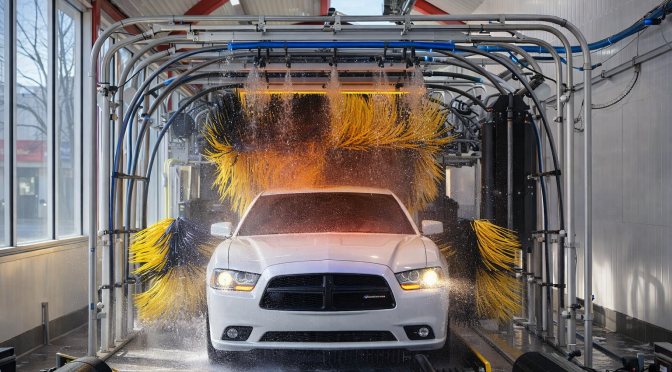
A Car Wash Effluent Treatment Plant (ETP) is a specialized water treatment system designed to treat and recycle wastewater generated from car washing activities. Standard wastewater systems can’t handle the unique composition of car wash effluent. This treatment plant removes contaminants before water reuse or discharge into municipal drains. The system treats used water that has oil, grease, detergents, wax, suspended solids, and hydrocarbons.
The dual purpose operates on two fronts. First, the effluent treatment plant process will give environmental protection by meeting stringent pollution control norms before discharge. Second, it makes water recycling possible for non-potable applications within the car wash facility. Professional car wash operations discharge effluent to sanitary sewers and treatment works owned by the public. This makes pretreatment through oil/water separators or clarifiers a must. Pretreatment occurs in underground tanks where water drains by gravity. Baffles separate compartments to allow only subsurface water flow.
Common Pollutants in Car Wash Wastewater
Car wash wastewater carries more than soap residue. The contamination profile has multiple pollutant categories that need systematic removal:
- Oil and grease from petroleum products on vehicle surfaces or equipment leaks, measured using EPA method 1664
- Suspended solids like mud, dust, rubber particles, sand, rust, and tire debris that reduce water clarity
- Detergents and surfactants like linear alkylbenzene sulfonates (LAS) that increase chemical oxygen demand
- Heavy metals such as lead, copper, and zinc from older vehicles or soiled surfaces
- Chemical oxygen demand (COD) and biological oxygen demand (BOD) from organic matter and contaminants
- Ammonia nitrogen from tire chemicals that promote algae growth
- Phosphates and other chemicals from cleaning agents
Car wash effluent may also contain hydrofluoric acid and ammonium bifluoride products depending on cleaning solutions used.
How Car Wash ETP Is Different from Industrial Effluent Treatment Plant
Car wash ETPs focus on specific automotive-related pollutants. Industrial effluent treatment plants handle broader chemical hazards. Industrial ETPs treat wastewater from pharmaceuticals, textiles, chemicals, and metal processing. They deal with toxic substances, complex chemical compounds, and hazardous sludge. These systems employ intensive chemical treatments like coagulation for heavy metals and advanced membrane filtration that has reverse osmosis.
Car wash systems address oil separation, suspended solids removal, and surfactant breakdown. The treatment complexity remains lower and targets automotive surface contaminants rather than industrial manufacturing byproducts.
Legal Compliance Requirements for Car Wash Operations
Pollution Control Board (PCB) Discharge Norms
A car wash that fails to meet Central Pollution Control Board standards exposes your business to legal action under the Water (Prevention and Control of Pollution) Act, 1974 and Environment Protection Act, 1986. State Pollution Control Boards enforce discharge limits for parameters including pH (5.5-9.0), BOD (30 mg/L for inland surface water), COD (250 mg/L), TSS (100 mg/L), and oil and grease (10 mg/L). Car wash effluent treatment plant systems must meet these specifications before discharge into public sewers, inland waters, or for land irrigation.
Mandatory ETP Installation Guidelines by State Authorities
State authorities require Consent to Establish (CTE) before construction and Consent to Operate (CTO) before starting operations. Karnataka State Pollution Control Board mandates proper treatment of commercial wastewater for all car wash units. Maharashtra Pollution Control Board enforces 100% recycling requirements for certain automotive operations. These consents specify permissible discharge values, monitoring frequencies, and reporting obligations that your facility must maintain.
Penalties and Shutdown Risks for Non-Compliance
Non-compliance violations trigger financial consequences. Clean Water Act violations cost in excess of INR 4,219,022.54 per day, per violation. Pollution control boards issue notices, conduct inspections, and order operational shutdowns beyond monetary penalties. Persistent non-compliance results in lawsuits and criminal charges that erode customer trust. Receipt of a wastewater non-compliance notice starts the clock for continuous violations and escalating penalties.
Zero Liquid Discharge (ZLD) Compliance Standards
Zero Liquid Discharge systems have become mandatory for specific industries in critical pollution zones. ZLD technology achieves 90-95% water reuse by recycling all wastewater through purification, evaporation, and sludge dewatering. ZLD compliance eliminates liquid discharge to municipal sewers for car wash operations and produces only minimal solid waste. It meets environmental regulations in areas with discharge restrictions.
Cost Savings Through Water Recycling and Reuse
Water Bill Reduction: Recycling Up to 90% of Wastewater
Modern car wash effluent treatment plant systems recycle up to 90% of wastewater and cut municipal water consumption costs by a large margin. Studies indicate that facilities using water reclamation systems reduce fresh water use from 50% to as high as 83%. A top-tier reclaim system can reduce freshwater usage by up to 80%. The system filters and treats wash water from previous cycles for reuse during subsequent vehicle washes.
Think about a facility washing 80 cars daily and using around 30 gallons per vehicle. Daily consumption reaches 2,400 gallons without recycling. An 85% recovery rate means about 2,000 gallons get reused daily. This saves around INR 1,012.57 per day and roughly INR 371,273.98 in annual water bills. Car washes can reuse 900 liters when daily usage totals 1,000 liters and require only 100 liters of fresh water.
Lower Wastewater Disposal and Treatment Costs
Water savings create dual financial benefits. Sewer expenses drop substantially when water doesn’t flow down the drain. Sewer discharge fees are often calculated based on a fraction of metered water consumption. Recycling reduces sewage discharge by a high margin and eases dependence on municipal sewage systems. This proves especially valuable when you have strict sewage policies in your area.
Reduced Freshwater Dependency and Supply Costs
Car wash facilities lower freshwater procurement costs and reduce sewage disposal charges by treating and reusing wastewater. Water represents a major expense for car wash businesses in both water and sewer costs. Businesses save up to 90% of water with car wash ETP systems. This proves especially beneficial in areas facing water lack or high water tariffs.
ROI Timeline: Payback Period of 12-18 Months
Most clients achieve return on investment within 12-18 months. The system pays for itself through reduced water bills (up to 80% savings), lower wastewater disposal costs and compliance cost avoidance. A water recycling system costing around INR 472,530.52 with annual operating costs of INR 67,504.36–INR 84,380.45 delivers a payback period of 14-18 months. Some facilities report getting ROI by the second year of installation.
How Car Wash Effluent Treatment Plant Process Works
Pre-Treatment: Oil and Grease Separation
Wastewater first passes through inlet screening systems that remove plastics, stones and large debris. An oil skimmer removes floating oils and grease to prevent system fouling. The collection tank equalizes flow variations and provides buffer storage.
Primary Treatment: Coagulation and Flocculation
Aerated stirrers mix coagulants like polyaluminum chloride with wastewater. Studies show that 100 mg/L of sodium bentonite with 20 mg/L aluminum achieved turbidity reduction to 4-6 NTU and COD reduction to 158 mg/L. The clariflocculation chamber combines colloidal particles and emulsified oils into settleable flocs.
Secondary Treatment: Aeration and Biological Oxidation
Extended aeration makes microbial digestion of organic pollutants possible through continuous oxygen supply. Biological treatment reduced surfactants by 95-99% and COD by 87-95%. Oxygen concentration of 7-8 mg/L managed to keep purification at optimal levels.
Tertiary Treatment: Multi-Stage Filtration (PSF, ACF, UF)
Pressure sand filters remove fine suspended solids. Activated carbon filters eliminate odor, color and dissolved organics[292]. Ultrafiltration membranes remove colloids, bacteria and fine impurities[292] to produce reuse-quality water.
Treated Water Storage and Reuse Applications
Treated water gets reused for vehicle washing, floor cleaning, toilet flushing and landscaping.
Sludge Management and Disposal
Sludge dewatering using bag units reduces volume by 80-85% and produces dry sludge cake for disposal.
Conclusion
We explored how car wash effluent treatment plants deliver dual benefits: meeting pollution control board regulations and substantially reducing operational costs. The treatment process handles automotive-specific pollutants through multiple stages and enables up to 90% water recycling. This translates to substantial savings on water bills and disposal fees. Your facility can achieve return on investment within 12-18 months while protecting the environment and avoiding pricey penalties. The combination of compliance assurance and financial benefits makes ETP installation a smart business decision for modern car wash operations.
Key Takeaways
Car wash effluent treatment plants offer a powerful combination of regulatory compliance and financial benefits that make them essential for modern automotive cleaning operations.
- Massive water savings: ETPs recycle up to 90% of wastewater, cutting water bills by 80% and reducing freshwater dependency significantly.
- Legal compliance protection: Meeting PCB discharge norms prevents penalties exceeding INR 4.2 million per day and avoids forced shutdowns.
- Quick ROI realization: Most facilities recover their ETP investment within 12-18 months through reduced water and disposal costs.
- Multi-stage treatment process: Systems remove oil, grease, suspended solids, and chemicals through pre-treatment, biological oxidation, and advanced filtration.
- Dual cost reduction: Lower both freshwater procurement costs and wastewater disposal fees while meeting Zero Liquid Discharge standards.
The financial case is compelling: a facility washing 80 cars daily can save approximately INR 371,274 annually in water bills alone, while avoiding the risk of regulatory penalties and operational shutdowns. This makes ETP installation not just an environmental responsibility, but a strategic business investment.
Frequently Asked Questions
Q1. What is the main purpose of installing an effluent treatment plant at a car wash?
An effluent treatment plant removes toxic and non-toxic materials, chemicals, oil, grease, and detergents from car wash wastewater. This allows the water to be safely recycled for reuse within the facility or discharged into the environment with minimal environmental impact while meeting pollution control regulations.
Q2. How does a car wash ETP help reduce operational costs?
A car wash ETP can recycle up to 90% of wastewater, which significantly reduces water bills by up to 80%. It also lowers freshwater procurement costs and wastewater disposal fees. Most facilities recover their investment within 12-18 months through these combined savings.
Q3. What pollutants does a car wash effluent treatment plant remove?
Car wash ETPs remove oil and grease, suspended solids (mud, dust, tire debris), detergents and surfactants, heavy metals (lead, copper, zinc), chemical oxygen demand (COD), biological oxygen demand (BOD), ammonia nitrogen, and phosphates from the wastewater.
Q4. What are the legal consequences of not having an ETP for a car wash?
Operating without proper effluent treatment can result in penalties exceeding INR 4.2 million per day per violation under pollution control laws. Non-compliance can also lead to forced operational shutdowns, lawsuits, criminal charges, and damage to business reputation.
Q5. How does the car wash effluent treatment process work?
The treatment process involves multiple stages: pre-treatment removes oil and large debris, primary treatment uses coagulation to aggregate particles, secondary treatment employs biological oxidation to digest organic pollutants, and tertiary treatment uses multi-stage filtration to produce clean, reusable water.