

The ideal TDS level in drinking water is between 50 and 300 mg/L (ppm), with 50–150 mg/L considered the sweet spot for daily home consumption according to WHO and BIS (IS 10500) benchmarks.
TDS represents the concentration of dissolved minerals, salts, and organic matter in your water. While regulatory standards permit water up to 500 mg/L (and up to 2,000 mg/L in emergencies), maintaining this optimal range ensures essential mineral intake without the bitter, salty taste of hard water.
What is the Ideal TDS Level in Drinking Water?
Key Drinking Water TDS Thresholds (2026 Standards):
Optimal Sweet Spot: 50–150 mg/L (best taste and balanced daily hydration)
Safe Palatable Range: 150–300 mg/L (rich in natural calcium and magnesium)
BIS IS 10500 Acceptable Limit: 500 mg/L (upper safe threshold for tap/municipal water)
Avoid Below 50 mg/L: Demineralized water that leaches body electrolytes
Avoid Above 500 mg/L: Hard water that causes scaling and salty/bitter taste
Understanding the 2026 Standards
The right balance matters. Water with a TDS below 50 ppm often tastes flat and may lack essential electrolytes like Calcium and Magnesium. In some cases, ultra-low TDS water is considered “hungry,” meaning it can leach minerals from your body or the pipes it flows through.
On the other hand, water with high TDS (above 500 ppm) is classified as “Hard Water.” Depending on the dissolved minerals, this water can taste salty, bitter, or metallic. While the Bureau of Indian Standards (BIS IS 10500) sets the acceptable limit at 500 mg/L, they allow a permissible relaxation up to 2000 mg/L only when no alternative source is available. However, for modern residential health, experts recommend staying well below these maximum limits.
TDS Level Comparison Table
| TDS Range (ppm) | Quality Classification | Health & Taste Impact |
|---|---|---|
| Below 50 | Low / Poor | Lacks essential minerals; flat taste |
| 50 – 150 | Excellent | Ideal Range. Perfect mineral balance and taste. |
| 150 – 300 | Good | Safe and palatable for daily consumption. |
| 300 – 500 | Acceptable | Within BIS limits; may notice slight mineral taste. |
| 500-1200 | Poor / High | Within BIS permissible relaxation limit only when no alternative source is available; not recommended for daily use |
| Above 1200 | Unacceptable | Not fit for drinking; requires advanced RO treatment. |
TDS (Total Dissolved Solids) plays a key role in determining water quality and affects its taste and mineral content. Unlike floating impurities you can see, TDS consists of substances that completely dissolve into water molecules. Your drinking water’s safety standards and mineral content depend on understanding TDS composition.
Full form of TDS in water and its meaning
TDS stands for Total Dissolved Solids in water. These solids include all inorganic and organic substances that exist in water as molecules, ions, or micro-granular suspended matter. Water acts as a universal solvent and naturally absorbs minerals, salts, metals, and small amounts of organic matter as it moves through various environments. TDS measures everything dissolved in water that isn’t an H₂O molecule.
Common dissolved solids: calcium, magnesium, sodium
You’ll find these main components in TDS:
Cations (positively charged ions): Calcium, magnesium, potassium, and sodium
Anions (negatively charged ions): Carbonates, bicarbonates, chlorides, sulfates, and nitrates
Other minerals: Iron, zinc, copper, and fluoride
Trace elements: These include beneficial minerals and potentially harmful substances like lead and arsenic
Calcium and magnesium substantially contribute to water “hardness,” which differs from other water quality measures. Sodium and potassium shape water’s taste and can affect people on restricted diets.
Sources of TDS: natural and man-made
Water picks up TDS through various natural and human-created sources:
Natural sources:
- Mineral springs and underground aquifers where rocks release minerals into water
- Soil and clay that wash away during rainfall and natural erosion
- Seawater that seeps into coastal areas, especially where people extract too much groundwater
- Decomposing plants that add organic matter
Man-made sources:
- Farm runoff that contains fertilizers, pesticides, and herbicides
- Factory wastewater that releases metals and chemicals
- City runoff and sewage that contains detergents and organic materials
- Chemicals added during water treatment
- Old, corroded plumbing systems that release metals like copper and lead
Natural TDS levels can range from 30 mg/liter in pure water sources to 6000 mg/liter in areas rich with minerals.
Measurement units: ppm vs mg/L
Scientists measure TDS levels using two equivalent units:
Parts Per Million (PPM) shows how many parts of dissolved solids exist in a million parts of solution. To cite an instance, 1 ppm means 1 mg of dissolved solids exists in 1,000 g of water.
Milligrams per Liter (mg/L) tells us how many milligrams of dissolved solids are in one liter of water.
These measurements work similarly because 1 ppm equals 1 mg/L. WHO and BIS guidelines use both units when they specify acceptable TDS limits for drinking water.
Special digital TDS meters measure these levels by checking how well water conducts electricity, since dissolved ions make water more conductive.
Ideal TDS Level for Drinking Water in 2026
Your drinking water’s proper TDS level depends on health guidelines and how minerals affect your body. Safety organizations have created specific rules to keep your water safe and good-tasting for everyday use.
WHO and BIS guidelines for TDS in drinking water
The World Health Organization (WHO) suggests keeping drinking water TDS levels under 600 mg/L for good taste, with levels below 300 mg/L considered excellent for palatability. Water should have at least 100 mg/L of TDS to give you enough minerals. The Bureau of Indian Standards (BIS) takes a careful approach with a 500 mg/L limit. In spite of that, BIS allows up to 2000 mg/L in some cases, though you shouldn’t drink this water daily.
These organizations update their rules as new research comes out. They balance the good minerals against possible problems from too many dissolved solids.
GOOD range: 150–300 mg/L
Water quality experts agree that drinking water in the 150-300 mg/L range is safe and palatable for daily consumption, though the 50-150 mg/L range remains the ideal for health and taste. Your body gets calcium and magnesium for strong bones and good metabolism, without the salty taste that comes with higher levels.
Water between 50-150 mg/L tastes great too, especially in places that might have sewage or factory waste nearby. If you have heart problems, experts suggest drinking water with 150-350 mg/L TDS.
Effects of low TDS: flat taste and mineral deficiency
Reverse osmosis systems without added minerals create water with TDS below 50 mg/L. This causes several issues:
-
Taste issues: Water with very low TDS tastes bland, so you might drink less of it.
-
Nutritional concerns: Your body might not get enough minerals over time, leading to:
- Feeling weak and tired
- Muscle cramps
- Digestive problems and constipation
- Poor nutrient absorption
-
Increased acidity: Low TDS water tends to be acidic, which can mess with food taste and digestion.
Effects of high TDS: salty taste and health risks
High TDS levels above 500 mg/L bring their own problems:
This water often tastes bad – salty, metallic, or bitter – based on what’s dissolved in it. It also won’t quench your thirst as well.
Drinking high-TDS water for a long time might cause:
- Stomach pain, irritation, or diarrhea
- More kidney stones
- Exposure to harmful metals like lead, arsenic, or nitrates if they’re part of the high TDS
- Heart problems, especially if you’re sensitive to them
High TDS water also ruins appliances through scale buildup, makes cleaning harder, and damages pipes.
Pick your water purification system based on your water’s TDS levels. Try to get that ideal 50-150 mg/L range while removing harmful stuff.
Is High TDS Always Harmful?
TDS measurements alone can’t tell you everything about your water’s safety or quality. In fact, what matters more is the actual makeup of these dissolved solids, not just how many there are in your water.
Beneficial minerals vs harmful contaminants
The link between TDS and health isn’t simple. Water with low to moderate TDS levels (50-300 ppm) usually contains good minerals like calcium and magnesium. These support your bone health and help with metabolic functions. Many people buy mineral water that has higher TDS levels because it’s good for their health. The World Health Organization agrees that some dissolved solids can help improve human health.
The specific compounds in your water’s TDS reading make all the difference. Water with the right amounts of calcium, magnesium, and potassium gives you essential nutrients. The same TDS level from industrial chemicals or heavy metals could harm you. That’s why a high TDS meter reading means you need more tests to know exactly what’s in your water.
Effect on taste, color, and appliance scaling
Your water’s TDS level changes how it tastes and works in everyday use. Water with moderate TDS (300-600 ppm) usually tastes better because it has a good mix of minerals. Water with very low TDS tastes flat, while high TDS water might taste salty, bitter, or metallic depending on its minerals.
High TDS water—also known as hard water—creates many household issues. It leaves crusty spots on faucets, sinks, and bathtubs. Scale builds up inside pipes and appliances. This buildup shortens the life of water heaters, coffee makers, and dishwashers. Hard water also makes it harder to create soap lather, so cleaning products don’t work as well.
Health concerns: lead, arsenic, nitrates
Moderate TDS isn’t bad for you, but high readings should make you careful. Your water might contain dangerous substances like lead, arsenic, or nitrates. These toxic materials can get into water through factory pollution, farm runoff, or old, corroded pipes.
Even small amounts of these contaminants can hurt your health over time. Lead can damage your brain, arsenic can cause cancer, and nitrates are especially dangerous if you’re pregnant or have babies. That’s why government guidelines focus on these specific harmful substances more than overall TDS levels.
Water quality experts suggest you need detailed testing beyond simple TDS measurements. This is crucial if your readings are above 500 mg/L or if your water looks, tastes, or smells strange.
How to Measure and Monitor TDS at Home
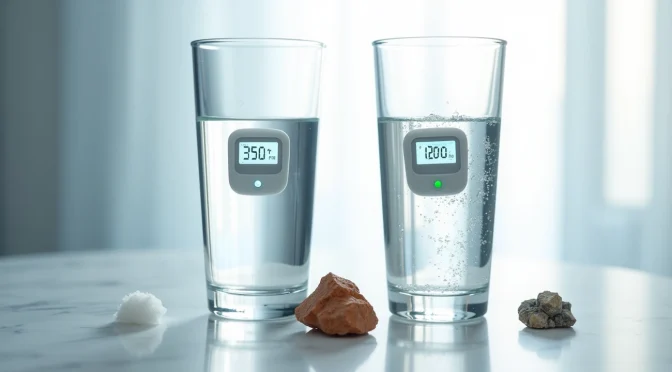
Your family’s health depends on optimal water quality, and checking TDS levels helps you maintain it. Modern technology has made home water testing more available and affordable than ever.
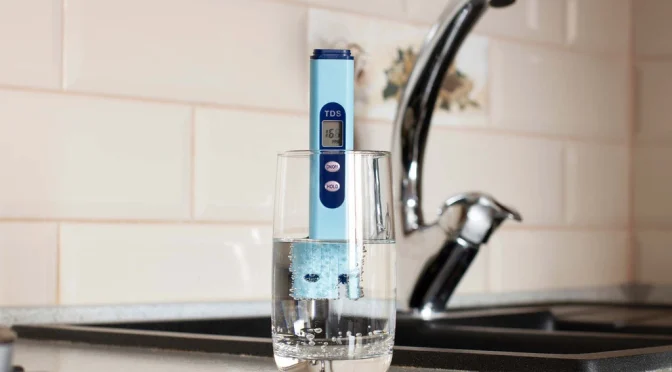
Using a digital TDS meter
Digital TDS meters have become a popular choice to test water at home because they’re affordable and simple to use. These small devices measure water conductivity and show TDS levels in parts per million (ppm) or mg/L. You can get a simple model for just ₹159, while feature-rich meters cost around ₹899.
A digital TDS meter works best when you:
- Remove the protective cap and turn on the meter
- Immerse the meter in water up to the marked level
- Stir gently to remove air bubbles
- Wait 10-15 seconds for a stable reading
- Note the value displayed (in ppm or mg/L)
- Rinse and dry the meter after use
Household TDS meters are accurate within ±2% and come with useful features like temperature compensation, auto-shutoff, and reading hold functions. You can use these devices beyond drinking water – they work great for aquariums, swimming pools, and hydroponics systems.
Smart purifiers with up-to-the-minute TDS display
Today’s water purification systems include built-in TDS monitoring features. Smart purifiers show TDS readings of incoming and purified water right away, so you can check how well the filtration works.
Advanced models give you extra benefits:
- Digital displays showing filter life status and water purity levels
- Mobile app connectivity to monitor remotely
- Alerts for maintenance requirements or quality issues
- Historical data tracking that spots trends or problems
These systems tell you exactly how your purifier performs. A sudden increase in TDS readings might signal that your RO membrane or carbon filter needs replacement.
How often should you check TDS levels?
Your water source determines how often you should test TDS levels. Municipal water users should check every 10-15 days. People who use borewells or tubewells need more frequent testing – about twice a week – since these sources show more TDS fluctuations. You should also test right after any purifier maintenance or filter replacement.
Key times to test include:
- Start of summer or monsoon seasons
- After moving to a new place
- When you notice unusual taste, odor, or scaling
A simple record of readings helps you spot patterns and catch problems early. Families with children, seniors, or health concerns should test more often since these groups can be more sensitive to water quality changes.
Best Water Purification Methods Based on TDS Levels
Your water’s TDS level plays a key role in choosing the right water purification technology. Different methods work better depending on your specific water quality challenges.
RO systems for TDS above 300 mg/L
You’ll need Reverse Osmosis technology when TDS levels go above 300 mg/L. The system pushes water through a semipermeable membrane that has tiny pores (about 0.0001 microns) which catch dissolved solids. RO handles TDS ranges from 500-3000 ppm effectively. This makes it perfect for groundwater since it typically has TDS between 500-3000 ppm.
UV and UF for microbial and moderate TDS
Simpler purification methods are enough when water has TDS below 200 ppm. UV systems use powerful light rays that eliminate 99.99% of harmful microorganisms. UF systems use membranes with larger pores (about 0.01 microns) and work with just gravity – no electricity needed. Neither system can reduce TDS levels well.
RO+UV+UF combo systems
You get complete protection against all types of contaminants with combination systems. RO+UV+UF systems work best when your water’s TDS exceeds 500 ppm. These advanced purifiers clean water through RO membranes first to remove dissolved solids, then run it through UV chambers to kill any remaining microorganisms.
TDS controller vs mineralizer: what’s the difference?
TDS controllers keep healthy minerals by mixing some unpurified water with RO-purified water. Mineralizers take a different approach – they purify water completely first, then add back beneficial minerals like calcium and magnesium. This makes mineralizers better at protecting against heavy metals.
Deionization and distillation for industrial use
Deionization removes all dissolved salts through ion exchange when you need ultra-pure water. Distillation works by turning water into vapor, leaving impurities behind before becoming liquid again. Both methods create extremely pure water that’s mainly used in laboratories, pharmaceutical work, and industrial applications.
TDS in treated wastewater — what STP and ETP buyers need to know
While the TDS ranges above apply to drinking water, buyers planning a Sewage Treatment Plant (STP) or Effluent Treatment Plant (ETP) need to understand TDS in the context of CPCB treated water discharge norms and reuse standards — which are distinct from drinking water guidelines.
Treated wastewater from a well-functioning STP is intended for discharge into water bodies or reuse for flushing, irrigation, and cooling — not drinking. The relevant TDS benchmarks are:
- CPCB Class A (treated water reuse): TDS below 500 mg/L — suitable for toilet flushing, landscaping, and cooling tower makeup
- CPCB inland surface water discharge: TDS below 2100 mg/L
- For ZLD (Zero Liquid Discharge) mandated industries: TDS in the reject stream must be handled through evaporation or crystallisation
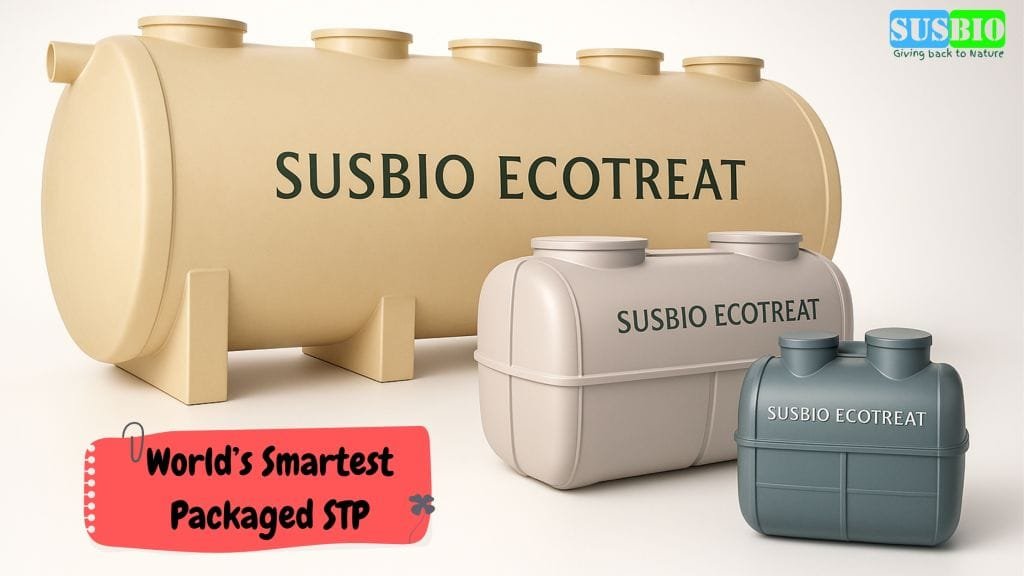
SUSBIO ECOTREAT packaged sewage treatment plants use MBBR technology and produce treated water consistently meeting CPCB Class A standards — typical BOD output below 10 mg/L and TSS below 10 mg/L. For projects where treated water reuse is a requirement, the TDS of the source sewage and the treatment technology both matter significantly.
For a detailed guide to CPCB discharge norms applicable to your project, see our complete CPCB STP guidelines guide.
Planning an STP or ETP for your project?
SUSBIO ECOTREAT packaged sewage treatment plants produce treated water meeting CPCB Class A standards, with 500+ installations across India and 8 countries. Get a free capacity assessment for your project — apartments, hotels, factories, or industrial plants.
Your drinking water’s safety and taste depend on its TDS levels. The ideal TDS range is 50-150 mg/L, with 150-300 mg/L also considered safe and palatable. Water below 50 mg/L tastes flat and may lack minerals. Water above 500 mg/L may not taste good and might contain harmful substances.
The TDS reading alone does not tell the whole story — what is dissolved in the water matters more than the number itself. Calcium and magnesium are beneficial; even tiny amounts of lead, arsenic, and nitrates can be harmful.
Keep track of water quality with digital TDS meters or smart purifiers with built-in displays. Municipal water users should test every 10-15 days; borewell users should test twice a week. Choose your purification method based on your TDS reading — RO for above 300 mg/L, UV/UF for moderate TDS with microbial concerns, and combination systems for comprehensive protection.
For STP and ETP project buyers, the relevant TDS benchmark is the CPCB treated water standard — not the drinking water guideline. A well-designed packaged STP should consistently deliver treated water below 500 mg/L TDS for reuse compliance.
Conclusion
Your drinking water’s safety and taste depend on its TDS levels. The ideal TDS range is 50-150 mg/L, with 150-300 mg/L also considered safe and palatable. This range gives you the right balance of minerals and good taste. Water with very low TDS (below 50 mg/L) tastes flat and might not give you enough minerals. High TDS water (above 500 mg/L) doesn’t taste good and might contain harmful substances.
The TDS reading alone doesn’t tell the whole story – what’s in the water matters more. Calcium and magnesium are good for your health. But even tiny amounts of lead, arsenic, and nitrates can be dangerous.
You can keep track of water quality easily with digital TDS meters or smart purifiers that have built-in displays. If you use city water, check TDS levels every 10-15 days. People who use borewells should test more often – twice a week – because these levels change more.
Your water’s TDS profile helps you pick the right purification method. RO systems are best when TDS exceeds 300 mg/L. UV and UF systems work well with moderate TDS when you need to remove microbes. Combination systems give you complete protection. TDS controllers and mineralizers help keep good minerals while removing harmful ones.
This knowledge helps you make smart choices about your drinking water. You can now choose the right purification system and set up a testing schedule. These steps protect your family’s health and ensure your water stays safe and tastes good through 2026 and beyond.
Key Takeaways
Understanding TDS levels helps you make informed decisions about water quality and purification systems to ensure safe, great-tasting drinking water for your family.
• Ideal TDS range is 50-150 mg/L – This balance provides essential minerals while maintaining good taste and safety standards recommended by WHO and BIS; 150-300 mg/L is also considered safe and palatable.
• Test TDS regularly with digital meters – Municipal water users should check every 10-15 days, borewell users bi-weekly to catch quality changes early.
• Choose purification based on TDS levels – Use RO systems for TDS above 300 mg/L, UV/UF for moderate levels, and combo systems for comprehensive protection.
• High TDS isn’t always harmful – The composition matters more than total levels; beneficial minerals like calcium are good, but contaminants like lead require removal.
• Low TDS water lacks minerals – Water below 50 mg/L tastes flat and may cause mineral deficiencies, while extremely high levels taste salty and damage appliances.
Regular monitoring and appropriate purification ensure your water meets the ideal TDS range while removing harmful contaminants and preserving beneficial minerals for optimal health and taste.
Frequently Asked Questions
Q1: What is the ideal TDS range for drinking water in 2026?
The optimal range for health and taste is 50–150 mg/L. While levels up to 300 mg/L are considered “good” for palatability, staying within the 50–150 mg/L bracket ensures you receive essential minerals without the heavy metallic taste associated with higher concentrations.
Q2: Is a TDS of 20 safe for daily consumption?
No, it is not recommended. Water with a TDS below 50 mg/L is often called “hungry water.” Because it is demineralized, it can leach essential electrolytes like Calcium and Magnesium from your body. Long-term consumption may lead to mineral deficiencies and can even affect bone and dental health.
Q3: What is the official BIS limit for TDS in India?
According to the Indian Standard IS 10500, the “Acceptable Limit” is 500 mg/L. In extreme cases where no alternative source exists, the “Permissible Limit” is extended to 2000 mg/L. However, for a premium drinking experience and long-term health, experts recommend keeping your home water below 300 mg/L.
Q4: Does boiling water help in reducing TDS?
No. Boiling is effective for killing biological contaminants like bacteria and viruses, but it does not remove dissolved solids. In fact, boiling can slightly increase your TDS reading because as water evaporates as steam, the concentration of minerals left behind becomes denser.
Q5: Can high TDS levels cause kidney stones?
Consistent consumption of water with very high TDS (above 1000 ppm), specifically when high in calcium and magnesium hardness, can increase the workload on your kidneys. In individuals predisposed to renal issues, this high mineral load may contribute to the formation of kidney stones.
Q6: How often should I test my water’s TDS?
Municipal Water: Test every 15 days to ensure your filter membranes are functioning correctly.
Borewell/Tanker Water: Test weekly or bi-weekly. Underground water sources fluctuate significantly due to seasonal changes and local groundwater depletion.
Q7: Which purification technology do I need based on my TDS?
TDS > 300 mg/L: A Reverse Osmosis (RO) system is essential to physically remove excess salts.
TDS < 200 mg/L: A combination of UV (Ultraviolet) + UF (Ultra-Filtration) is often sufficient to kill germs while retaining natural minerals.
Varying Sources: If your source alternates between municipal and borewell, an RO+UV+UF system with a TDS Modulator is the best 2026 solution for consistent quality.
“Maintaining ideal TDS levels is just one aspect of water quality management. For industries, residential complexes and commercial buildings, a properly functioning Sewage Treatment Plant ensures treated water meets quality standards before discharge or reuse.”
Check out our guide on how SUSBIO ECOTREAT systems manage high TDS effectively.