

An Effluent Treatment Plant (ETP) is a facility designed to treat industrial wastewater before its discharge into the environment or reuse within industrial processes. The full form ETP stands for Effluent Treatment Plant and represents a specialized waste treatment system that removes harmful contaminants from wastewater generated by various industrial activities. An ETP plant functions as a critical infrastructure component that processes effluent—the liquid waste stream exiting industrial operations—through structured treatment stages to eliminate pollutants such as chemicals, oils, heavy metals and organic waste.
The main goal of an effluent treatment plant centers on removing contaminants from industrial wastewater to meet environmental discharge standards set by regulatory bodies. Industries including pharmaceuticals, textiles, chemicals, dyes, food processing, oil refineries and metal manufacturing use ETP systems to manage wastewater containing diverse impurities specific to their operations. Some effluents contain oils and grease. Others harbor toxic materials such as cyanide, with food and beverage factories generating degradable organic pollutants. Without treatment facilities that function properly, industries risk contaminating nearby water bodies, harming aquatic life, degrading soil quality and posing health hazards to surrounding communities.
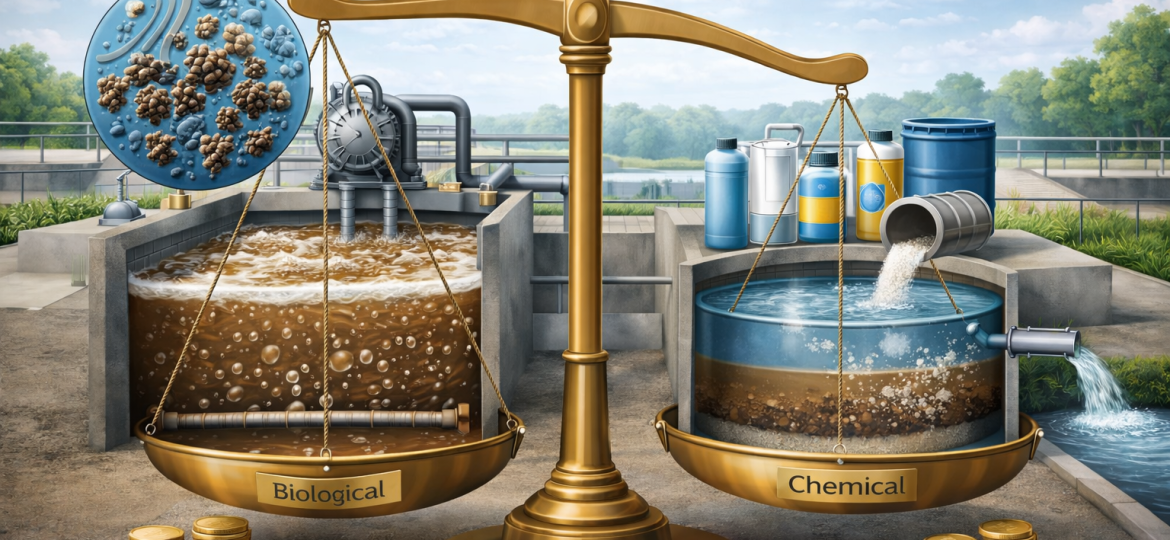
ETPs employ a combination of physical, chemical and biological processes to treat wastewater at various levels. Physical methods include screening and sedimentation to remove large solids, oil and grease. Chemical treatments use coagulation to destabilize and collect heavy metals and fine particles, electrolysis for pollutant breakdown, and membrane filtration to concentrate contaminants before recovery. Biological processes break down organic pollutants and reduce biochemical oxygen demand (BOD) and chemical oxygen demand (COD). Advanced stages incorporate UV disinfection to neutralize harmful microorganisms before discharge or reuse and ensure environmental safety.
Strict environmental regulations mandate the installation and operation of ETPs in industrial sectors across many countries. Compliance with standards set by environmental authorities helps industries avoid legal penalties and demonstrates commitment to environmental responsibility. Beyond regulatory requirements, ETPs support sustainable industrial water management by enabling water recycling and reuse within processes and thereby reduce overall water demand. The treatment prevents the release of harmful pollutants into natural water bodies, protects ecosystems and promotes public health while allowing industries to operate responsibly.
How does the ETP process work?
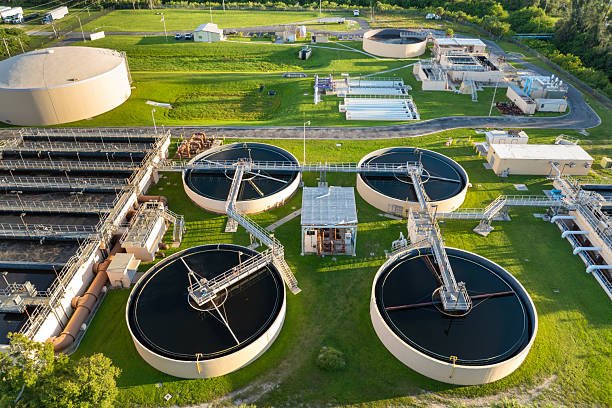
Industrial wastewater undergoes sequential treatment stages that remove contaminants through distinct operational phases.
Collection and equalization
Wastewater from different industrial sources flows into collection tanks where it is stored before treatment begins. The equalization tank balances hydraulic loads and maintains consistent flow rates by mixing and homogenizing wastewater streams. This process eliminates fluctuations in effluent composition caused by variable industrial operations. Storage periods range from 8 to 12 hours, allowing proper mixing that prevents solid settling within the tank. Floating aerators or mechanical mixers provide continuous agitation to achieve homogeneous effluent before advancing to subsequent stages. pH levels are monitored and adjusted at this phase, as wastewater pH should fall between 5.5 and 9.0 according to standards.
Primary treatment
Screening systems remove large floating debris such as wood, plastics and other bulky objects that could damage downstream equipment. Wastewater enters grit chambers designed to slow flow velocity after screening, allowing dense inorganic materials like sand and gravel to settle. Primary clarifiers or sedimentation tanks provide two hours of detention time for gravity settling. Suspended solids sink to form raw sludge at the tank bottom, while oils and grease float to the surface for mechanical skimming. Chemical coagulation and flocculation processes improve solid separation at this stage. Primary treatment removes 50-60% of suspended solids and 30-40% of biochemical oxygen demand (BOD) from wastewater.
Secondary treatment
Biological processes degrade dissolved and suspended organic matter using microorganisms that consume organic pollutants as food. The activated sludge process introduces wastewater into aeration tanks where compressed air provides oxygen to support microbial growth. Moving Bed Biofilm Reactor (MBBR) systems employ plastic media with high surface areas for biofilm development. Sequential Batch Reactors (SBR) perform equalization, aeration and clarification within a single tank through time-sequenced operations. Secondary clarifiers follow biological treatment to separate activated sludge from treated water. This stage removes 85-95% of BOD and chemical oxygen demand (COD).
Tertiary treatment
Advanced filtration employs sand filters, multimedia filters and activated carbon systems to remove residual suspended solids and organic material. Disinfection eliminates pathogenic microorganisms through chlorination, ultraviolet radiation or ozonation before discharge. Membrane filtration technologies including reverse osmosis separate remaining contaminants at molecular levels. Nutrient removal processes target excess nitrogen and phosphorus to prevent eutrophication in receiving water bodies.
Sludge handling
Sludge generated during treatment undergoes thickening to reduce water content and decrease volume. Dewatering processes using filter presses or centrifuges remove moisture further. Digestion through aerobic or anaerobic methods stabilizes organic matter and reduces pathogenic loads. Dewatered sludge faces final disposal through landfilling, incineration or beneficial reuse as fertilizer when meeting safety standards.
Key components of an ETP plant
A well-laid-out ETP plant layout integrates multiple infrastructure components that function together to purify industrial wastewater. Each component serves a specific operational purpose within the treatment sequence.
Equalization tanks act as critical buffers that manage fluctuations in flow rate and pollutant concentration. These tanks require 6-16 hours of detention time to mix incoming wastewater streams. The tanks balance hydraulic and organic shocks and allow downstream processes to operate near design conditions. This equalization improves BOD removal efficiency up to 30%. Modern equalization tanks incorporate level sensors, mechanical mixers and pH control systems for immediate monitoring of influent characteristics.
Bar screens remove large debris including plastics, paper and metal objects from raw wastewater. Metal bars spaced 1 to 3 inches apart capture bulky materials that could damage pumps or clog treatment units. Automatic cleaning mechanisms prevent filter accumulation and maintain steady water flow. Fine screens with smaller apertures trap particles that pass through coarse screening.
Grit chambers employ long, narrow tank designs to reduce flow velocity. Dense inorganic materials such as sand, gravel and ash settle as a result. The chamber design maintains differential sedimentation velocity to ensure grit settles while lighter organic matter does not accumulate.
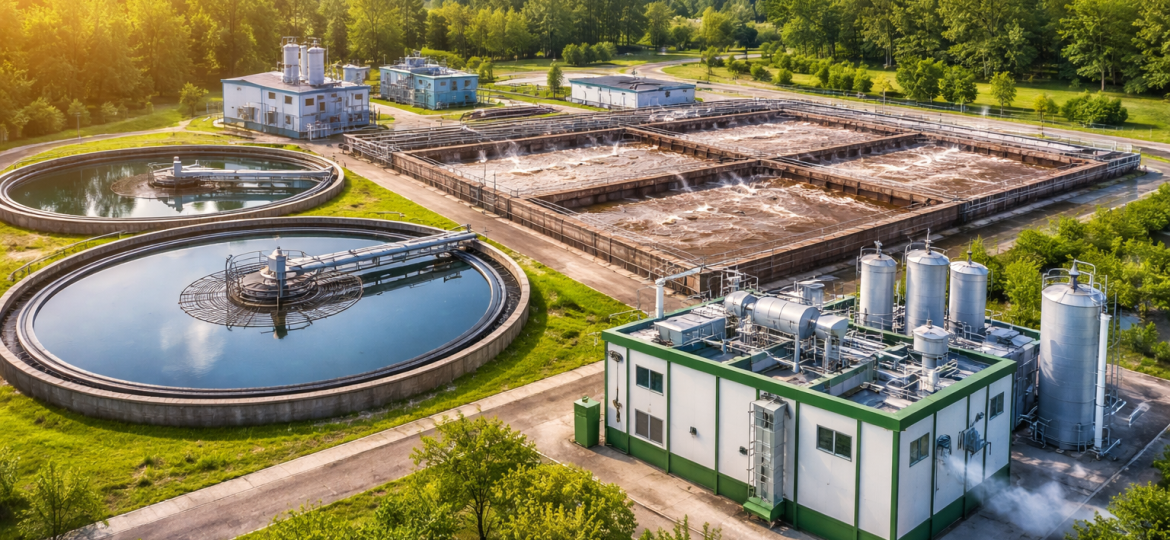
Clarifiers employ sedimentation principles to separate suspended solids from liquid. Primary clarifiers positioned after preliminary treatment remove heavier particles that sink as sludge. Secondary clarifiers follow biological treatment stages to separate biological flocs from treated water. Both types feature mechanical scrapers or rakes that rotate and push settled sludge toward central hoppers for removal.
Aeration tanks are the foundations of biological treatment and break down organic materials through aerobic digestion. Two diffuser types introduce oxygen into these tanks:
- Fine bubble diffusers create tiny bubbles (1-3mm diameter) that rise slowly and provide longer oxygen contact time with superior transfer efficiency
- Coarse bubble diffusers generate larger bubbles that boost mixing and resist fouling
Disinfection units eliminate remaining pathogens through chlorination, UV radiation or ozonation. Chlorine contact tanks require 30-minute detention time with 0.5 mg/L target residual chlorine. UV systems use ultraviolet lamps to destroy microbial DNA without chemical addition.
Final holding tanks store treated effluent before discharge or reuse and allow quality verification against environmental standards. Sludge handling facilities incorporate thickening tanks, dewatering equipment including filter presses and centrifuges, and drying beds to reduce sludge volume before disposal.
Types of ETP systems for different industries
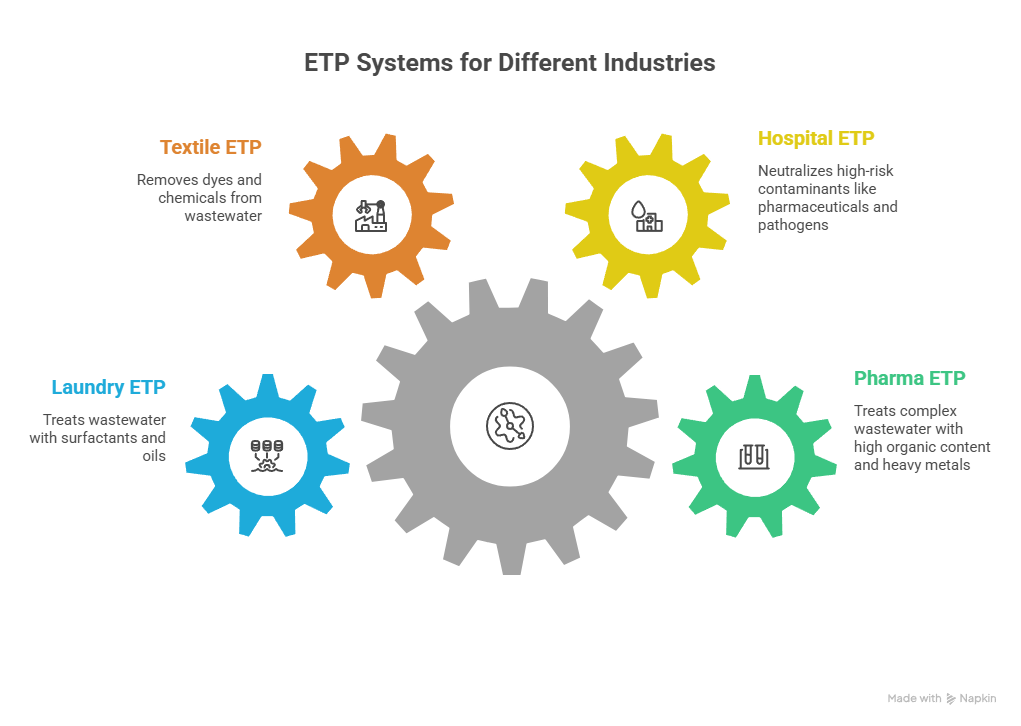
Different industries generate wastewater with distinct contaminant profiles that need specialized treatment configurations beyond standard ETP designs.
ETP for pharma industry
Pharmaceutical manufacturing produces complex wastewater containing high organic content from solvents, acids, and bases used during production processes. Concentrated organic compounds cause the effluent to exhibit high chemical oxygen demand and biological oxygen demand levels. Heavy metals like lead, mercury, and cadmium contaminate pharmaceutical wastewater streams and need specialized removal techniques. The pH varies between very acidic and alkaline depending on raw materials and manufacturing processes. Treatment systems employ anaerobic units such as UASB reactors and digesters combined with aerobic processes like diffused aeration and activated sludge systems. Advanced technologies like MBR, MBBR, and SBR address varying wastewater compositions based on reuse requirements. Tertiary stages use reverse osmosis, ultrafiltration, and chemical oxidation to eliminate micropollutants and active pharmaceutical ingredients. These systems support Zero Liquid Discharge goals while ensuring compliance with regulatory standards.
ETP for hospitals
Healthcare facilities generate 200-400 liters of wastewater per bed daily in developing nations, while developed countries produce 400-1200 liters per bed per day. Hospital effluent contains pharmaceuticals, disinfectants, heavy metals, antibiotics, and pathogens from diagnostic labs, pharmacies, and operation theaters. Regulatory standards mandate BOD levels below 30 mg/L, COD below 250 mg/L, and TSS below 100 mg/L for facilities with 10 or more beds. Treatment employs coagulation, membrane filtration, activated carbon adsorption, and advanced oxidation processes to neutralize high-risk contaminants. The systems prevent antimicrobial resistance by removing antibiotic residues before discharge.
ETP for textile industry
Textile operations discharge wastewater laden with dyes, chemicals, and suspended solids from dyeing, washing, bleaching, and finishing processes. The effluent contains high organic loads with elevated TDS and TSS concentrations. Treatment systems address color removal and BOD and COD reduction through optimized coagulation-flocculation followed by biological oxidation processes.
Laundry ETP systems
Commercial laundries produce effluent containing anionic and cationic surfactants from detergents, along with oils, greases, and suspended solids. Untreated wastewater shows BOD levels of 200-400 mg/L and COD concentrations reaching 800-1200 mg/L. Treatment systems achieve up to 95% pollutant removal efficiency through chemical dosing, coagulation-flocculation, and biological processes. Treated water becomes suitable for reuse in washing cycles, toilet flushing, and landscaping applications.
Why are effluent treatment plants important?
Regulatory authorities worldwide mandate ETP installation in industrial sectors of all types to prevent environmental degradation. Government bodies including the Central Pollution Control Board (CPCB) and State Pollution Control Boards (SPCBs) establish strict discharge standards for parameters such as Biological Oxygen Demand (BOD), Chemical Oxygen Demand (COD), Total Suspended Solids (TSS), and pH levels. Non-compliance results in substantial fines, shutdown notices, and legal action against violating facilities.
Industrial effluents with toxic chemicals, heavy metals, oils, grease, and pathogens contaminate soil and water bodies when discharged untreated. This contamination causes groundwater pollution and eutrophication in lakes and rivers. It also leads to marine biodiversity loss. Hazardous effluents discharged without proper treatment create air pollution through toxic gas release. They generate foul odors and produce unsanitary working conditions. Soil and water contamination affects public health.
ETPs enable industries to reuse treated water for cooling towers, boiler feed, gardening, landscaping, and equipment cleaning. This reuse reduces freshwater demand. It lowers operational costs associated with water procurement. Water conservation through reuse becomes especially valuable in water-scarce regions. Industries that implement proper effluent treatment demonstrate their commitment to the environment and enhance their reputation among customers, investors, regulatory authorities, and local communities beyond just compliance.
Frequently Asked Questions
Q1. What is the main purpose of an Effluent Treatment Plant?
An Effluent Treatment Plant is designed to treat industrial wastewater by removing harmful chemicals, pollutants, heavy metals, and suspended solids before discharge into the environment or reuse. It ensures that wastewater meets environmental standards set by regulatory authorities, protecting water bodies, soil quality, and public health from industrial contamination.
Q2. How is an ETP different from a regular wastewater treatment plant?
ETPs are specifically designed to handle industrial wastewater from sectors like pharmaceuticals, textiles, and chemicals where extreme contamination levels occur. They employ specialized physical, chemical, and biological processes to treat complex industrial pollutants, whereas standard wastewater treatment plants primarily handle domestic sewage with less toxic contaminants.
Q3. What are BOD and COD in effluent treatment?
BOD (Biochemical Oxygen Demand) measures the amount of oxygen required by microorganisms to break down organic matter in wastewater, while COD (Chemical Oxygen Demand) measures the total oxygen needed to chemically oxidize all pollutants. Secondary treatment in ETPs typically removes 85-95% of BOD and COD, with regulatory standards requiring BOD below 30 mg/L and COD below 250 mg/L for discharge.
Q4. Can treated water from an ETP be reused?
Yes, treated water from ETPs can be reused for various industrial and non-potable applications including cooling towers, boiler feed, equipment cleaning, toilet flushing, gardening, and landscaping. This reuse reduces freshwater demand, lowers operational costs, and supports water conservation, especially in water-scarce regions.
Q5. What happens to the sludge generated during effluent treatment?
Sludge undergoes several handling processes including thickening to reduce water content, dewatering using filter presses or centrifuges, and digestion through aerobic or anaerobic methods to stabilize organic matter. The final dewatered sludge is disposed of through landfilling, incineration, or beneficial reuse as fertilizer when it meets safety standards.
Key Takeaways
Understanding ETPs is crucial for industries seeking environmental compliance and sustainable operations. Here are the essential insights about effluent treatment plants:
- ETPs remove harmful contaminants from industrial wastewater through physical, chemical, and biological processes before environmental discharge or reuse
- Treatment occurs in sequential stages: collection/equalization, primary treatment (removes 50-60% suspended solids), secondary biological treatment (removes 85-95% BOD/COD), and tertiary advanced filtration
- Different industries require specialized ETP configurations – pharmaceutical plants need heavy metal removal, hospitals require pathogen elimination, and textile facilities focus on dye and chemical treatment
- ETPs enable water reuse for cooling, cleaning, and landscaping, reducing freshwater demand by up to 70% while ensuring regulatory compliance
- Regulatory compliance is mandatory – non-compliance results in substantial fines, shutdown notices, and legal action from environmental authorities
Proper ETP implementation not only prevents environmental contamination and protects public health but also demonstrates corporate responsibility while reducing operational water costs through recycling and reuse programs.