

Picking the right STP treatment plant for your project can save you time and money. You can install and operate prefabricated sewage treatment plants within days instead of months compared to conventional ones. We have witnessed how this quick deployment becomes especially valuable during emergencies or when you need urgent wastewater management solutions.
The differences between a packaged STP sewage treatment plant and conventional design go beyond installation speed. Prefabricated STP plants are more affordable because they need less on-site construction time, which reduces labor costs. These modular systems arrive pre-engineered and factory-assembled. They feature modern biological treatment processes like MBBR (Moving Bed Biofilm Reactor) that improve treatment efficiency. This piece will help you figure out which STP water treatment solution best fits your needs and budget.
Understanding the Basics: Prefabricated vs Conventional STP
The right choice between prefabricated and conventional sewage treatment plants depends on understanding their basic differences to make a budget-friendly decision for your project.
What is a prefabricated sewage treatment plant?
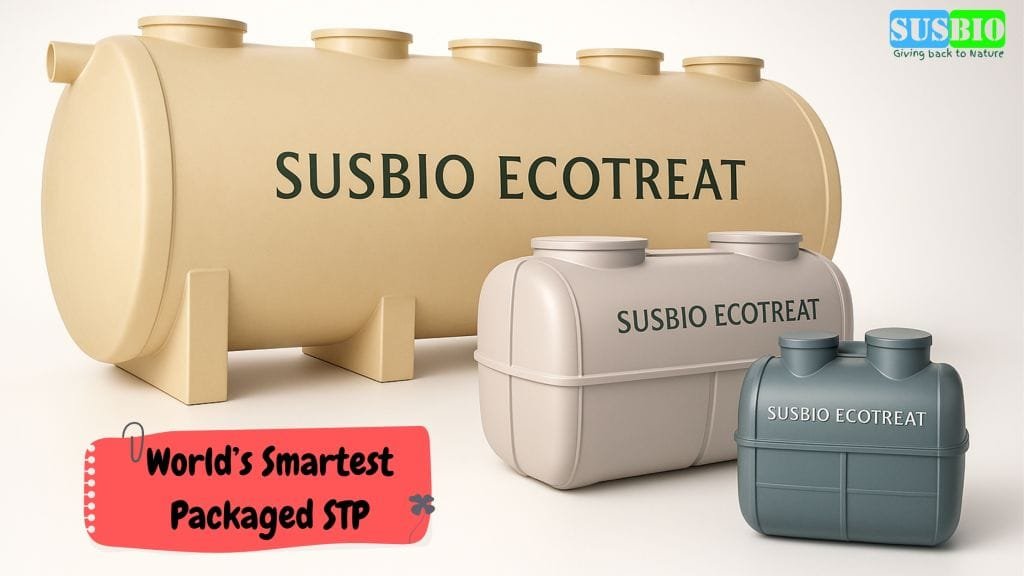
A prefabricated sewage treatment plant comes as a compact, ready-to-use system. Manufacturers assemble these units off-site in controlled conditions before shipping them to where they’ll be installed. These pre-engineered, modular units arrive ready to go and start working within days instead of months.
Manufacturers build prefabricated STP plants to last. They use strong materials like FRP (Fiber-Reinforced Plastic), MS, or RCC that resist corrosion well. The standardized design makes transport easy and setup quick at any location. They work just like “plug-and-play” solutions.
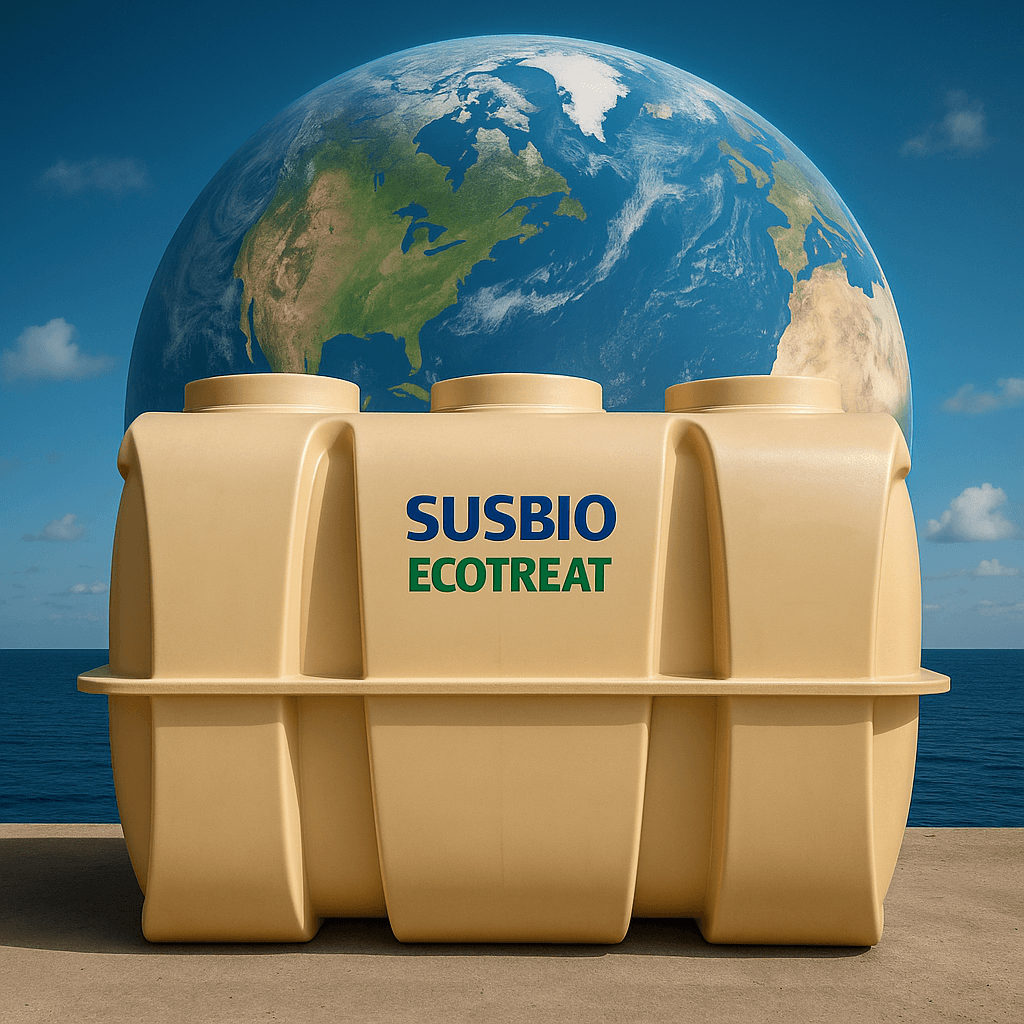
SUSBIO ECOTREAT stands out among India’s state-of-the-art packaged STP solutions. It uses MBBR (Moving Bed Biofilm Reactor) and SBR (Sequencing Batch Reactor) technologies that work efficiently and need minimal upkeep.
How does a conventional STP plant work?
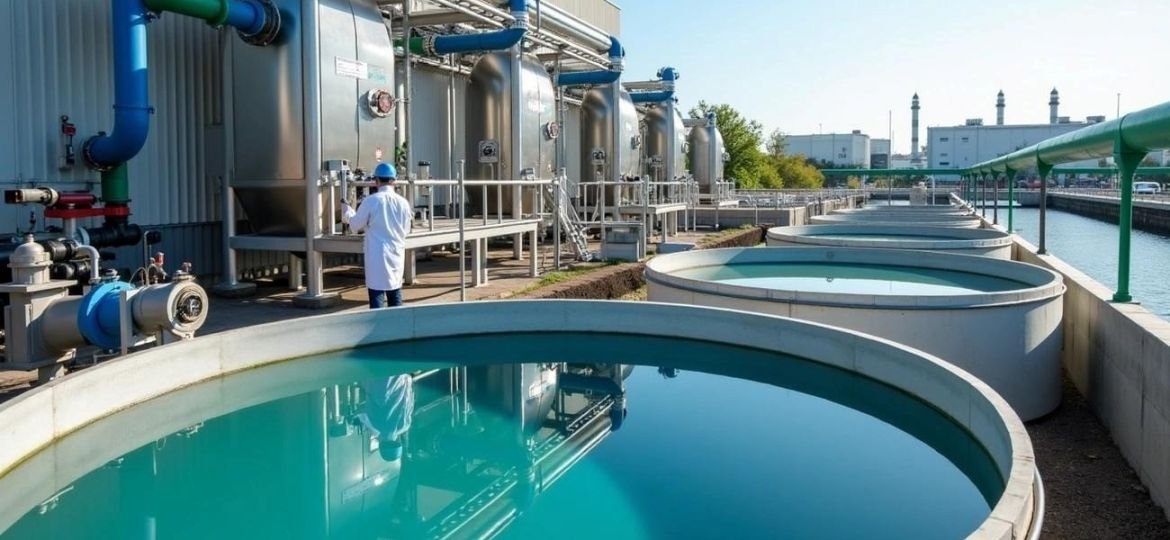
Conventional sewage treatment plants are built from scratch on-site. They serve municipalities, large factories, or government projects. These plants need extensive construction work and lots of land.
Conventional STPs work through biological, mechanical, and sometimes chemical processes. Most systems use activated sludge processes or other methods like Extended Aeration, Sequencing Batch Reactors (SBR), or Moving Bed Bioreactors (MBBR).
Modern conventional STPs can also come with durable FRP tanks that reduce installation work. Yet they still need skilled workers and daily monitoring more than their automated prefabricated counterparts.
STP plant process and treatment stages overview
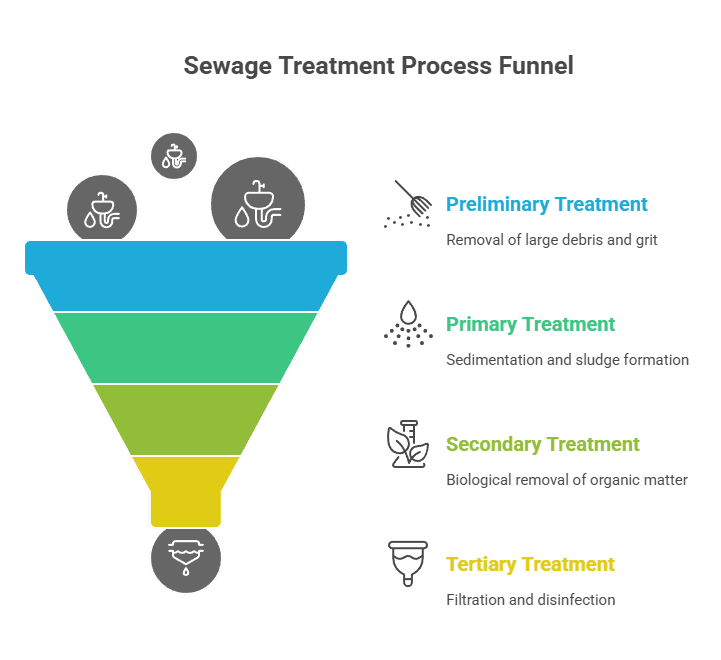
Prefabricated and conventional STP plants share similar treatment principles but differ in how they work. The standard treatment process includes:
- Pre-Treatment/Preliminary Treatment: The original stage filters out large objects and debris through screening. Then grit removal helps sand and small particles settle.
- Primary Treatment: Wastewater flows into sedimentation tanks. Heavy solids sink to form sludge while oils and greases float up. This stage removes suspended solids effectively.
- Secondary Treatment: This biological stage breaks down organic matter with microorganisms. The system might use activated sludge process, extended aeration, or biofilm technologies based on its design.
- Tertiary Treatment: Some systems add this advanced stage. It includes filtration, disinfection (using UV radiation or chlorination), and removes nutrients before discharge.
Prefabricated systems work great for smaller projects with limited space or quick setup needs. Larger projects that need extensive treatment might benefit from conventional systems, even though they take longer to build.
Installation and Setup Costs
Your STP choice affects your finances well before operations begin. Installation and setup costs take up much of the total project budget.
Site preparation: minimal vs extensive civil work
These two STP types show striking differences in site preparation needs. Prefabricated STP plants just need a flat concrete foundation pad. This makes the construction costs lower from the start. SUSBIO ECOTREAT, one of India’s most advanced packaged STP solutions, just needs simple excavation and Plain Cement Concrete (PCC) foundation. You won’t need complex RCC tanks or extensive groundwork.
Traditional STP plants need detailed civil construction. This includes excavation, concrete work, tank building, and extensive plumbing installations. The costs can run 30% higher than modular systems because of these requirements.
Installation time: days vs months
The time difference between these two STP systems creates big financial differences:
| System Type | Installation Type | Civil Work Required |
|---|---|---|
| Prefabricated STP | 2 days to few weeks | Minimal foundation |
| Conventional STP | Several months to years | Extensive construction |
Pre-engineered and factory-assembled prefabricated units allow faster deployment. SUSBIO ECOTREAT units can start running within 2-4 weeks. Traditional systems might take 6-12 months to build.
Labor and equipment costs comparison
Labor costs create a major difference between these systems. Prefabricated STP plants need fewer specialized construction crews who work for shorter periods. This means you’ll pay less for labor during installation.
Traditional systems need multiple construction phases. Each phase needs its own specialized equipment and crews. Prefabricated units come ready to install and just need connection to existing infrastructure.
Traditional systems’ installation costs make up 15-40% of total construction expenses. SUSBIO ECOTREAT and similar prefabricated units cost less thanks to factory efficiency and minimal on-site work.
Prefabricated systems’ quick installation reduces construction-related disruptions. You’ll see less noise, dust, and traffic issues compared to longer conventional STP installations. This benefit becomes valuable especially when you have urban environments or operational facilities that need minimal disturbance.
Operational and Maintenance Expenses
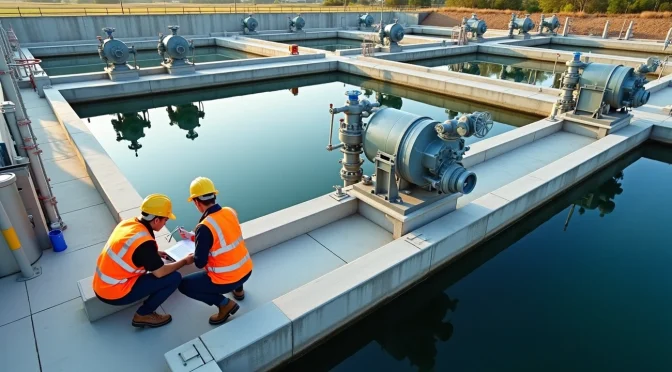
The true economic value of your sewage treatment investment depends on long-term operational expenses more than the original setup costs.
Automation and manpower: packaged STP vs traditional
The staffing needs between prefabricated and conventional STP plants create a big cost difference. Traditional sewage treatment plants just need skilled personnel who understand wastewater principles, safety protocols, and equipment maintenance. These conventional systems rely on dedicated operators who perform daily monitoring tasks, MLSS testing, and process adjustments.
Prefabricated STPs like SUSBIO ECOTREAT showcase state-of-the-art automation in India’s wastewater sector. These systems come with pre-programmed controls, remote monitoring features, and automated process management that reduce human involvement. Most packaged systems are fully automated with smart controls, remote diagnostics, and IoT-based performance tracking to minimize reliance on manual operators.
This difference in automation directly affects operational budgets:
| Aspect | Prefabricated STP | Conventional STP |
|---|---|---|
| Monitoring | Automated/Remote | Skilled manpower, daily monitoring |
| Training Needs | Simplified | Extensive |
Energy consumption and sludge handling
Energy efficiency is a vital operational advantage for prefabricated systems. Traditional STPs need continuous operation of power-hungry equipment like air blowers that run 24/7, which drives up electricity costs. SUSBIO ECOTREAT and other advanced packaged solutions make use of optimized aeration systems that cut power consumption by 15-20% compared to traditional designs.
Sludge management is a major operational challenge for conventional systems. These systems generate high sludge volumes that need regular removal—sometimes weekly or monthly—which creates ongoing expenses and logistical issues. The sludge handling process involves thickening, dewatering, and proper disposal, which adds to operational costs.
Ease of maintenance and downtime costs
Both systems have different maintenance needs. Traditional STPs have many mechanical components that need regular care—screens need cleaning, blowers need servicing, and diffusers often clog. This can reduce oxygen transfer efficiency by up to 40%. Yes, it is true that poorly maintained conventional plants can use up to 50% more energy than well-maintained ones.
Prefabricated systems’ standardized, modular design makes components available and replaceable quickly, which reduces downtime during repairs. This modular approach means replacement parts are easy to find, and technicians know these systems well, which leads to faster and more economical maintenance.
A well-maintained prefabricated STP like SUSBIO ECOTREAT can last longer while delivering clean treated water with minimal attention—you’ll only need occasional inspection and preventative maintenance instead of constant monitoring.
Space, Scalability, and Relocation Costs
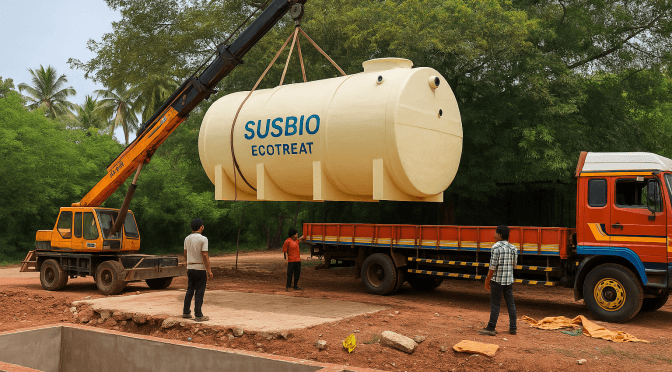
Space usage and future adaptability shape the long-term value of sewage treatment investments. These factors affect both immediate costs and financial flexibility.
Land usage: compact vs large footprint
Prefabricated sewage treatment plants and conventional STP systems show clear differences in their spatial needs. Prefabricated plants work with smaller footprints. They just need 25-100 square meters for small capacity systems (5-50 KLD). This compact design makes them perfect for urban areas where land is scarce or expensive.
Conventional STP plants take up much more space. They just need 300-1000+ square meters to handle similar treatment loads. This big space requirement creates problems in crowded areas where land costs keep rising.
SUSBIO ECOTREAT shows how space-efficient these systems can be. Its innovative design lets you install it in basements, rooftops, or small yards. This makes it ideal for urban and semi-urban areas where space optimization is vital.
Scalability: modular expansion vs redesign
The way these systems handle changing capacity needs creates another big cost difference. Prefabricated STP systems are adaptable thanks to their modular design. You can expand them by adding more units as your treatment needs grow.
Conventional systems work differently. They usually just need complete redesign and reconstruction when capacity needs change. This means lots of downtime, engineering costs, and construction expenses. Prefabricated systems can grow without huge cost increases.
SUSBIO ECOTREAT’s modular nature lets you implement changes in phases. Users can add components as their budget allows and still maintain treatment efficiency during expansion.
Relocation feasibility and associated costs
Prefabricated STP plants offer one standout advantage – they’re portable. Unlike fixed conventional installations, you can disconnect, move, and reinstall prefabricated units at new locations.
This mobility feature is a great way to get value for:
- Temporary construction sites that just need short-term treatment
- Businesses that change locations
- Remote areas needing quick but not permanent solutions
Conventional systems become permanent once built. Moving them costs more than the original installation due to demolition, transport limits, and reconstruction.
SUSBIO ECOTREAT’s relocatable design brings new financial flexibility to sewage treatment. It turns what used to be fixed infrastructure into a movable asset.
Use Case Cost Scenarios Across Sectors
The cost benefits between prefabricated and conventional sewage treatment plants show significant differences in various sectors. Each industry deals with unique wastewater challenges that affect their profits.
Residential complexes and housing societies
Indian cities require on-site stp treatment plants in residential complexes that have more than 100 units. Prefabricated systems eliminate odors and reduce maintenance costs by 70% in high-density residential sewage treatment.
The numbers tell a compelling story:
- A 100-flat residential building needs ₹25-30 lakhs for a 50 KLD sewage treatment plant
- Property owners can save ₹4-5 lakhs yearly in water costs with a ₹8 lakh 50-100 KLD prefabricated STP
- Water reuse helps recover the investment within 18-24 months
Kandivali’s Hiranandani Communities, with its 400 flats, pays ₹1-2 lakh monthly to run a conventional STP. This expense shows why prefabricated systems make more financial sense.
Hotels, hospitals, and commercial buildings
Hotel wastewater comes from guest bathrooms, kitchens, laundries, and swimming pools. MBR technology in prefabricated STPs handles these different waste streams effectively.
Hospital waste contains pharmaceuticals and pathogens that need special treatment with UV and ozonation. An MBR system helped a Delhi hospital save ₹25 lakhs yearly while removing 99% of pathogens.
Commercial buildings can reduce utility costs and meet environmental standards with prefabricated STPs.
Industrial units with variable loads
Textile, pharmaceutical, and food processing industries create wastewater with high organic and chemical content. These industries use smart prefabricated STPs that remove 90-95% of pollutants.
A Chennai auto parts manufacturer cut yearly fines by ₹2.8 crore by installing industrial wastewater treatment. Prefabricated systems adapt to changing loads without needing system modifications.
Smart cities and temporary construction sites
Smart prefabricated STPs need only 10-20 square meters of space and cost ₹10-15 lakh. These systems use advanced AABR technology and IoT monitoring to keep running costs low.
Municipal applications can save ₹10-15 lakh yearly by reducing energy use by 30-40%. SUSBIO ECOTREAT, India’s most advanced packaged STP, works great for temporary construction sites that need quick but not permanent solutions.
Comparison: Prefabricated vs Conventional STP Plants
| Aspect | Prefabricated STP (SUSBIO ECOTREAT) | Conventional STP |
|---|---|---|
| Installation Time | 2-4 weeks | 6-12 months |
| Civil Work Required | Minimal (simple excavation and PCC foundation) | Extensive construction, RCC tanks |
| Staff Requirements | Minimal to none, automated operations | Multiple skilled operators needed |
| Monitoring System | Automated/Remote with IoT capabilities | Daily manual checks needed |
| Space Requirements | 25-100 sq meters (5-50 KLD) | 300-1000+ sq meters |
| Energy Efficiency | 15-20% lower power consumption | Higher consumption, especially for air blowers |
| Maintenance Needs | Simple preventative maintenance | Regular intensive maintenance |
| Scalability | Easy modular expansion | Needs extensive redesign |
| Relocation Possibility | Fully relocatable | Fixed installation, cannot be moved |
| Construction Costs | Lower (up to 30% savings) | Higher due to extensive civil work |
| Installation Location | Flexible (basements, rooftops, small yards) | Needs dedicated large area |
| Automation Level | High (pre-programmed controls, smart monitoring) | Limited, mainly manual operation |
| Treatment Technology | Advanced MBBR/SBR with modern biological processes | Traditional activated sludge process |
| Sludge Management | Optimized handling | Needs frequent removal (weekly/monthly) |
Conclusion
Prefabricated STP plants prove to be more economical than conventional systems across the board. Our analysis shows these systems save money both during setup and throughout their lifespan.
The quick installation time makes a huge difference. These systems take weeks instead of months to set up, which cuts labor costs right away. Traditional systems just need too much civil work. They require special construction teams and long on-site work that can push costs up by 30%. Prefab units also need minimal site prep, which eliminates many hidden expenses that pop up with regular installations.
Running costs tell the same story. Prefab systems run with fewer staff thanks to automation, while regular plants need skilled operators checking things daily. Power bills are lower too – advanced systems like SUSBIO ECOTREAT use 15-20% less electricity than standard ones.
Space savings become a huge plus, especially in cities where every square foot counts. These compact units take up 70-90% less space than regular systems, which saves big on land costs.
The biggest advantage might be how easy these systems adapt over time. Their modular design lets you expand without the major overhaul that conventional systems need. You can even move prefab units around, turning what’s usually a fixed asset into something you can transfer.
SUSBIO ECOTREAT leads the pack as India’s most advanced packaged STP solution. It combines all these benefits with advanced MBBR and SBR technologies for better treatment results. This system shows how modern prefab solutions have become the smart choice for budget-conscious, green wastewater management.
Traditional systems still work well for some big municipal projects. But the numbers clearly favor prefab solutions for residential complexes, commercial buildings, and industrial sites. Looking at both upfront costs and lifetime expenses, prefab STPs save organizations 30-50% compared to conventional options.
Your specific needs will help you pick the right system. But when budget matters most, prefab STP plants ended up giving you more bang for your buck.
Key Takeaways
When choosing between prefabricated and conventional sewage treatment plants, the financial advantages clearly favor prefabricated systems across installation, operation, and long-term costs.
- Prefabricated STPs install 10x faster (weeks vs months) and require 30% less construction investment due to minimal civil work
- Operational costs drop significantly with automated systems requiring fewer staff and consuming 15-20% less energy than conventional plants
- Space efficiency delivers major savings – prefabricated units need 70-90% less land area, crucial for expensive urban locations
- Modular design enables cost-effective expansion and relocation, transforming fixed infrastructure into transferable assets
- Investment recovery typically occurs within 18-24 months through reduced water costs and maintenance savings of up to 70%
For most residential, commercial, and industrial applications, prefabricated STP systems like SUSBIO ECOTREAT deliver 30-50% total cost savings compared to conventional alternatives while providing superior treatment efficiency and operational flexibility.
Frequently Asked Questions
Q1. What is the average cost range for a prefabricated STP plant?
The cost of a prefabricated STP plant varies based on capacity and features. For example, a 50-100 KLD prefabricated STP typically costs around ₹8 lakhs, which can result in annual water cost savings of ₹4-5 lakhs.
Q2. How do installation times compare between prefabricated and conventional STP plants?
Prefabricated STP plants can be installed and made operational within 2-4 weeks, while conventional systems may require 6-12 months for construction and setup.
Q3. What are the space requirements for prefabricated vs conventional STP plants?
Prefabricated STP plants typically require 25-100 square meters for small capacity systems (5-50 KLD), while conventional plants often need 300-1000+ square meters for comparable treatment capacities.
Q4. How do operational costs differ between prefabricated and conventional STP plants?
Prefabricated STP plants generally have lower operational costs due to automation, reduced staff requirements, and 15-20% lower power consumption compared to conventional systems.
Q5. What is the typical return on investment period for a prefabricated STP plant?
For most applications, the investment in a prefabricated STP plant can be recovered within 18-24 months through reduced water costs and maintenance savings of up to 70% compared to conventional systems.