

Under Schedule VI of the Environment (Protection) Rules, 1986, the Central Pollution Control Board (CPCB) mandates strict effluent discharge standards for all industrial and commercial facilities across India. For inland surface water disposal, treated effluent must not exceed BOD 30 mg/L, COD 250 mg/L, and TSS 100 mg/L, with a permissible pH between 5.5 and 9.0.
Failing to meet these national baseline parameters exposes facilities to immediate closure notices under Section 5 of the E(P) Act and stringent environmental compensation penalties enforced by State Pollution Control Boards (SPCBs) and the National Green Tribunal (NGT).
CPCB’s Role in Environmental Regulations in India
The Central Pollution Control Board functions under the Ministry of Environment, Forest and Climate Change (MoEFCC). Established under the Water Act of 1974, CPCB sets national discharge standards, classifies water bodies, issues technical guidelines, and acts as the appellate authority when disputes arise between industries and state boards.
Water (Prevention and Control of Pollution) Act, 1974
The Water Act of 1974 is the primary legislation governing effluent discharge in India. It empowers CPCB to specify discharge limits, require industries to install treatment facilities, and issue Consent to Establish (CTE) and Consent to Operate (CTO) orders as operating permits.
Which ministry in India is responsible for setting up of environmental standards and regulations?
The Ministry of Environment, Forest and Climate Change (MoEFCC) is responsible for environmental policy and approves major regulatory standards before implementation. CPCB provides technical inputs — monitoring data, discharge standards, testing protocols — while MoEFCC provides legislative backing and policy direction.
How CPCB collaborates with SPCBs for enforcement
CPCB sets national standards; SPCBs handle day-to-day monitoring and enforcement within their states. The two bodies conduct joint inspections of major industrial clusters, run technical training programmes, and maintain standard protocols for effluent sampling. Some states — Maharashtra, Gujarat, Tamil Nadu — apply limits stricter than the national baseline.
Key Parameters in CPCB Effluent Standards
CPCB’s general discharge standards (Schedule VI, Environment Protection Rules 1986) define permissible limits based on the receiving body — inland surface water, public sewer, or land disposal. These are the baseline national limits applicable across industries unless sector-specific rules prescribe stricter values.
BOD, COD, and TSS permissible limits for inland surface water
BOD must not exceed 30 mg/L for discharge into rivers and lakes. COD is capped at 250 mg/L. TSS must remain below 100 mg/L. These thresholds are significantly tighter than the limits for public sewers, where BOD is permitted up to 350 mg/L — reflecting the higher sensitivity of open water bodies to organic loading.
Heavy metal discharge limits: Chromium, Lead, Mercury
Heavy metals are regulated strictly because they bioaccumulate and cannot be removed by standard biological treatment. Hexavalent chromium is limited to 0.1 mg/L and total chromium to 2.0 mg/L for inland water discharge. Lead must stay below 0.1 mg/L. Mercury carries the tightest limit at 0.01 mg/L — applicable equally to inland water and public sewer discharge.
Oil & Grease and pH range for treated wastewater
Oil and grease must be below 10 mg/L for discharge to inland water and 20 mg/L for public sewers or marine coastal areas. The permitted pH range is 5.5–9.0 — outside this range, effluent can corrode infrastructure and disrupt aquatic ecosystems.
Online monitoring requirements for large ETPs
Since 2014, CPCB has mandated Continuous Online Effluent Monitoring Systems (OCEMS) for 17 categories of highly polluting (Red category) industries. These systems track pH, TSS, COD, BOD, and flow rate in real time and transmit data automatically to CPCB and SPCB servers. Data is timestamped and flagged as “Live,” “Delay,” or “Offline” — with delays triggering compliance notices.
| Parameter | Inland Surface Water | Public Sewer | Land Disposal |
|---|---|---|---|
| pH | 5.5 – 9.0 | 5.5 – 9.0 | 5.5 – 9.0 |
| BOD (mg/L) | 30 | 350 | 100 |
| COD (mg/L) | 250 | — | — |
| TSS (mg/L) | 100 | 600 | 200 |
| Oil & Grease (mg/L) | 10 | 20 | 10 |
| Chromium-VI (mg/L) | 0.1 | 2.0 | 1.0 |
| Lead (mg/L) | 0.1 | 1.0 | — |
| Mercury (mg/L) | 0.01 | 0.01 | — |
Engineering Compliance for High-COD/BOD Effluents:
Standard physical separation is rarely enough to meet CPCB Schedule VI discharge limits for chemical, textile, food processing, or automotive effluents. SUSBIO’s custom Effluent Treatment Plants (ETP) and Zero Liquid Discharge (ZLD) systems combine electro-coagulation, MBBR biological treatment, and multi-stage RO to achieve 100% SPCB audit compliance.
Explore SUSBIO Industrial ETP Solutions →
Wondering if your industry has stricter limits? Check the complete CPCB Schedule VI standards →
How CPCB Standards Impact Indian Industries
Need for ETP upgrades in textile, pharma, and distillery sectors
Textile: High dye loads, TDS, and colour require multi-stage ETPs — typically biological treatment followed by tertiary filtration or ozonation. Colour and AOX (adsorbable organic halogens) are sector-specific parameters beyond the general limits.
Pharmaceutical: High-COD/TDS effluent from API manufacturing requires advanced systems including Multiple Effect Evaporators (MEE) for concentration and stripper units for volatile organic removal. Many pharmaceutical units are required to achieve Zero Liquid Discharge (ZLD).
Distillery: Spent wash has extremely high BOD (30,000–80,000 mg/L). CPCB mandates biomethanation followed by composting or incineration — direct discharge to land or water bodies is prohibited regardless of dilution.
Operational cost implications and automation opportunities
Installing a compliant ETP typically requires ₹10–50 lakhs depending on flow volume and industry type, with ongoing maintenance and monitoring costs. CPCB’s OCEMS mandate has accelerated adoption of automated control systems that flag deviations in real time, reducing the risk of accidental non-compliance.
Legal risks and penalties for non-compliance
- Imprisonment up to five years or fines up to ₹1 lakh under the Water Act, 1974
- Additional daily fines up to ₹5,000 for continuing violations
- Factory closure orders and CTO cancellation by the SPCB
- NGT-directed penalties under the Polluter Pays Principle, which can run into crores for major water body contamination
Green branding and export competitiveness
CPCB compliance — particularly ZLD certification — is increasingly demanded by international buyers in the EU and US as part of supply chain due diligence. Industries that achieve ZLD status and have OCEMS data available for audit gain a credible differentiator in export markets.
SUSBIO ECOTREAT: India's most advanced packaged STP
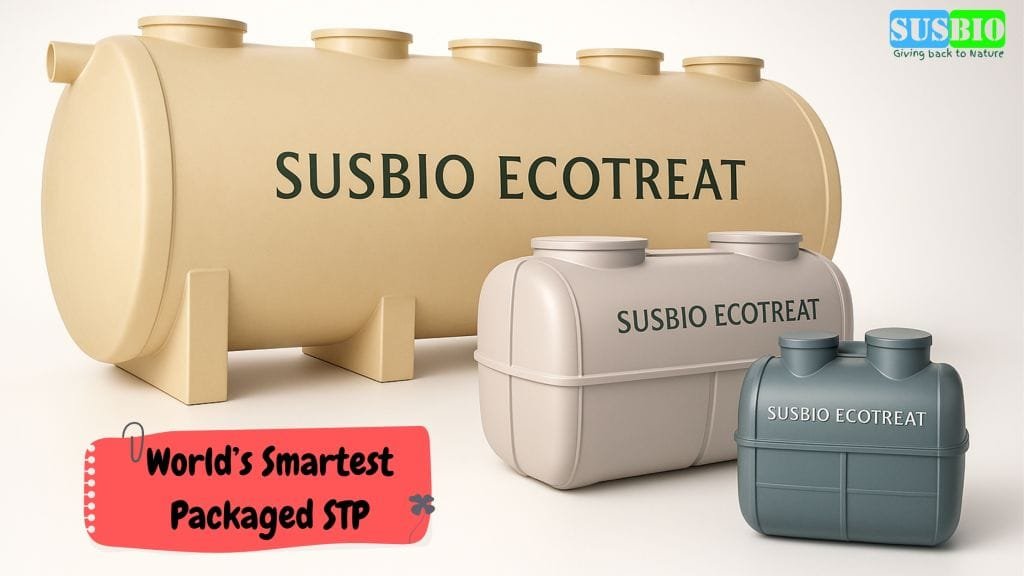
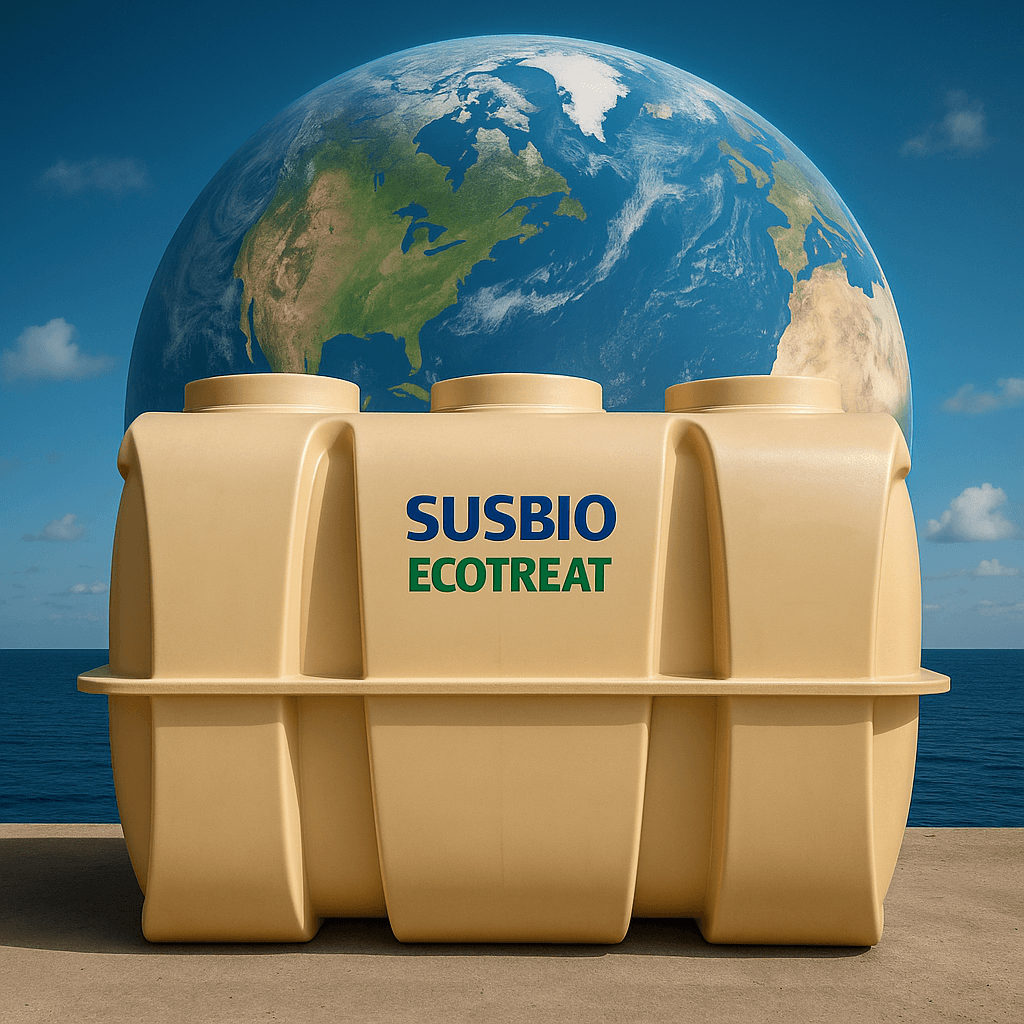
SUSBIO ECOTREAT leads the market as India’s most advanced prefabricated sewage treatment plant. The system installs in 3–5 days and uses 70% less electricity than conventional STPs through its Anaerobic + MBBR dual-stage biological treatment process. The plant’s fiber-reinforced plastic build makes it durable and quiet. This ready-to-use solution works automatically without an on-site operator.
Zero Liquid Discharge (ZLD) and water reuse systems
ZLD systems create a complete closed loop that treats and reuses 95% of wastewater, eliminating discharge. The setup costs 4-5 times more than regular treatments, but most projects pay for themselves within 3-5 years. Chemical plants processing 100 KLD see returns even faster – usually in 2.8 years.
Real-time monitoring with RS-485 Modbus sensors
RS-485 digital sensors track water quality live and send data straight to CPCB/SPCB servers. One interface handles multiple measurements at once. Special probes detect BOD, COD, TSS, and other key parameters.
Public dashboards and ESG reporting readiness
ZLD certification proves that facilities recycle all their wastewater, supporting Environmental, Social, and Governance goals. Companies can show their commitment to the environment through this certification. It proves they manage resources well and follow sustainable corporate practices.

Conclusion
CPCB effluent standards are the legal floor for industrial wastewater discharge in India. The limits differ by receiving body — inland water, public sewer, or land — and sector-specific notifications add further requirements for high-polluting industries. Compliance requires a correctly designed ETP, routine NABL-accredited lab testing, annual Form V submissions under the Environment Protection Rules, and OCEMS integration for Red category units.
Industries that treat compliance as an operational baseline — rather than a periodic audit exercise — are better positioned to avoid penalties, pass export audits, and scale without regulatory disruption.
Frequently Asked Questions
Q1. What are the key parameters monitored in CPCB effluent standards?
The primary parameters under Schedule VI are pH, BOD, COD, TSS, oil and grease, and heavy metals (chromium, lead, mercury, arsenic). Sector-specific notifications add industry-relevant parameters — colour for textiles, AOX for pulp and paper, TDS for distilleries.
Q2. How do CPCB standards impact Indian industries?
Industries must operate compliant ETPs, conduct regular effluent testing through NABL-accredited laboratories, submit Form V annually, and — if classified as Red category — install OCEMS. Non-compliance exposes facilities to closure orders, fines, and NGT penalties.
Q3. What are the consequences of non-compliance with CPCB standards?
Non-compliance under the Water Act, 1974 can result in imprisonment up to five years, fines up to ₹1 lakh, daily penalties of ₹5,000 for continuing violations, and CTO cancellation. The NGT additionally applies the Polluter Pays Principle for damage to water bodies.
Q4. What is Zero Liquid Discharge (ZLD) and which industries need it?
ZLD means no treated effluent is discharged outside the facility — all water is recovered and reused. CPCB mandates ZLD for distilleries, pharmaceutical API plants, textile processing units in critically polluted areas, and certain chemical manufacturers. Capital cost is 4–5x a standard ETP, but freshwater savings and regulatory security typically deliver payback within 3–5 years.
Q5. How are CPCB standards different from SPCB standards?
CPCB sets the national baseline under Schedule VI. SPCBs can — and often do — set stricter limits for specific industries or water bodies within their state. Maharashtra’s MPCB, for example, has imposed stricter COD and TDS limits for several industrial clusters. The applicable standard is whichever is more stringent — national or state.