


If you are looking for a water treatment plant manufacturer in India for a residential project, hotel, hospital, industrial facility, or institutional campus — this guide covers everything: what plants are, how they work, what the law requires, what specifications actually matter, how to size your plant, and why SUSBIO ECOTREAT is the most widely installed packaged STP in the country.
India's Wastewater Problem — The Numbers You Need to Know
India generates 72,368 million litres of sewage every single day from its urban centres alone. Of that, just 28% gets properly treated. The rest flows into rivers, drains, and groundwater — the same sources that millions depend on for drinking, farming, and bathing.
CPCB’s own data shows 296 polluted river stretches across 271 rivers as of 2025. BOD levels in major stretches of the Yamuna exceed 30 mg/L — the legal maximum for discharge from any treatment plant. India’s per capita freshwater availability has already fallen below the international stress threshold of 1,700 cubic metres per person per year.
This is the context in which you are buying a water treatment plant. Getting it right is not optional.
- 72,368 MLD — daily urban sewage generation (CPCB, 2020–21)
- Only 28% — actually treated; 72% untreated and discharged (CPCB)
- 296 — polluted river stretches identified across 271 rivers (CPCB 2025)
- 500+ — active SUSBIO ECOTREAT installations across 24 Indian states
What Is a Water Treatment Plant?
A water treatment plant (WTP) is a system that removes biological, chemical, and physical contaminants from water — making it safe for discharge, reuse, or consumption depending on the application. The term covers several distinct categories:
SEWAGE TREATMENT PLANT (STP)
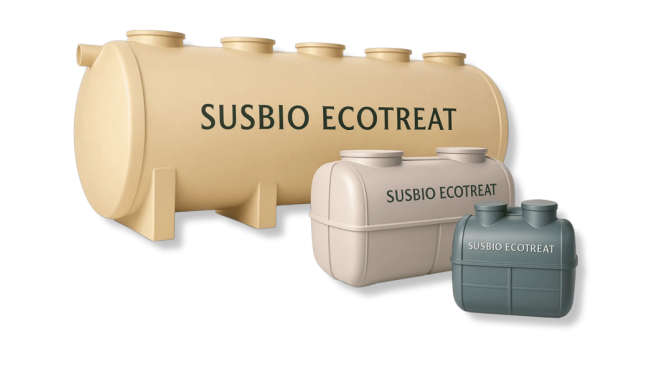
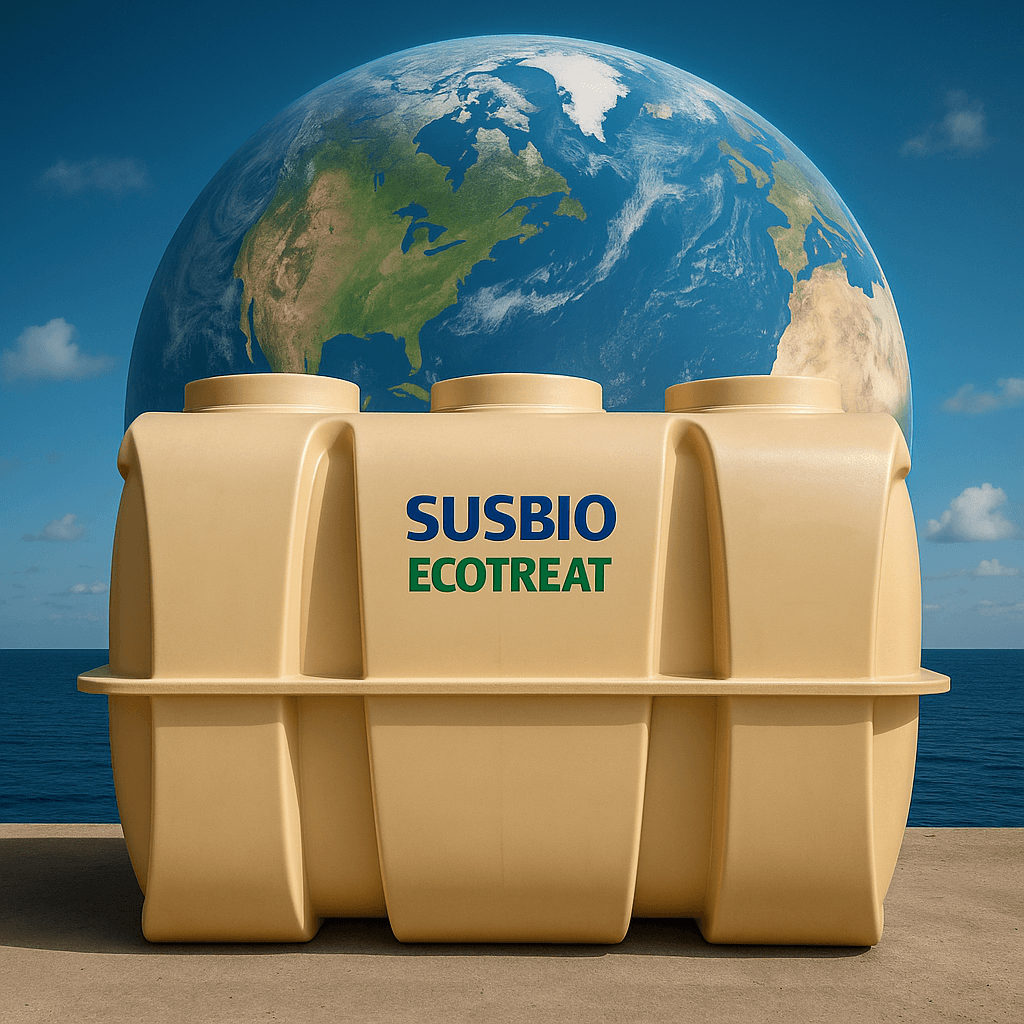
Treats domestic wastewater: grey water from kitchens and bathrooms, black water from toilets. The objective is to reduce BOD, TSS, and pathogens to levels safe for discharge into a drain or waterbody, or for reuse in flushing, irrigation, and cooling. This is SUSBIO’s primary domain. SUSBIO ECOTREAT is a packaged STP manufactured in Pune and deployed across India from 2 KLD to 500 KLD.
Effluent Treatment Plant (ETP)
Treats industrial wastewater from factories, hotels, hospitals, food processors, and pharmaceutical plants. ETPs combine physical, chemical, and biological treatment stages. For high-strength or toxic effluent streams, advanced electrochemical treatment is increasingly replacing conventional biology-only systems. SUSBIO IONTREAT is an electrochemical ETP available from 10 KLD to 1 MLD.
Drinking Water Treatment Plant (WTP)
Purifies raw surface or groundwater for potable use through coagulation, flocculation, sedimentation, filtration, and disinfection. Primarily relevant for municipalities, township developers, and facilities dependent on untreated surface water.
Zero Liquid Discharge Plant (ZLD)
Achieves near-zero effluent output by combining biological treatment with membrane systems (UF, RO) and evaporation/crystallisation. Mandated for specific heavily polluting industries. High capital and operating cost — relevant for textile, tanneries, sugar, distilleries, and certain chemical manufacturers in critically polluted areas.
For most residential developers, hoteliers, hospital operators, and small-to-mid industrial facilities in India, the relevant product is a packaged STP or ETP in the 2 KLD to 500 KLD range. That is exactly what SUSBIO ECOTREAT is built for.
Understanding the treatment process helps you verify what you’re being sold. Most low-cost packaged plants skip stages that matter — and you pay for it three years later with non-compliant effluent and SPCB notices. Here is how a properly engineered packaged STP like SUSBIO ECOTREAT works:
| Stage | Process | What Happens | Why It Matters |
|---|---|---|---|
| 1 | Screening | Bar screen removes plastics, rags, grit | Protects downstream components |
| 2 | Anaerobic Stage | No-oxygen digestion; 40–60% BOD reduction | Handles peak loads; unique to ECOTREAT |
| 3 | MBBR Stage | Aerobic biofilm on plastic carriers; nitrification | Compact; no sludge recirculation |
| 4 | Secondary Clarifier | Biomass settles; supernatant advances | Clean separation before polishing |
| 5 | UV Disinfection | UV light eliminates pathogens | No chemicals; safe for reuse |
| 6 | Tertiary (Optional) | Sand filter + activated carbon | For LEED / industrial reuse standard |
Why the Dual-Stage Anaerobic + MBBR Process Matters
Most packaged STPs use only a single aerobic stage — meaning raw sewage hits the aerobic bacteria at full BOD strength. When influent load spikes on a weekend or during a hotel check-in surge, a single-stage plant struggles to maintain effluent quality. SUSBIO ECOTREAT’s anaerobic first stage reduces incoming BOD by 40–60% before it reaches the MBBR chamber — giving the aerobic biomass a manageable, stable load regardless of what comes in. This is the single biggest reason ECOTREAT consistently passes SPCB tests that cheaper plants fail.
CPCB Standards Every Buyer Must Understand
The Central Pollution Control Board sets the minimum effluent quality standards for treated water in India. There are two relevant standards for STP output:
| Parameter | General Standard | Class A Standard | SUSBIO Status |
|---|---|---|---|
| BOD (Biochemical Oxygen Demand) | ≤30 mg/L | ≤10 mg/L | ✔ ECOTREAT meets Class A |
| TSS (Total Suspended Solids) | ≤100 mg/L | ≤10 mg/L | ✔ ECOTREAT meets Class A |
| pH | 5.5 – 9.0 | 6.0 – 9.0 | ✔ Controlled in process |
| Ammoniacal Nitrogen | ≤50 mg/L | ≤5 mg/L | ✔ MBBR nitrification handles this |
| Faecal Coliforms | Not specified (General) | ≤100 MPN/100 ml | ✔ UV disinfection unit standard |
| Treated Water Use | Drain/river discharge only | Flushing, irrigation, cooling towers | ✔ Required for green certifications |
What This Means in Practice
If your plant produces effluent that only meets the General Standard, your treated water can only go to a drain or surface body — it cannot be reused. You will also fail SPCB inspection if you are in a zone that mandates Class A output (coastal, eco-sensitive, or CRZ areas almost always do).
If your plant meets Class A — BOD ≤10 mg/L, TSS ≤10 mg/L, Faecal Coliforms ≤100 MPN/100 ml — your treated water can be reused for toilet flushing, irrigation, car washing, and cooling towers. In a 200-unit apartment complex, this saves 30,000 to 40,000 litres of fresh water every day.
SUSBIO ECOTREAT is engineered, tested, and certified to CPCB Class A across all capacity sizes from 2 KLD to 500 KLD. Third-party lab reports are available for every standard plant model.
Where Are Water Treatment Plants Legally Required in India?
Mandatory STP and ETP installation is now firmly embedded in law and enforced through SPCB inspections, occupancy certificate requirements, and CPCB closure orders. Here is where you legally cannot skip it:
Residential Projects
CPCB’s 2017 Environment Protection Act notification requires STPs in all residential complexes generating more than 10 KLD of wastewater in areas without public sewerage access. In practice, any apartment project above 20 units — and virtually any township — will need a functional, SPCB-approved STP to get an occupancy certificate. Most state SPCBs have aligned their own thresholds. Non-compliance post-occupancy triggers show-cause notices and can result in water connection disconnection.
Hotels, Resorts, and Hospitality
All hotels above 2-star classification and any resort in an ecologically sensitive zone must have an independent STP. HRACC star ratings explicitly require this. In Goa, Maharashtra, Kerala, and Himachal Pradesh, CRZ and coastal zone regulations mean no discharge into open drains without treatment — a zero-tolerance clause. Multiple hotel and resort properties have faced closure or de-rating in the past three years for non-compliance.
Hospitals and Healthcare
The Biomedical Waste Management Rules 2016 and CPCB healthcare guidelines require treatment of both grey water (STP) and biomedical liquid waste. Any healthcare facility above 30 beds typically requires an SPCB-approved STP. SUSBIO configures ECOTREAT for healthcare applications with enhanced UV disinfection and a chemical dosing provision compatible with disinfectant-containing wastewater.
Industrial Facilities
The Water (Prevention and Control of Pollution) Act mandates ETP installation for any industry generating trade effluent. Standards vary by sector — textile, food processing, pharmaceutical, and automotive have different BOD/COD/heavy metal thresholds. Industries in critically polluted areas additionally face ZLD mandates. Section 43 of the Water Act allows criminal liability for non-compliance.
IT Parks, SEZs, and Commercial Complexes
Large commercial developments generating above 10 KLD of wastewater require STPs as part of green building compliance (IGBC, GRIHA, LEED). Many SEZ authorities now mandate centralised STP infrastructure as a condition of unit allotment. The Union Ministry of Jal Shakti requires cities to recycle and reuse at least 20% of consumed water — a target that cascades down to large commercial consumers.
CRZ and Eco-Sensitive Zones
CRZ notifications under the Environment Protection Act are among the most stringent in Indian environmental law. Absolutely no untreated sewage can be discharged in CRZ-I, CRZ-II, or CRZ-III areas. FRP packaged STPs like ECOTREAT — fully enclosed, leak-proof, installable above ground — are particularly suited here. They leave no subsoil contamination risk and meet the strict containment requirements of coastal environmental officers in Goa, Maharashtra, and Kerala.
How to Calculate the Right STP Capacity — CPHEEO Method
Undersizing your STP is the most common and most expensive mistake in the industry. Retrofitting a plant that’s been running overloaded costs two to three times the original installation. Here is the standard methodology based on CPHEEO (Central Public Health and Environmental Engineering Organisation) norms used across India:
Step 1 — Estimate Occupancy and Daily Water Consumption
- Residential (urban): 135 litres per person per day (lpcd) as per CPHEEO norms.
- Hotels (guests staying overnight): 135 lpcd.
- Hotels (day visitors): 45 lpcd.
- Hospitals: 350–450 lpcd depending on bed type.
- Offices / IT parks: 45 lpcd.
- Schools and colleges: 45 lpcd (residential); 15–25 lpcd (day).
- Restaurants / food courts: 70 lpcd per seat (full-service); 25 lpcd (fast food).
Step 2 — Apply the 80% Wastewater Conversion Factor
Not all water consumed becomes wastewater. The standard factor is 80%. Wastewater generated = total water supply × 0.80.
- Example: 200-unit apartment, 4 residents per unit = 800 persons × 135 lpcd = 108,000 L/day = 108 KLD. Wastewater = 108 × 0.80 = 86.4 KLD — round up to 90 KLD.
Step 3 — Add a Safety Margin
Always round up to the next standard plant size and add at least 10–15% buffer for peak loads, future expansion, and guest/visitor variation. An undersized plant is a liability; a slightly oversized one is not.
Use SUSBIO’s free online STP Capacity Calculator — available at susbio.in/how-to-calculate-sewage-treatment-plant-capacity — for instant capacity recommendations based on your project type, occupancy, and location.
SUSBIO Product Range — Which System for Which Project
The following table maps standard project types to the recommended SUSBIO system, capacity range, and the key technical advantage for that application:
| Project Type | Capacity Range | Recommended System | Key Advantage |
|---|---|---|---|
| Individual Villas / Farmhouses | 2 – 5 KLD | ECOTREAT 2KLD / 5KLD | Below-ground FRP, no operator |
| Row Houses / Small Complexes | 5 – 20 KLD | ECOTREAT 10KLD / 20KLD | Compact, odour-free, auto-run |
| Apartments / Housing Societies | 20 – 100 KLD | ECOTREAT 25 – 100KLD | CPCB Class A, reuse-ready |
| Hotels / Resorts | 10 – 150 KLD | ECOTREAT + UV + Tertiary | Zero-odour, load-variable design |
| Hospitals / Healthcare | 10 – 100 KLD | ECOTREAT + Enhanced Disinfection | Pathogen removal, chemical-resistant |
| IT Parks / Campuses | 50 – 300 KLD | ECOTREAT / SBR | IGBC/LEED compliant |
| Townships / Large Developments | 100 – 500 KLD | ECOTREAT / SBR modular | Multi-phase scalable |
| Industrial (Domestic Waste) | 10 – 500 KLD | ECOTREAT | For canteen + toilet load in factories |
| Industrial Effluent (High COD) | 10 KLD – 1 MLD | IONTREAT Electrochemical ETP | No civil pond, high-strength streams |
What to Actually Look for in a Water Treatment Plant Manufacturer
Most buyers make one of two mistakes — they focus purely on upfront price, or they go with the most familiar brand without checking whether that brand actually serves their scale. Here is what determines whether your plant runs well five years from now:
In-House Manufacturing vs. Assembly
A manufacturer who fabricates their own FRP vessels, designs their own internals, and controls the full bill of materials is a fundamentally different vendor from a contractor who assembles components from multiple suppliers. In-house manufacturing means tighter quality control, faster spare parts, and a single accountable party when something fails. SUSBIO fabricates every ECOTREAT vessel at its own FRP unit at Vasuli MIDC, Chakan, Pune. The team that designs the plant builds the vessel.
CPCB / SPCB Compliance — Demand Proof
Ask for copies of third-party lab reports from plants the manufacturer has installed in your state — not just a datasheet. Effluent quality data from independent sampling at operating plants is the only reliable evidence of performance. A manufacturer who cannot produce test reports from their installed base is selling a promise.
Post-Commissioning Service and AMC
The plant you buy today will need maintenance for 15–20 years. Ask whether the manufacturer has a service team in your region — not just a reseller’s phone number. Ask how many plants they are currently under AMC in your state and what the average response time is for a breakdown call. SUSBIO operates a dedicated 9-member pan-India field service team with active AMC contracts across 24 states. Service is a core revenue line — not an afterthought.
FRP Quality and Vessel Life
FRP quality varies significantly between manufacturers. Wall thickness, resin type, lamination quality, and UV stabilisation all affect how the vessel holds up after five to ten years underground. Thin-walled vessels from low-cost manufacturers show structural cracking and subsoil leakage by year three. SUSBIO’s in-house FRP unit at Chakan uses formulations specific to continuous immersion in sewage — the same standard it applies to export orders.
Capacity Range and Scalability
A manufacturer limited to small units cannot advise you correctly as your project grows. SUSBIO ECOTREAT covers 2 KLD to 500 KLD — the same engineering team can handle a 10 KLD villa cluster and a 300 KLD township Phase 2 expansion.
IoT Monitoring
Modern packaged STPs should offer real-time monitoring of blower status, DO levels, pump health, and alarm conditions. This matters especially for facilities without full-time operators — residential societies, small hotels. SUSBIO ECOTREAT supports IoT integration, enabling SUSBIO’s service team to detect faults remotely before they become failures.
SUSBIO ECOTREAT — India's Most Deployed Packaged STP
SUSBIO (Sustainable Biosolutions Pvt. Ltd.) was founded in 2013 in Goa. The founding question was straightforward: why do packaged STPs in India fail so consistently, and what would it take to build one that doesn’t?
The answer, after studying installed bases across the country, came down to three failures — weak biological design (single-stage aerobic), poor FRP construction (outsourced thin-wall vessels), and no service backbone after handover. ECOTREAT was built to fix all three simultaneously.
Thirteen years and 500+ installations later, across 24 Indian states, SUSBIO ECOTREAT is the benchmark for the packaged STP segment serving residential, hospitality, healthcare, and light industrial applications.
Dual-Stage Anaerobic + MBBR Biological Process
ECOTREAT’s two-stage biological train is its defining feature. The anaerobic stage (Stage 2) reduces incoming BOD by 40–60% before sewage reaches the MBBR chamber. The MBBR stage uses free-floating plastic bio-media carriers to grow a dense aerobic biofilm that handles the remaining BOD reduction and nitrification. Output consistently achieves CPCB Class A: BOD ≤10 mg/L, TSS ≤10 mg/L, Faecal Coliforms ≤100 MPN/100 ml.
In-House FRP Manufacturing, Vasuli MIDC, Chakan
Every ECOTREAT vessel is fabricated at SUSBIO’s own FRP unit in Chakan, Pune — not outsourced. Wall thickness, resin formulation, and lamination schedule are specified by SUSBIO’s engineers for each capacity size and installation depth. This is why SUSBIO can offer structural warranties that third-party assembled plants cannot.
500+ Active Installations, 24 States
ECOTREAT is installed in villas, apartment complexes, boutique hotels, five-star resorts, mission hospitals, IT campuses, and industrial facilities from Goa to Assam, from Ladakh to Kerala. This is not a claimed figure — it is a verifiable installed base that your own consultant can visit.
CPCB Class A Certified Across the Range
Every ECOTREAT unit from 2 KLD to 500 KLD is engineered and tested to CPCB Class A. For SPCB consent applications, SUSBIO provides the complete documentation package: CTE/CTO dossier, P&ID diagrams, process flow charts, and first-month effluent test report.
Zero Odour, Low Noise, Minimal Operator Requirement
The anaerobic stage is fully enclosed within the FRP vessel — no open tanks, no exposed organic matter. Blowers are sound-attenuated. For units below 50 KLD, no full-time operator is required. A monthly service visit covers all routine checks.
Exports to Multiple Countries
SUSBIO exports ECOTREAT to multiple international markets — commercially verified evidence that the product meets standards beyond Indian regulatory minimums.
Applications — Who Uses SUSBIO ECOTREAT
Residential Complexes and Real Estate Developers
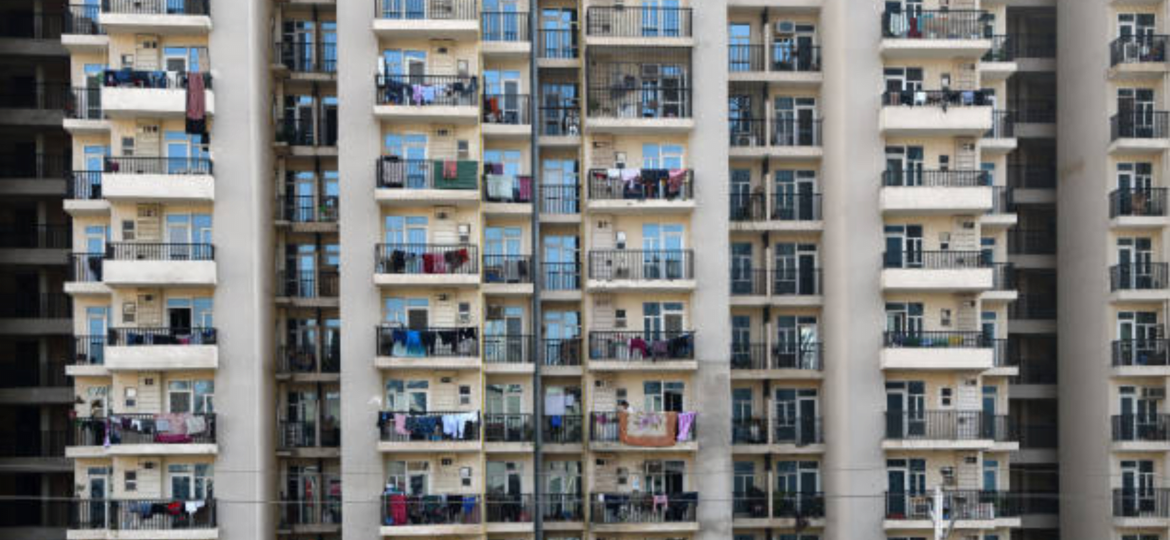
Apartment complexes, gated communities, plotted layouts, villas, row houses. SUSBIO works with developers from project design stage — ensuring the STP is sized correctly and integrated into the civil layout before foundations are laid. Post-construction retrofits cost two to three times more and often result in undersized, non-compliant installations. If you are a developer reading this before breaking ground, that is the most valuable sentence in this article.
Hotels, Resorts, and Eco-Lodges
Boutique hotels, heritage properties, beach resorts, hill station lodges, and large hotel chains. The hospitality segment has specific challenges: seasonal load variation, variable-strength kitchen and laundry wastewater, and strict aesthetic requirements around plant placement. ECOTREAT’s below-ground installation option and odour-free operation make it the default choice for resort properties across Goa, Kerala, Himachal Pradesh, and Rajasthan.
Hospitals and Healthcare
Multi-specialty hospitals, nursing homes, diagnostic centres, and medical colleges. Healthcare applications require pathogen removal above general standards, chemical resistance in vessel materials, and compatibility with disinfectant-laden wastewater from OT and ICU floors. SUSBIO configures ECOTREAT for healthcare with enhanced UV disinfection and dosing provision built in.
IT Parks, Campuses, and Institutions
Large daytime-load institutional campuses generate high flows during working hours and minimal flows overnight — a load profile that confuses single-stage aerobic plants designed for steady-state conditions. ECOTREAT’s dual-stage process handles this variation reliably. Deployed across multiple IT campuses and educational institutions seeking IGBC and LEED certification.
Industrial Facilities — Domestic + Industrial Streams
For industrial clients, domestic sewage from canteens, toilets, and change rooms is handled by ECOTREAT. High-strength industrial process effluent — high COD, colour, heavy metals, toxic organics — is handled by SUSBIO IONTREAT, the electrochemical ETP. The dual-system approach (ECOTREAT + IONTREAT) is increasingly specified by environmental consultants for manufacturing parks and SEZ units.
Remote and Off-Grid Projects
SUSBIO’s biodigester and biotoilet range serves Himalayan trekking camps, island facilities, defence field bases, and highway rest areas where grid power is unavailable or unreliable. No electricity required for the basic biodigester model; no regular chemical dosing; no dedicated operator.
Frequently Asked Questions
Q1. What is the cost of a water treatment plant in India?
For a well-engineered packaged STP like SUSBIO ECOTREAT, indicative budgets are: ₹2–5 lakh for a 5–10 KLD unit; ₹8–15 lakh for a 50 KLD unit; ₹25–50 lakh for 100–200 KLD. Actual cost depends on civil work, automation level, and site conditions. The lowest quote is rarely lowest cost — a plant that fails SPCB inspection, requires constant repairs, or needs replacement at year five costs far more than one that runs correctly for 15 years. Compare total cost of ownership, not upfront price.
Q2. How long does it take to install a packaged STP?
For a standard ECOTREAT in the 10–100 KLD range: civil preparation takes 2–4 weeks; plant fabrication runs in parallel at the Chakan facility; installation and commissioning on site takes 3–7 working days once the plant arrives. Biological startup — the period for the microbial culture to establish in the MBBR media — takes 4 to 6 weeks before the plant reaches design effluent quality. Total timeline from order to stable Class A output: 8 to 12 weeks.
Q3. What maintenance does a packaged STP need?
A correctly designed packaged STP requires minimal routine intervention. Monthly visits cover blower checks, pump lubrication, UV lamp inspection, and effluent sampling. Desludging is needed every 3 to 6 months depending on organic loading. SUSBIO AMC contracts cover all of this, typically at 5–8% of plant capital cost per year. SUSBIO currently services plants under AMC across 24 states.
Q4. Can treated STP water be reused for flushing and gardening?
Yes — if the plant meets CPCB Class A standards (BOD ≤10 mg/L, TSS ≤10 mg/L, Faecal Coliforms ≤100 MPN/100 ml). SUSBIO ECOTREAT is certified to Class A, making its treated water legally and technically suitable for toilet flushing, irrigation, car washing, and use in cooling towers. In a 200-unit residential complex, reusing treated water reduces fresh water consumption by 30,000 to 40,000 litres per day.
Q5. What is the difference between MBBR and SBR technology for sewage treatment?
MBBR (Moving Bed Biofilm Reactor) grows aerobic bacteria on free-floating plastic carriers — compact, robust, no sludge recirculation, ideal for packaged plants in variable-load conditions. SBR (Sequencing Batch Reactor) operates in timed fill-react-settle-decant cycles in a single tank — excellent nitrogen and phosphorus removal, better suited for larger plants where precise automation is feasible. SUSBIO offers both: ECOTREAT uses Anaerobic + MBBR for its packaged range; SUSBIO SBR is available for mid-to-large projects where the technology is specified.
Q6. Which industries are required to install an ETP in India?
Any industry generating trade effluent is legally required to install an ETP under the Water (Prevention and Control of Pollution) Act. Industries with the highest ETP enforcement include: textile and dyeing, tanneries, pharmaceuticals, food and beverage processing, electroplating, paint manufacturing, hospitals, dairy processing, and pulp and paper. SUSBIO IONTREAT, an electrochemical ETP, is particularly suited for high-COD, coloured, or toxic streams that conventional biological ETPs cannot fully treat.
Q7. How do I get SPCB consent (CTE/CTO) for a sewage treatment plant?
The process varies by state but generally requires: plant drawings, capacity calculations on CPHEEO norms, an effluent quality undertaking, and in some states a commissioning test report. SUSBIO provides the complete CTE/CTO documentation dossier as part of every ECOTREAT installation — P&ID diagrams, process flow charts, capacity calculations, and the first-month effluent test report are all included. Your environmental consultant or liaison officer can submit directly from the SUSBIO-provided package.
Q8. What is the lifespan of a packaged FRP sewage treatment plant?
A well-fabricated FRP vessel has a structural life of 20+ years in normal underground conditions. Electrical and mechanical components (blowers, pumps, UV lamps) have shorter service lives — typically 3–8 years for major components — and are replaceable. The critical variable is FRP quality: thin-walled or poorly laminated vessels from low-cost manufacturers show structural failure within 3–5 years. SUSBIO’s in-house FRP fabrication at Chakan is the reason ECOTREAT installations from 2013 are still in service today.
Q9. Does SUSBIO export sewage treatment plants outside India?
Yes. SUSBIO exports ECOTREAT packaged STPs to multiple countries. Export configurations are reviewed against destination-country discharge standards. Contact info@susbio.in for export enquiries.
Q10. What is the difference between a packaged STP and a conventional STP?
A conventional STP is built in-situ from civil construction — concrete tanks, separate equipment rooms, and extensive pipework. It requires more land, longer construction time, and higher civil cost. A packaged STP like ECOTREAT is factory-fabricated, arrives on site as a complete unit, requires minimal civil work (essentially a pit and connecting pipes), and can be commissioned in days rather than months. Packaged STPs are preferred for 2–500 KLD applications; conventional civil STPs are typically used above 500 KLD or in municipal projects.
Talk to SUSBIO’s Engineering Team
Whether you are a developer sizing an STP for a new project, an operator with a non-compliant plant, a hotel owner facing an SPCB notice, or an EPC consultant specifying equipment — the right next step is a technical conversation with an engineer who understands your influent load, your regulatory obligations, and your site constraints.
SUSBIO offers a free technical consultancy call. No sales pitch. An engineer with 13+ years in STP commissioning across India will review your project requirements and give you a straight answer on what you need and what it will cost.
- Phone: +91 88889 80197 | +91 98200 78043 | +91 88069 08550
- Email: info@susbio.in
- Website: in
- Goa (Head Office): #5, Umiya Habitat, Zuarinagar, South Goa – 403726
- Pune (Manufacturing): V130, Vasuli MIDC, Chakan, Pune – 410510
- Mumbai (Branch): GD-05, Suyog Industrial Estate, Vikhroli West – 400083


3 Comments
[…] ECOTREAT is a cutting-edge sewage treatment solution developed by SUSBIO, a leading wastewater treatment company in India. Designed to meet the growing demand for efficient, sustainable, and easy-to-maintain sewage […]
[…] activities, and improper waste disposal have significantly polluted water sources. This is where water treatment plants (WTPs) play a vital role in protecting the environment and ensuring access to clean and safe water. In […]
Thanks for sharing Blog.