

Nepal’s wastewater governance runs through three layers: the Ministry of Water Supply (MoWS) sets national policy, Kathmandu Upatyaka Khanepani Limited (KUKL) manages water and sewerage specifically within the Kathmandu Valley, and the Nepal Water Supply Corporation (NWSC) covers major urban centers outside it. National Domestic Wastewater Effluent Standards set enforceable limits on BOD5, TSS, pH and E. coli before discharge — the legal framework exists and is reasonably well defined.
What’s missing is the infrastructure to meet it. Most of Kathmandu Valley’s wastewater is still discharged untreated into the Bagmati River and its tributaries, and while the ADB-backed Kathmandu Valley Wastewater Management Project has brought real capacity online — the Guheshwori plant (32.4 MLD) has been operating since 2020, and the Dhobighat plant (37 MLD) is expected to complete commissioning by mid-2026 — that capacity is concentrated in the urban core. It does nothing for the hotels of Pokhara, the hospitals and factories outside Kathmandu’s sewer catchment, or the dozens of fast-growing municipalities NWSC doesn’t yet reach.
Why Decentralized STPs Matter in Nepal
- Centralized treatment is years behind its own targets: components of the Kathmandu Valley project, including decentralized treatment units at Hanumanghat and Gokarna, have faced significant contractor delays even as deadlines extend into mid-2026.
- Most of the country sits outside Kathmandu Valley’s coverage entirely: NWSC’s mandate covers “major urban centers” outside the valley, leaving smaller municipalities and tourism towns like Pokhara largely dependent on individual or no treatment at all.
- Rapid urbanization is outpacing what’s already a thin network: published research on Nepal’s urban wastewater management points to unplanned growth straining onsite sanitation systems faster than new treatment capacity can be added.
- Nepal’s upcoming graduation from Least Developed Country status (expected around November 2026) means reduced access to the development aid that has funded much of its existing treatment infrastructure — putting more of the burden for new capacity onto private developers, hotels and institutions themselves.
SUSBIO ECOTREAT for Nepal
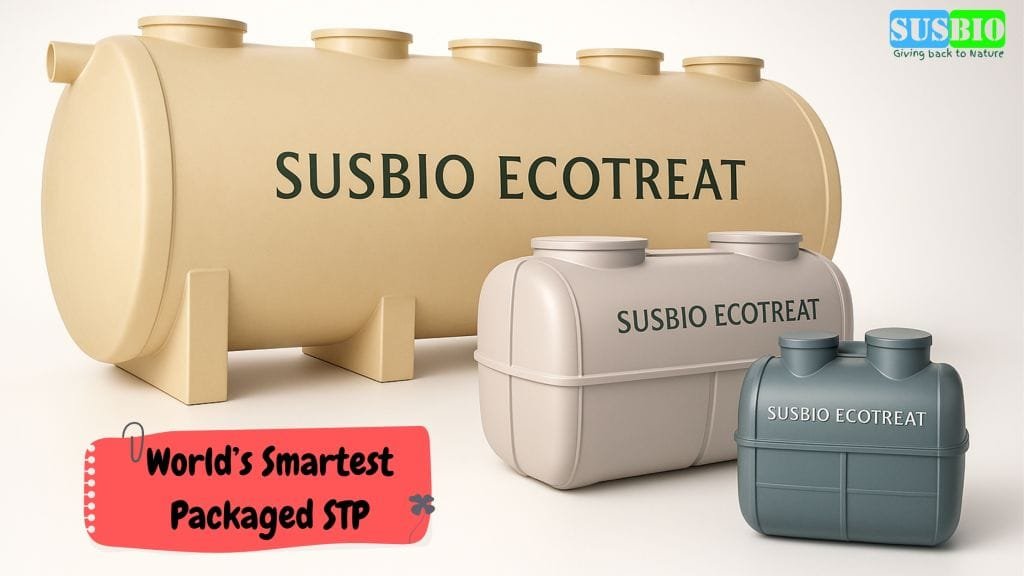
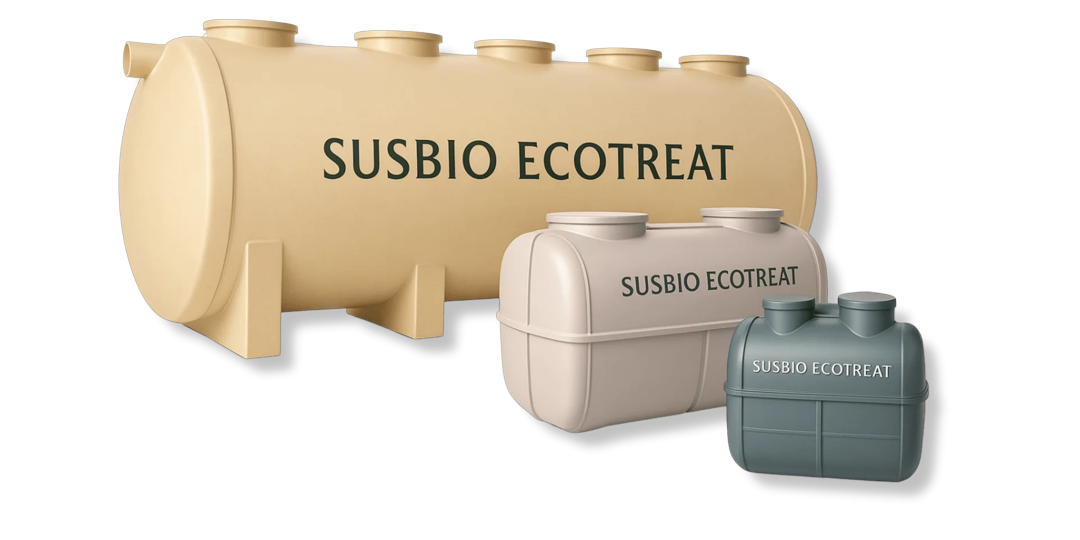
SUSBIO ECOTREAT runs on Anaerobic + MBBR (Moving Bed Biofilm Reactor) technology — the same biofilm-based approach Nepal’s own centralized project has specified for its decentralized treatment units at sites like Hanumanghat and Gokarna, so it’s a technology local regulators and engineers are already familiar with, not an unfamiliar import. The plant uses 70% less electricity than conventional sewage treatment systems, is prefabricated from corrosion-resistant FRP, and installs in 3–5 days — a meaningful advantage in Kathmandu Valley’s dense urban sites and equally useful for hotels in Pokhara or institutions in the Terai where heavy construction logistics are harder to manage.
ECOTREAT covers 1–500 KLD, sized to match anything from a guesthouse to a hospital or large residential development. The plant is engineered to meet BOD, COD, TSS and pathogen-removal targets consistent with Nepal’s National Domestic Wastewater Effluent Standards, built on the same Anaerobic + MBBR design SUSBIO deploys across 500+ installations in 24 Indian states and exports to 8 countries.
SUSBIO vs. the Other Options in Nepal
| Option | What It Actually Offers | The Catch |
|---|---|---|
| Centralized treatment (KUKL/NWSC) | Functioning, no-cost-to-owner treatment within Kathmandu Valley’s connected core | Limited to the valley’s urban centre; major components are years behind schedule, and coverage outside the valley is partial at best |
| Septic tank / no treatment (status quo) | Lowest upfront cost | No real treatment before discharge into rivers like the Bagmati — the primary driver of Nepal’s urban water pollution today |
| Established international/Indian STP exporters already active in Nepal | Real engineering, products already sold into the Kathmandu market | Often limited on-ground installation and after-sales service presence inside Nepal, since the manufacturer is based and primarily serving customers elsewhere |
| SUSBIO ECOTREAT | Anaerobic + MBBR packaged plant, 3–5 day install, 70% less electricity, 500+ installation track record across 8 export markets | Like any packaged plant, requires periodic monitoring — modest compared to running a centralized system |
Where SUSBIO ECOTREAT Fits in Nepal

- Hotels and resorts in Pokhara, Chitwan and other tourism hubs outside Kathmandu Valley’s sewer network
- Hospitals and healthcare facilities needing consistent effluent quality regardless of municipal coverage
- Educational institutions and government campuses in growing municipalities NWSC hasn’t yet reached
- Residential complexes and apartment developments inside Kathmandu Valley awaiting or supplementing municipal connection
- Industrial and manufacturing facilities required to meet National Domestic Wastewater Effluent Standards independently
Frequently Asked Questions
What are Nepal’s wastewater discharge standards?
Nepal’s National Domestic Wastewater Effluent Standards set enforceable limits on BOD5, TSS, pH and E. coli before water can be discharged, applying nationally alongside oversight from the Ministry of Water Supply.
Does Kathmandu Valley already have enough sewage treatment capacity?
Not yet. Major plants like Guheshwori (32.4 MLD) and Dhobighat (37 MLD) add real capacity, but most of the valley’s wastewater is still discharged untreated into the Bagmati River and its tributaries, and some project components remain behind schedule.
Can SUSBIO ECOTREAT be installed outside Kathmandu Valley?
Yes. ECOTREAT is fully prefabricated and modular, making it suitable for Pokhara, the Terai, and any municipality where NWSC or local infrastructure doesn’t yet provide sewerage coverage.
Is MBBR technology already used in Nepal?
Yes. Nepal’s own Kathmandu Valley Wastewater Management Project specifies MBBR at decentralized treatment sites including Hanumanghat and Gokarna, so it’s a technology already familiar to local engineers and regulators.
What capacity range does SUSBIO ECOTREAT offer for hotels and institutions in Nepal?
ECOTREAT covers 1–500 KLD, suitable for anything from a small guesthouse to a hospital or large residential development.
How much electricity does ECOTREAT save compared to conventional systems?
ECOTREAT uses 70% less electricity than conventional sewage treatment plants.
How long does installation take in Nepal?
Most installations are completed in 3–5 days once the prefabricated unit arrives on site, since civil work requirements are minimal.
Conclusion
Nepal’s wastewater gap isn’t closing on its own. Centralized capacity will keep expanding inside Kathmandu Valley, but the gap it leaves outside the valley — and outside the deadlines those projects keep missing — is where most hotels, hospitals, schools and developers in Nepal will keep finding themselves for years to come. SUSBIO ECOTREAT closes that gap now: an Anaerobic + MBBR packaged plant built on technology Nepal’s own engineers already specify, installed in 3–5 days, running on 70% less electricity, backed by 500+ installations across 24 Indian states and exports to 8 countries. Get in touch for a site assessment and a capacity recommendation suited to your location.