

Schools generate a distinct wastewater profile: sewage concentrated into sharp peaks around specific hours — morning arrival, lunch break, and dismissal — rather than the more evenly spread load a residential building sees across the day. A 50 KLD system at a school like Podar has to be sized against these peak windows specifically, not just an average daily flow figure, since a plant that only accounts for the daily average risks underperforming at exactly the hours several hundred students and staff are actually using the facilities at once.
Pune’s own regulatory environment adds a further layer of consistency to this: SUSBIO’s home manufacturing base is in Pune (Vasuli MIDC, Chakan), and Maharashtra Pollution Control Board (MPCB) compliance is a familiar, well-understood requirement for installations across the state, including institutional campuses like schools.
The Requirement
Podar School needed the system for regulatory compliance — as with most educational institutions above a certain size, operating without an STP isn’t something local pollution control authorities allow, and Podar School needed a functioning system in place rather than continuing to operate without one. That compliance requirement set the timeline: the plant needed to be installed and running, not just planned, which made SUSBIO ECOTREAT’s fast, minimal-disruption installation a practical fit for a live school campus that couldn’t accommodate months of construction to meet the deadline.
The Solution: SUSBIO ECOTREAT
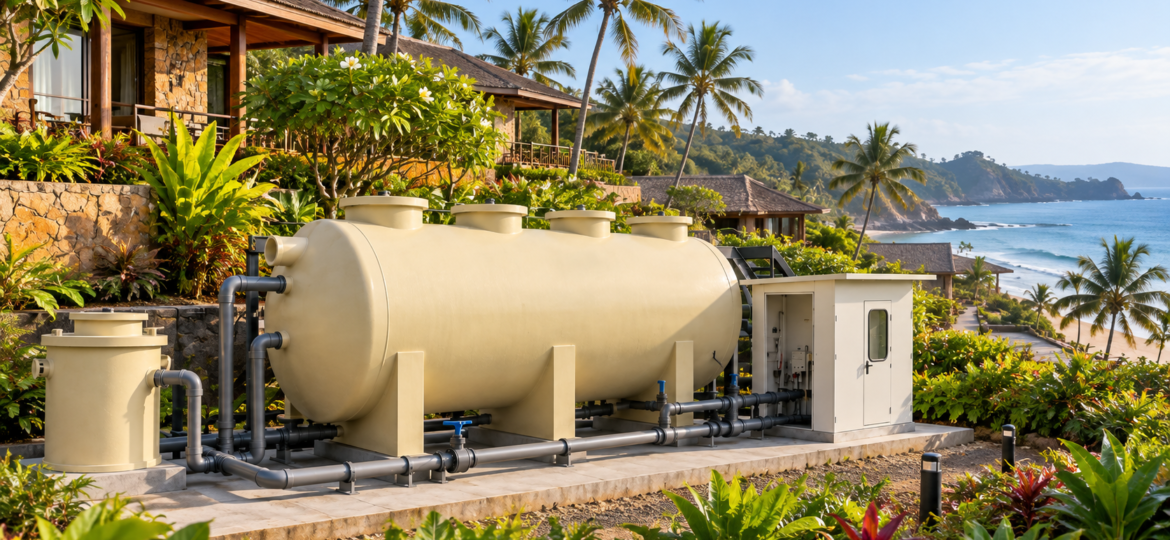
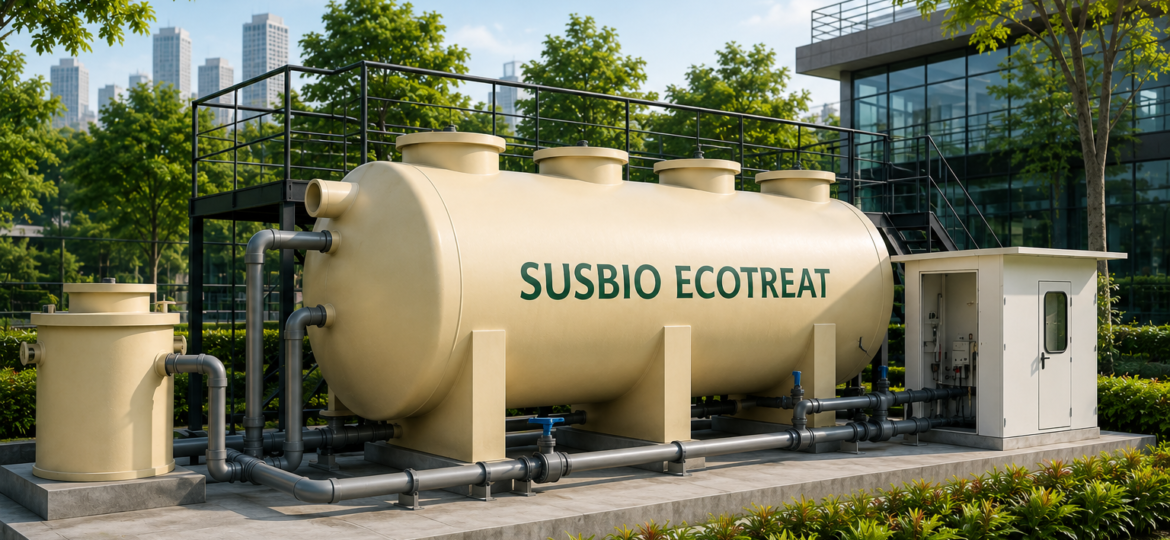
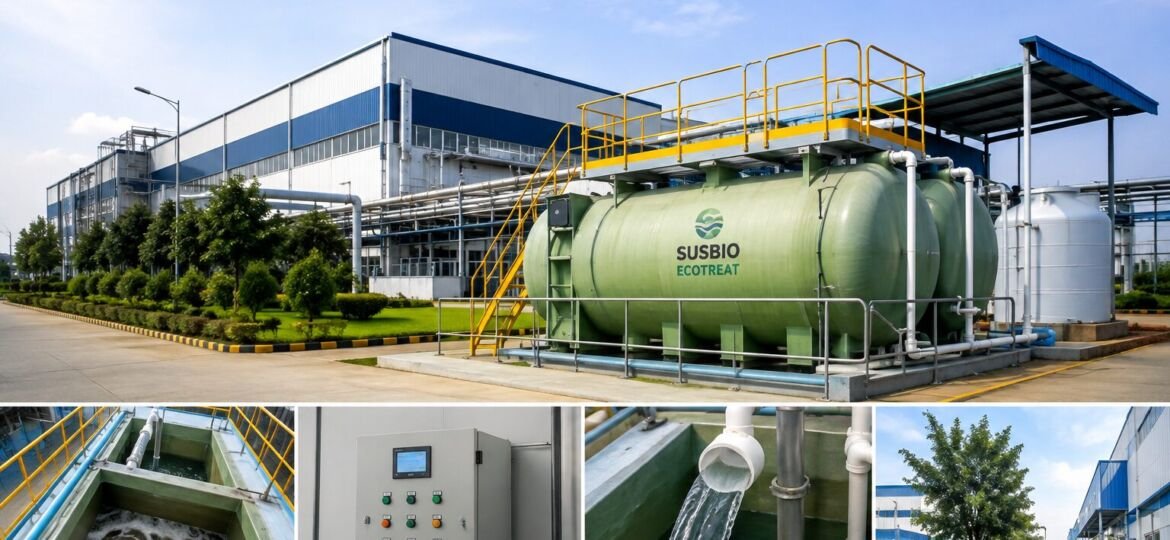
SUSBIO installed a complete 50 KLD ECOTREAT packaged STP at Podar School, built on the Anaerobic + MBBR hybrid process — anaerobic pre-treatment ahead of a Moving Bed Biofilm Reactor. Because the system is prefabricated FRP, arriving factory-built and tested, installation was completed with minimal disruption to an active school campus — a meaningful advantage given schools can’t simply pause operations for extended civil construction the way some commercial sites can plan around.
The system is engineered for consistent effluent quality (BOD below 10 mg/L across SUSBIO’s 500+ installations) while consuming up to 70% less electricity than conventional STPs — a direct, ongoing operating-cost benefit for an educational institution running on a fixed annual budget.
The Outcome
Since installation in June 2026, the system has been running without issue — no odor complaints, no operational disruptions, and no interruptions to the school’s daily routine. For an active campus that can’t afford unplanned downtime during term time, that quiet, uneventful operation is the actual measure of success.
Why SUSBIO ECOTREAT for Educational Campuses
Schools and educational institutions share a specific set of requirements: peak-load sizing around class schedules rather than a flat daily average, minimal disruption during installation on an active campus, low ongoing operational complexity since schools rarely have dedicated wastewater engineering staff, and dependable compliance for an institution that answers to parents, regulators, and accreditation bodies alike. SUSBIO ECOTREAT’s factory-tested construction, automated low-maintenance operation, and Anaerobic + MBBR engineering are built around exactly this combination — proven across 500+ installations in 24 Indian states, including other educational institutions with comparable requirements to Podar School’s.
Conclusion
A school doesn’t get to plan around its wastewater system the way a factory or a hotel can — the bell schedule doesn’t move for anyone, and neither does the peak load it creates three times a day. Podar School’s 50 KLD SUSBIO ECOTREAT installation was built around that reality from the start, not retrofitted to survive it. Since going live in June 2026, it has done exactly what a school needs from infrastructure like this: nothing noticeable at all. No odor complaints, no operational disruptions, no interruptions to a single school day — which, for a system whose entire job is to work quietly in the background while several hundred students and staff go about their routine, is the only outcome that actually counts.
For institutions weighing the same decision Podar School faced — how to get reliable, compliant sewage treatment onto an active campus without disrupting the work of educating students — this installation is a working answer, not a hypothetical one.
Frequently Asked Questions
What size STP does a school typically need?
It depends on student and staff headcount and peak-hour usage patterns, not just campus size. SUSBIO ECOTREAT’s 1-500 KLD range covers everything from a small school to a large multi-building campus.
How does a school’s wastewater load differ from a residential building’s?
Schools see sharp, concentrated peaks around arrival, lunch, and dismissal rather than a more evenly distributed load across the day, so proper sizing has to account for peak flow specifically, not just a daily average.
How disruptive is installation on an active school campus?
Because ECOTREAT is prefabricated and factory-tested before arriving on site, installation is significantly faster and less disruptive than a conventional civil-built STP, which matters for a campus that can’t easily pause operations.
What maintenance does a school STP require?
ECOTREAT is designed for low-maintenance, largely automated operation, reducing dependency on dedicated technical staff — a practical fit for schools, which rarely have in-house wastewater engineering expertise.