

UNPPL’s industrial campus in Hyderabad generates sewage from its on-site workforce and facility operations — wastewater that needs to be treated before discharge or reuse, meeting Telangana State Pollution Control Board (TSPCB) requirements. Hyderabad’s own infrastructure gap makes this a familiar pressure for industrial sites in the city: the city generates over 1,500 MLD of sewage, and municipal treatment infrastructure doesn’t fully cover it, particularly for newer industrial and commercial developments — making independent, on-site treatment a practical necessity rather than a choice.
It’s worth distinguishing what kind of wastewater an industrial campus like UNPPL’s actually generates, since it’s a different profile than a typical process-heavy manufacturing site. This is domestic-pattern sewage — washrooms, canteen or pantry facilities, and general workforce sanitation — rather than the chemically complex process effluent an ETP is built for. That distinction matters for the technology choice: a site like this needs an STP engineered for organic, pathogen, and suspended-solid removal (SUSBIO ECOTREAT’s domain), not an ETP built around chemical or heavy-metal contaminant removal. Sizing also has to account for shift patterns rather than assuming steady 24-hour occupancy — industrial workforce facilities typically see concentrated peak usage around shift changes and meal breaks rather than the more even distribution of a residential building.
The Requirement
UNPPL’s Hyderabad industrial campus was a new facility with no existing sewage treatment infrastructure — meaning the STP wasn’t a replacement or an upgrade, but a first-installation requirement tied directly to the facility becoming operational. That put installation speed at a premium: a new industrial facility can’t fully commission and begin operations without compliant wastewater treatment in place, so the timeline for the STP was effectively the timeline for the facility’s own readiness.
The Solution: SUSBIO ECOTREAT
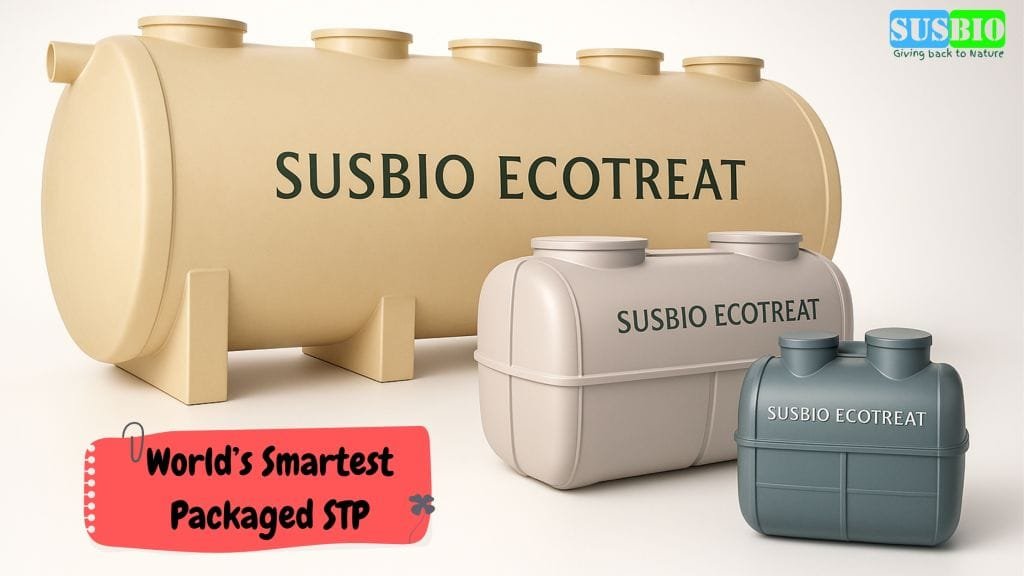
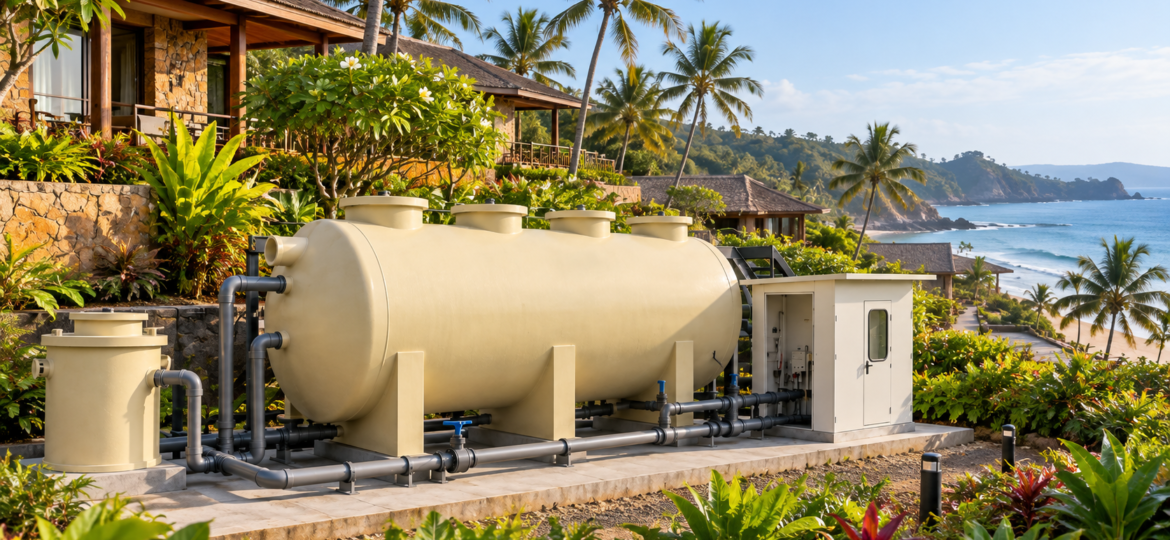
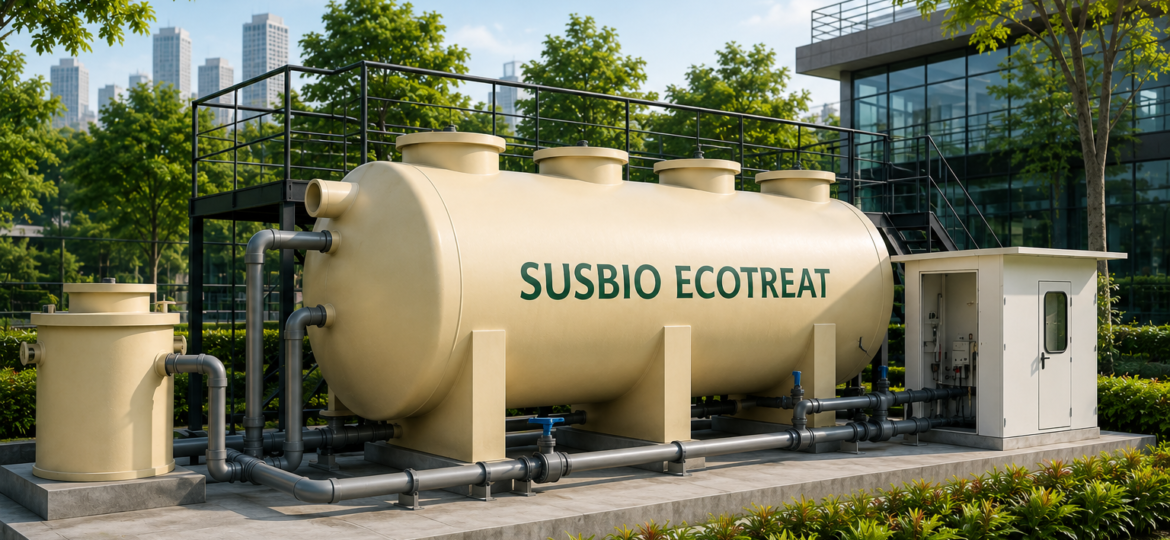
SUSBIO installed a complete ECOTREAT packaged STP at the UNPPL industrial campus, built on the Anaerobic + MBBR hybrid process — an anaerobic pre-treatment stage ahead of a Moving Bed Biofilm Reactor. Being prefabricated FRP, the system arrived factory-built and tested, reducing dependency on site-level civil work and cutting installation time compared to a conventional poured-concrete STP — a meaningful advantage for an active industrial site where prolonged construction disruption has a real operational cost.
The system is engineered for consistent effluent quality (BOD below 10 mg/L across SUSBIO’s 500+ installations) while consuming up to 70% less electricity than conventional STPs — a direct operating-cost benefit for an industrial facility running the system continuously.
The Outcome
The system has been running without complaint for six months since commissioning — a meaningful result for an industrial site, where consistent, trouble-free operation matters more than any single test number. No operational issues, no odor complaints, and no interruptions to the facility’s own operations since the STP went live.
Why SUSBIO ECOTREAT for Industrial Campuses
Industrial campuses like UNPPL’s face a specific combination of constraints: consistent, high-confidence compliance (industrial sites draw more regulatory scrutiny than typical residential projects), minimal disruption to active operations during installation, and dependable long-term performance without heavy in-house technical staffing. SUSBIO ECOTREAT’s factory-tested construction, automated operation, and Anaerobic + MBBR engineering are built around exactly that combination — proven across 500+ installations in 24 Indian states, including industrial sites with comparable requirements to UNPPL’s.
Conclusion
The UNPPL installation reflects a pattern common across SUSBIO’s industrial projects: an active facility that needs reliable, compliant sewage treatment without the extended construction timeline and civil-work dependency of a conventional STP. As the system moves further into regular operation, we’ll look to update this case study with measured performance data — a commitment to keeping this a genuine record of results, not just an installation announcement.
Frequently Asked Questions
What size industrial campus is a SUSBIO ECOTREAT system suited for?
ECOTREAT’s 1–500 KLD range covers workforce-facility sewage from a small industrial unit through a large multi-building campus — sized against actual headcount and shift patterns rather than a generic per-square-foot estimate.
Is an STP or an ETP the right fit for an industrial campus?
It depends on the source. Workforce sanitation, washrooms, and canteen wastewater need an STP. If the site also generates process effluent from manufacturing, that stream needs separate ETP-grade treatment — the two should never be combined into one system.
How disruptive is ECOTREAT installation at an active industrial site?
Because the system is prefabricated and factory-tested before arriving on site, installation is significantly faster than a conventional civil-built STP — minimizing disruption to ongoing industrial operations compared to an extended construction timeline.
What ongoing maintenance does an industrial ECOTREAT installation require?
The system is designed for low-maintenance, largely automated operation, reducing dependency on dedicated in-house wastewater treatment staff — a practical advantage for industrial sites without specialized environmental engineering personnel on staff.
Does an industrial STP need to account for shift-based usage patterns?
Yes. Industrial workforce facilities typically see concentrated peak load around shift changes and meal breaks rather than steady usage, so proper sizing accounts for peak flow, not just average daily volume.