

Choosing between chemical treatment and biological treatment for your effluent treatment plant can mean the difference between thousands in savings or wasted expenses each year. Chemical treatment of wastewater uses reactants to remove contaminants. Biological treatment of wastewater relies on living bacteria to purify water. Both methods have advantages when it comes to original investment and operating costs. In this piece, we’ll break down the true costs of each effluent treatment method to help you determine which approach delivers better ROI for your facility.
What is Chemical Treatment in Effluent Treatment Plants?
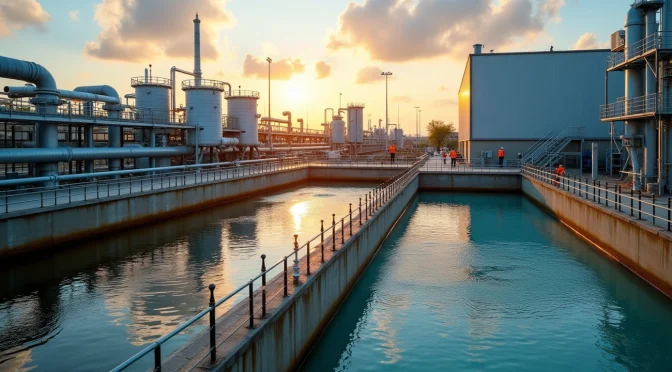
Chemical treatment of wastewater refers to using chemical substances to alter the effluent’s composition and remove contaminants that physical methods alone cannot eliminate. The process neutralizes acidic or alkaline wastewater, destabilizes suspended particles, and breaks down toxic compounds to make water safe for discharge or reuse.
How Chemical Treatment of Wastewater Works
The chemical treatment process adds specific chemicals to boost coagulation, flocculation, precipitation, or neutralization of pollutants. Most facilities apply these processes in preliminary and primary treatment stages among physical methods like screening and sedimentation. Coagulants destabilize wastewater particles by introducing positively charged chemicals that reduce negative particle charges. This causes waste to form larger bodies that settle or filter out with ease. Advanced oxidation processes can degrade recalcitrant organic compounds and heavy metals that resist conventional treatment.
Key Chemicals Used in ETPs
Facilities rely on several chemical categories for effective treatment. Coagulants include aluminum sulfate (alum), polyaluminum chloride (PAC), and ferric chloride. Flocculants use anionic or cationic polymers to encourage particle clumping. pH adjusters employ sodium hydroxide, hydrochloric acid, or lime to balance wastewater acidity. Oxidizing agents like sodium hypochlorite and hydrogen peroxide break down organic pollutants. Disinfection uses chlorine solutions at dosages of 5 to 15 mg/l.
Industries That Benefit from Chemical Treatment
Chemical treatment proves especially effective for oily wastewater from industrial sources. The ceramic industry achieved removals of up to 99.9% TSS, 98.23% COD, and 99.1% lead using polyaluminum chloride coagulant. Textiles, pharmaceuticals, and petrochemicals release complex effluents containing heavy metals and organic compounds that require tailored chemical treatment plans.
Original Setup Costs for Chemical Treatment Systems
Setup costs vary based on treatment capacity, chemical dosing systems, and storage infrastructure requirements. We’ll compare these against biological systems in the cost analysis section.
What is Biological Treatment of Wastewater in ETPs?
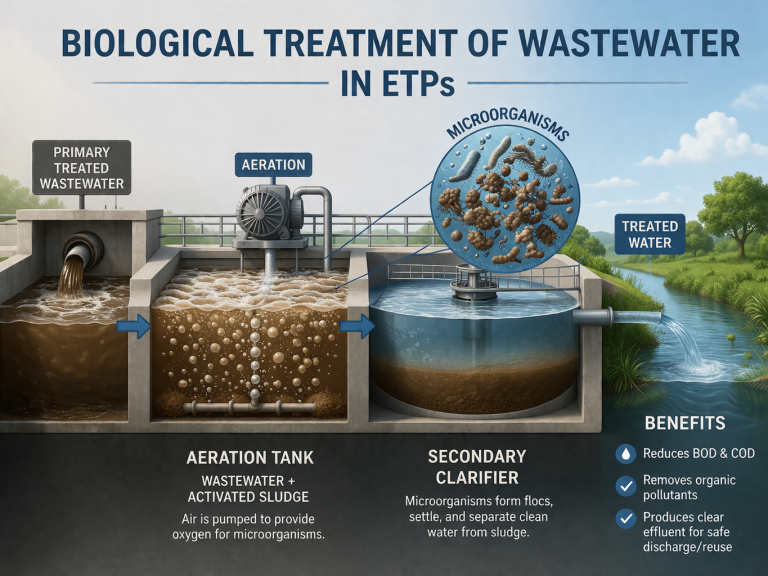
Biological treatment of wastewater uses bacteria, nematodes, protozoa, fungi, and algae to decompose organic pollutants through their natural cellular processes. This secondary treatment stage follows primary physical treatment and occurs in specialized bioreactors where microorganisms break down contaminants.
How Biological Treatment Works in Effluent Treatment
Microorganisms consume organic matter in wastewater as their food source and convert pollutants into stable inorganic forms through metabolic activity. The process addresses biological oxygen demand (BOD) and chemical oxygen demand (COD) while removing nutrients like ammonia, nitrogen, and nitrate. Real-life results demonstrate purification capability. One facility reduced BOD from 1090 mg/L to 93 mg/L after six months of biological treatment. COD levels dropped from 3260 mg/L to 218 mg/L in the same way. Biofilm reactors, including moving bed biofilm reactors (MBBR) and biological aerated filters, remove organic pollutants and nitrogenous substances at high rates. They produce minimal sludge. These systems prove more eco-friendly and budget-friendly compared to chemical or thermal approaches.
Aerobic vs Anaerobic Biological Systems
Aerobic treatment requires oxygen and removes up to 98% of organic contaminants, maintaining dissolved oxygen levels of 1-2 mg/L. The process converts waste into carbon dioxide, water, and biomass. Anaerobic systems operate without oxygen and generate much less waste. Anaerobic treatment produces ten times less sludge than aerobic processes. The key advantage lies in energy recovery, as over 90% of organic matter converts to methane gas. This methane has a calorific value of 9,000 kcal/m3 and can generate electricity or provide heat for facility operations.
Industries Best Suited for Biological Treatment
Biological systems excel at treating effluent from pharmaceutical facilities (high COD, antibiotics), food and beverage operations (high BOD, fats, oils), dairy processing (lactose, proteins), distilleries (very high BOD/COD), chemical manufacturing, petrochemical plants (hydrocarbons, phenols), textile operations, pulp and paper mills (lignin), tanneries (chromium, sulfides), and sugar processing facilities.
Cost Comparison: Which Treatment Method Saves You More Money?
Money drives most treatment decisions. The numbers tell a clear story when we compare both approaches side by side.
Original Capital Investment: Chemical vs Biological Treatment
Chemical treatment systems for a 100 KLD unit cost Rs 15-25 lakhs at the start. This excludes chemical storage facilities, dosing equipment and corrosion-resistant pipework. Biological treatment requires Rs 20-35 lakhs for equivalent capacity, but this complete figure has bioreactor systems, aeration equipment and automated monitoring.
Operating Costs: Chemicals vs Energy Consumption
Chemical treatment consumes Rs 1.8-3.2 lakhs monthly on alum, caustic soda and polymer flocculants for a 200 KLD facility. Biological systems need minimal chemical supplementation. They spend just Rs 15,000-40,000 monthly. Energy consumption favors biological treatment at 0.8-1.2 kWh per kiloliter versus 1.5-2.5 kWh for chemical systems.
Maintenance and Labor Costs Over Time
Chemical dosing pumps require replacement every 18-24 months at Rs 40,000-80,000 per unit. Biological systems demonstrate 50% lower maintenance requirements.
Waste Disposal Expenses for Both Methods
Chemical treatment produces sludge that requires Rs 3,000-6,000 per ton disposal. Biological sludge costs just Rs 500-1,200 per ton.
Long-Term ROI: 5-Year and 10-Year Projections
A 250 KLD facility spends Rs 1.2-1.8 crores on chemical treatment over five years versus Rs 65-95 lakhs for biological treatment. ROI comes within 18-30 months.
Hidden Costs to Think About
Aeration represents the biggest energy drain in biological systems. Equipment wear and energy consumption accelerate when you neglect maintenance.
Performance and Efficiency: Beyond Just Cost Savings
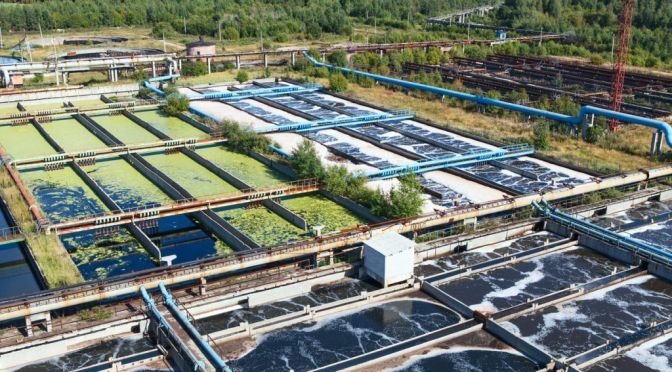
Performance metrics beyond price tags determine which treatment method works for your facility’s specific needs.
Treatment Speed and Effectiveness
Chemical treatment removes contaminants within hours. This makes it valuable for industries with fluctuating wastewater loads. Biological treatment requires longer timeframes for microorganisms to adapt and stabilize. Chemical processes achieve reaction times measured in minutes or hours. Biological systems need extended startup periods and steady-state maintenance for optimal microbial community development.
Space Requirements for Each Method
Land requirements for biological systems exceed chemical treatment footprints due to longer retention times. Chemical treatment systems scale with modular equipment additions more easily.
Handling Different Types of Industrial Wastewater
Biological systems excel at removing biodegradable materials like carbohydrates and proteins. Chemical treatment handles toxic soluble metals including aluminum and copper. Complex polymers require chemical oxidation to break them into simpler forms before biological treatment can proceed. Biological treatment expressed higher efficiencies, especially for nitrogen removal.
Environmental Effect and Compliance Costs
Chemical treatment generates chemical sludge requiring specialized disposal. Biological processes produce biodegradable sludge, and anaerobic systems generate biogas as a renewable energy source.
Flexibility When Wastewater Composition Changes
Chemical treatment maintains consistent performance whatever the seasonal variations or load fluctuations. Biological systems face disruption from shock loads or toxic compounds. They require days or weeks for recovery.
Comparison Table: Biological vs. Chemical Treatment in ETPs
| Comparison Factor | Chemical Treatment | Biological Treatment |
|---|---|---|
| Original Capital Investment (100 KLD unit) | Rs 15-25 lakhs (excludes storage, dosing equipment, pipework) | Rs 20-35 lakhs (detailed, has bioreactor, aeration, monitoring) |
| Monthly Operating Costs (200 KLD facility) | Rs 1.8-3.2 lakhs (chemicals: alum, caustic soda, polymers) | Rs 15,000-40,000 (minimal chemical supplementation) |
| Energy Consumption | 1.5-2.5 kWh per kiloliter | 0.8-1.2 kWh per kiloliter |
| Maintenance Costs | Chemical dosing pumps need replacement every 18-24 months at Rs 40,000-80,000 per unit | 50% lower maintenance requirements |
| Sludge Disposal Cost | Rs 3,000-6,000 per ton | Rs 500-1,200 per ton |
| 5-Year Total Cost (250 KLD facility) | Rs 1.2-1.8 crores | Rs 65-95 lakhs |
| ROI Timeline | Not specified | 18-30 months |
| Treatment Speed | Hours (minutes to hours for reactions) | Longer timeframes; needs extended startup and steady-state maintenance |
| Space Requirements | Smaller footprint; scales with modular equipment | Larger land requirements due to longer retention times |
| Sludge Production | Chemical sludge that needs specialized disposal | Biodegradable sludge; anaerobic systems produce 10x less sludge than aerobic |
| Energy Recovery Potential | None specified | Anaerobic systems convert 90%+ organic matter to methane (9,000 kcal/m³) |
| Best for Wastewater Types | Toxic soluble metals (aluminum, copper, mercury, lead); complex polymers; oily wastewater | Biodegradable materials (carbohydrates, proteins, hydrocarbons); high BOD/COD; nitrogen removal |
| Environmental Impact | Produces chemical sludge that needs specialized disposal | Produces biodegradable sludge; generates renewable biogas |
| Flexibility with Load Changes | Maintains consistent performance whatever the seasonal variations or fluctuations | Disrupted by shock loads or toxic compounds; needs days/weeks for recovery |
| Typical Removal Efficiency | Up to 99.9% TSS, 98.23% COD, 99.1% lead (ceramic industry example) | Up to 98% organic contaminants; BOD: 1090→93 mg/L; COD: 3260→218 mg/L |
| Key Industries | Ceramics, textiles, pharmaceuticals, petrochemicals, food processing (oily wastewater) | Pharmaceuticals, food & beverage, dairy, distilleries, chemical manufacturing, petrochemicals, textiles, pulp & paper, tanneries, sugar processing |
Conclusion
The choice between biological and chemical treatment isn’t about declaring a universal winner. Biological treatment delivers better long-term savings with 5-year costs nearly 50% lower than chemical methods. But chemical treatment wins at the time you need rapid processing or handle toxic metals.
My approach to your decision:
Long-term savings and environmental compliance are your priorities? Biological treatment offers ROI within 18-30 months.
Fluctuating loads or immediate results? Chemical treatment provides consistent performance whatever the variations.
Your wastewater contains biodegradable organic matter? Biological systems excel at removal efficiency.
Your specific wastewater composition and operational priorities should drive the final call.
Frequently Asked Questions
Q1. How do biological and chemical wastewater treatment methods differ from each other?
Biological treatment uses living microorganisms like bacteria to naturally break down organic waste in wastewater. Chemical treatment, on the other hand, uses chemical substances to neutralize, kill, or remove pollutants. While chemical treatment works much faster and can handle toxic compounds, biological treatment is more environmentally friendly and cost-effective for organic matter removal.
Q2. What are the main benefits of using biological treatment in effluent treatment plants?
Biological treatment offers several advantages including lower operating costs, environmental sustainability, and efficient removal of organic pollutants. It produces biodegradable sludge that’s cheaper to dispose of, and anaerobic systems can even generate methane as a renewable energy source. The method is also scalable and flexible, making it suitable for various industrial applications with high BOD and COD levels.
Q3. What are the main drawbacks of chemical treatment methods?
Chemical treatment requires continuous purchase of expensive chemicals like alum, caustic soda, and polymers, leading to high monthly operating costs. It generates chemical sludge that requires specialized and costly disposal. Additionally, the ongoing chemical consumption increases operational expenses and can create secondary pollutants, making it less environmentally sustainable compared to biological methods.
Q4. Which industries should choose chemical treatment over biological treatment?
Chemical treatment works best for industries dealing with toxic soluble metals (like aluminum, copper, mercury, and lead), oily wastewater, and complex polymers. It’s particularly suitable for facilities with fluctuating wastewater loads or those requiring rapid treatment times. Industries like ceramics, certain petrochemical operations, and facilities handling non-biodegradable contaminants benefit most from chemical treatment.
Q5. How long does it take to recover the investment in biological treatment systems?
Biological treatment systems typically achieve return on investment (ROI) within 18-30 months. Despite higher initial capital costs (Rs 20-35 lakhs for a 100 KLD unit), the significantly lower monthly operating costs and reduced sludge disposal expenses result in 5-year total costs that are nearly 50% lower than chemical treatment methods.