

MLD Full Form: MLD stands for Megaliters Per Day — the standard unit for large-scale municipal and industrial water systems. 1 MLD = 1,000 KLD = 10,00,000 litres per day.
1 MLD = 1,000 KLD = 10,00,000 litres per day. To convert KLD to MLD: divide by 1,000. To convert MLD to KLD: multiply by 1,000. CPCB mandates STP installation at 10 KLD (0.01 MLD), full SPCB consent (CTE/CTO) above 50 KLD, and online monitoring (OCEMS) above 1 MLD (1,000 KLD).
KLD ↔ MLD Conversion Formula:
- To convert KLD to MLD → divide by 1,000 (e.g. 500 KLD ÷ 1,000 = 0.5 MLD)
- To convert MLD to KLD → multiply by 1,000 (e.g. 2 MLD × 1,000 = 2,000 KLD)
- 1 KLD = 0.001 MLD | 1 MLD = 1,000 KLD | 1 MLD = 10,00,000 litres/day
| KLD | MLD | Litres/Day | Typical Use |
|---|---|---|---|
| 10 KLD | 0.01 MLD | 10,000 L/day | Small apartment (50–70 flats) |
| 50 KLD | 0.05 MLD | 50,000 L/day | Large apartment (250+ flats) |
| 100 KLD | 0.10 MLD | 1,00,000 L/day | Hotel or hospital |
| 500 KLD | 0.50 MLD | 5,00,000 L/day | Large township |
| 1,000 KLD | 1 MLD | 10,00,000 L/day | Small municipal STP |
| 10,000 KLD | 10 MLD | 1,00,00,000 L/day | Large municipal STP |
Every sewage treatment plant or effluent treatment plant in India is sized and described using one of two units: KLD or MLD. If you are a developer, facility manager, architect, or EHS officer dealing with a wastewater treatment project for the first time, these abbreviations will appear constantly — in vendor quotes, SPCB applications, NGT orders, CPCB compliance documents, and engineering drawings.
Getting these units wrong, or using them interchangeably without understanding the distinction, leads to real problems: undersized plants that fail effluent quality checks, oversized plants that waste capital, and compliance documents that trigger rejection from SPCBs.
This guide explains both units clearly, covers every relevant conversion, and maps them directly to the regulatory thresholds and project types where each applies in India.
Need to size a system right away? Use our interactive
KLD: Kiloliters Per Day
KLD stands for Kiloliters Per Day. One kiloliter equals exactly 1,000 liters. So 1 KLD means 1,000 liters of water processed in a 24-hour period.
KLD is the standard unit for small to medium-scale water and wastewater treatment projects in India. When a residential developer asks for a quote on an STP, the capacity will be quoted in KLD. When an SPCB grants Consent to Establish for a hotel’s sewage treatment system, the approved capacity is in KLD. When a hospital submits its environmental compliance report, the daily sewage generation figure is in KLD.
Where KLD is used:
- Residential apartments and housing societies (typically 10 KLD to 500 KLD)
- Hotels and resorts (5 KLD to 200 KLD depending on room count and occupancy)
- Hospitals and healthcare facilities (10 KLD to 300 KLD)
- IT parks and commercial complexes (20 KLD to 500 KLD)
- Industrial facilities for domestic sewage from worker facilities (5 KLD to 100 KLD)
- Pharmaceutical and industrial ETPs for process effluent (10 KLD to 500 KLD)
Quick conversion: 1 KLD = 1,000 liters per day = 1 cubic meter per day (m3/day)
MLD: Megaliters Per Day
MLD stands for Megaliters Per Day. One megaliter equals 1,000,000 liters — exactly 1,000 times larger than a kiloliter.
So 1 MLD = 1,000 KLD = 10,00,000 liters per day.
MLD is the standard unit for large-scale municipal and industrial water systems. India’s urban wastewater generation is described in MLD — the country generates over 72,000 MLD of sewage daily, of which only around 30% receives effective treatment. When the Namami Gange programme specifies treatment capacity for river towns, it uses MLD. When AMRUT 2.0 allocates funds for city-level sewage infrastructure, MLD figures appear in project documents.
Where MLD is used:
- Municipal sewage treatment plants serving entire towns or cities
- Large industrial clusters and Common Effluent Treatment Plants (CETPs)
- River basin water supply and distribution systems
- CPCB Online Continuous Effluent Monitoring (OCEMS) — mandatory for STPs above 1 MLD (1,000 KLD)
- Jal Jeevan Mission drinking water supply infrastructure
KLD vs MLD: Direct Comparison
| Parameter | KLD (Kiloliters per Day) | MLD (Million Liters per Day) |
|---|---|---|
| Full Form | Kiloliters Per Day | Megaliters Per Day |
| Volume | 1,000 liters/day | 10,00,000 liters/day |
| Conversion | 1 KLD = 0.001 MLD | 1 MLD = 1,000 KLD |
| Scale | Small to medium projects | Large municipal and industrial |
| Typical Use | Residential, hotel, hospital, industrial STP/ETP | Municipal STP, CETP, water supply systems |
| CPCB Context | Consent thresholds stated in KLD | OCEMS trigger at 1 MLD (1,000 KLD) |
Conversion Table
| KLD | MLD | Liters Per Day |
|---|---|---|
| 10 KLD | 0.01 MLD | 10,000 L/day |
| 50 KLD | 0.05 MLD | 50,000 L/day |
| 100 KLD | 0.1 MLD | 1,00,000 L/day |
| 500 KLD | 0.5 MLD | 5,00,000 L/day |
| 1,000 KLD | 1 MLD | 10,00,000 L/day |
| 5,000 KLD | 5 MLD | 50,00,000 L/day |
Why This Matters for CPCB and SPCB Compliance in India
This is where KLD and MLD move from being textbook definitions to having real regulatory and financial consequences for your project.
The CPCB mandatory STP threshold: 10 KLD
Under CPCB guidelines, any residential or commercial project generating 10 KLD or more of sewage is required to install an STP. This 10 KLD figure comes from the per capita sewage generation norm of 135 liters per person per day under CPHEEO standards. A residential complex of approximately 75 people — roughly 15 to 20 flats — will generate around 10 KLD. That is the legal trigger for mandatory STP installation.
The SPCB consent threshold: 50 KLD
Projects generating above 50 KLD require formal Consent to Establish (CTE) and Consent to Operate (CTO) from their State Pollution Control Board. Below 50 KLD, registration requirements vary by state. Above 50 KLD, the full SPCB consent process applies with technical documentation, design approval, site inspection, and performance testing.
The OCEMS threshold: 1 MLD (1,000 KLD)
STPs handling more than 1 MLD — equivalent to 1,000 KLD — are required to install Online Continuous Effluent Monitoring Systems (OCEMS) that transmit real-time BOD, COD, TSS, pH, and flow data directly to CPCB servers 24 hours a day. This applies to large residential townships, industrial campuses, and institutional complexes generating very high sewage volumes.
Getting these thresholds wrong in project planning — for example, sizing a plant at 48 KLD to avoid the 50 KLD SPCB consent requirement, only to find actual sewage generation exceeds that — leads to consent violations, NGT notices, and forced retrofits at significantly higher cost than getting the sizing right initially.
How to Calculate KLD for Your Project
The standard CPHEEO per capita sewage generation norms used by CPCB and SPCBs across India are:
| Facility Type | Per Capita Sewage Generation | Calculation Basis |
|---|---|---|
| Residential apartment | 135 liters/person/day | Number of residents |
| Hotel with restaurant | 180 liters/guest/day | Room occupancy + staff |
| Hospital (with laundry) | 340 liters/bed/day | Number of beds |
| Office/IT park | 45 liters/person/day | Number of employees |
| School/college (day) | 45 liters/student/day | Enrollment |
| Industrial (domestic only) | 45 liters/worker/day | Workforce strength |
Example calculation — 200-flat residential complex:
Assuming 3.5 residents per flat: 200 x 3.5 = 700 residents
700 residents x 135 liters/day = 94,500 liters/day = 94.5 KLD
This project requires a minimum 100 KLD STP, requires SPCB CTE and CTO, and must meet CPCB discharge standards of BOD 10 mg/L for treated water reuse.
Example calculation — 80-room hotel:
Assuming 1.5 guests per room at 70% occupancy: 80 x 1.5 x 0.7 = 84 guests + 30 staff
(84 x 180) + (30 x 45) = 15,120 + 1,350 = 16,470 liters/day = 16.5 KLD
Minimum plant size: 20 KLD SUSBIO ECOTREAT.
Common Mistakes When Working With KLD and MLD
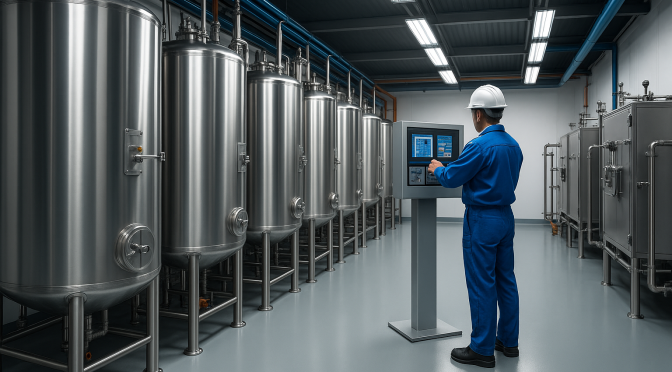
Across 500+ installations in 24 Indian states and 8 countries, SUSBIO’s engineering team has seen the same sizing and planning errors appear repeatedly on projects of all scales.
Undersizing by using average flow instead of peak flow.
Sewage generation is not uniform across 24 hours. Morning peak from 6 AM to 10 AM and evening peak from 7 PM to 10 PM can reach 2.5 to 3 times the average hourly flow. A plant sized on average daily KLD without accounting for peak factor will face hydraulic overloading during peak hours, causing BOD and TSS in treated water to exceed CPCB discharge limits.
Confusing installed capacity with design flow.
A 100 KLD plant is designed to treat 100 KLD under normal conditions with a defined influent quality range. If actual sewage generation exceeds that, or if influent BOD is significantly higher than designed — common in hotels with large kitchens — performance degrades. Always provide actual influent data to your STP designer. Do not rely on assumed values.
Using MLD figures from municipal norms for private project sizing.
Municipal sewage generation figures cited in CPCB reports — such as India generating 72,000 MLD — are aggregate estimates that include groundwater infiltration and stormwater. They are not suitable for sizing a private STP. Use CPHEEO per capita norms and your actual project data.
Ignoring future load in phased developments.
A phased township that will eventually house 2,000 families should not install a 10 KLD STP for Phase 1 and then retrofit every subsequent phase. Plan the ultimate capacity at design stage, install in phases using modular systems, but design civil infrastructure for the final load from the outset.
Underestimating long-term OPEX by ignoring energy efficiency.
Conventional activated sludge STPs are energy-intensive by design. SUSBIO ECOTREAT’s Anaerobic + MBBR dual-stage technology consumes up to 70% less electricity than conventional STPs — a difference that compounds significantly over the 50-year lifecycle of the plant. Always compare lifecycle electricity costs, not just capital cost, when evaluating STP technology options.
KLD in SUSBIO ECOTREAT: Packaged STP Capacity Range
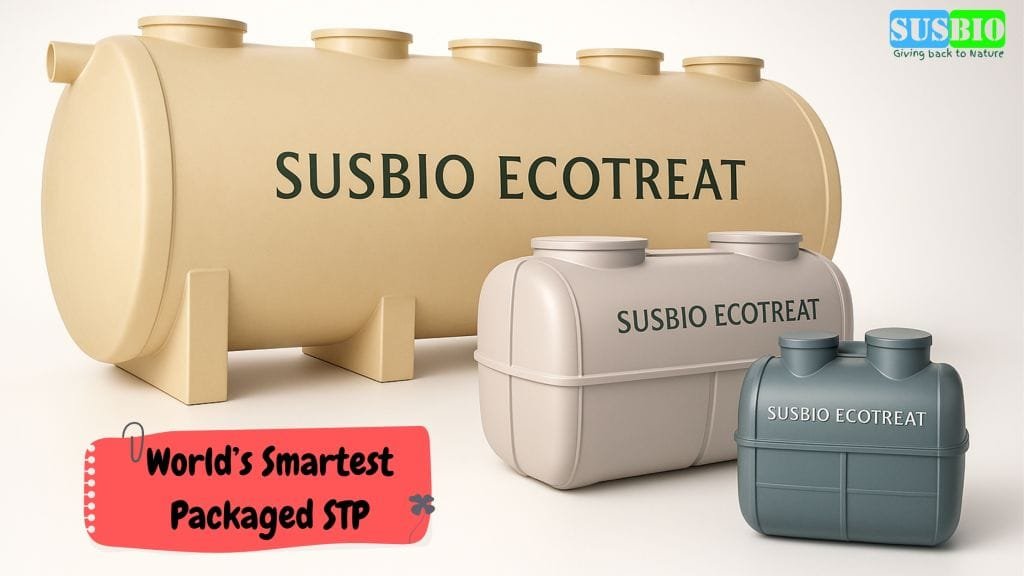
SUSBIO ECOTREAT packaged sewage treatment plants using Anaerobic + MBBR dual-stage biological treatment are available from 1 KLD to 500 KLD in standard configurations, with 500+ installations across 24 Indian states and 8 countries. Beyond 500 KLD, SUSBIO designs custom civil STP systems.
| Plant Capacity | Typical Application |
|---|---|
| 2 – 10 KLD | Small villas, boutique hotels, clinics |
| 10 – 50 KLD | Apartment complexes (up to ~370 flats), small hotels |
| 50 – 100 KLD | Mid-size residential townships, hospitals |
| 100 – 200 KLD | Large apartments, IT campuses, industrial facilities |
| 200 – 500 KLD | Large townships, hotel clusters, institutional campuses |
| 500+ KLD | Custom engineering — contact SUSBIO |
Conclusion
The ability to differentiate between KLD and MLD measurements is vital for water treatment professionals. These measurements affect every part of plant operations, from the original design to daily management.
KLD measurements work best at smaller scales. They’re perfect for residential complexes, community plants, and small industrial facilities. This unit helps plan precise capacity for systems that process thousands of liters daily instead of millions. KLD calculations also help smaller operations comply with regulations and make equipment sizing decisions.
MLD measurements become vital when dealing with metropolitan-scale water systems. Large urban centers, industrial complexes, and regional water networks depend on this larger unit to plan infrastructure and allocate resources. The million-liter scale needs different approaches to manage environmental impact, costs, and monitoring protocols.
Plant operators need to know a simple yet significant conversion: 1,000 KLD equals 1 MLD. This knowledge makes it easier to communicate with stakeholders, forecast capacity accurately, and select appropriate equipment. A clear understanding of these measurement differences helps avoid design errors that could get pricey and lead to poor treatment capacity or unnecessary overbuilding.
Smart monitoring systems that track flow rates across both KLD and MLD scales will shape water treatment’s future. These technologies help plant operators maintain peak performance, whatever the system size, while meeting water quality standards consistently. Water quality parameters like pH and TDS are measured independently of volume — a 10 KLD plant must meet the same outlet standards as a 1 MLD plant.
KLD and MLD concepts give water treatment professionals the tools to make smart decisions about infrastructure investments, capacity planning, and regulatory compliance. These measurement units are the foundations of effective water management systems that serve communities of all sizes.
Frequently Asked Questions
Q1. What does KLD stand for in water treatment?
KLD stands for Kiloliters Per Day. It measures the volume of water or wastewater a treatment system processes in 24 hours. 1 KLD equals 1,000 liters per day. It is the standard unit for sizing residential, commercial, hotel, hospital, and industrial STPs and ETPs in India.
Q2. What does MLD stand for?
MLD stands for Megaliters Per Day. 1 MLD equals 10,00,000 liters per day, which is the same as 1,000 KLD. MLD is used for large municipal water supply and sewage treatment systems, river basin projects, and industrial clusters.
Q3. How do you convert KLD to MLD?
Divide KLD by 1,000. So 500 KLD = 0.5 MLD. To convert MLD to KLD, multiply by 1,000. So 2 MLD = 2,000 KLD.
Q4. What is the minimum STP capacity required by CPCB?
CPCB guidelines require an STP for any project generating 10 KLD or more of sewage. Projects above 50 KLD require formal SPCB Consent to Establish and Consent to Operate. Projects above 1,000 KLD (1 MLD) require OCEMS online monitoring with 24/7 data transmission to CPCB servers.
Q5. How is KLD calculated for a residential project?
Multiply the number of residents by the per capita sewage generation norm. CPHEEO standard is 135 liters per person per day for residential buildings. A 500-person complex generates 500 x 135 = 67,500 liters/day = 67.5 KLD. The plant is then sized to the next standard capacity — in this case 75 KLD or 100 KLD depending on the design margin applied.
Q6. Can a packaged STP be rated in both KLD and MLD?
Yes. A 2,000 KLD plant is the same as a 2 MLD plant. For reporting to CPCB or SPCB, the unit used depends on the scale — KLD is generally used in consent applications for private projects while MLD may appear in large municipal project reports.