

Pharmaceutical manufacturing produces some of the most chemically complex wastewater of any industry in India. A bulk drug or API manufacturing unit generates effluent with COD levels that can exceed 10,000 mg/L — roughly 30 to 50 times higher than domestic sewage. This wastewater carries active pharmaceutical ingredients that survive conventional biological treatment, solvents that are toxic to treatment microorganisms, heavy metals from synthesis reactions, and pH values that can swing from 2 to 12 within the same facility depending on which batch process is running.
A standard ETP designed for textile or food processing will not work for a pharmaceutical plant. The treatment train must be engineered specifically for that facility’s effluent characteristics. This is why pharma ETP design is a specialised discipline — not a product selection from a catalogue.
This guide explains how a pharmaceutical ETP actually works: what each treatment stage does, what it removes, and why pharma effluent demands a more complex sequence than almost any other industrial category. For CPCB compliance requirements, ZLD trigger conditions, and SPCB consent details specific to pharma plants, see our companion compliance guide linked at the end of this page.
Why Pharmaceutical Wastewater Is Different
Before getting into the treatment stages, it helps to understand what makes pharma effluent uniquely difficult to treat compared to other industrial categories.
| Parameter | Typical Pharma Influent | Domestic Sewage | CPCB Outlet Limit |
|---|---|---|---|
| BOD | 1,000 – 8,000 mg/L | 150 – 300 mg/L | 30 mg/L |
| COD | 2,000 – 50,000 mg/L | 300 – 600 mg/L | 250 mg/L |
| TSS | 500 – 3,000 mg/L | 200 – 400 mg/L | 100 mg/L |
| pH | 2 – 12 (variable) | 6.5 – 8.5 | 6.5 – 8.5 |
| TDS | 5,000 – 30,000 mg/L | 500 – 1,500 mg/L | 2,100 mg/L |
| Heavy Metals | Present (Pb, Hg, Cd, Cr) | Absent | As per Schedule VI |
| APIs / Solvents | Present | Absent | Not detected |
High and variable COD
COD in pharma process effluent typically ranges from 2,000 to over 50,000 mg/L depending on the synthesis step. A single batch reaction washdown can spike inlet COD to levels that overwhelm a biological treatment zone sized for average loads. Getting from a 10,000 mg/L inlet to CPCB’s 250 mg/L outlet limit is a multi-stage engineering challenge — not something a single technology can handle.
APIs and recalcitrant organics
Active pharmaceutical ingredients are designed to be biologically stable. Many resist biodegradation entirely and pass through conventional aerobic biological treatment unchanged. Removing them requires activated carbon adsorption or advanced oxidation — neither of which is part of a standard industrial ETP.
Solvents
Acetone, methanol, isopropanol, ethyl acetate — these solvents used in extraction and purification are often volatile and toxic to biological treatment microorganisms at even low concentrations. Solvent recovery is handled at source before the ETP, but residual loads must be factored into ETP design.
Heavy metals
Metal catalysts — palladium, platinum, nickel, chromium compounds — appear in process effluent from synthesis reactions. CPCB sets individual discharge limits for each heavy metal, many below 1 mg/L. Dedicated physico-chemical removal stages are required.
pH extremes
Pharmaceutical synthesis involves acid-base reactions that can shift effluent pH by 3 to 4 units within minutes as a new batch starts. Biological treatment organisms survive only between pH 6.5 and 8.5. Automatic, continuous pH correction is not optional — it is what keeps the entire biological stage alive.
High TDS
Inorganic salts from reaction processes drive TDS to 5,000-30,000 mg/L in some pharma effluents. Biological and physico-chemical treatment does not remove TDS. Membrane treatment (RO) is required where TDS limits apply or ZLD is mandated.
The Pharmaceutical ETP Treatment Train: Stage by Stage
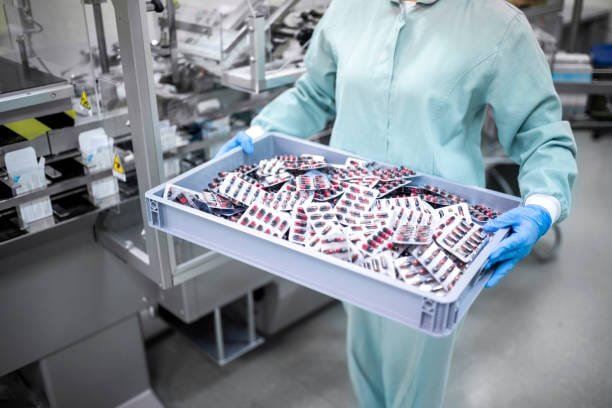
A pharma ETP is a sequence of treatment stages, each targeting specific pollutants the previous stage cannot remove. Skipping or undersizing any single stage will result in non-compliance at the outlet.
Stage 1 — Collection and Segregation
High-strength process effluent from synthesis reactors, column washings, and solvent recovery is collected separately from low-strength utility effluent — cooling tower blowdown, boiler washdowns, equipment rinsing. Mixing these at the inlet dilutes the high-strength stream, increases total volume unnecessarily, and makes downstream treatment less efficient.
Segregation at source allows solvent recovery and preliminary pH adjustment to operate on concentrated streams before they reach the central ETP. This is one of the most cost-effective steps in pharma ETP design — done right at the design stage, it reduces equipment sizing and operating cost across every downstream stage.
Stage 2 — Screening and Grit Removal
Bar screens remove large solids, packaging fragments, and equipment debris. Fine screens protect pumps and instruments from abrasion. Grit chambers remove sand, glass beads, catalyst support particles, and other inorganic material that would otherwise settle in treatment tanks and wear down mechanical equipment over time.
Stage 3 — pH Neutralisation
This is the single most critical pre-treatment stage in a pharma ETP — and the one most commonly underspecified by vendors offering off-the-shelf systems.
Acidic and alkaline streams are combined in a neutralisation tank where acid (sulphuric acid or hydrochloric acid) or alkali (sodium hydroxide or lime) is dosed automatically to bring pH to 6.5-8.5. The dosing must be continuous and automated with inline pH sensors and closed-loop control. A batch-operated pharmaceutical facility can shift effluent pH by 3-4 units within minutes. Manual or timer-based correction cannot respond fast enough.
Why pH control determines everything downstream
Incorrect pH entering the biological zone kills the active microbial biomass. Recovery takes 2-4 weeks during which the ETP produces non-compliant effluent. This is the most common cause of catastrophic treatment failure at pharma ETPs in India. Redundant pH dosing systems and alarm-triggered shutdown protocols are standard design practice at SUSBIO
Stage 4 — Physico-Chemical Treatment
Physico-chemical treatment removes non-biodegradable suspended solids, colloidal matter, heavy metals, and a significant fraction of COD before the effluent reaches biological treatment — where these compounds would be toxic or inhibitory to microorganisms.
Coagulation: Ferric chloride, alum, or polyaluminium chloride is dosed under rapid mixing to destabilise colloidal particles.
Flocculation: A polymer flocculant bridges the destabilised particles into larger, settleable flocs under slow mixing.
Clarification or DAF: Floc is separated either by gravity settling in a primary clarifier, or by Dissolved Air Flotation (DAF) where micro-bubbles carry floc to the surface for skimming. DAF is preferred for pharma effluent because it handles low-density floc and oil-bearing streams more effectively than gravity settling.
Physico-chemical treatment typically achieves 60-75% TSS removal, 30-50% COD reduction, and near-complete removal of most heavy metals. The chemical sludge produced contains heavy metals and coagulant residues — it is classified as hazardous waste and must be disposed of at an authorised TSDF under CPCB’s Hazardous Waste Management Rules.
Stage 5 — Biological Treatment
After physico-chemical pre-treatment removes the compounds that would poison biological organisms, the effluent enters the biological zone where microorganisms break down remaining biodegradable organic matter.
Anaerobic Treatment — for COD above 3,000 mg/L
Anaerobic bacteria degrade organic matter in the absence of oxygen, converting it to biogas (methane and CO2) and a small volume of sludge. Technologies include UASB (Upflow Anaerobic Sludge Blanket) reactors and Anaerobic Baffled Reactors.
Anaerobic treatment achieves 60-80% COD reduction at much lower energy cost than aerobic treatment. Biogas can be captured for energy recovery. However, it cannot achieve outlet COD below 500-800 mg/L alone — aerobic polishing is always needed downstream.
Aerobic Treatment — MBBR, ASP, or SBR
Aerobic organisms break down the remaining biodegradable organics from the anaerobic outlet. The right technology choice depends on the facility’s flow pattern and effluent variability.
| Technology | Best For | Strength | Weakness |
|---|---|---|---|
| MBBR | Batch pharma, variable loads | Handles load variation, compact, robust | Requires fine screening at inlet |
| ASP (Activated Sludge) | Continuous steady-flow plants | Well understood, lower capital cost | Poor tolerance of pH swings and shock loads |
| SBR | Smaller facilities, batch discharge | Flexible, no secondary clarifier needed | Operator-intensive, not ideal for continuous flow |
| MBR | Where very low outlet TSS needed | Very high effluent quality | High energy, membrane fouling risk |
| UASB | High COD above 3,000 mg/L | Biogas recovery, low sludge volume | Slow startup, sensitive to toxic shock |
MBBR is SUSBIO’s preferred technology for pharma biological treatment. The biofilm that grows on MBBR carriers tolerates load variations and moderate toxic shock far better than the suspended biomass in conventional activated sludge. Pharmaceutical facilities with batch manufacturing generate inherently variable effluent loads — MBBR handles this without the biomass washout risk that can destabilise ASP systems.
A properly designed anaerobic + MBBR aerobic sequence achieves outlet COD of 300-500 mg/L from a 5,000-10,000 mg/L inlet. Getting below CPCB’s 250 mg/L limit requires tertiary treatment.
Stage 6 — Tertiary Treatment
Tertiary treatment removes what biological treatment cannot: residual COD from stable organic compounds, colour, turbidity, APIs, and TDS.
Sand Filtration removes residual TSS and turbidity. It is a prerequisite for activated carbon and membrane systems downstream — both require clean inlet water to function efficiently.
Activated Carbon Adsorption uses granular activated carbon (GAC) to adsorb residual organics including APIs, phenols, and refractory compounds that pass through biological treatment unchanged. This is the primary API removal mechanism in a pharma ETP.
Advanced Oxidation Process (AOP) is used where recalcitrant compounds survive activated carbon. Fenton’s reagent (hydrogen peroxide + ferrous iron), ozonation, or UV/H2O2 generates hydroxyl radicals that break down otherwise stable organic molecules. AOP is energy-intensive and is deployed only where simpler methods are insufficient.
Reverse Osmosis (RO) removes dissolved salts and residual organics where a TDS discharge standard applies or where ZLD is mandated. RO produces high-quality permeate but generates a concentrated reject (20-30% of inlet volume) that requires further treatment in ZLD systems.
Stage 7 — Disinfection
UV irradiation or chlorination eliminates residual pathogens before discharge or reuse. UV is preferred in pharmaceutical applications because it leaves no chemical residue in the treated effluent.
Stage 8 — Zero Liquid Discharge (ZLD) — Where Mandated
Pharmaceutical units in Red Category, operating in critically polluted areas or river basins under NGT orders, must achieve Zero Liquid Discharge. No liquid leaves the facility boundary.
ZLD systems process the RO reject through Multiple Effect Evaporators (MEE) and Agitated Thin Film Dryers (ATFD) or Spray Dryers to produce a dry salt cake for TSDF disposal or industrial reuse.
ZLD Cost Indicator — 2026
A 100 KLD pharma ETP with full ZLD (biological + physico-chemical + RO + MEE) has a total installed cost of approximately Rs. 2.5 crore to Rs. 4 crore depending on effluent complexity. Operating cost runs Rs. 80 to Rs. 150 per KL treated including electricity, chemicals, and sludge disposal. Contact SUSBIO for a site-specific estimate based on your actual effluent characterisation.
Treatment Stage Summary
| Stage | Process | Primary Pollutant Removed | Typical Efficiency |
|---|---|---|---|
| 1 | Collection & Segregation | — | Reduces downstream load |
| 2 | Screening & Grit Removal | Large solids, inorganic grit | 10-20% TSS |
| 3 | pH Neutralisation | Acid/alkali imbalance | pH corrected to 6.5-8.5 |
| 4 | Physico-Chemical (DAF) | Heavy metals, colloidal COD, TSS | 60-75% TSS, 30-50% COD |
| 5a | Anaerobic Treatment | High-strength biodegradable COD | 60-80% COD |
| 5b | Aerobic Treatment (MBBR) | Residual biodegradable COD | 80-90% of remaining COD |
| 6a | Sand Filtration | Residual TSS, turbidity | >95% TSS |
| 6b | Activated Carbon | APIs, refractory organics, colour | 70-90% residual COD |
| 6c | AOP (if required) | Recalcitrant organics | Site-specific |
| 6d | RO (if required) | TDS, dissolved salts | 90-98% TDS |
| 7 | UV Disinfection | Pathogens | >99.9% pathogen removal |
| 8 | ZLD (if mandated) | All remaining liquid | Zero liquid discharge |
Sludge Management
Every treatment stage generates sludge — and in a pharma ETP, sludge management is a compliance obligation, not just an operational consideration.
Chemical sludge from physico-chemical treatment contains heavy metals and coagulant residues. It is classified as hazardous waste under Schedule I of CPCB’s Hazardous Waste Management Rules. Disposal at an authorised TSDF is mandatory, and disposal manifests must be maintained for SPCB inspection.
Biological sludge from anaerobic and aerobic stages is organic and generally non-hazardous, but must be dewatered by filter press or centrifuge and disposed of through authorised channels. Sludge generation rates and disposal records are part of the environmental compliance documentation that SPCB inspectors review during consent renewal.
What Differentiates a Well-Designed Pharma ETP
Having commissioned ETPs across pharmaceutical facilities in India since 2013, SUSBIO’s engineering team has consistently seen that the difference between a compliant, long-running system and a chronically non-compliant one comes down to three things that have nothing to do with the technology brand selected.
Influent characterisation before design.
Every pharma ETP project must begin with actual effluent sampling and laboratory analysis — BOD, COD, TSS, pH range across at least two full batch cycles, heavy metals panel, TDS, solvent identification, and API load where possible. Generic design assumptions will produce a non-compliant system. The effluent from a bulk drug API plant is fundamentally different from a formulation packaging facility — even within the same pharmaceutical company.
pH control quality.
Automatic, continuous, and redundant pH dosing with real-time monitoring and alarm systems is the single most important engineering decision in pharma ETP design. It protects the biological stage from the most common cause of catastrophic treatment failure. If there is one place not to economise in a pharma ETP, this is it.
ZLD infrastructure planning at design stage.
Even if ZLD is not currently mandated for a facility, building in civil infrastructure for future RO and MEE systems at the initial design stage costs a fraction of what retrofitting those systems into an operating plant will cost later under regulatory pressure. The pharma sector is moving towards broader ZLD enforcement — plan for it now.
Conclusion
We’ve been commissioning pharma ETPs since 2013. If there’s one thing that stands out after 500+ installations, it’s this: the plants that fail aren’t failing because of the wrong technology choice. They fail because of poor influent characterisation, inadequate pH control, and civil designs that have no room for future upgrades.
Pharmaceutical wastewater is genuinely complex — not in a way that makes it unsolvable, but in a way that demands engineering rigour from day one. The COD loads, the API content, the pH swings — none of these are surprises if you’ve done your homework before design. They only become problems when vendors skip the homework and size a plant on assumptions.
If your facility is planning an ETP, or if you’re dealing with a plant that keeps producing non-compliant effluent, the starting point is always the same: get your actual effluent characterised across at least two full batch cycles before any design work begins. Everything downstream of that decision gets easier.
SUSBIO works with pharmaceutical facilities across India — from formulation units to bulk API manufacturers. We bring site-specific design, not catalogue selection. Reach us at info@susbio.in or +91 88889 80197 to discuss your project.
For CPCB compliance requirements, ZLD trigger conditions for Red Category pharma units, SPCB consent process, and OCEMS obligations, read our companion page: Pharma Industry ETP: Ensuring Compliance and Sustainability
Key Takeaways
Pharmaceutical wastewater is not a standard industrial effluent problem. COD can exceed 10,000 mg/L, APIs resist biological treatment, heavy metals require dedicated removal stages, and pH can swing by 4 units within minutes of a batch change. A standard ETP designed for textile or food processing will not achieve CPCB compliance on pharma effluent.
Treatment is always multi-stage — there is no single technology that handles pharma wastewater end to end. The sequence runs from segregation at source through pH neutralisation, physico-chemical treatment, anaerobic and aerobic biological stages, tertiary polishing, and ZLD where mandated.
The biological stage technology choice matters, but what matters more is the pH control system protecting it. Anaerobic + MBBR is SUSBIO’s preferred sequence for batch pharma manufacturing because MBBR handles variable organic loads without the biomass washout risk that destabilises conventional activated sludge.
ZLD is increasingly mandatory for Red Category pharma units in India. Building in the civil infrastructure for RO and MEE at design stage costs a fraction of retrofitting it later under regulatory pressure.
Chemical sludge from physico-chemical treatment is hazardous waste under CPCB’s Hazardous Waste Management Rules. TSDF disposal with maintained manifests is non-negotiable — not just a compliance formality.
Frequently Asked Questions
Q1. What is the basic purpose of an Effluent Treatment Plant in pharmaceutical manufacturing?
An Effluent Treatment Plant (ETP) in pharmaceutical manufacturing treats wastewater generated during production processes before environmental discharge or reuse. It employs a combination of physical, chemical, and biological processes to remove pollutants, toxic chemicals, active pharmaceutical ingredients, and hazardous materials, ensuring the treated water meets regulatory standards and can be safely released or recycled within facilities.
Q2. What are the CPCB discharge limits for pharmaceutical effluent in India?
For discharge to inland surface water, CPCB’s Schedule VI standards require pharmaceutical effluent to meet: BOD ≤ 30 mg/L, COD ≤ 250 mg/L, TSS ≤ 100 mg/L, pH between 6.5 and 8.5, and TDS ≤ 2,100 mg/L. Heavy metals have individual limits — most below 1 mg/L — under Schedule I of the Environment Protection Rules. Pharma units discharging to marine coastal areas or public sewers have separate standards. For reuse of treated water within the facility, CPCB Class A standards apply: BOD ≤ 10 mg/L, TSS ≤ 10 mg/L, and turbidity ≤ 2 NTU.
Q3. Is ZLD mandatory for pharmaceutical units in India?
ZLD is mandatory for pharmaceutical units classified as Red Category by CPCB that operate in critically polluted industrial areas or in river basins under active NGT orders. This currently covers major pharma manufacturing clusters in Maharashtra (Tarapur, Ambernath, Patalganga), Gujarat (Ankleshwar, Vapi), Telangana (Hyderabad pharma city), and Himachal Pradesh (Baddi-Barotiwala-Nalagarh). Units outside these zones may not currently face a ZLD mandate but should design ETP infrastructure to accommodate future RO and MEE systems — enforcement is expanding and retrofitting later costs significantly more than planning for it at design stage.
Q4. What is the cost of a pharmaceutical ETP in India?
Pharma ETP cost depends heavily on effluent complexity, capacity, and whether ZLD is required. As a general indicator for 2026: a 50 KLD pharma ETP with biological treatment and physico-chemical stages costs ₹80 lakh to ₹1.5 crore turnkey. A 100 KLD system with full ZLD (biological + physico-chemical + RO + MEE) costs ₹2.5 crore to ₹4 crore. Operating cost runs ₹80 to ₹150 per KL treated. These are indicative figures — actual cost depends on your site’s influent characteristics, which must be determined through laboratory analysis before any design work begins. Contact SUSBIO at info@susbio.in for a site-specific estimate.
Q5. How is pharmaceutical wastewater treated in India?
Pharmaceutical wastewater in India is treated through a multi-stage sequence: source segregation to separate high-strength process streams from utility effluent, pH neutralisation to bring effluent to 6.5–8.5 before biological treatment, physico-chemical treatment using coagulation and DAF to remove heavy metals and colloidal COD, anaerobic biological treatment for high-COD streams above 3,000 mg/L, aerobic biological treatment using MBBR or SBR for residual BOD/COD removal, and tertiary treatment using sand filtration and activated carbon for API removal and polishing. Where ZLD is mandated, RO and Multiple Effect Evaporators process the concentrate to zero liquid discharge. Chemical sludge from physico-chemical stages is classified as hazardous waste and must be disposed of at an authorised TSDF.
Q6. Which is better for pharma ETP — MBBR or MBR?
For most pharmaceutical manufacturing facilities in India, MBBR is the better choice for the aerobic biological stage. Pharma facilities with batch manufacturing generate variable effluent loads — MBBR’s biofilm is significantly more tolerant of these load fluctuations and moderate toxic shock events than the suspended biomass in MBR, which can be disrupted by the same conditions and suffers membrane fouling from pharma effluent components. MBR delivers higher effluent quality (near-potable) and is the right choice where very low outlet TSS is critical or where space is extremely constrained. For standard CPCB compliance on pharma effluent, MBBR in combination with upstream anaerobic treatment and downstream sand filtration and activated carbon achieves the required outlet quality at lower capital and operating cost than MBR.
Q7. What are Red Category industries under CPCB in India?
CPCB classifies industries into Red, Orange, Green, and White categories based on their Pollution Index score, which accounts for air, water, and hazardous waste generation. Red Category industries have a Pollution Index of 60 or above and are subject to the most stringent environmental compliance requirements, including mandatory online continuous effluent monitoring systems (OCEMS) for units discharging above 1 MLD, ZLD requirements in critically polluted areas, and higher scrutiny during SPCB consent renewals. Pharmaceutical manufacturing — particularly bulk drug and API production — falls under Red Category. Formulation-only units may be classified Orange depending on the specific processes involved. Red Category status triggers more frequent SPCB inspections and stricter discharge standards.