

Package sewage treatment plants might hold the answer to India’s massive wastewater crisis. Recent data shows India generates 72,368 Million Liters per Day (MLD) of urban wastewater. Only 28% (20,236 MLD) gets treated. The remaining 72% of untreated wastewater likely ends up in our rivers, lakes, and groundwater systems.
We need to bridge the gap between generated and treated wastewater to make use of it as a valuable resource. Rural regions add another 39,604 MLD of wastewater to the treatment challenge our country faces. Package sewage treatment plants offer the quickest way to help buildings and communities meet the Central Pollution Control Board (CPCB) standards.
CPCB has laid out specific guidelines for setting up and running Sewage Treatment Plants that ensure safe operations and effective treatment. These guidelines highlight modular STP design that adapts to varying load conditions. Package STPs prove to be an ideal solution for buildings of all sizes. Selecting an STP with the right capacity is vital to prevent system overload. The main goal remains removing contaminants from wastewater to make it safe for discharge or reuse.
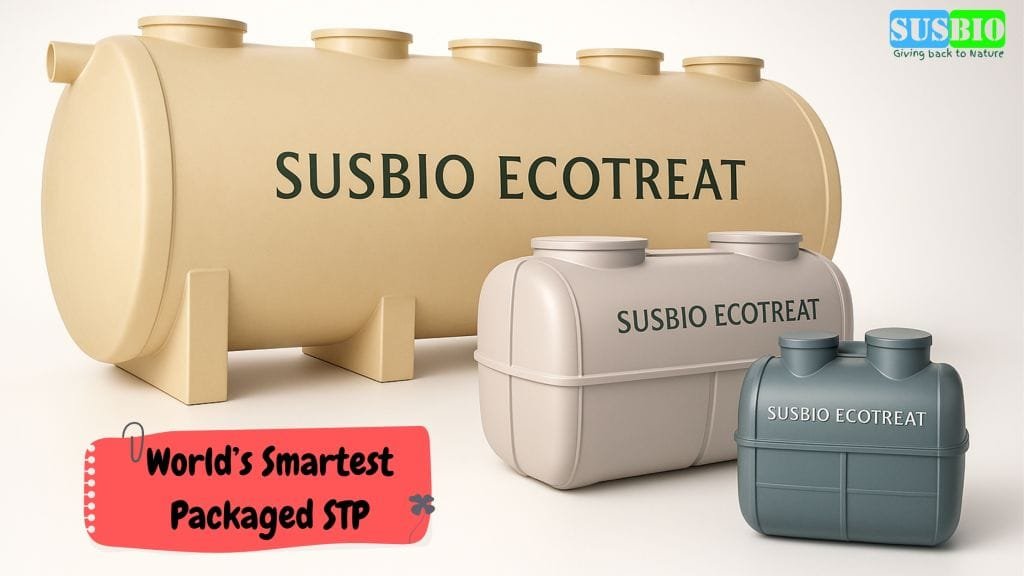
This complete guide explores what you need to know about package sewage treatment plants that meet the upcoming 2026 CPCB standards. We’ll focus on SUSBIO ECOTREAT—India’s most advanced packaged STP that’s future-ready for all regulatory requirements.
What is a Package Sewage Treatment Plant?

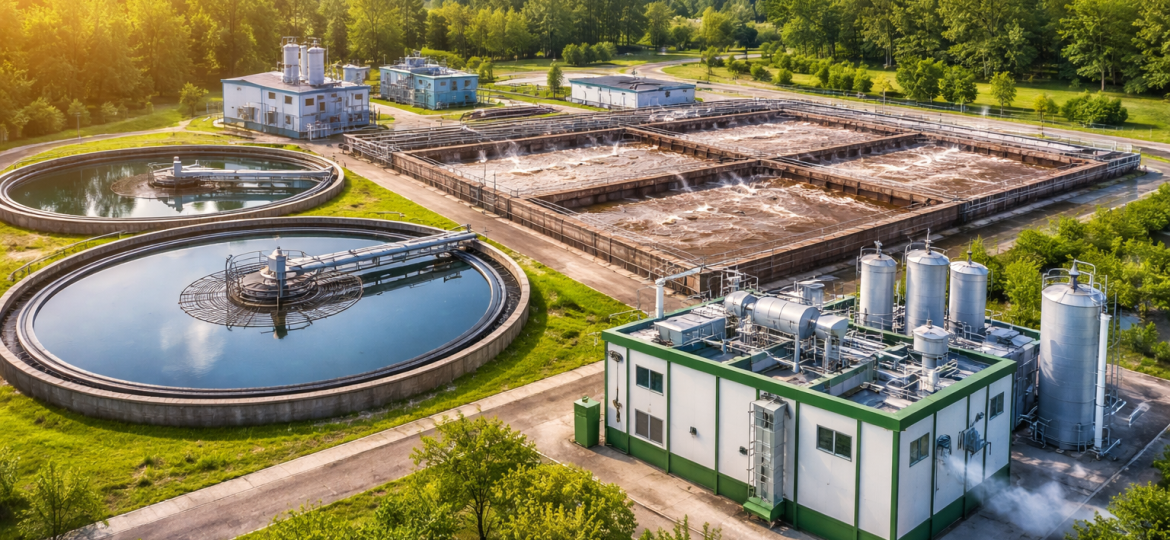
Package sewage treatment plants bring a modern twist to wastewater management with their smart design and efficiency. These units work like compact water treatment factories that come pre-engineered and pre-fabricated. Manufacturers assemble them off-site and deliver them ready for installation.
STP Full Form in Water Treatment Context
STP stands for Sewage Treatment Plant. These facilities process domestic sewage and turn it into treated water by removing harmful contaminants. The process eliminates bacteria, viruses, organic waste, and suspended solids. The main goal is to protect human life and ecosystems by cleaning wastewater before it goes back into the environment or gets reused for non-potable purposes.
How Package STPs Differ from Conventional STPs
Package STPs have several clear advantages over conventional systems:
- Installation Time: You can set up package STPs in days instead of months with minimal civil work.
- Space Efficiency: They just need nowhere near as much space, taking up 40-60% less area than conventional STPs.
- Modularity: Factory-built modular units let you scale up easily as your treatment needs grow.
- Mobility: Many designs can move to new locations when needed.
- Cost-Effectiveness: You’ll spend less upfront thanks to prefabrication and simpler construction needs.
Package STPs also run with more automation. This leads to lower operating costs and you’ll need fewer skilled workers.
Common Use Cases in Residential and Commercial Buildings
Package STPs work great in many settings:
- Space-conscious apartment complexes and gated communities
- Hotels, resorts, and hospitals that need odor-free operation
- Commercial buildings and IT parks looking for water reuse options
- Manufacturing facilities and offices that need quick setup
- Remote construction sites without city water connections
SUSBIO ECOTREAT stands as India’s most advanced packaged STP solution. Its future-ready design fits perfectly in both small residential projects and bigger commercial developments. The system meets all current regulatory standards and is ready for future requirements too.
Key Factors to Meet 2026 CPCB STP Standards
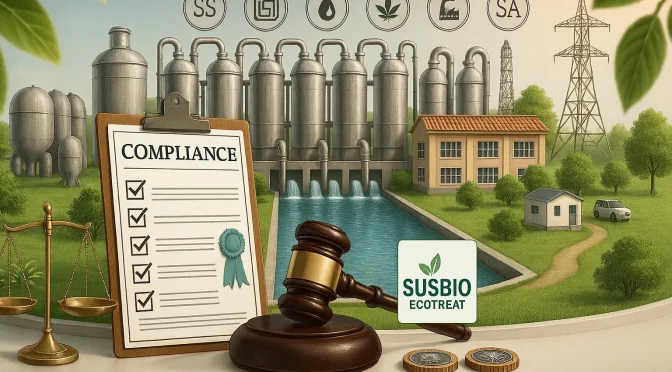
Building owners and facility managers must pay attention to several critical factors as India’s environmental regulations for sewage treatment grow stricter. The 2026 CPCB standards bring new challenges that need careful planning.
Effluent Quality Parameters: BOD ≤ 10 mg/L, TSS ≤ 10 mg/L
The 2026 CPCB standards establish strict water quality measures for package sewage treatment plants. The treated effluent must achieve:
- BOD (Biochemical Oxygen Demand) ≤ 10 mg/L
- TSS (Total Suspended Solids) ≤ 10 mg/L
- COD (Chemical Oxygen Demand) ≤ 50 mg/L
- pH level between 6.5–8.5
- Ammonical Nitrogen ≤ 5 mg/L
- Total Nitrogen ≤ 5 mg/L
- Fecal Coliform ≤ 100 MPN/100 mL
SUSBIO ECOTREAT achieves these parameters consistently through advanced filtration and biological treatment processes.
Dual Plumbing and Reuse Infrastructure Requirements
Water reuse has become mandatory under the CPCB guidelines. Buildings must now have:
- Dual plumbing systems for separating fresh and treated water
- Dedicated storage tanks for treated water
- Clear “Non-potable” signage on all treated water outlets
- Infrastructure for directing treated water to acceptable uses
Toilet flushing, landscape irrigation, floor washing, and cooling towers are acceptable reuse applications.
Online Monitoring and Data Logging Mandates
Immediate monitoring has become essential for compliance verification. Package STPs now need:
- Online Continuous Effluent Monitoring Systems (OCEMS) that measure parameters like pH, BOD, COD, TSS, and flow rate
- Direct data transmission to CPCB servers without PC intermediaries
- Communication protocols using RS485 with Modbus
- Non-volatile memory for data storage during connectivity outages
- Calibration verification at intervals specified by CPCB
Function checks happen every 15 days and validation occurs through routine calibration library generation. SPCBs or authorized agencies perform monthly performance checks.
SUSBIO ECOTREAT package sewage treatment plants include these monitoring systems, which helps buildings stay compliant with evolving regulations.
Choosing the Right Package STP for Your Building

Package sewage treatment plant selection needs careful thought to work well for your requirements.
Sizing Based on 135–150 LPCD Sewage Load
Accurate sizing is the life-blood of a well-functioning STP installation. Domestic applications use a standard calculation of 135–150 liters per capita per day (LPCD). Sewage generation makes up about 90% of the total water demand in a typical building. To name just one example, with 1,200 residents:
Daily sewage generation = 1,200 people × 135 LPCD = 162,000 liters (162 KLD)
Small projects usually need:
- 50 residents: 10–15 KLD capacity
- 100 residents: 20–25 KLD capacity
- Small hotel (50 rooms): 15–20 KLD
Space Constraints and Modular Installation Options
Space limits often determine STP choice, especially in urban areas. Modular STPs use up to 10 times less space than regular systems. These pre-engineered, factory-assembled units come in containerized or skid-mounted forms that fit into basements or utility areas without major structural changes.
SUSBIO ECOTREAT’s modular designs handle 5-500 m³/day in compact, container-like structures – perfect when space is tight.
Package Sewage Treatment Plant Cost Ranges by Capacity
Prices vary by a lot based on capacity:
- 5-10 KLD: ₹65,000–₹1,00,000 per KLD (₹3.25-10 lakh total)
- 10-25 KLD: ₹55,000–₹85,000 per KLD (₹5.5-21 lakh total)
- 25-50 KLD: ₹50,000–₹75,000 per KLD (₹12.5-37.5 lakh total)
Maintenance and AMC Considerations
Annual Maintenance Contracts (AMC) are a key part of operational costs. A typical 50 KLD plant’s monthly expenses run between ₹25,000–₹53,000. This covers electricity (₹12,000–₹18,000), manpower (₹10,000–₹20,000), consumables, and AMC fees.
Systems that are managed to keep well are a great way to get longer equipment life, better performance, regulatory compliance, and technical support. Make sure you think over these ongoing costs when making your decision.
Why SUSBIO ECOTREAT is the Best Fit for 2026 and Beyond
SUSBIO ECOTREAT leads India’s package sewage treatment solutions with its advanced technology. The system tackles future wastewater challenges head-on and helps buildings stay compliant beyond 2026.
Plug-and-Play Installation for Small and Large Buildings
SUSBIO ECOTREAT brings a revolutionary prefabricated design that’s ready for installation with minimal civil work. This plug-and-play approach cuts deployment time from months to just days. Urban environments with premium space costs benefit from the system’s compact footprint. The modular scalability fits everything from small apartment complexes to large industrial facilities.
Meets All CPCB and SPCB Norms for 2026
The plant combines anaerobic and aerobic biological stages in its dual treatment process to break down organic pollutants thoroughly. BOD levels stay below 10 mg/L and COD under 50 mg/L, which surpasses the 2026 CPCB standards. The advanced technology delivers crystal-clear, pathogen-free water suitable for reuse.
Low Sludge Generation and High Water Recovery
MBR-OSA technology in SUSBIO ECOTREAT cuts biological sludge production by up to 78%. The system uses 90% less electricity than conventional STPs. These features keep operating costs low throughout its lifecycle.
Trusted Package Sewage Treatment Plant Manufacturer in India
SUSBIO stands as a trailblazing wastewater treatment plant manufacturer in India with successful installations nationwide. Their FRP construction comes with a 10-year MOC warranty, making them the most reliable partner to achieve long-term compliance.
Conclusion
Package sewage treatment plants are a vital solution to India’s growing wastewater crisis. We’ve seen how these innovative systems help buildings meet the stringent 2026 CPCB standards. They also address the gap between wastewater generation and treatment capacity.
Package STPs are definitely an ideal choice for residential and commercial buildings. Their space efficiency, rapid installation, and modular design give practical benefits to property owners who face space constraints or tight deadlines. The CPCB’s dual plumbing requirements and water reuse infrastructure change wastewater from a disposal problem into a valuable resource.
Picking the right STP size is a vital part of optimal performance. The right calculations based on 135-150 LPCD will give a system that handles peak loads without compromising treatment quality. Looking at maintenance needs and costs helps avoid operational issues later.
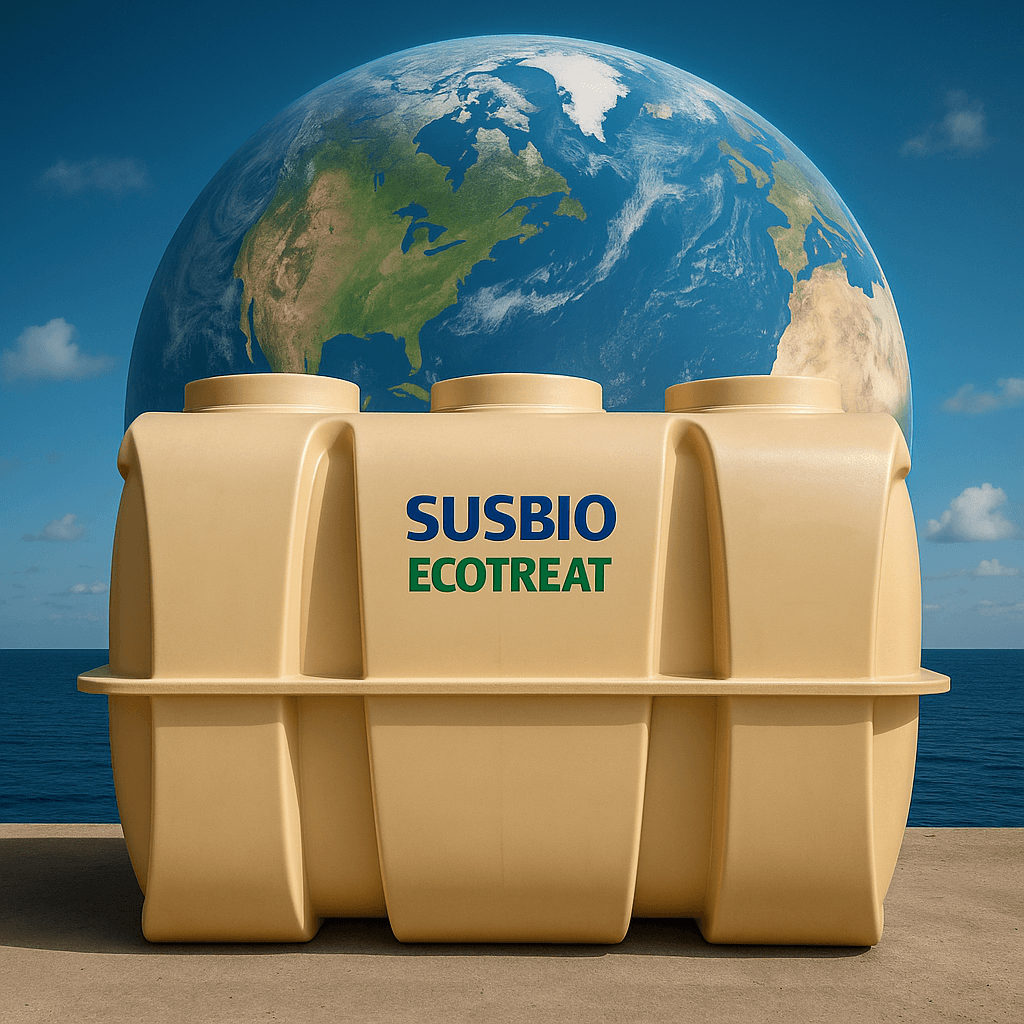
SUSBIO ECOTREAT leads the pack as India’s most advanced packaged STP solution. Buildings of all sizes benefit from its plug-and-play installation. Its innovative dual treatment process achieves effluent quality that exceeds the 2026 CPCB parameters consistently. The system’s low sludge generation and high water recovery rates lead to big operational savings over time.
Building owners and facility managers need to act now for eco-friendly wastewater management. SUSBIO ECOTREAT and similar future-ready solutions can help tackle India’s wastewater treatment challenges together. Smart choices today ensure regulatory compliance tomorrow and protect our water resources for future generations.
Key Takeaways
Understanding package sewage treatment plants is crucial for meeting India’s 2026 CPCB standards and addressing the massive wastewater crisis where 72% of urban wastewater remains untreated.
- Stringent 2026 standards require BOD ≤10 mg/L and TSS ≤10 mg/L with mandatory dual plumbing systems and online monitoring for all buildings.
- Size your STP correctly using 135-150 LPCD calculation to ensure optimal performance and avoid system overloading in residential and commercial applications.
- Package STPs offer 40-60% smaller footprint than conventional systems with plug-and-play installation reducing deployment time from months to days.
- Costs range from ₹65,000-₹1,00,000 per KLD for smaller capacities with ongoing AMC expenses of ₹25,000-₹53,000 monthly for 50 KLD plants.
- SUSBIO ECOTREAT exceeds 2026 standards with dual treatment technology achieving crystal-clear effluent while reducing sludge generation by 78% and electricity usage by 90%.
The transition to compliant wastewater treatment isn’t just regulatory necessity—it’s an opportunity to transform waste into a valuable water resource while protecting India’s environment for future generations.
Frequently Asked Questions
Q1. What are the key effluent quality parameters for package STPs to meet 2026 CPCB standards?
The 2026 CPCB standards require treated effluent to have BOD ≤ 10 mg/L, TSS ≤ 10 mg/L, COD ≤ 50 mg/L, pH between 6.5-8.5, and fecal coliform ≤ 100 MPN/100 mL, among other parameters.
Q2. How do package sewage treatment plants differ from conventional STPs?
Package STPs are pre-engineered, compact units that can be installed quickly, require less space (40-60% smaller footprint), and offer modularity and portability. They generally have lower capital costs and more automation compared to conventional STPs.
Q3. What are the new infrastructure requirements for buildings implementing package STPs?
Buildings must now install dual plumbing systems to separate fresh and treated water, dedicated storage tanks for treated water, clear “Non-potable” signage on treated water outlets, and infrastructure for directing treated water to acceptable reuse applications.
Q4. How should I size a package STP for my building?
Size your STP based on 135-150 liters per capita per day (LPCD) for domestic applications. Estimate sewage generation at approximately 90% of total water demand. For example, a building with 1,200 residents would generate about 162 KLD of sewage.
Q5. What are the advantages of SUSBIO ECOTREAT package STPs?
SUSBIO ECOTREAT offers plug-and-play installation, meets all 2026 CPCB norms, has low sludge generation, and high water recovery. It uses MBR-OSA technology to reduce biological sludge production by up to 78% and consumes 90% less electricity than conventional STPs.