

Nepal’s wastewater numbers are stark. According to the 2021 census, only around 10% of households have access to a sewerage network, and the government currently provides effective treatment for just 2–3% of total urban wastewater generated — well behind the global average of roughly 20%. The result is most visible in the capital: the Bagmati River and its tributaries in Kathmandu Valley carry largely untreated sewage through one of the country’s most densely populated areas. Outside the valley, coverage is thinner still.
Why Centralized Plants Alone Won’t Close the Gap
Nepal’s wastewater numbers are stark: only about 10% of households have access to a sewerage network, and the government currently provides effective treatment for just 2–3% of urban wastewater generated — well behind the global average of roughly 20%. The ADB-backed Kathmandu Valley Wastewater Management Project has brought real capacity online, but it’s concentrated in the urban core. For the full breakdown — what’s been built, what’s delayed, and what it means for the rest of the country — see SUSBIO’s Nepal wastewater infrastructure breakdown.
Why Packaged STPs Are the Practical Fix
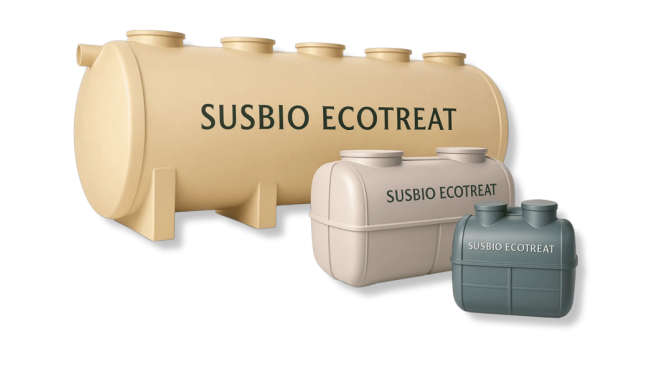
- Compact and modular: suited to Nepal’s mountainous terrain, dense Kathmandu sites, and remote locations where large civil works are not realistic
- Fast to deploy: prefabricated construction means most installations are complete in 3–5 days, with minimal on-site civil work required
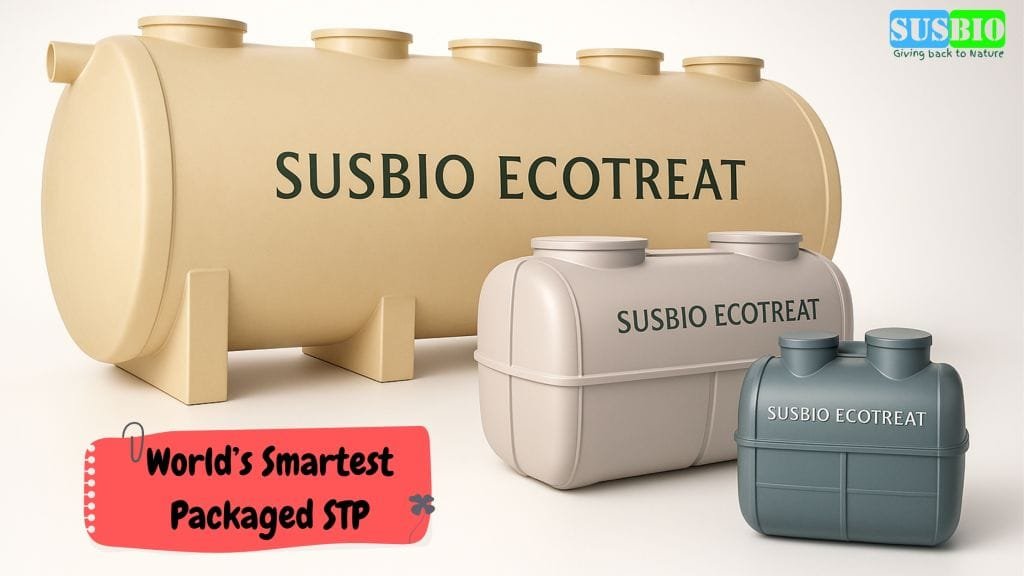
- Built on familiar technology: SUSBIO ECOTREAT runs on Anaerobic + MBBR — the same biofilm-based approach Nepal’s own centralized project has specified for its decentralized treatment units at Hanumanghat and Gokarna
- Energy-efficient: uses 70% less electricity than conventional sewage treatment plants, a meaningful saving where grid reliability varies outside Kathmandu
- Meets national standards: engineered to BOD, COD, TSS and pathogen-removal benchmarks consistent with Nepal’s National Domestic Wastewater Effluent Standards
- Scalable: 1–500 KLD capacity range covers everything from a single guesthouse to a hospital or large residential development
SUSBIO ECOTREAT in Nepal
What This Means for Hotels, Institutions and Developers
- Pokhara and Chitwan’s hotels and resorts depend on lake and river water quality as part of the tourism product itself — Phewa Lake’s health isn’t just an environmental issue for Pokhara’s hospitality sector, it’s a reputational one, making independent treatment a business necessity rather than a compliance afterthought.
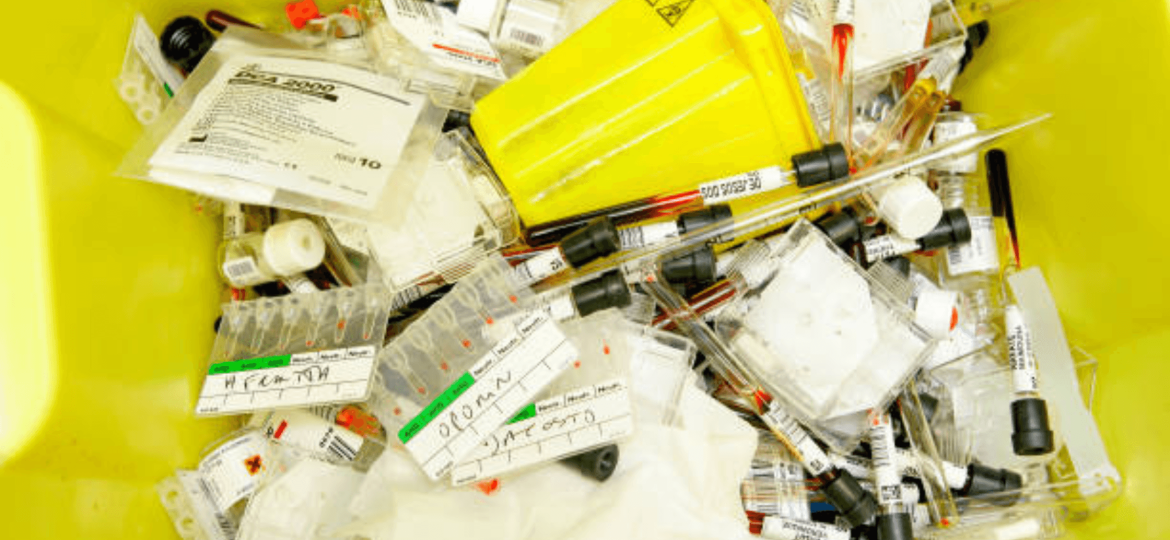
- Hospitals and healthcare facilities outside Kathmandu’s sewer catchment carry effluent risks — pathogen load, pharmaceutical residues — that untreated discharge into local waterways turns into a public health issue, not just a regulatory one.
- Educational institutions and government campuses in NWSC’s coverage gaps are often exactly the fast-growing municipalities where informal settlement and inadequate sanitation compound each other fastest.
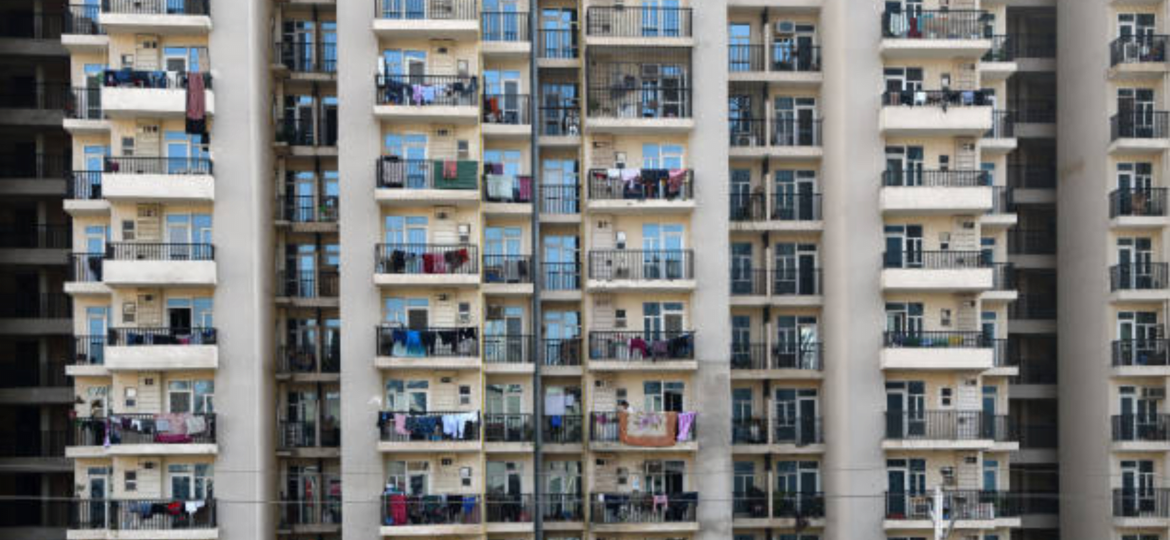
- Residential developments inside Kathmandu Valley going up faster than sewer connections can follow add directly to the untreated load already reaching the Bagmati.
- Industrial and manufacturing facilities discharging without independent treatment are a material contributor to the river pollution this piece opens with.
Conclusion
Nepal’s wastewater infrastructure will keep growing, but centralized investment alone won’t reach the hotels of Pokhara, the hospitals outside the valley, or the residential developments going up faster than sewers can follow them. Packaged STPs — specifically Anaerobic + MBBR systems already familiar to Nepali engineers — are the practical bridge between where the infrastructure is today and where it needs to be. SUSBIO ECOTREAT installs in 3–5 days, runs on 70% less electricity than a conventional STP, and scales from 1 KLD to 500 KLD. If you’re building, operating or managing a facility in Nepal that needs its own treatment solution, the technology and the track record are already there.
Frequently Asked Questions
How much of Nepal’s wastewater is actually treated today?
The government currently provides effective treatment for only about 2–3% of the total urban wastewater Nepal generates — well behind the global average of roughly 20%.
What percentage of Nepali households are connected to a sewerage network?
According to the 2021 census, only around 10% of households in Nepal have access to a sewerage network.
What happens to wastewater that centralized plants don’t reach?
It goes largely untreated into rivers like the Bagmati — the primary driver of Kathmandu Valley’s urban water pollution today, and the reason independent, on-site treatment matters most precisely in the areas centralized infrastructure hasn’t yet reached.
Are packaged STPs already a recognized solution in Nepal?
Yes. Nepal’s own Kathmandu Valley Wastewater Management Project specifies MBBR-based decentralized treatment units at sites including Hanumanghat and Gokarna, so the technology is already familiar to local engineers and regulators.
What size of packaged STP does SUSBIO offer?
SUSBIO ECOTREAT covers 1 to 500 KLD, suitable for anything from a small guesthouse to a hospital or large residential development.
How quickly can a packaged STP be installed in Nepal?
Most installations are complete in 3–5 days once the prefabricated unit arrives on site, since civil work requirements are minimal.
Where can I get full specifications and a consultation for a packaged STP in Nepal?
Visit SUSBIO’s dedicated Sewage Treatment Plant Manufacturer in Nepal page for capacity options, installation timelines, and to request a free site assessment.