

Introduction
Shopping malls and commercial complexes are bustling hubs of activity that cater to thousands of visitors daily. These facilities generate significant amounts of wastewater, which, if not managed properly, can lead to environmental degradation, regulatory issues, and even health hazards. The installation of a robust sewage treatment plant (STP) system is crucial for ensuring that wastewater is treated effectively, protecting both the environment and public health.
The Importance of Sewage Treatment for Malls and Complexes

Shopping malls and commercial complexes must handle large volumes of wastewater generated from various sources such as restrooms, food courts, maintenance, and landscaping. Proper sewage treatment is vital for several reasons:
Environmental Protection: Untreated sewage can contaminate water bodies, harm aquatic life, and degrade the natural ecosystem. A well-functioning STP ensures that wastewater is treated to safe levels before being released or reused.
Regulatory Compliance: Government regulations mandate that commercial establishments treat their wastewater to specific standards. Failing to meet these standards can result in hefty fines, legal action, and even closure.
Public Health: Untreated wastewater poses serious health risks, including the spread of diseases and exposure to harmful pathogens. An effective STP protects the health of visitors and employees by ensuring that wastewater is properly treated.
Sustainability: With increasing emphasis on sustainable practices, malls and complexes are expected to adopt eco-friendly solutions. An STP helps in recycling wastewater for non-potable uses such as irrigation, cooling, and cleaning, thereby reducing the strain on freshwater resources.
Challenges Faced by Malls in Wastewater Management
Despite the benefits of installing an STP, shopping malls and complexes face several challenges when it comes to wastewater management:
-
High Volume and Variable Load: The volume of wastewater generated can vary significantly depending on the time of day, day of the week, or season. This variability makes it challenging to design an STP that can handle peak loads without overcapacity during off-peak times.
-
Limited Space: Shopping malls are often located in urban areas where space is at a premium. Installing a conventional STP that requires a large footprint can be challenging in such settings.
-
High Organic Load: Wastewater from food courts and restaurants tends to have a high organic load, which can be difficult to treat using conventional methods. This necessitates the use of advanced treatment technologies that can effectively handle such loads.
-
Odor and Noise Concerns: Operating an STP in a commercial setting requires careful consideration of odor and noise control to ensure a pleasant environment for shoppers.
-
Maintenance and Operation: Regular maintenance and skilled operation are crucial for the optimal performance of an STP. Many malls lack the in-house expertise to manage these systems effectively, leading to operational challenges.
How STPs are Helping Shopping Malls and Complexes
Modern STPs are designed to address the specific challenges faced by shopping malls and commercial complexes. They offer several advantages:
Advanced Treatment Technologies: Modern STPs utilize advanced technologies such as Membrane Bioreactor (MBR), Sequential Batch Reactor (SBR), and Moving Bed Biofilm Reactor (MBBR) to effectively treat wastewater, including high organic loads.
Compact Design: Many STPs are now available in compact, modular designs that require less space and can be easily integrated into existing facilities.
Energy Efficiency: Advanced STPs are designed to minimize energy consumption, reducing the overall operational costs for mall owners.
Reusability of Treated Water: Treated wastewater can be reused for non-potable purposes, reducing the demand for freshwater and contributing to sustainability goals.
Automated Operation and Monitoring: Modern STPs are equipped with automated control systems that monitor performance and make real-time adjustments, reducing the need for constant human supervision and ensuring consistent treatment quality.
Why Choose SUSBIO STP for Your Shopping Mall?
When it comes to choosing the right STP for a shopping mall or complex, SUSBIO’s Anaerobic + MBBR technology is built specifically for the load pattern malls actually generate — heavy, variable, and high in organic content from food courts and restrooms. Here’s why SUSBIO fits this use case:
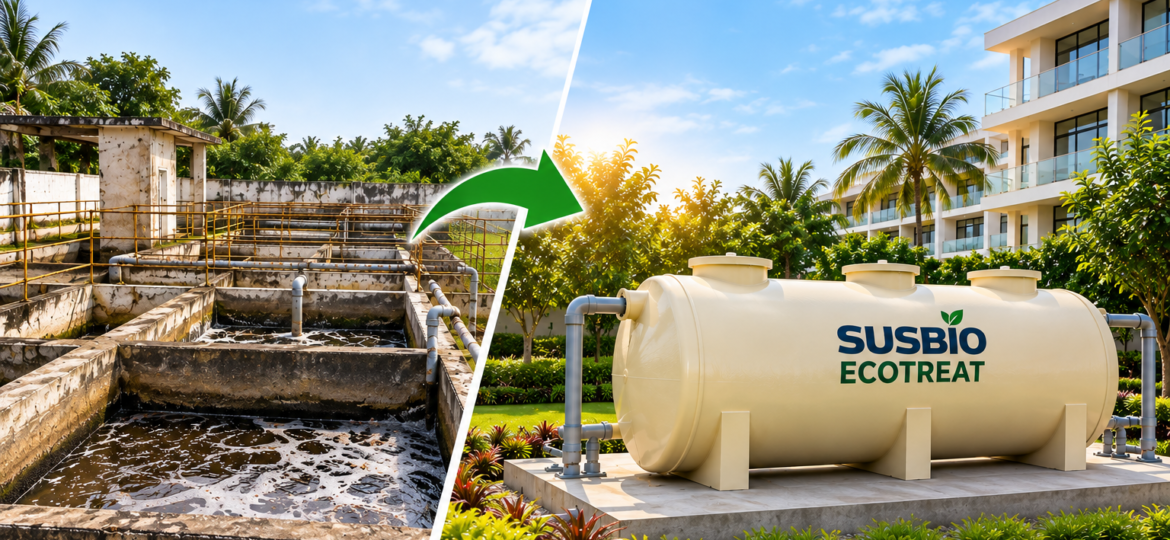
- Anaerobic + MBBR technology: SUSBIO ECOTREAT’s dual-stage process — anaerobic pre-treatment ahead of a Moving Bed Biofilm Reactor — is specifically suited to the high organic load and variable traffic patterns malls generate throughout the day, without the space and civil-work demands of a conventional system.
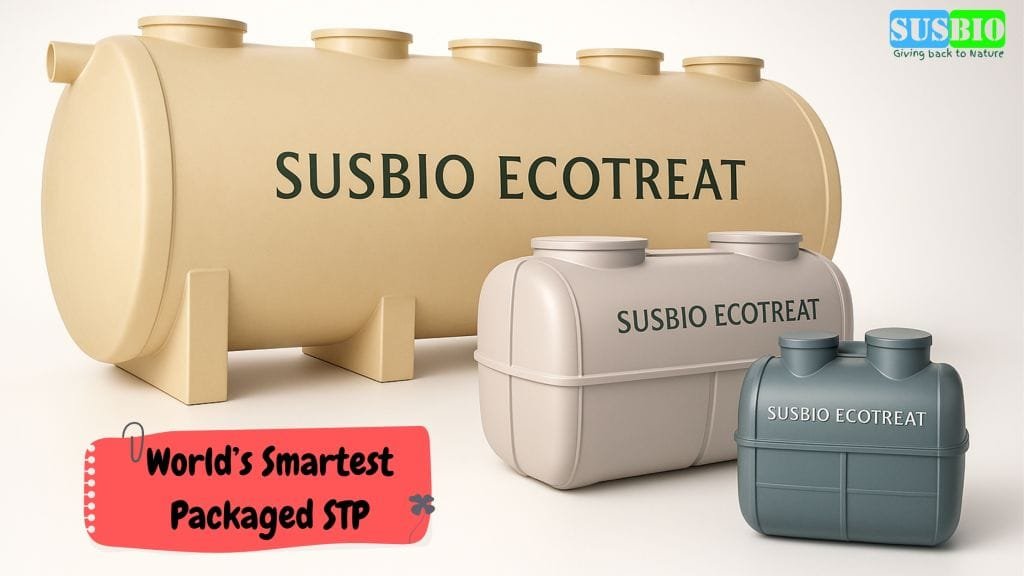
- Compact and Prefabricated Design: Built from factory-tested FRP, ECOTREAT requires minimal footprint and installs in days rather than months — critical for urban mall sites where space is at a premium and downtime during construction isn’t an option.
- 70% Less Electricity: The Anaerobic + MBBR process uses significantly less power than conventional biological treatment, reducing operational costs for mall owners over the system’s life.
- Automated, Low-Maintenance Operation: ECOTREAT is designed to run with minimal manual intervention, addressing the exact staffing gap most malls face — few have in-house wastewater treatment expertise.
- High-Quality Treated Water: Treated effluent is suitable for reuse in landscaping, cooling systems, and other non-potable applications, supporting the sustainability commitments malls increasingly need to demonstrate.
- Full-Lifecycle Support: From initial consultation through installation and ongoing service, SUSBIO’s team handles the full project, not just the equipment.
Frequently Asked Questions
What size STP does a shopping mall typically need?
Capacity depends on footfall, number of food outlets, and restroom fixture count rather than just square footage — SUSBIO’s ECOTREAT range covers 1–500 KLD, sizing appropriately for anything from a smaller retail complex to a large regional mall.
Can an STP handle the variable wastewater load of a mall — busy weekends versus quiet weekdays?
Yes, when equalization capacity is sized correctly. A properly designed system buffers peak-hour and peak-day surges before they reach biological treatment, so the plant doesn’t fail during exactly the hours it’s under the most pressure.
How much space does a mall STP actually require?
SUSBIO ECOTREAT’s prefabricated, modular design has a significantly smaller footprint than a conventional civil-built STP, and can be installed underground where surface space needs to stay available for parking, landscaping, or retail use.
Can treated wastewater be reused within the mall?
Yes — treated effluent from ECOTREAT is suitable for non-potable reuse including landscaping irrigation, cooling tower makeup, and toilet flushing, reducing a mall’s freshwater demand.
How disruptive is installation to an operating mall?
Because ECOTREAT is prefabricated and factory-tested before arriving on site, installation typically takes days rather than the months a conventional STP construction would require — a meaningful difference for a facility that can’t shut down for extended construction.
Does a mall STP require dedicated in-house staff to operate?
No. ECOTREAT’s automated monitoring and control systems are designed to minimize the need for constant manual oversight, addressing the operational-expertise gap most malls face without a full-time wastewater specialist on staff.
Conclusion
Investing in a high-quality sewage treatment plant is not just a regulatory requirement but a smart business decision for shopping malls and commercial complexes. It ensures environmental compliance, promotes public health, supports sustainability, and can significantly reduce operating costs. SUSBIO’s Anaerobic + MBBR technology is built specifically for the high-organic-load, variable-traffic conditions malls generate — backed by 500+ installations across 24 Indian states and full lifecycle support from design through maintenance. Get in touch for a site assessment and a capacity recommendation suited to your property.