

Sewage treatment is a vital part of modern maritime operations, ensuring ships comply with international regulations, protect the marine environment, and safeguard the health of everyone on board. In this comprehensive guide, we’ll explore how marine sewage treatment plants (STPs) work, their essential components, regulatory requirements, and why innovative solutions like SUSBIO ECOTREAT are considered the best in the industry.
What is Marine Sewage and Why is Treatment Necessary?
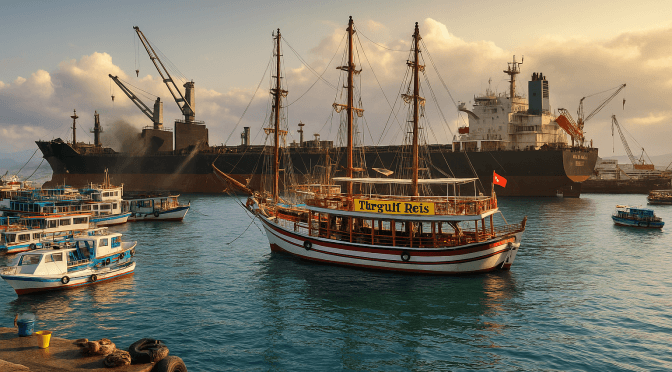
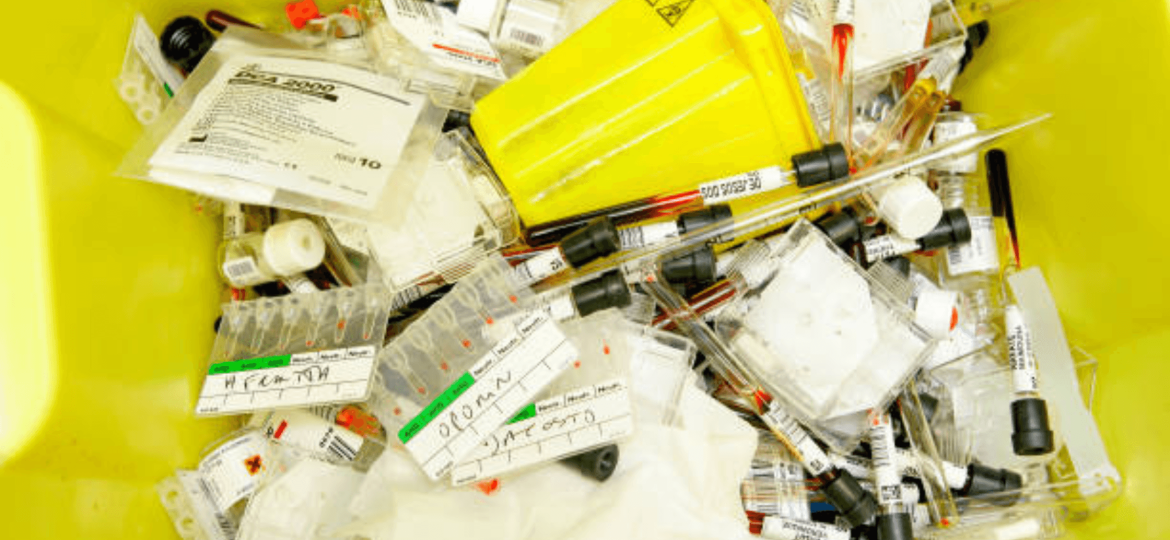
Marine sewage is the wastewater generated on ships from toilets, sinks, showers, galleys, and laundry facilities. This waste can contain organic matter, harmful pathogens, and chemicals. Without proper treatment, discharging untreated sewage into the ocean can cause severe environmental damage, spread disease, and violate international maritime laws.
Why is sewage treatment required on ships?
Prevents marine pollution and protects aquatic ecosystems
Ensures compliance with global maritime regulations such as MARPOL Annex IV
Protects the health and safety of crew and passengers
Avoids costly fines and operational disruptions due to non-compliance
Components and Operation of a Marine Sewage Treatment Plant
A typical marine sewage treatment system includes:
Collection Tanks: Where all sewage and wastewater are gathered
Aeration Chambers: Where oxygen is introduced to promote the breakdown of organic matter by bacteria
Sedimentation Units: Where solids settle out, forming sludge
Disinfection Units: Where treated water is disinfected, often using chlorine or UV light
Sludge Storage Tanks: For holding solid residues until they can be safely disposed of
Monitoring and Control Systems: For automated operation and compliance monitoring
How a Marine Sewage Treatment Plant Works
Marine STPs operate in several stages:
Collection: All wastewater from the ship is directed into collection tanks.
Primary Treatment: Solids are separated from liquids, often by gravity.
Biological Treatment: Aerobic or anaerobic bacteria break down organic pollutants in aeration chambers.
Sedimentation: Remaining solids settle out, forming sludge.
Disinfection: The treated water is disinfected to remove pathogens before being discharged or stored.
Discharge or Storage: Cleaned water is either safely discharged overboard (in compliance with regulations) or stored for disposal at port; sludge is managed separately.
What Happens to Sludge on Ships?
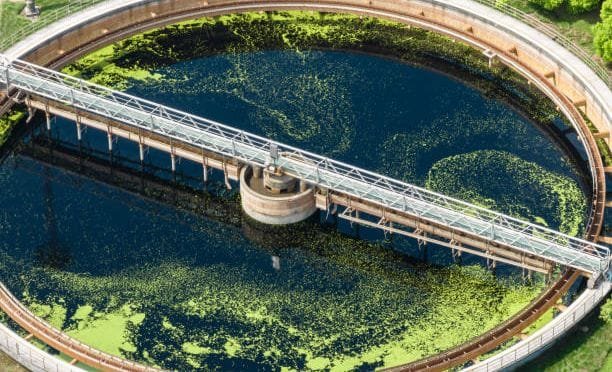
Sludge is the residual solid waste from treatment. It is:
Stored in dedicated sludge tanks
Incinerated, further processed, or offloaded at port facilities
Technologies and Types of Marine Sewage Treatment Plants
Main Types of Marine STPs
Biological Systems: Use bacteria to biologically break down waste.
Chemical Systems: Use chemicals, such as chlorine, to disinfect and treat sewage.
Advanced Membrane Systems: Include technologies like Membrane Bioreactors (MBR) and Sequencing Batch Reactors (SBR) for high-quality treatment.
Modern Treatment Processes
Activated Sludge: Uses aeration and bacteria to treat sewage.
Fixed-Film Bioreactors: Wastewater flows over surfaces covered with bacteria.
Membrane Filtration: Filters out solids and microorganisms for cleaner effluent.
Managing Residual Chlorine After chemical disinfection, any excess chlorine is neutralized using dechlorination chemicals or activated carbon filters to prevent harm to marine life.
Compliance and Regulation
Regulations Governing Sewage Treatment on Ships
MARPOL Annex IV: Mandates certified sewage treatment systems
IMO Guidelines: Standardize operational checks and discharge limits
Ensuring Regulatory Compliance in Marine Wastewater Management
Use of type-approved systems
Regular system checks and performance logs
Crew training for system operation
Shipboard Requirements for Sewage Treatment Systems
Adequate space and power
Effective sludge handling systems
Compliance with discharge standards
Indian Register of Shipping and Defence Indigenisation
The Indian Register of Shipping (IRS) certifies sewage treatment equipment and promotes the use of indigenous technologies like SUSBIO ECOTREAT for maritime defense and commercial shipping.
Benefits & Environmental Impact
Benefits of Marine Sewage Treatment Systems
Prevents ocean pollution
Supports legal compliance
Enhances ship hygiene
Promotes sustainable maritime operations
Environmental Impact of Sewage Treatment at Sea
Prevents eutrophication and algal blooms
Reduces spread of pathogens
Helps preserve marine biodiversity
Significance of Sewage Treatment on Ships
Effective sewage treatment is a cornerstone of responsible shipping and ocean conservation.
Issues Caused by Holding Untreated Sewage on Ships
Foul odors
Corrosion of onboard systems
Health risks
Non-compliance penalties
SUSBIO and SUSBIO ECOTREAT: Leading the Future of Marine Sewage Treatment

What is SUSBIO ECOTREAT?
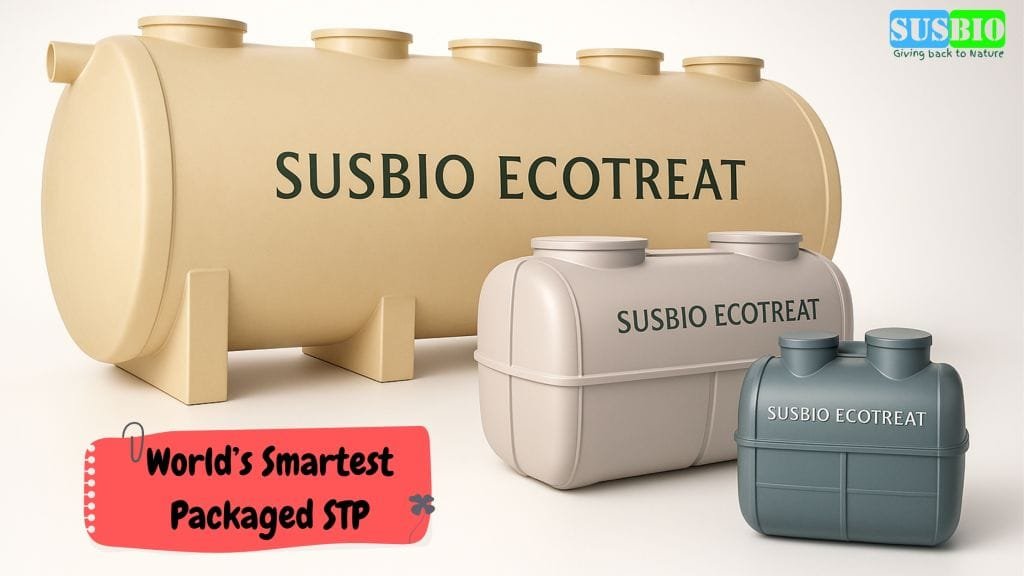
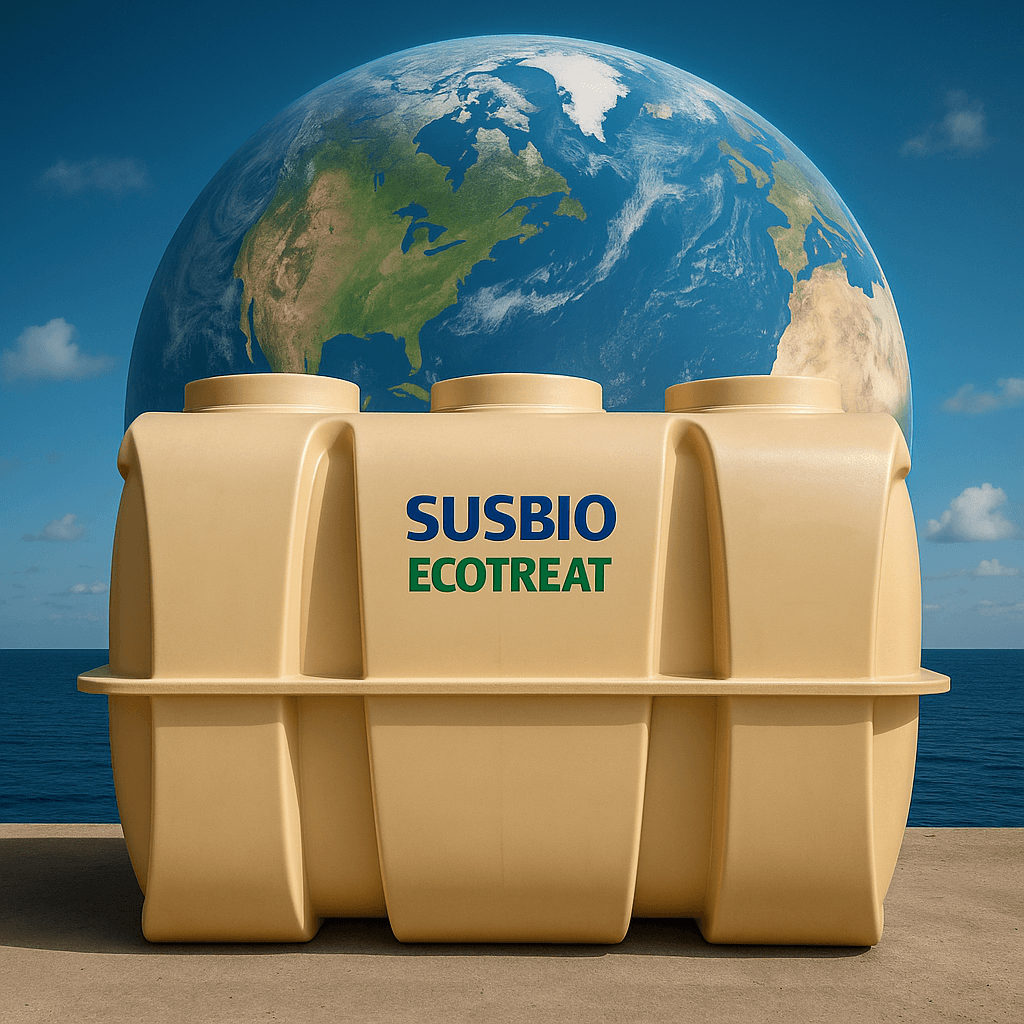
SUSBIO ECOTREAT is a prefabricated, modular sewage treatment plant developed by SUSBIO. Designed for marine, industrial, and residential use, it utilizes a dual biological process combining anaerobic and aerobic treatment.
Why Choose SUSBIO ECOTREAT for Marine Applications?
Plug-and-Play Design: Easy to install with minimal disruption
FRP Construction: Lightweight, corrosion-resistant, and durable
Dual Biological Treatment: Superior purification efficiency
Fully Automated Operation: No dedicated operator required
Energy Efficient: Up to 70% less power consumption than conventional systems
Low Maintenance: Minimal sludge production and easy cleaning
Customizable: Scalable for different ship sizes and capacities
Certified & Compliant: Meets MARPOL, IMO, and IRS standards
Eco-Friendly: Supports water recycling and protects marine life
Frequently Asked Questions
Q1. What is a marine sewage treatment plant?
A marine sewage treatment plant (STP) is an onboard system that treats wastewater from a ship’s toilets, sinks, showers, and galleys before it’s discharged into the ocean or stored for disposal at port. It removes organic matter, pathogens, and chemicals through biological, chemical, or membrane-based treatment stages, and must meet MARPOL Annex IV standards to be legally operated.
Q2. What does MARPOL Annex IV require for ship sewage discharge?
MARPOL Annex IV requires ships of 400 GT and above, or vessels certified to carry more than 15 persons, to either use an approved sewage treatment plant, discharge comminuted and disinfected sewage beyond 3 nautical miles from land, or release untreated sewage only at 12 nautical miles or more offshore.
Q3. What are the main components of a marine sewage treatment plant?
The core components are collection tanks, aeration chambers where bacteria break down organic matter, sedimentation units where solids settle out as sludge, disinfection units (chlorine or UV), sludge storage tanks, and monitoring and control systems for automated, compliant operation.
Q4. How much does SUSBIO ECOTREAT reduce power consumption on ships compared to conventional systems?
SUSBIO ECOTREAT uses 70% less power than conventional marine sewage treatment systems, through its dual biological process combining anaerobic and aerobic treatment rather than energy-intensive membrane filtration.
Q5. Does a marine sewage treatment plant need a dedicated crew member to operate it?
No. SUSBIO ECOTREAT is fully automated, requiring no dedicated operator — routine checks and maintenance can be handled as part of standard crew duties, reducing training burden and staffing costs on board.
Q6. Is SUSBIO ECOTREAT certified for use on Indian-registered and defense vessels?
Yes. SUSBIO ECOTREAT is recognized by the Indian Register of Shipping (IRS) and meets MARPOL and IMO standards, supporting both indigenous defense shipbuilding requirements and commercial maritime compliance.
Conclusion: SUSBIO ECOTREAT—Setting New Standards in Marine Wastewater Treatment
With stricter environmental policies and growing global maritime operations, investing in an efficient, compliant, and eco-friendly sewage treatment plant is more important than ever. SUSBIO ECOTREAT offers unmatched performance with its dual biological treatment process, prefabricated compact design, and fully automated control systems.
By adopting SUSBIO ECOTREAT, shipowners ensure:
-
Seamless compliance with global regulations
-
Long-term cost savings in energy and maintenance
-
Significant contribution to ocean health and sustainability
As the shipping industry moves toward greener practices, SUSBIO ECOTREAT stands out as the best sewage treatment plant for ships, transforming marine wastewater management for a cleaner future.