

A sewage treatment plant that’s working correctly shouldn’t smell. When it does, the specific character of the odor is actually diagnostic information — a rotten-egg smell, a sharp ammonia smell, and a general sewage smell each point to different root causes. This page walks through each one, what it means, and what to check.
For the broader range of reasons an STP can fail beyond odor specifically — design, installation, maintenance, and operational causes — see our companion troubleshooting guide, Why My Sewage Treatment Plant Is Not Working. This page goes deep on odor specifically, since it’s usually the first symptom anyone notices and the one most often misdiagnosed.
Rotten-Egg or Sulfurous Smell: Anaerobic Conditions
This is the most common odor complaint, and it means the biological stage has gone anaerobic — the bacteria the system relies on for aerobic treatment have been displaced by anaerobic bacteria that produce hydrogen sulfide as a byproduct. This happens when oxygen delivery to the tank falls short of what the biological load needs.
What to check: Blower or aeration system function first — motor condition, diffuser blockage, and whether the blower is actually reaching design airflow. Second, whether the organic load has grown beyond what the aeration system was sized for — a system running near or above its design capacity struggles to maintain adequate dissolved oxygen throughout the tank. Third, dead zones from poor mixing, where sections of the tank go stagnant and anaerobic even while the rest of the tank aerates normally.
Sharp, Pungent Smell: Incomplete Nitrification (Ammonia)
A sharper, more chemical-smelling odor than general sewage smell usually points to incomplete nitrification — the biological stage isn’t fully converting ammonia to nitrate. This is typically a retention-time or oxygen-availability issue rather than a sludge or blockage problem, and it’s often missed because it doesn’t present as the more familiar rotten-egg smell most people associate with sewage.
Persistent General Odor: Excess Sludge Accumulation
Sludge that isn’t removed on schedule keeps decomposing in place, producing odor continuously even when the rest of the treatment process is functioning normally. This is more often a maintenance-schedule problem than a design problem — check when desludging was last performed against the recommended interval for the plant’s capacity, rather than assuming a process failure.
Sudden or Worsening Odor: Organic Overload
If actual influent load — BOD/COD, not just flow volume — has grown beyond the system’s original design, the biological stage can’t keep pace, and partially-treated organic matter starts to smell before it’s fully broken down. This is the same load-versus-capacity diagnostic covered in our piece on why increasing ETP capacity doesn’t solve performance issues — an overload problem needs a load assessment, not just more frequent cleaning.
Odor With No Obvious Process Cause: Mechanical or Hydraulic Issues
- Blocked or partially blocked inlet/outlet pipelines causing sewage to back up and sit rather than flow through the system.
- Pump failures preventing proper flow between treatment stages.
- Uneven hydraulic distribution where some sections of the plant get overloaded while others are underused — similar to the short-circuiting issue covered in our capacity guide.
Odor From Treated (Discharged) Water Specifically
This is a stronger signal than tank odor and shouldn’t be treated the same way. Bad-smelling treated water almost always means BOD and TSS are still above compliant limits even though the system is technically running — a lab test is the right next step, not just a smell-based diagnosis, since this has direct regulatory implications.
SUSBIO's Approach to Odor Prevention
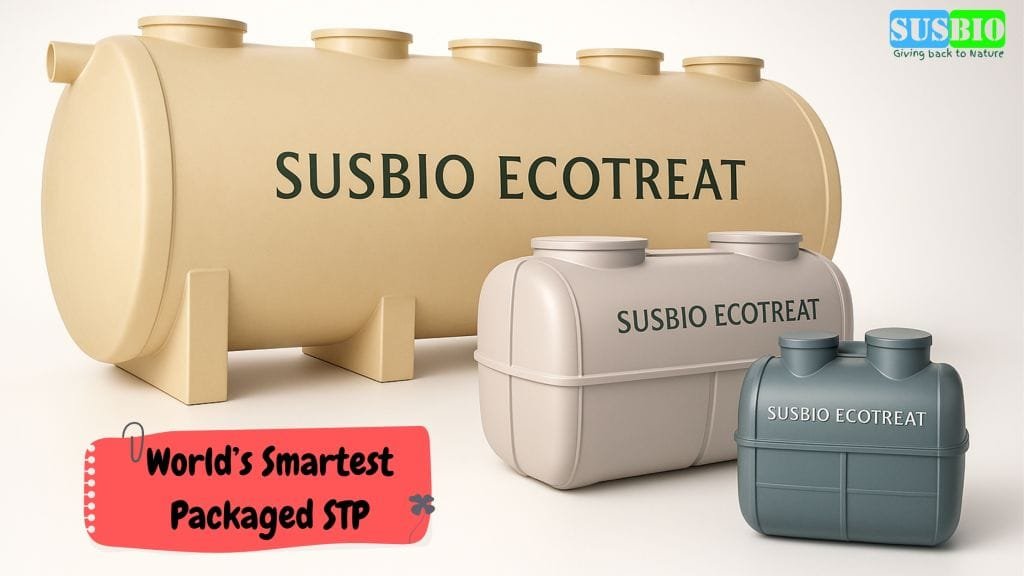
SUSBIO ECOTREAT‘s Anaerobic + MBBR design is engineered specifically against the most common odor triggers above: the pre-integrated anaerobic stage reduces the organic and sludge load reaching the MBBR stage, which lowers the risk of the aeration system falling behind demand. Site-specific influent characterisation at the design stage also means the system is sized against actual load rather than an assumed average — the same principle that prevents the organic-overload odor cause described above.
Conclusion
A bad smell from your STP is never something to just live with or mask — it’s diagnostic information the system is giving you for free. Rotten-egg smell points to anaerobic conditions and an aeration problem; a sharp ammonia smell points to incomplete nitrification; a smell that’s been building steadily points to overdue sludge removal; a smell that started suddenly points to organic overload beyond design capacity. Matching the fix to the actual cause — rather than defaulting to more frequent cleaning or masking the symptom — is what actually resolves it instead of just delaying the next complaint.
If the odor is coming from your treated, discharged water rather than the tank itself, treat that as a compliance signal, not just a nuisance — get a lab test rather than relying on smell alone to judge whether you’re meeting BOD and TSS limits.
SUSBIO ECOTREAT’s Anaerobic + MBBR design addresses the two most common root causes at the engineering level — reduced load reaching the aerobic stage, and sizing based on actual site-specific influent data rather than an assumed average — but any STP, including yours, benefits from diagnosing by odor type rather than guessing.
Frequently Asked Questions
What does a rotten-egg smell from my STP mean?
It usually indicates anaerobic conditions — the aerobic bacteria the system depends on have been displaced by anaerobic bacteria producing hydrogen sulfide, typically due to insufficient aeration for the current load.
Why does my STP smell like ammonia instead of sewage?
A sharp, ammonia-like smell usually points to incomplete nitrification rather than a general process failure — the biological stage isn’t fully converting ammonia to nitrate, often due to insufficient retention time or oxygen availability.
Can excess sludge cause ongoing bad odor even if the plant is otherwise working?
Yes. Sludge that isn’t removed on schedule continues decomposing in place, producing continuous odor independent of whether the treatment process itself is functioning correctly.
If my STP suddenly started smelling worse, what changed?
A sudden increase in odor often indicates organic overload — actual influent load has grown beyond the system’s design capacity, and the biological stage can no longer fully process it before it starts to smell.
Does bad-smelling treated (discharged) water indicate a compliance problem?
Very likely, yes. Odor isn’t itself a regulatory standard, but bad-smelling treated water is a strong indicator that BOD and TSS are above permissible limits — worth confirming with a lab test given the compliance implications.
How does SUSBIO ECOTREAT reduce odor risk by design?
The Anaerobic + MBBR process reduces the organic and sludge load reaching the aerobic stage before it arrives, lowering the chance of the aeration system falling behind demand — combined with site-specific sizing based on actual influent load rather than an assumed average.