

Punjab’s industrial base — particularly the textile, dyeing, and electroplating clusters concentrated around Ludhiana — has made wastewater compliance a defining regulatory issue for the state. The Punjab Pollution Control Board (PPCB) is the statutory authority responsible for enforcing STP and ETP standards across the state. This guide explains PPCB’s role, its STP requirements, the consequences of non-compliance, and how SUSBIO ECOTREAT helps organizations meet them.
Why Punjab's Wastewater Challenge Matters
Ludhiana’s industrial corridor — dominated by dyeing, textile processing, and electroplating units — has a long, well-documented history of contributing to pollution in the Buddha Nullah, a seasonal stream that carries industrial and domestic wastewater into the Sutlej River. This is precisely the kind of documented environmental pressure PPCB’s regulations are built to address, and it’s why compliant, independent treatment matters as much for individual facilities as it does for shared infrastructure like Common Effluent Treatment Plants (CETPs) serving Ludhiana’s dyeing units.
What PPCB Is and What It Does
The Punjab Pollution Control Board is a statutory authority established under the Water (Prevention and Control of Pollution) Act, 1974, with its mandate extended by the Air (Prevention and Control of Pollution) Act, 1981, and the Environment (Protection) Act, 1986. PPCB is responsible for granting Consent to Establish (CTE) and Consent to Operate (CTO) for STPs and industrial facilities, monitoring water and air quality across the state, conducting inspections and effluent audits, and enforcing corrective action against non-compliant facilities.
Key PPCB Requirements for STPs
- Consent to Establish (CTE) and Consent to Operate (CTO): Required before construction and before operation, respectively. Applications require site plans, project reports, and pollution control strategy documentation.
- Discharge standards: Treated effluent must meet CPCB-aligned parameters, typically BOD below 10 mg/L, COD below 50 mg/L, and TSS below 10 mg/L for standard discharge and reuse applications.
- Online monitoring: Larger STPs (typically above 50 KLD) are required to install real-time online monitoring systems for key parameters, with data linked to PPCB’s monitoring infrastructure.
- Industrial pre-treatment before CETP discharge: Units connected to shared infrastructure like Ludhiana’s dyeing-unit CETPs must still meet pre-treatment standards before their effluent enters the common system — connection to a CETP does not remove the individual facility’s treatment obligations.
- Sludge handling: Sludge must be dewatered and disposed of in accordance with PPCB and CPCB guidelines, with proper documentation maintained.
Consequences of Non-Compliance
Facilities operating without valid CTE/CTO, or discharging effluent that fails to meet prescribed standards, face fines, mandatory corrective action orders, and in serious or repeated cases, suspension or revocation of operating consent. Given the ongoing regulatory and public attention on the Buddha Nullah specifically, industrial and commercial facilities in and around Ludhiana face particularly close scrutiny compared to less industrially concentrated parts of the state.
How SUSBIO ECOTREAT Supports PPCB Compliance
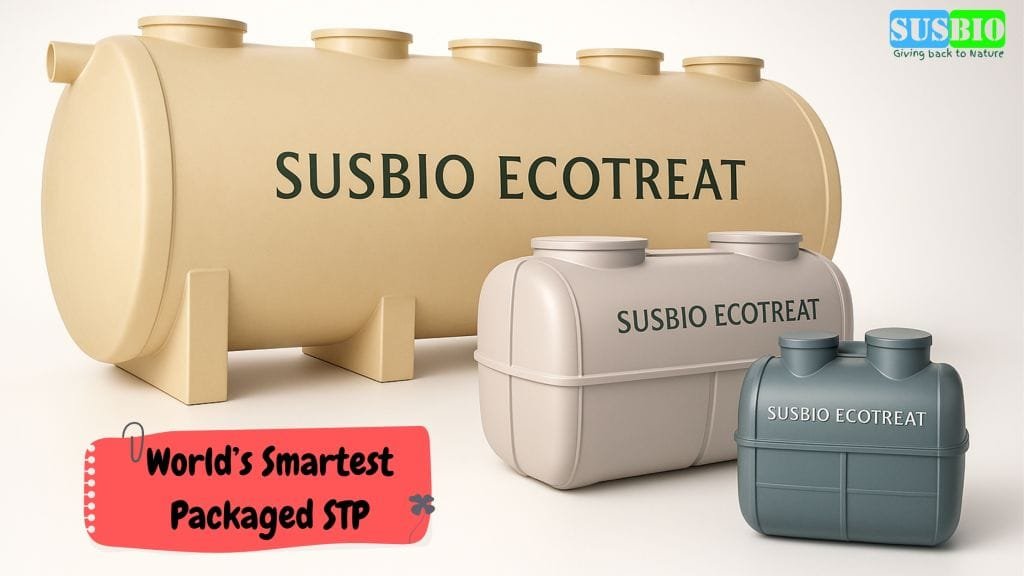
SUSBIO ECOTREAT is built on an Anaerobic + MBBR hybrid process, engineered to consistently deliver effluent quality that meets or exceeds PPCB and CPCB discharge norms, while consuming up to 70% less electricity than conventional STPs. Backed by 500+ installations across 24 Indian states since 2013, ECOTREAT is manufactured at Vasuli MIDC, Chakan, Pune, with configurations suited to Punjab’s residential, commercial, and institutional requirements. For industrial facilities generating process effluent — including textile, dyeing, and electroplating units — SUSBIO ETP / IONTREAT offers electrochemical treatment engineered for that specific contaminant profile, distinct from domestic sewage treatment.
Frequently Asked Questions
Who needs to comply with PPCB STP guidelines?
All industries, commercial complexes, hospitals, hotels, and residential projects generating sewage above prescribed thresholds must comply with PPCB STP norms.
What documents are needed for CTE/CTO applications in Punjab?
Applicants must submit site plans, project reports, environmental impact documentation where applicable, pollution control strategies, and proof of land ownership or lease.
Does connecting to a CETP remove my facility’s individual treatment obligations?
No. Units connected to shared infrastructure like Ludhiana’s dyeing-unit CETPs must still pre-treat their effluent to meet PPCB standards before it enters the common system — CETP connection doesn’t exempt an individual facility from its own compliance requirements.
What happens if my STP fails to meet PPCB discharge standards?
PPCB may impose fines, mandate corrective action, or in serious cases suspend or revoke the facility’s Consent to Operate, along with potential legal proceedings.
How does SUSBIO ECOTREAT help meet PPCB requirements specifically?
ECOTREAT’s Anaerobic + MBBR process consistently delivers CPCB-aligned effluent quality (BOD below 10 mg/L) with built-in monitoring capability. For industrial process effluent specifically, SUSBIO ETP / IONTREAT is engineered for that separate contaminant profile.
Conclusion
PPCB’s STP guidelines reflect the real, documented pressure Punjab’s industrial base — particularly Ludhiana’s dyeing and textile sector — places on local water bodies including the Buddha Nullah and Sutlej River. Strict compliance isn’t just a legal requirement; it’s a direct response to a well-known, closely watched environmental issue. SUSBIO ECOTREAT’s Anaerobic + MBBR technology, alongside SUSBIO ETP for industrial process effluent, helps facilities across Punjab meet PPCB standards efficiently while supporting the state’s broader water sustainability goals.
Note: General PPCB structure (Water Act 1974 basis, CTE/CTO process, online monitoring threshold) follows the same verified pattern used across the other state guides on the site. The Ludhiana/Buddha Nullah context is real, well-documented public knowledge, not invented. No specific PPCB discharge limit numbers beyond the standard CPCB Class A reference were asserted as confirmed PPCB-specific figures — worth verifying against PPCB’s current published standards before publishing, in case they differ from the national baseline.