

West Bengal’s sewage treatment gap is stark: only about 232.5 MLD of sewage is treated daily against a far larger volume generated across the state, with untreated wastewater reaching rivers including the Hooghly and Damodar. The regulatory response has been building steadily — NGT-mandated compliance monitoring, expanded Ganga Action Plan infrastructure, and stricter WBPCB enforcement — but implementation still lags. NGT-monitored data from April–July 2024 found that of 42 STPs across 30 Ganga-front towns in West Bengal, 11 were non-operational, and only 7 fully complied with NGT-prescribed discharge norms even among the operational ones.
Kolkata's Water Bodies and Why Treatment Matters Locally
The Hooghly River forms Kolkata’s western boundary and is the city’s primary surface water resource, while the Bidyadhari and Kulti rivers, along with an extensive network of connected canals, drain the eastern parts of Kolkata Metropolitan Area into the Bay of Bengal. These water bodies serve overlapping purposes — water supply, bathing, washing, aquaculture, recreation — alongside absorbing drainage from the city, which is exactly why untreated discharge has such a direct, compounding impact on public health and the environment locally.
The Regulatory Framework: WBPCB Compliance
The West Bengal Pollution Control Board (WBPCB) is the state authority responsible for inspecting sewage and trade effluent treatment plants under the Water (Prevention and Control of Pollution) Act, 1974. Any facility discharging sewage or trade effluent needs Consent to Establish (CTE) and Consent to Operate (CTO) from WBPCB, obtained through the Silpa Sathi portal — the state’s centralized platform for all WBPCB registrations and consent applications since January 2023.
Processing timelines depend on industry risk categorization: 60 days for Red category (higher risk), 30 days for Orange, and 15 days for Green category industries. Required documentation typically includes site layout, a Detailed Project Report (DPR), and technical reports for the STP/ETP itself — the same category of documentation covered in more depth in our guide to STP and green building certification requirements.
Industrial Context: The Bantala Leather Complex
West Bengal’s industrial wastewater challenge is illustrated clearly by the Kolkata Leather Complex at Bantala — a purpose-built industrial cluster of roughly 500 tanneries, established following a Supreme Court directive to relocate polluting tanneries out of central Kolkata, handling an estimated 22-25% of India’s total tanning output. The complex has a dedicated Common Effluent Treatment Plant (CETP), but a 2018 CAG audit found that 250 of the complex’s tanneries were not connected to the CETP and were discharging effluent directly into storm water canals and roads instead — with discharge from those canals failing to meet CPCB permissible limits at the outlet point.
This is a useful, concrete illustration of a broader pattern worth understanding: a compliant CETP or STP existing on paper doesn’t guarantee compliant discharge in practice if individual units aren’t actually connected to it, or if capacity doesn’t match actual generation. For industrial facilities in West Bengal — whether inside a complex like Bantala or operating independently — the practical requirement is a properly sized, properly connected treatment system, not just proximity to shared infrastructure.
SUSBIO ECOTREAT for West Bengal
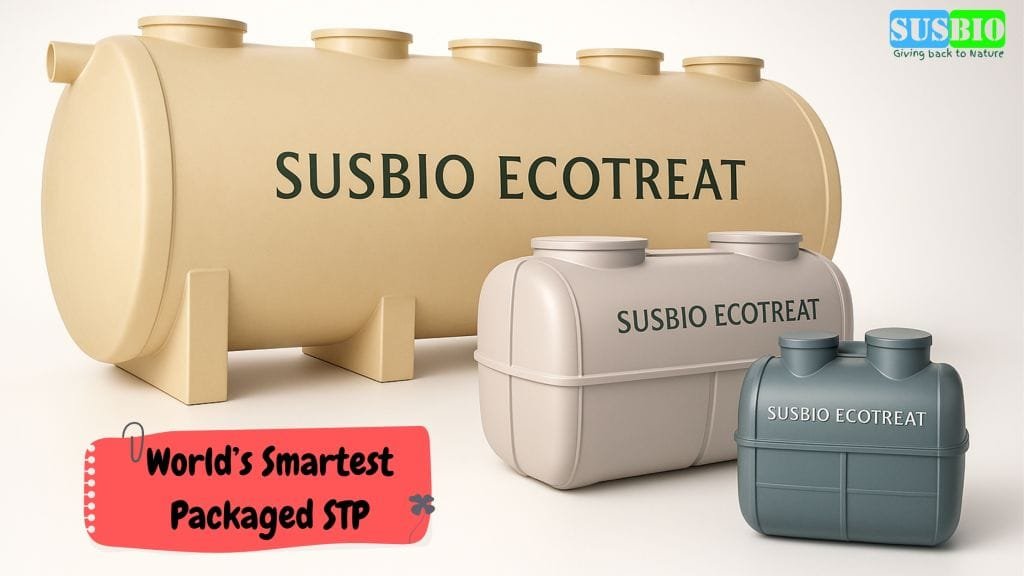
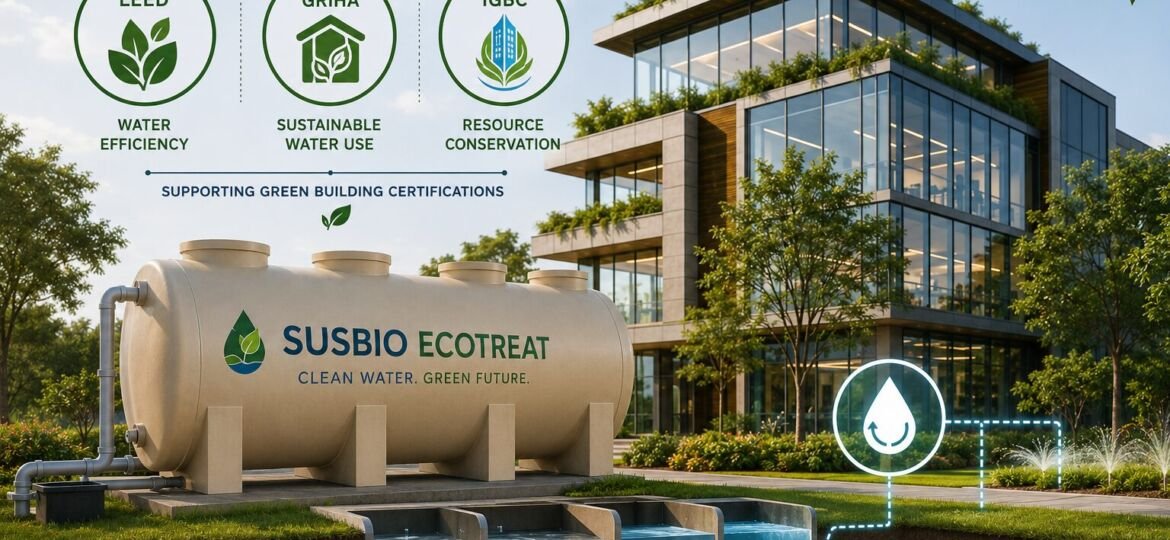
SUSBIO ECOTREAT’s Anaerobic + MBBR hybrid process is built for exactly the kind of decentralized, site-specific treatment that closes the gap between regulatory requirement and actual compliant operation. Because the system is prefabricated FRP — factory-built and tested before arriving on site — installation doesn’t depend on extensive civil works or a lengthy construction timeline, which matters for residential developments, hotels, and standalone industrial units across Kolkata and West Bengal that need treatment in place without an extended build-out. The system is engineered to CPCB Class A standard, consuming up to 70% less electricity than conventional STPs, with SUSBIO’s pan-India service network already covering the wider Eastern India corridor.
Who Needs This in Kolkata and West Bengal
- Residential complexes and gated communities in Kolkata and surrounding municipalities, where WBPCB CTE/CTO requirements apply above defined size thresholds.
- Hotels and commercial developments needing compact, space-efficient treatment for dense urban sites.
- Industrial units, including those within complexes like Bantala, that need their own connected, properly sized treatment rather than relying on shared infrastructure that may not actually reach them.
- Institutional campuses — schools, hospitals — that need reliable compliance without dedicated in-house wastewater expertise.
Frequently Asked Questions
What approvals does an STP need in West Bengal?
Consent to Establish (CTE) and Consent to Operate (CTO) from the West Bengal Pollution Control Board (WBPCB), applied for through the Silpa Sathi portal, along with site layout, DPR, and technical STP/ETP documentation.
How much sewage does West Bengal currently treat?
Reported figures put daily treated sewage at around 232.5 MLD, with a substantial volume of untreated wastewater still reaching rivers including the Hooghly and Damodar.
Is having a Common Effluent Treatment Plant (CETP) enough for industrial compliance in West Bengal?
Not necessarily. A documented case at the Kolkata Leather Complex found that a working CETP existed, but a significant share of individual units weren’t actually connected to it and were discharging directly into storm water canals instead — proper connection and appropriately sized individual treatment matter as much as the shared infrastructure existing.
How long does WBPCB approval take?
Processing timelines depend on industry risk categorization: 60 days for Red category, 30 days for Orange, and 15 days for Green category industries.
Does SUSBIO ECOTREAT meet West Bengal’s discharge requirements?
SUSBIO ECOTREAT is engineered to CPCB Class A standard (BOD ≤10 mg/L) across its capacity range, meeting the discharge and reuse standards applicable under WBPCB’s framework.
Conclusion
West Bengal’s sewage treatment gap isn’t a shortage of regulation — WBPCB’s CTE/CTO framework, NGT monitoring, and CPCB discharge standards are all in place. The gap is between regulatory requirement and actual, properly connected, properly sized treatment on the ground, illustrated clearly by cases like Bantala’s disconnected tanneries. SUSBIO ECOTREAT’s prefabricated, fast-installing Anaerobic + MBBR systems are built to close exactly that gap — for residential, commercial, institutional, and industrial sites across Kolkata and West Bengal.