

If you’ve priced out a sewage treatment plant, you already know where most of the budget and most of the delay actually comes from. It’s rarely the treatment technology itself — it’s the civil construction. RCC tanks, shuttering, curing time, contractor coordination, monsoon delays. A project that should take 6–8 weeks stretches into 4–6 months, and the civil work alone can account for 40–60% of the total cost.
The question “can I get an STP without civil work?” isn’t a trick question — it has a straightforward answer: yes, if you choose a packaged FRP plant instead of a conventionally built one. Here’s exactly what that means, what changes, and where the limits are.
What "STP Without Civil Work" Actually Means
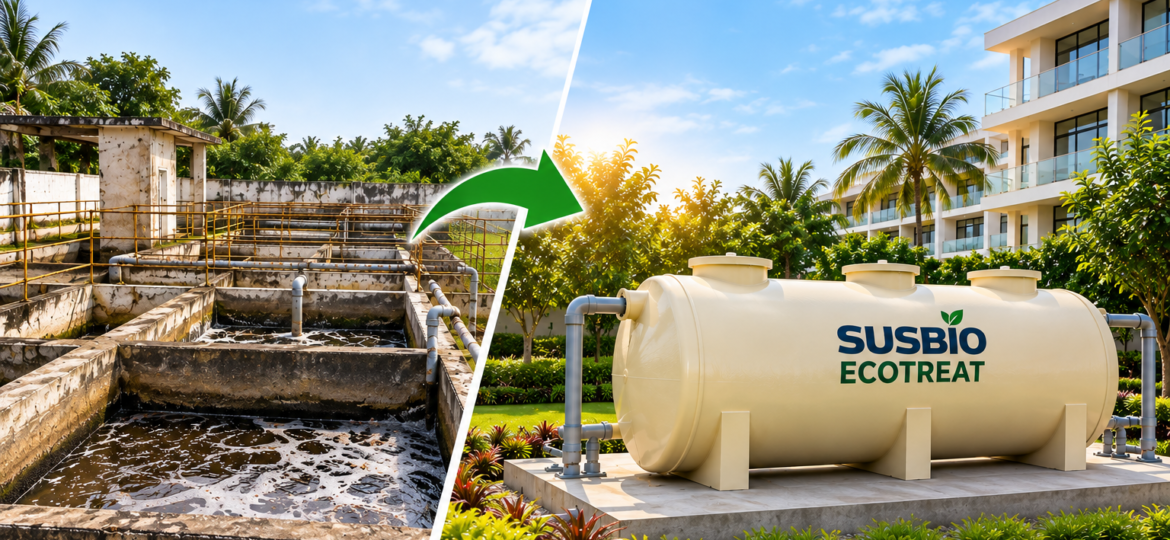
A conventional STP is built on-site: excavation, RCC tank construction, waterproofing, curing (which alone can take 2–4 weeks per pour), then equipment installation inside the finished tanks. The tank is the plant — it’s poured in place and can’t be moved or reused.
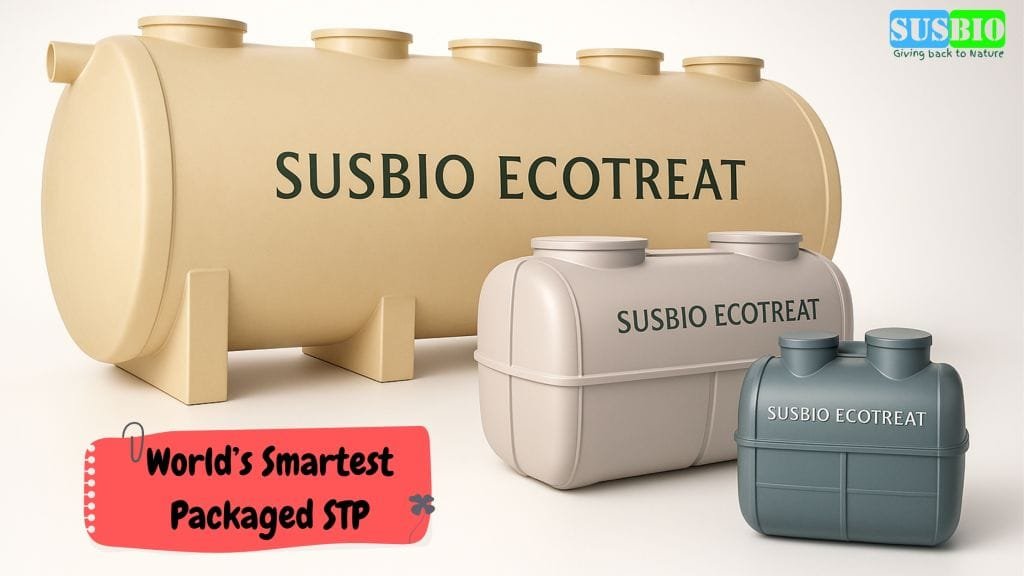
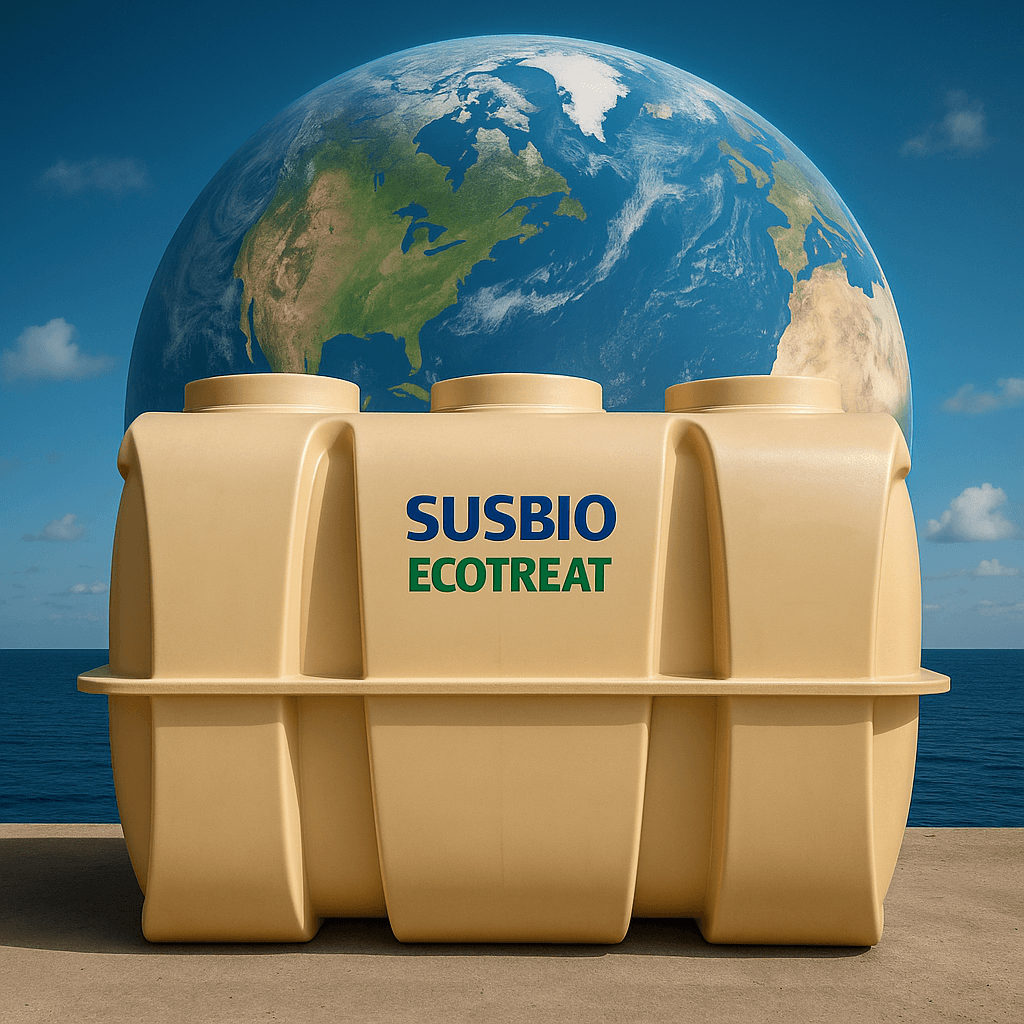
A packaged STP flips this. The entire treatment system — tanks, biological reactors, piping, blowers, control panel — is fabricated inside a single FRP (Fibre Reinforced Plastic) vessel at a factory, tested, and then transported to site as one unit. What’s left for the site team to do is prepare a level foundation, connect inlet/outlet piping, wire the power supply, and commission the plant. No shuttering, no RCC pour, no curing wait.
This is the basis of “STP without civil work” — not zero site work of any kind, but zero structural construction. The distinction matters, because vendors sometimes use the phrase loosely. What genuinely disappears is the RCC tank; what remains is a foundation.
Why Civil Construction Is the Real Bottleneck
Three problems come bundled with site-built civil STPs:
Time. RCC curing alone typically needs 21–28 days per structural pour before it can bear load, and most STP tanks need multiple pours (base slab, walls, partitions). Add excavation, shuttering, and de-shuttering between stages, and a civil STP routinely takes 3–6 months from groundbreaking to commissioning — before any biological startup time is even factored in.
Cost overruns. Civil work is the least predictable line item in an STP budget. Site conditions (soil type, water table, monsoon timing), local labour rates, and contractor availability all swing the final number, often 15–40% above the original estimate.
Structural degradation. RCC tanks in continuous contact with sewage are exposed to hydrogen sulfide gas, which corrodes concrete and rebar over time. Civil STP structures typically need repairs starting around 15–20 years in, even though the overall structure may remain in use for 30+ years with that maintenance factored in.
A packaged FRP plant sidesteps all three: it’s fabricated and tested off-site in parallel with foundation prep, arrives ready to connect, and FRP doesn’t corrode the way concrete does.
How SUSBIO ECOTREAT Delivers a Civil-Work-Free STP
SUSBIO ECOTREAT is built specifically to eliminate the civil construction bottleneck, using Anaerobic + MBBR dual-stage biological treatment inside a single prefabricated FRP vessel.
- Manufacturing: Every vessel is fabricated in-house at SUSBIO’s own facility in Vasuli MIDC, Chakan, Pune — not outsourced — using resin formulations built for continuous wastewater immersion.
- Site requirement: A prepared foundation only. No RCC tank construction, no shuttering, no curing wait.
- Installation timeline: On-site installation typically takes 3–10 days after delivery, depending on capacity — compared to 3–6 months for an equivalent civil STP.
- Capacity range: 1 KLD to 500 KLD from a single packaged range, covering everything from a villa to a large township.
- Energy efficiency: The Anaerobic + MBBR process uses 70% less electricity than conventional STPs, since the anaerobic first stage pre-digests a large share of the organic load before the aerobic MBBR stage takes over.
- Structural life: A well-fabricated FRP vessel is rated for 45–50 years of structural life — since FRP resists the corrosion that shortens the working life of RCC structures.
- Compliance: Every ECOTREAT unit is designed to meet CPCB Class A discharge standards (BOD ≤10 mg/L, TSS ≤10 mg/L, Faecal Coliforms ≤100 MPN/100 ml), enabling reuse for flushing, irrigation, and cooling towers.
- Track record: 500+ active installations across 24 Indian states, with exports to 8 countries.
Civil STP vs. Packaged (No Civil Work) STP — Side by Side

| Factor | Conventional Civil STP | Packaged FRP STP (e.g. SUSBIO ECOTREAT) |
|---|---|---|
| Site construction | RCC tank built on-site | Foundation only |
| Typical timeline | 3–6 months | 1–3 months (fabrication + 3–10 day install) |
| Cost predictability | Variable — depends on site, labour, weather | Fixed factory price, minimal site variables |
| Structural material | Reinforced concrete | FRP (fibre reinforced plastic) |
| Structural life | 30+ years, with repairs typically needed at 15–20 years | 45–50 years, corrosion-resistant |
| Relocatable | No — permanent structure | Yes — can be repositioned if needed |
| Weather dependency | High (monsoon delays curing) | Low — fabrication happens off-site |
Are There Cases Where Some Civil Work Is Still Needed?
Yes — “no civil work” refers to eliminating the tank construction, not every site activity. A few things still apply even with a packaged plant:
- Foundation: A level, load-bearing base is still required — typically a simple concrete slab or plinth, far smaller in scope than a full tank.
- Underground installation: For space-constrained sites where the unit needs to sit below grade, some excavation and a housing structure around the vessel may be needed — though this is still a fraction of full civil tank construction.
- Very large capacities: At the upper end of the range (typically above 200–300 KLD), some projects combine a packaged biological unit with limited civil work for ancillary structures like larger equalization tanks, depending on site-specific flow patterns.
For the large majority of residential, commercial, and hospitality projects in the 1–200 KLD range, a foundation is the only site preparation required.
Installation Timeline: What to Expect
For a typical SUSBIO ECOTREAT installation:
- Order confirmation and design finalization — plant drawings, capacity calculations, and CTE documentation prepared
- Factory fabrication (runs in parallel with site foundation work) — 3–6 weeks depending on capacity
- Foundation preparation on-site — happens concurrently with fabrication, not after
- Delivery and on-site installation — 3–10 days
- Biological startup — 4–6 weeks for the microbial culture in the MBBR media to establish fully and reach consistent CPCB Class A output
Because fabrication and foundation work happen in parallel rather than sequentially, the total time from order to a stable, compliant plant typically runs 8–12 weeks — a fraction of the civil-STP timeline.
Frequently Asked Questions
Is it really possible to install an STP with zero civil work?
Not entirely zero — a foundation is still required. What’s eliminated is the RCC tank construction itself, which is the time- and cost-heavy part of a conventional STP. A packaged FRP plant like SUSBIO ECOTREAT arrives fully fabricated and only needs a prepared foundation, piping connections, and electrical hookup.
How much time does skipping civil work actually save?
Civil STPs typically take 3–6 months due to excavation, shuttering, and RCC curing (21–28 days per pour). A packaged FRP plant’s on-site installation takes just 3–10 days after delivery, with total order-to-operation time of around 8–12 weeks including fabrication and biological startup.
Does skipping civil work mean lower quality or a weaker structure?
No. A well-fabricated FRP vessel is rated for 45–50 years of structural life, longer than the point at which RCC tanks typically need repair work (15–20 years) due to hydrogen sulfide corrosion. FRP quality depends on the manufacturer’s resin formulation and in-house fabrication control.
Can a packaged STP without civil work still meet CPCB discharge norms?
Yes. SUSBIO ECOTREAT is designed to meet CPCB Class A standards (BOD ≤10 mg/L, TSS ≤10 mg/L, Faecal Coliforms ≤100 MPN/100 ml) across its full 1–500 KLD range, enabling treated water reuse for flushing, irrigation, and cooling towers.
What size projects benefit most from a civil-work-free STP?
Villas, apartments, hotels, hospitals, and commercial buildings in the 1–200 KLD range see the most benefit, since a foundation is typically the only site preparation needed. Larger projects above 200–300 KLD may combine a packaged biological unit with limited civil work for ancillary structures.
Does eliminating civil work affect ongoing maintenance?
No — maintenance requirements (blower checks, UV lamp replacement, desludging, AMC visits) are the same regardless of whether the vessel is FRP or concrete. What changes is the structural side: FRP doesn’t develop the cracking or corrosion issues that affect RCC tanks over time.
SUSBIO (Sustainable Biosolutions Pvt. Ltd.) has delivered 500+ packaged ECOTREAT installations across 24 Indian states and exports to 8 countries, manufactured in-house at Vasuli MIDC, Chakan, Pune.