

Most ETP failures aren’t design failures in the way people assume — a system rarely breaks down at the load it was built for. It breaks at the load nobody sized it for: the harvest-season surge, the peak tourist month, the order spike that triples throughput for six weeks a year. A plant that runs cleanly at average flow can fail badly at peak flow, and “average” is exactly the number most ETP proposals are built around.
What Seasonal Load Variation Actually Looks Like
This isn’t a hypothetical edge case — it’s the normal operating pattern for a wide range of industries:
- Food and beverage processing: harvest-season throughput can run several times higher than off-season volume, concentrated into a few months.
- Hotels and resorts: occupancy — and with it, kitchen and laundry effluent — swings hard between peak tourist season and off-season.
- Textile and dyeing units: order-driven production means effluent volume and chemical load can spike around specific order cycles rather than following a steady curve.
- Dairy processing: milk procurement volume itself varies seasonally, and processing wastewater follows it directly.
In every one of these cases, a plant sized for the average across the year is, by definition, undersized for a meaningful chunk of the year.
Why This Breaks a Poorly Designed Plant
Biological treatment — the core of most ETP and STP processes — depends on a stable population of microorganisms that need time to adapt to load changes. A sudden spike in organic or chemical load doesn’t just mean “more water to treat”; it can shock the biological stage faster than the microbial population can respond, causing treatment efficiency to collapse exactly when the plant is under the most pressure to perform. The failure isn’t the equipment — it’s a design that assumed a flat demand curve for a process that was never flat to begin with.
Designing Around It
Equalization capacity, not just treatment capacity. An equalization tank sized for the actual peak-to-average ratio absorbs short-term surges before they ever reach the biological stage, smoothing a spiky input into something the treatment process can actually handle consistently.
Sizing to peak, not average. This sounds obvious, but it requires actually knowing the peak — not estimating it. A design built from a single average-flow number, without characterizing the real seasonal swing, is a design built to fail during exactly the months that matter most to the client’s business.
Load-flexible technology. Not every treatment technology handles variable load equally well. Systems built around a fixed biological population (like a conventional activated sludge process) can struggle with sharp swings, while moving-bed biofilm approaches — where the biological population lives on carriers rather than in suspension — tend to tolerate load variation more gracefully, since the biofilm surface area provides a buffer the system can draw on during a spike.
Real-time monitoring, not scheduled sampling. A plant that’s only checked periodically won’t catch a load event until after it’s already degraded output quality. Continuous monitoring of key parameters catches the shift as it happens, giving an operator the chance to intervene before a compliance breach — not after.
How SUSBIO Approaches This
Every SUSBIO ETP design starts with site-specific influent characterisation — measuring actual BOD, COD, TSS, pH, and flow patterns for that specific site, rather than applying a generic industry template. For clients with known seasonal variation, that characterisation includes peak-period data, not just an annual average, so the equalization and treatment capacity are sized for the load the plant will actually see during its hardest months — not the load it sees on a typical Tuesday.
Why SUSBIO IONTREAT Is Built for Variable Industrial Loads
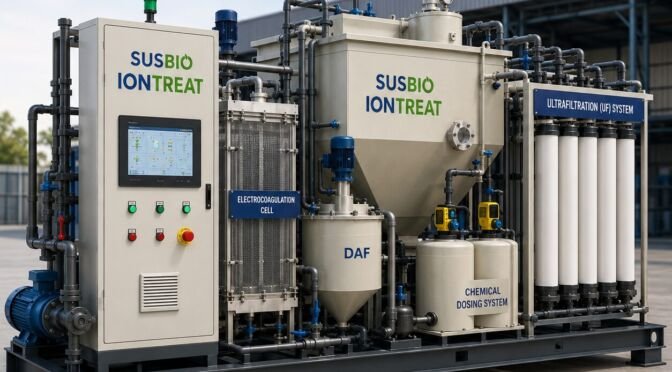
The industries most exposed to seasonal load variation — textile and dyeing, chemical processing, pharmaceutical intermediates — are also the industries generating the most chemically complex effluent, which is exactly where SUSBIO IONTREAT fits. IONTREAT is SUSBIO’s electrochemical ETP system, engineered to reduce chemical consumption compared to conventional ETPs while treating industrial effluent that biological-only systems often can’t handle safely.
The seasonal-load advantage specifically: the biological treatment failure mode described earlier in this article — a microbial population that needs time to adapt and can be shocked by a sudden load spike — doesn’t apply the same way to an electrochemical process. IONTREAT’s electrocoagulation-based treatment isn’t dependent on a living biological population building up tolerance over time, so it responds to a change in influent characteristics far more immediately than a system waiting on biology to catch up. For a textile unit facing an order-driven surge, or a chemical plant with batch-driven discharge spikes, that responsiveness is the difference between staying compliant through the peak and discovering a compliance breach after it’s already happened.
Why it’s the right choice, specifically: IONTREAT handles the heavy metals, dyes, and high-COD loads that define industrial effluent — not just organic sewage — which is exactly the contaminant profile that shows up hardest during a seasonal production spike. Combined with SUSBIO’s site-specific influent characterisation, an IONTREAT system is sized against the real chemical load a site will face at its peak, not an average that understates what the plant actually has to handle during its highest-risk months.
Common Mistakes
- Sizing from a single average-flow figure supplied without any seasonal breakdown — often because no one asked for one.
- Treating equalization capacity as optional to save upfront cost, then discovering its absence during the first peak season.
- Choosing a treatment technology based on average-case cost comparisons without weighing how each option actually performs under load variation.
- Relying on periodic manual sampling for a process that needs to be caught and corrected in real time.
Frequently Asked Questions
What is seasonal load variation in wastewater treatment?
It’s the predictable swing in wastewater volume and strength that many industries experience — driven by harvest seasons, tourist seasons, order cycles, or procurement volume — rather than a steady, average flow across the year.
Why can’t an ETP just be sized for average flow?
Because the plant still has to perform during peak months, not just on average. A design based only on the annual average is, by definition, undersized for every period above that average — often the exact period when the client’s business activity, and regulatory scrutiny, is highest.
What is equalization capacity, and why does it matter for seasonal loads?
An equalization tank buffers incoming flow before it reaches biological treatment, smoothing out short-term surges so the treatment process sees a more consistent load. Without it, a seasonal spike goes straight into the biological stage and can shock the system.
Which treatment technologies handle variable load better?
Technologies where the biological population lives on a fixed surface (like moving-bed biofilm carriers) tend to tolerate load swings more gracefully than processes relying entirely on a suspended biological population, which can take longer to recover from a shock load.
How does SUSBIO account for seasonal variation in ETP design?
Through site-specific influent characterisation that includes peak-period data, not just an annual average — so equalization and treatment capacity are sized for the load the plant will actually face during its highest-demand months.
Conclusion
Seasonal load variation isn’t an edge case — for food processing, hospitality, textiles, and dairy, it’s the actual operating pattern, and a plant designed only around the annual average will fail predictably during exactly the months a business depends on it most. The fix isn’t complicated in principle: characterize the real peak, not just the average, size equalization capacity around it, and choose a treatment approach that doesn’t depend on a slow-to-adapt biological population when the load itself won’t hold still.
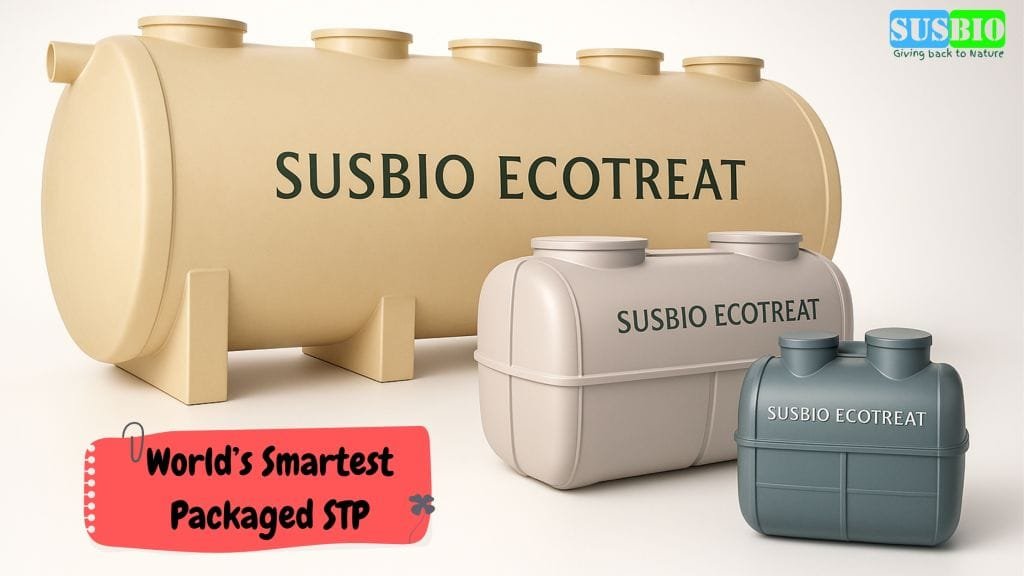
That’s the design philosophy behind both SUSBIO ECOTREAT and SUSBIO IONTREAT — site-specific influent characterisation that accounts for peak-period data from the start, not a generic capacity number applied uniformly across every project. Whether the right fit is ECOTREAT’s Anaerobic + MBBR process for domestic and organic loads, or IONTREAT’s electrochemical treatment for the chemically complex, variable-load effluent that industrial operations generate, the underlying principle is the same: a plant built for the load you’ll actually face at your worst month, not your average one.
Related reading:
- ETP: Role, Importance, and Why They Matter — the full pillar guide this article builds on
- ETP Plant for Food Industry — a closer look at seasonal load in food processing specifically
- SUSBIO ETP / IONTREAT — our electrochemical ETP built for variable industrial loads