


An Effluent Treatment Plant (ETP) is a facility that treats industrial wastewater – removing harmful pollutants, chemicals, heavy metals, and biological contaminants before the water is safely discharged or reused. ETPs are mandatory for industries under India’s Environment (Protection) Act, 1986 and CPCB/SPCB discharge regulations. Their role is to protect public health, prevent water body contamination, enable water reuse, and ensure industries remain legally compliant. Key industries requiring ETPs include pharmaceuticals, textiles, food processing, chemicals, leather, and automotive manufacturing. SUSBIO’s IONTREAT effluent treatment plant uses electrochemical treatment to reduce chemical consumption vs conventional ETPs — designed for pharma, food processing, textile, and industrial applications.“
Why Effluent Treatment Has Become India's Most Urgent Industrial Challenge
India’s industrial output has grown dramatically over the past two decades. So has the volume of untreated industrial effluent flowing into its rivers, groundwater, and soil. The Ganga, Yamuna, Godavari, and virtually every major Indian river system now carry significant industrial effluent loads. The consequences — contaminated drinking water sources, destroyed aquatic ecosystems, agricultural land degradation, and widespread waterborne illness — are documented, measurable, and worsening.
The regulatory response has been equally dramatic. The Central Pollution Control Board and State Pollution Control Boards have tightened discharge norms, increased inspection frequency, and pursued non-compliant industries with shutdown notices, financial penalties, and criminal prosecutions. The National Green Tribunal has issued thousands of orders specifically targeting industrial effluent discharge. In 2026, operating an industrial facility in India without a functional, CPCB-compliant Effluent Treatment Plant is not just an environmental risk — it is a direct threat to the facility’s licence to operate.
This guide is the most comprehensive resource available on Effluent Treatment Plants for Indian industry. It covers what ETPs are, how they work, which industries need them, what CPCB standards apply, how to choose the right technology, and how SUSBIO — with 13+ years of ETP engineering experience and 500+ installations — designs and delivers ETP systems that perform and comply for the long term.
India’s Industrial Wastewater Challenge: Key Facts 2026
• India generates approximately 6.2 billion litres of industrial effluent every day — the majority is discharged without adequate treatment (CPCB)
• 17 categories of ‘highly polluting’ industries are mandated to install real-time Online Continuous Effluent Monitoring Systems (OCEMS) linked to CPCB servers
• Non-compliance penalties: fines up to Rs. 1 lakh, imprisonment up to 5 years under EP Act 1986, and immediate Consent to Operate cancellation
• ZLD (Zero Liquid Discharge) is now mandatory for textile dyeing, tanneries, sugar mills, distilleries, and pulp/paper industries in several states
• India’s industrial wastewater treatment market is projected to reach USD 2.08 billion by 2025, growing at 9.7% CAGR
• SUSBIO has designed and commissioned ETP and STP systems for 500+ industrial and institutional projects since 2013
SUSBIO ETP Capabilities
SUSBIO designs and commissions Effluent Treatment Plants for industries across India. Every project begins with actual influent characterisation — measuring BOD, COD, TSS, pH, heavy metals, and specific industrial pollutants before designing the system. This is why every SUSBIO ETP consistently passes SPCB inspections year after year.
| SUSBIO ETP Capability Details | Details |
|---|---|
| Industries Served | Pharmaceutical, textile, food & beverage, chemical, automotive, leather, paper, sugar, distillery, institutional |
| ETP Capacity Range | 5 KLD to 5,000+ KLD — packaged and engineered civil systems |
| Core Technologies | Coagulation-Flocculation, DAF, MBBR, ASP, SBR, Anaerobic (UASB/ABR), MBR, Activated Carbon, RO, AOP, ZLD |
| Design Approach | Site-specific influent characterisation before every design — BOD, COD, TSS, pH, heavy metals, specific pollutants measured before sizing |
| CPCB Compliance | All designs target CPCB/SPCB discharge standards as guaranteed performance outcome |
| OCEMS Integration | Full OCEMS design, installation, and CPCB server connectivity for all Red Category industries |
| ZLD Capability | Complete Zero Liquid Discharge systems including RO, evaporator, and crystalliser for mandatory ZLD industries |
| Sludge Management | Complete sludge thickening, dewatering (filter press/centrifuge), and hazardous waste disposal planning |
| Regulatory Support | Complete SPCB CTE and CTO documentation preparation and submission support |
| SUSBIO ETP Product Page | |
| Manufacturing | Vasuli MIDC, Chakan, Pune — factory-fabricated FRP vessels, factory pre-tested before dispatch |
| Experience | 13+ years | 500+ projects | 24 Indian states | Since 2013 |
What Is an Effluent Treatment Plant? Complete Definition and Context
An Effluent Treatment Plant (ETP) is an on-site or centralised facility that processes wastewater generated by industrial operations. Unlike domestic sewage — which contains primarily organic matter from human waste — industrial effluent can contain a highly diverse range of pollutants depending on the manufacturing process involved: acids and alkalis from chemical plants, synthetic dyes and surfactants from textile mills, active pharmaceutical ingredients and solvents from drug manufacturing, organic matter and oils from food processing, heavy metals from electroplating and metal finishing, and thermal pollution from power generation.
Each of these pollutant profiles requires a different treatment approach. A pharmaceutical ETP is not the same as a textile ETP. A food processing ETP uses different biological processes than a chemical ETP. This is the fundamental reason why ETP design is a specialised engineering discipline — and why choosing the right ETP manufacturer, one with genuine multi-industry experience, is critical to achieving compliance and long-term performance.
ETP vs STP vs WTP: Key Differences at a Glance ETP (Effluent Treatment Plant): Treats industrial process wastewater containing chemicals, heavy metals, and industrial pollutants. Required for manufacturing industries. STP (Sewage Treatment Plant): Treats domestic sewage from toilets, bathrooms, and kitchens. Required for buildings, apartments, hotels, hospitals. WTP (Water Treatment Plant): Treats raw water (river, borewell) to produce potable drinking water. Combined facilities need both ETP (for process effluent) and STP (for domestic sewage from canteens/workers). |
How Does an Effluent Treatment Plant Work? Stage-by-Stage Process
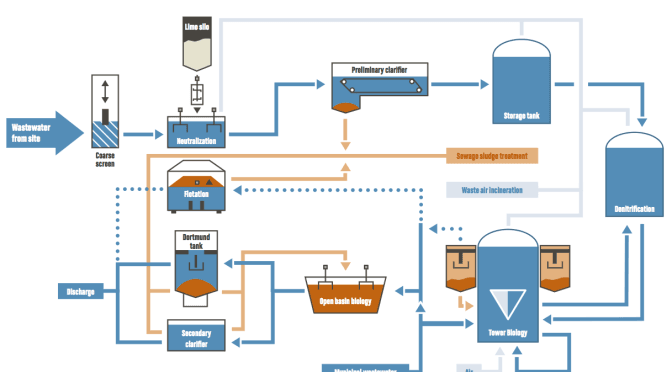
A complete industrial ETP processes wastewater through multiple treatment stages. The number and type of stages depend on the influent characteristics and the required outlet quality. Here is the standard ETP treatment train used in SUSBIO’s designs:
Stage 1: Preliminary Treatment — Screening and Equalisation
Raw industrial effluent first passes through bar screens or fine screens that remove large solids, rags, and debris that could damage downstream equipment. An equalisation tank then buffers the effluent — industrial processes rarely generate effluent at a constant rate, and the equalisation tank smooths out flow and concentration variations before downstream treatment. For industries with batch processes (pharmaceutical, food), this stage is particularly critical.
Stage 2: Primary Treatment — Physical and Chemical Separation
Primary treatment removes suspended and floating matter through physical and chemical processes. Coagulation involves adding chemicals (alum, ferric chloride, polyelectrolytes) that cause fine suspended particles to form larger flocs. Flocculation allows these flocs to grow larger. Sedimentation in a primary clarifier then allows these flocs to settle. For effluent containing oils and greases (food processing, automotive), dissolved air flotation (DAF) is used instead — tiny air bubbles attach to oil droplets and float them to the surface for skimming.
Stage 3: Secondary Treatment — Biological Treatment
Secondary treatment uses microorganisms to remove dissolved organic matter (BOD and COD) from the effluent. The main biological treatment technologies used in ETPs are:
- Activated Sludge Process (ASP): Suspended bacteria treat effluent in an aeration tank. High BOD removal (85-90%) but requires careful sludge management.
- MBBR (Moving Bed Biofilm Reactor): Biofilm on plastic carriers treats effluent continuously. Compact, tolerant of load variations. SUSBIO’s preferred biological treatment technology.
- SBR (Sequential Batch Reactor): Timed batch cycles in a single tank. Suitable for variable flow industrial applications.
- Anaerobic Treatment: Used for high-BOD effluents (distilleries, sugar mills, food processing) — bacteria digest organic matter without oxygen, often producing biogas as a byproduct.
- MBR (Membrane Bioreactor): Combines biological treatment with membrane filtration for highest outlet quality. Used when strict reuse standards are required.
Stage 4: Tertiary Treatment — Advanced Polishing
Tertiary treatment removes residual pollutants not eliminated by biological treatment. Processes include sand filtration and activated carbon filtration for fine suspended solids and colour removal, reverse osmosis (RO) for dissolved salts and TDS reduction, ion exchange for specific ion removal, UV disinfection or ozonation for pathogen elimination, and advanced oxidation processes (AOPs) for recalcitrant organic compounds that resist biological treatment — particularly relevant for pharmaceutical and chemical effluents.
Stage 5: ZLD (Zero Liquid Discharge) — Maximum Water Recovery
For industries facing ZLD mandates or severe water scarcity, advanced tertiary treatment enables near-total water recovery. After RO, the concentrated brine reject is further processed through evaporators and crystallisers to produce dry salt, achieving zero liquid discharge. ZLD is mandatory for textile dyeing units, tanneries, sugar mills, and distilleries in several Indian states.
Stage 6: Sludge Management
Every ETP produces sludge — the accumulated biological and chemical residues from the treatment process. Sludge must be properly managed: thickened to reduce volume, dewatered using filter presses or centrifuges, and disposed of through authorised channels. Some industrial sludges are classified as hazardous waste under the Hazardous Waste Management Rules and must be disposed of at authorised Treatment, Storage, and Disposal Facilities (TSDFs). SUSBIO designs sludge management systems as an integral part of every ETP project.
The Role and Importance of Effluent Treatment Plants: 7 Critical Reasons
1. Legal Compliance — The Non-Negotiable Foundation
The legal obligation to install and operate a functional ETP is absolute for every industry generating industrial effluent in India. The Environment (Protection) Act, 1986, the Water (Prevention and Control of Pollution) Act, 1974, and CPCB’s General Standards for Discharge (Schedule VI, EP Rules) collectively mandate treatment to defined outlet standards before any discharge. Non-compliance exposes the facility to SPCB Consent to Operate cancellation, fines up to Rs. 1 lakh per violation, criminal prosecution under the EP Act with imprisonment up to 5 years for repeat violations, and NGT-ordered closure of the facility.
Beyond CPCB, industries in certain categories must comply with OCEMS (Online Continuous Effluent Monitoring System) requirements — real-time transmission of BOD, COD, pH, TSS, and flow data directly to CPCB servers. Non-functional OCEMS is treated as a compliance failure equivalent to actual effluent discharge violations.
2. Protection of India’s Water Bodies
India’s rivers are among the most ecologically stressed water bodies in the world. Industrial effluent is a primary contributor to river pollution — responsible for elevated BOD, toxic heavy metal contamination, synthetic dye colouration, and thermal pollution in rivers from the Ganga basin to the Krishna and Cauvery. ETPs intercept this pollution at source, before it reaches water bodies where treatment becomes economically and technologically impractical. Every functional ETP is a direct contribution to river health and aquatic ecosystem preservation.
3. Groundwater Protection
Industries that discharge untreated or inadequately treated effluent into land or unlined evaporation ponds contaminate shallow and deep aquifers over time. In India’s industrial clusters — Vapi (Gujarat), Ankleshwar (Gujarat), Ludhiana (Punjab), Tirupur (Tamil Nadu) — groundwater contamination from decades of industrial effluent discharge has rendered aquifers unsafe for drinking or agriculture. ETPs prevent this irreversible contamination by treating effluent to CPCB standards before any land application or discharge.
4. Public Health Protection
Industrial effluent contains substances that are directly toxic to human health — arsenic, lead, mercury, cadmium, and chromium from various industrial processes; pharmaceutical active ingredients from drug manufacturing; pesticide residues from agrochemical facilities; and pathogenic microorganisms from food processing waste. When these substances enter drinking water sources through untreated discharge, the public health consequences can be severe and long-lasting. ETPs eliminate these risks at source, protecting communities downstream of industrial operations.
5. Water Reuse and Conservation
In a country facing increasing freshwater stress across its industrial belts, treated industrial effluent is a significant potential resource. A well-designed ETP producing tertiary-treated water meeting defined quality standards enables industries to reuse treated water for cooling tower makeup, boiler feed (after further treatment), process washing, gardening, and toilet flushing — reducing freshwater intake, lowering water procurement costs, and contributing to sustainability targets. This is particularly valuable in water-stressed industrial states like Gujarat, Maharashtra, Rajasthan, and Tamil Nadu.
6. ESG Compliance and Investor Confidence
Environmental, Social, and Governance (ESG) criteria have become central to institutional investment decisions in India’s listed and unlisted industrial sector. Industries with documented, functional ETP systems and CPCB compliance records score significantly higher on ESG assessments. International buyers — particularly in pharmaceuticals, textiles, and food processing — increasingly require verified environmental compliance documentation from Indian suppliers. A functional, compliant ETP is no longer just a regulatory obligation — it is a business development asset.
7. Reputation and Social Licence to Operate
Industries operating near communities have faced increasingly organised resistance to untreated effluent discharge. Community protests, PIL filings, NGT petitions, and media coverage of industrial pollution have resulted in operational disruptions, forced shutdowns, and permanent damage to corporate reputations. A functioning ETP protects not just regulatory compliance but the social licence to operate — the implicit permission of the surrounding community for the industrial facility to continue operations.
Industry-Specific ETP Requirements in India: Sector-by-Sector Guide
ETP design is not one-size-fits-all. Each industry generates effluent with unique characteristics that determine the treatment process, technology selection, and regulatory requirements. Here is SUSBIO’s sector-by-sector guide:
PHARMACEUTICAL INDUSTRY ETP
Pharmaceutical effluent is among the most complex and strictly regulated categories of industrial wastewater. It contains active pharmaceutical ingredients (APIs), organic solvents, chemical synthesis byproducts, and disinfectants from production and cleaning-in-place (CIP) processes. CPCB requires pharmaceutical units to meet BOD < 30 mg/L, COD < 250 mg/L, and specific limits on heavy metals and toxic organics.
- Key treatment processes: Stripping for solvent removal, activated carbon adsorption for API removal, biological treatment (MBBR or MBR), advanced oxidation for recalcitrant organics.
- OCEMS requirement: Pharmaceutical units are in the ‘Red’ category — mandatory OCEMS linked to CPCB servers.
- ZLD trend: Many pharmaceutical units in Gujarat and Maharashtra are moving toward ZLD compliance to avoid groundwater liability.
Textile and Dyeing Industry ETP
Textile dyeing and processing effluent is characterised by high COD, intense synthetic colouration, high TDS, and variable pH. Colour removal is a primary design challenge — synthetic dyes are resistant to conventional biological treatment and require chemical coagulation, activated carbon filtration, or ozonation for effective colour removal.
- Key treatment processes: Coagulation/flocculation for colour, biological treatment for BOD/COD, activated carbon for residual colour, RO for TDS.
- ZLD mandate: Textile dyeing units in Tamil Nadu, Rajasthan, and Maharashtra face mandatory ZLD requirements. Evaporator-crystalliser systems required.
- CPCB standard: COD < 250 mg/L, colour not exceeding 400 ADMI units after dilution.
Food and Beverage Processing ETP
Food processing effluent has high BOD (500-5000 mg/L depending on product) from organic matter in food residues, fats, oils, and cleaning agents. While not chemically toxic, the high organic load demands robust biological treatment to avoid oxygen depletion in receiving water bodies.
- Key treatment processes: Grease trap/DAF for oil removal, high-rate anaerobic treatment for BOD reduction, aerobic MBBR or ASP polishing, UV disinfection.
- Anaerobic advantage: High-BOD food effluent is ideal for anaerobic digestion — biogas generated can offset energy costs significantly.
- FSSAI and export compliance: Food processing facilities serving export markets require effluent treatment documentation for international audit compliance.
Chemical and Petrochemical Industry ETP
Chemical industry effluent contains a highly variable mixture of organic solvents, acids, alkalis, inorganic salts, and specific toxic compounds depending on the chemical manufactured. Pre-treatment to neutralise extreme pH and remove toxic compounds that could inhibit biological treatment is a critical first step.
- Key treatment processes: pH neutralisation, chemical precipitation for heavy metals, biological treatment (after toxic compound pre-treatment), activated carbon polishing.
- Hazardous waste: Chemical sludge is frequently classified as hazardous waste requiring TSDF disposal.
- CPCB Red category: Mandatory OCEMS, consent renewal scrutiny, and potential ZLD requirements in water-stressed areas.
Automotive and Metal Finishing Industry ETP
Automotive and metal finishing facilities generate effluent containing oils and greases, heavy metals (chromium, nickel, zinc, lead), cyanides from electroplating, and acid/alkali from metal treatment processes. Hexavalent chromium reduction is a specific treatment requirement for chrome electroplating facilities.
- Key treatment processes: Cyanide oxidation (alkaline chlorination), chromium reduction (acidic reduction), heavy metal precipitation, DAF for oil removal, biological polishing.
- CPCB limits: Hexavalent chromium < 0.1 mg/L, total chromium < 2 mg/L, cyanide < 0.2 mg/L — among the strictest industrial discharge limits.
CPCB Industrial Effluent Discharge Standards: Reference Table for Indian Industries
| Industry Sector | BOD (mg/L) | COD (mg/L) | TSS (mg/L) | pH | Special Parameters |
|---|---|---|---|---|---|
| Pharmaceutical | < 30 | < 250 | < 100 | 6.5-8.5 | Heavy metals; specific API limits |
| Textile / Dyeing | < 30 | < 250 | < 100 | 6.5-8.5 | Colour < 400 ADMI; TDS norms |
| Food Processing | < 30 | < 250 | < 100 | 6.5-8.5 | Oil & Grease < 10 mg/L |
| Chemical / Petrochem | < 30 | < 250 | < 100 | 6.5-8.5 | Specific toxic organics; heavy metals |
| Automotive / Metal | < 30 | < 250 | < 100 | 6.5-8.5 | Cr(VI) < 0.1; CN < 0.2; Zn < 5 |
| Sugar / Distillery | < 30 | < 250 | < 100 | 6.5-8.5 | ZLD mandatory in many states |
| Tannery / Leather | < 30 | < 250 | < 100 | 6.5-8.5 | Chromium < 2 mg/L; Sulphide < 2 |
| Paper / Pulp | < 30 | < 250 | < 100 | 6.5-8.5 | AOX; chlorinated organics; colour |
ETP Technology Comparison: Choosing the Right Process for Your Industry
| Technology | How It Works | BOD Removal | Best For | Energy Use |
|---|---|---|---|---|
| Activated Sludge (ASP) | Suspended bacteria in aeration tank | 85-95% | High-volume industrial effluent; established process | High |
| MBBR | Biofilm on HDPE carriers; continuous flow | 85-95% | Variable load industries; compact footprint needed | Low-Medium |
| SBR | Timed batch cycles; single tank | 85-95% | Batch process industries; variable flow | Medium |
| MBR | Biological + membrane filtration | 95-99% | High reuse quality required; space constrained | High |
| Anaerobic (UASB/ABR) | Bacteria digest organics without oxygen | 50-80% | High-BOD effluent; food, dairy, distillery; biogas recovery | Zero (generates biogas) |
| Coagulation/Flocculation | Chemical precipitation of suspended matter | N/A (TSS removal) | Pre-treatment; textile colour; metal removal | Low |
| Activated Carbon | Adsorption of dissolved organics and colour | Polishing stage | Pharmaceutical API removal; colour; trace organics | Low |
| Reverse Osmosis (RO) | Membrane separation of dissolved salts | N/A (TDS removal) | ZLD pre-treatment; high TDS effluent | High |
| Advanced Oxidation (AOP) | Hydroxyl radicals destroy recalcitrant organics | Polishing stage | Pharmaceutical; chemical; dye removal | High |
How to Choose the Right ETP Manufacturer: 6 Non-Negotiable Criteria
ETP selection is one of the most consequential engineering decisions an industrial facility makes. The wrong choice means years of non-compliance, operational disruption, and regulatory liability. Here is what actually matters:
- Industry-specific experience: Has the manufacturer designed ETPs for your specific industry? Pharmaceutical ETP design is fundamentally different from textile ETP design. Verify with references from the same industry sector.
- CPCB/SPCB compliance track record: Can the manufacturer demonstrate a history of ETPs that pass SPCB inspections and maintain compliance over years of operation — not just at commissioning?
- Process engineering depth: Does the manufacturer conduct proper influent characterisation (BOD, COD, TSS, pH, heavy metals, flow) before designing the ETP? A manufacturer who sizes an ETP without measuring the actual effluent is not an engineer — they are a product seller.
- Technology selection transparency: Does the manufacturer explain why they are recommending a specific technology for your effluent? Can they compare MBBR vs. ASP vs. MBR for your application with documented reasoning?
- Post-commissioning service: What happens when the ETP underperforms or requires maintenance? Does the manufacturer have a service network? An Annual Maintenance Contract? SUSBIO provides lifetime service on every installation.
- Regulatory documentation support: Does the manufacturer prepare SPCB CTE and CTO documentation, OCEMS integration, and compliance reports? SUSBIO manages complete regulatory documentation for every ETP project.
ETP Cost in India: What Does an Effluent Treatment Plant Cost? (2026 Guide)
ETP cost in India varies significantly based on capacity, effluent complexity, required outlet quality, technology selected, and ZLD requirements. Unlike STPs where cost scales relatively predictably with capacity, ETP cost depends heavily on the specific industrial effluent characteristics — a pharmaceutical ETP for the same capacity as a food processing ETP can cost 3-5 times more due to the complexity of treatment required.
The following indicative price ranges are based on SUSBIO’s project experience across industries. Actual pricing requires a site-specific assessment and influent characterisation.
| Industry | Capacity | Technology | Indicative Cost Range |
|---|---|---|---|
| Food & Beverage Processing | 50-200 KLD | DAF + Anaerobic + MBBR | Rs. 20 – 60 Lakhs |
| Food & Beverage Processing | 200-500 KLD | DAF + Anaerobic + MBBR + Tertiary | Rs. 60 Lakhs – 1.5 Crore |
| Textile / Dyeing | 50-200 KLD | Coagulation + Biological + Colour removal | Rs. 30 – 80 Lakhs |
| Textile / Dyeing (ZLD) | 50-200 KLD | Full ZLD with RO + Evaporator | Rs. 1.5 – 4 Crore |
| Pharmaceutical | 20-100 KLD | Stripping + AC + MBBR + AOP | Rs. 40 Lakhs – 1.5 Crore |
| Pharmaceutical (ZLD) | 20-100 KLD | Full ZLD system | Rs. 2 – 5 Crore |
| Chemical / Petrochemical | 50-200 KLD | Neutralisation + Chemical + Biological | Rs. 30 – 90 Lakhs |
| Automotive / Metal Finishing | 20-100 KLD | DAF + Heavy metal removal + Biological | Rs. 25 – 70 Lakhs |
| Tannery / Leather | 50-200 KLD | Chrome recovery + Biological + Tertiary | Rs. 40 Lakhs – 1.2 Crore |
| Sugar Mill / Distillery | 100-500 KLD | Anaerobic (biogas) + Aerobic + Tertiary | Rs. 50 Lakhs – 2 Crore |
| Paper / Pulp | 100-500 KLD | Primary + Biological + AOX treatment | Rs. 60 Lakhs – 2.5 Crore |
Important: These are indicative ranges only. ETP cost cannot be accurately estimated without actual influent sampling and characterisation. A manufacturer who quotes an ETP price without measuring your effluent is selling a product, not engineering a solution. SUSBIO provides free influent assessment and detailed budgetary proposals for every ETP project. Contact SUSBIO at susbio.in/contact-us for a project-specific proposal.
What Factors Drive ETP Cost?
- Effluent composition and toxicity — the more complex and toxic the effluent, the more treatment stages required and the higher the cost
- Required outlet quality — meeting CPCB general standards costs less than meeting state-specific stricter limits or ZLD mandates
- ZLD requirement — Zero Liquid Discharge adds significantly to capital cost due to RO, evaporator, and crystalliser requirements
- Capacity — larger ETPs have lower per-KLD cost due to economies of scale
- OCEMS integration — mandatory for Red Category industries; adds Rs. 5-15 lakhs depending on instrumentation scope
- Sludge classification — hazardous industrial sludge requires specialised dewatering and TSDF disposal, adding to operating cost
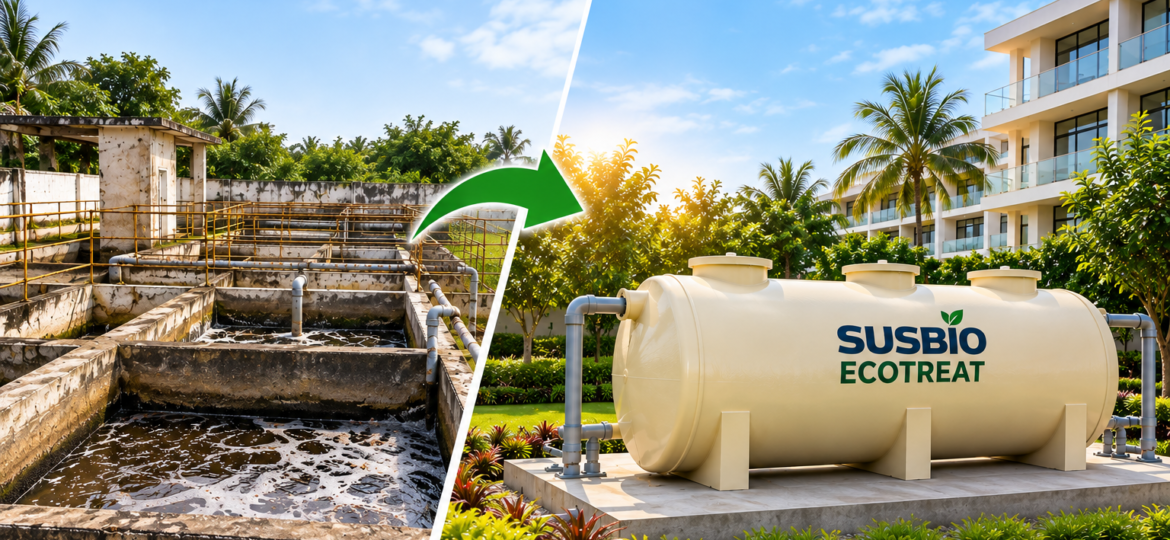
- Civil vs packaged construction — packaged FRP systems have lower civil cost; large-capacity systems require civil construction
SUSBIO ETP: Engineering Expertise Backed by 13 Years and 500+ Installations
SUSBIO (Sustainable Biosolutions Pvt. Ltd.) designs, manufactures, and commissions Effluent Treatment Plants for industries across India. With manufacturing at Vasuli MIDC, Chakan, Pune and headquarters in Goa, SUSBIO brings genuine engineering depth to every ETP project — not generic product supply.
| SUSBIO ETP Capability | Details |
|---|---|
| Industries Served | Pharmaceutical, food processing, textile, chemical, automotive, institutional |
| ETP Capacity Range | From small industrial canteen ETPs to large-scale industrial systems |
| Core Technologies | MBBR, ASP, SBR, Anaerobic, MBR, Coagulation-Flocculation, RO, DAF |
| Approach | Site-specific influent characterisation before design — no generic product supply |
| CPCB Compliance | All designs target CPCB/SPCB discharge standards as guaranteed performance |
| OCEMS Integration | Full OCEMS design, installation, and CPCB server connectivity for regulated categories |
| Sludge Management | Complete sludge thickening, dewatering, and disposal planning |
| ZLD Capability | Zero Liquid Discharge systems including evaporator-crystalliser for mandatory ZLD industries |
| Regulatory Support | Complete SPCB CTE and CTO documentation preparation and support |
| Service | Lifetime service commitment from SUSBIO’s Pune and Goa teams |
| Experience | 13+ years | 500+ projects | 24+ Indian states |
Akshat, Founder SUSBIO – on ETP Design in India
The most common ETP failure I see in the field is not a technology failure — it is a design failure. Someone sized the plant based on assumed BOD of 300 mg/L when the actual effluent was 800 mg/L. Or they chose a biological system for effluent containing compounds that inhibit biological activity. Or they installed a standard civil ETP that produces BOD 40 mg/L when the SPCB standard is 10 mg/L. Every SUSBIO ETP project begins with actual influent sampling and characterisation. We measure before we design. That is why our ETPs pass inspections year after year.
Frequently Asked Questions: Effluent Treatment Plants
Q1. What is an Effluent Treatment Plant (ETP) and why is it needed?
An ETP (Effluent Treatment Plant) is a system that treats industrial wastewater to remove pollutants before discharge or reuse. It is needed because industrial effluent contains toxic chemicals, heavy metals, biological contaminants, and hazardous organic compounds that cause severe damage to water bodies, soil, and human health if discharged untreated. In India, ETP installation is legally mandatory for all industries generating industrial effluent under the Environment (Protection) Act, 1986 and CPCB discharge regulations.
Q2. What is the difference between ETP and STP?
An ETP (Effluent Treatment Plant) treats industrial process effluent containing chemicals, heavy metals, and industrial pollutants. An STP (Sewage Treatment Plant) treats domestic sewage from toilets, bathrooms, and kitchens. ETPs require specialised treatment processes tailored to specific industrial effluent characteristics. STPs use standard biological treatment for domestic sewage. Industrial facilities with worker canteens and welfare facilities need both — an ETP for process effluent and an STP for domestic sewage.
Q3. Which industries in India are required to install an ETP?
All industries generating industrial effluent are required to install ETPs under India’s Environment (Protection) Act, 1986. Key industries include: pharmaceutical and bulk drug, textile dyeing and processing, chemical and petrochemical, food and beverage processing, leather and tannery, sugar mills and distilleries, paper and pulp, automotive and metal finishing, and power generation. Industries in the ‘Red’ category must also install OCEMS (Online Continuous Effluent Monitoring Systems) linked to CPCB servers.
Q4. What are CPCB discharge standards for industrial effluent?
CPCB sets standards under Schedule VI of the Environment (Protection) Rules, 1986. Common standards for discharge to inland surface water: BOD < 30 mg/L, COD < 250 mg/L, TSS < 100 mg/L, pH 6.5-8.5. Specific industries face additional parameters — pharmaceutical requires API limits and heavy metal controls; textile requires colour removal norms; automotive requires chromium < 2 mg/L and cyanide < 0.2 mg/L. State PCBs often enforce stricter local standards.
Q5. What is ZLD (Zero Liquid Discharge) and which industries need it?
ZLD (Zero Liquid Discharge) means no liquid effluent leaves the facility boundary — all water is treated, recycled, and reused on-premises. ZLD is currently mandatory for textile dyeing and finishing units, tanneries, sugar mills, distilleries, and pulp/paper mills in several Indian states by CPCB/NGT orders. ZLD systems require advanced tertiary treatment including RO and evaporator-crystalliser technology. SUSBIO designs complete ZLD systems for industries facing this mandate.
Q6. What is OCEMS and which industries need it?
OCEMS (Online Continuous Effluent Monitoring System) is a real-time monitoring system that measures BOD, COD, pH, TSS, and flow rate in industrial effluent and transmits data directly to CPCB servers. OCEMS is mandatory for the 17 categories of ‘highly polluting’ (Red category) industries in India, including pharmaceutical, textile, chemical, tannery, sugar, paper, and others. Non-functional OCEMS is treated as a compliance failure. SUSBIO provides complete OCEMS design, installation, and CPCB server connectivity.
Q7. What is the process of getting SPCB consent for an ETP?
ETP installation requires two SPCB consents: Consent to Establish (CTE) before installation — requires design basis report, process flow diagram, equipment list, site plan, and effluent disposal plan. Consent to Operate (CTO) after commissioning — requires performance test results demonstrating CPCB-compliant outlet quality (typically 3-7 days of consecutive compliant samples). SUSBIO prepares and supports complete CTE and CTO documentation for every project, including OCEMS documentation for regulated categories.
Q8. How does SUSBIO design ETPs differently from other manufacturers?
SUSBIO begins every ETP project with actual influent characterisation — collecting and analysing samples to measure BOD, COD, TSS, pH, heavy metals, and specific industrial pollutants before designing the system. This ensures the ETP is sized and designed for the actual effluent, not assumed values. SUSBIO then selects the appropriate technology combination (MBBR, anaerobic, coagulation, RO, etc.) based on measured data and CPCB/SPCB outlet requirements. Every SUSBIO ETP is designed to pass SPCB inspections as a guaranteed outcome, not just at commissioning but year after year.
Q9. What happens if an industry does not install an ETP in India?
Non-compliance with ETP installation requirements under India’s EP Act 1986 and CPCB norms results in: SPCB Show Cause Notice, financial penalties up to Rs. 1 lakh per violation, Consent to Operate (CTO) cancellation or suspension, NGT-ordered closure of the facility, and criminal prosecution with imprisonment up to 5 years for repeat violations. In practice, industries without ETPs also face community opposition, reputational damage, and exclusion from export markets that require environmental compliance documentation.
Q10. Can ETP treated water be reused in the factory?
Yes, if the ETP produces sufficient quality treated water. Tertiary-treated industrial effluent meeting defined quality standards can be reused for cooling tower makeup water (reducing freshwater intake significantly), boiler feed (after additional polishing to meet boiler water quality), process washing where exact purity is not required, gardening and green belt irrigation, and toilet flushing in worker welfare facilities. The specific reuse application determines the required treatment level and corresponding tertiary treatment investment.
Q11. What is the cost of installing an ETP in India?
ETP cost in India varies widely based on capacity, influent characteristics, required outlet quality, and technology selected. Small industrial ETPs (50-200 KLD) typically range from Rs. 15-60 lakhs. Medium industrial ETPs (200-1000 KLD) range from Rs. 60 lakhs to several crores. Large ZLD systems range from Rs. 2-20 crores depending on capacity and technology. SUSBIO provides free influent assessment and indicative budgetary proposals for every ETP project. Contact SUSBIO at www.susbio.in/contact-us for a project-specific proposal.
Q12. What is the lifespan of an industrial ETP?
A well-designed and maintained industrial ETP has an operational life of 20-30 years. FRP vessels and tanks (as used in SUSBIO systems) are rated for 25+ year service life and are corrosion-resistant to industrial effluent chemistry. Civil RCC tanks in conventional ETPs may require structural repair after 15-20 years. Mechanical equipment (pumps, blowers, filter presses) typically requires replacement or refurbishment every 5-10 years depending on operating conditions and maintenance quality.
Conclusion: Why an Effluent Treatment Plant Is Non-Negotiable for Every Indian Industry
Effluent Treatment Plants are not optional infrastructure. They are the mandatory foundation of responsible industrial operation in India in 2026. The regulatory framework is clear, the enforcement is accelerating, and the consequences of non-compliance are severe and irreversible for both the environment and the business.
But beyond compliance, a well-designed ETP is a genuine business asset — enabling water reuse, reducing freshwater costs, supporting ESG credentials, protecting community relationships, and building the documented environmental track record that international buyers and institutional investors increasingly require.
Choosing the right ETP manufacturer is the most important decision in this process. SUSBIO brings 13+ years of multi-industry ETP engineering experience, site-specific influent characterisation, CPCB-compliant design, complete regulatory documentation support, and lifetime service to every ETP project in India.
Get a Free ETP Design Consultation from SUSBIO
Influent characterisation, technology recommendation, CPCB compliance design, and SPCB documentation support for any industry.
www.susbio.in/contact-us | info@susbio.in | +91 88889 80197 | India’s Leading ETP and STP Manufacturer Since 2013
Read More — Related Resources from SUSBIO
This ETP pillar page connects to SUSBIO’s full library of industry-specific ETP and wastewater treatment resources. Use these links to explore specific topics in depth.
Industry-Specific ETP Guides
- ETP for Pharmaceutical Industry — CPCB compliance, API removal, solvent stripping, ZLD: Read more here
- ETP for Hospitals — biomedical waste, pathogen removal, MoEFCC norms: Read more here
- ETP for Food Industry — high BOD, DAF, anaerobic treatment, FSSAI compliance: Read more here
- ETP for Hotels and Restaurants — grease trap, kitchen effluent, hospitality compliance: Read more here
Technical ETP Resources
- Industrial ETP Complete Guide — all industries, all technologies: Read more here
- ETP vs STP — key differences and which one your project needs: Read more here
- Top 5 ETP Manufacturers in India — comparison and selection guide: Read more here
- Understanding ETP Basics — processes, components, working: Read more here
Regulatory and Compliance Resources
- CPCB Guidelines and Discharge Standards 2026: Read more here
- MPCB STP Guidelines for Maharashtra: Read more here
SUSBIO Product Pages
- SUSBIO ETP Product Page — full specifications, capacity range, inquiry: Explore SUSBIO ETP
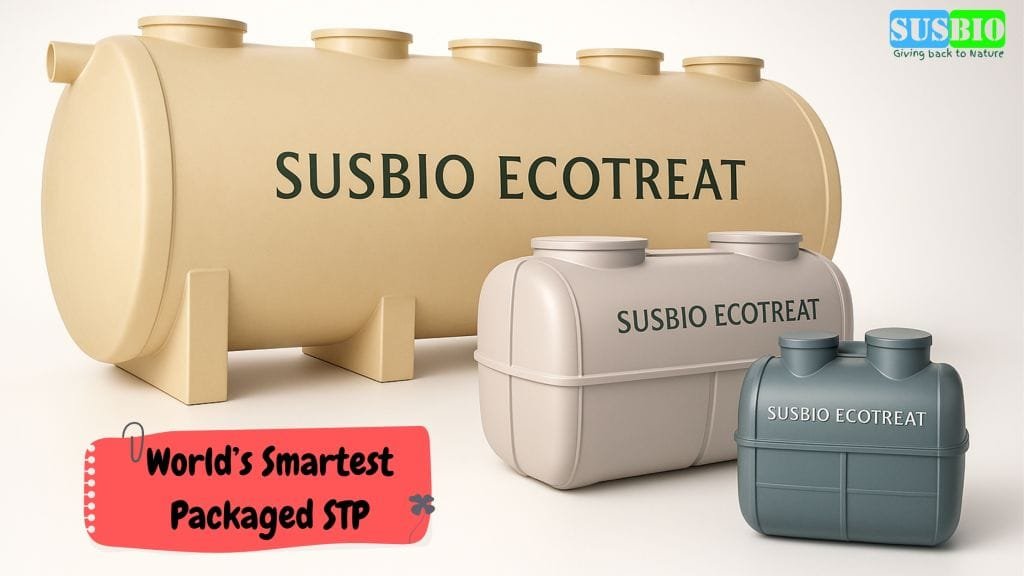
- SUSBIO ECOTREAT Packaged STP — for domestic sewage treatment: Explore SUSBIO ECOTREAT
- Free ETP Consultation — site assessment, budgetary proposal: Connect with SUSBIO
Explore More from SUSBIO
- SUSBIO ETP Solutions: https://susbio.in/effluent-treatment-plant-etp/
- SUSBIO ECOTREAT Full Range: https://susbio.in/susbio-ecotreat/
- Industrial ETP Complete Guide: https://susbio.in/industrial-effluent-treatment-plants-a-comprehensive-guide-for-industries/
- ETP vs STP — Which Do You Need: https://susbio.in/stp-vs-etp-which-treatment-plant-fits-your-industry-2025/
- CPCB Guidelines 2026: https://susbio.in/government-standards-and-guidelines-for-sewage-treatment-plants-stps-in-india-2026-expert-guide/
- STP Capacity Calculator: https://susbio.in/how-to-calculate-sewage-treatment-plant-capacity/
- Free Consultation: https://susbio.in/contact-us/

10 Comments
[…] blog explores the critical role of ETPs, the industries that need them, the processes involved, and why they are indispensable for […]
[…] Effluent Treatment Plants (ETP) play a pivotal role in managing industrial wastewater. With India’s industrial sector expanding rapidly, the need for efficient wastewater management has become a top priority for businesses and environmental agencies alike. Among the leading players in this domain, SUSBIO stands out as the best Effluent Treatment Plant (ETP) manufacturer in India, offering cutting-edge solutions tailored to diverse industries. […]
[…] global economic growth, generates significant volumes of wastewater laden with complex pollutants. Effluent Treatment Plants (ETPs) play a pivotal role in managing and treating pharmaceutical effluents, ensuring compliance with […]
[…] in ensuring environmental sustainability. Two essential technologies for treating wastewater are Effluent Treatment Plants (ETPs) and Sewage Treatment Plants (STPs). While both systems aim to treat wastewater before its […]
[…] Effluent Treatment Plants (ETPs) play a vital role in ensuring that industries comply with environmental regulations by treating wastewater before discharge. With stringent government norms and growing environmental awareness, ETPs are indispensable for sectors that produce significant quantities of wastewater containing harmful contaminants. Below, we explore the top 5 sectors where effluent treatment plants are critical. […]
[…] usage and diverse effluent characteristics, faces significant challenges in managing wastewater. Effluent Treatment Plants (ETPs) play a crucial role in treating and managing this wastewater, ensuring compliance with […]
[…] Effluent treatment plants (ETPs) play a vital role in safeguarding the environment by treating industrial wastewater and ensuring compliance with regulatory standards. Selecting the right ETP manufacturer can significantly impact your business operations, cost efficiency, and sustainability goals. […]
[…] 0 By Akshat Tyagi Latest Blogs November 15, […]
[…] Effluent Treatment Plants (ETPs) play a vital role in managing industrial wastewater, ensuring that harmful pollutants are removed before the water is released back into the environment. India has several leading manufacturers of ETP plants, known for their innovation, reliability, and adherence to environmental standards. Here, we highlight the top 5 ETP plant manufacturers in India, with SUSBIO leading the way. […]
[…] Effluent Treatment Plants (ETPs) play a pivotal role in managing wastewater generated by industrial processes. Designed to treat contaminated water before it is discharged into the environment, ETPs are a cornerstone of sustainable industrial operations. As a leading ETP plant manufacturers in India, SUSBIO is dedicated to providing innovative and efficient solutions for industries striving for environmental compliance. […]